20 Loudest Dog Breeds (With Info & Pictures)

Dogs diverged from their ancient ancestors around 27,000 years ago. Nevertheless, they have retained some traits, including barking and howling, albeit perhaps not for the same purpose. With that said, humans have also played a role in determining how loud their pets are. For example, we expect guard dogs to bark if danger is present, and herding canines need to control livestock, which sometimes involves yipping. So, what are some of the loudest dog breeds in the world today?

The 20 Loudest Dog Breeds
1. Australian Shepherd

| Origin: | United States (California) |
| AKC Group: | Herding |
| UKC Group: | Herding Dog |
The Australian Shepherd is an all-American dog despite the implication of the breed’s name. They are intelligent animals that work as a herder, and they are loud when communicating with their herds and owners. This trait shows up in the pup’s affinity with children as well, as they see children as other animals to round up and keep together. Also, this breed is somewhat protective, which isn’t unusual in their line of work.
2. Border Collie

| Origin: | Great Britain |
| AKC Group: | Herding |
| UKC Group: | Herding Dog |
The Border Collie stands out as the smartest dog breed 1, which is not unexpected in a dog that may be alone in the field for longer periods. You can see the stamina and strength of this dog on display in the show ring or just running around the backyard, but barking is a vital skill for an animal that may herd livestock much larger than their roughly 50-pound body. This dog is also full of energy and best suited to active families.
3. Collie

| Origin: | Scotland |
| AKC Group: | Herding |
| UKC Group: | Herding Dog |
It’s easy to see why the Collie is a boisterous pooch. The rugged terrain of Scotland certainly challenged this herder, and their voice had to travel across hills and moors. This pup is energetic because of their job, but not as much as you may expect.
4. Pembroke Welsh Corgi

| Origin: | Southwestern Wales |
| AKC Group: | Herding |
| UKC Group: | Herding Dog |
You’d think the Pembroke Welsh Corgi was a much larger dog, judging by their tenacity and bark that shows that they mean business. This breed differs from the Cardigan Welsh Corgi in their smaller size and absence of a tail. You have to admire this dog’s courage, considering people used them to herd cattle, but their small size keeps them out of reach of an angry cow’s hoof.
5. Shetland Sheepdog

| Origin: | Shetland Island, Scotland |
| AKC Group: | Herding |
| UKC Group: | Herding Dog |
The Shetland Sheepdog is a smaller version of the Collie. It’s not an unusual practice for enthusiasts to selectively breed dogs to fit a size need. In this case, it was a financial one since they are cheaper to care for than a large pup. We don’t know everything about the Sheltie’s history. However, the pooch is a sweetheart. They are affectionate and get along with everyone, including other canines. However, they do have quite the bark, which you can expect from a herding dog.
6. American Foxhound

| Origin: | United States |
| AKC Group: | Hound |
| UKC Group: | Sighthound |
The American Foxhound is the United States’ take on the breed across the pond (the English Foxhound). This breed’s job in Colonial America was the same as in England—fox hunting. Founding Father George Washington was an ardent fan. Fox hunts are fast-paced activities, and the dog’s barking helps the hunters keep track of their animal companions.
7. Basset Hound

| Origin: | France |
| AKC Group: | Hound |
| UKC Group: | Sighthound |
It’s hard to imagine the Basset Hound rushing into the field, hunting rabbits and deer. However, hunters often walk through the woods to find their quarry, and this pup could handle the task and be easy to follow. Their booming voices made it simple to find them if they got separated. This dog is also as easy-going as they get with an affectionate personality and that gets along with children and other pets.
8. Beagle

| Origin: | England |
| AKC Group: | Hound |
| UKC Group: | Sighthound |
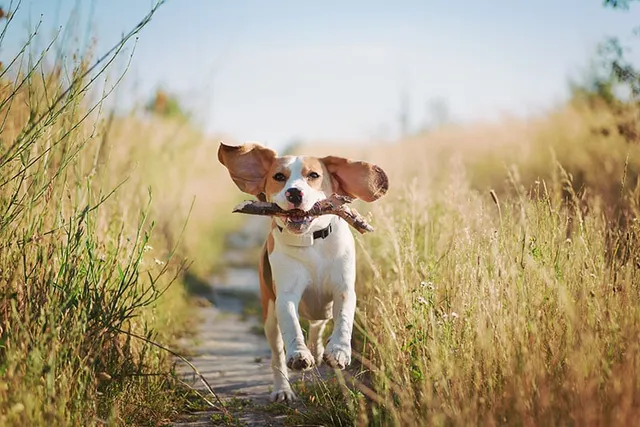
The Beagle’s claim to fame is their excellence at hunting rabbits, which goes back hundreds of years. While the UKC classifies the breed as a sighthound, this pup also has a keen sense of smell. That makes them ideal for individuals hunting on foot. Americans enthusiastically accepted the breed when the dogs arrived stateside. It even ranks number eight on the AKC’s most popular breeds despite their loud voices.
9. Bloodhound

| Origin: | Ancient Mediterranean area |
| AKC Group: | Hound |
| UKC Group: | Sighthound |
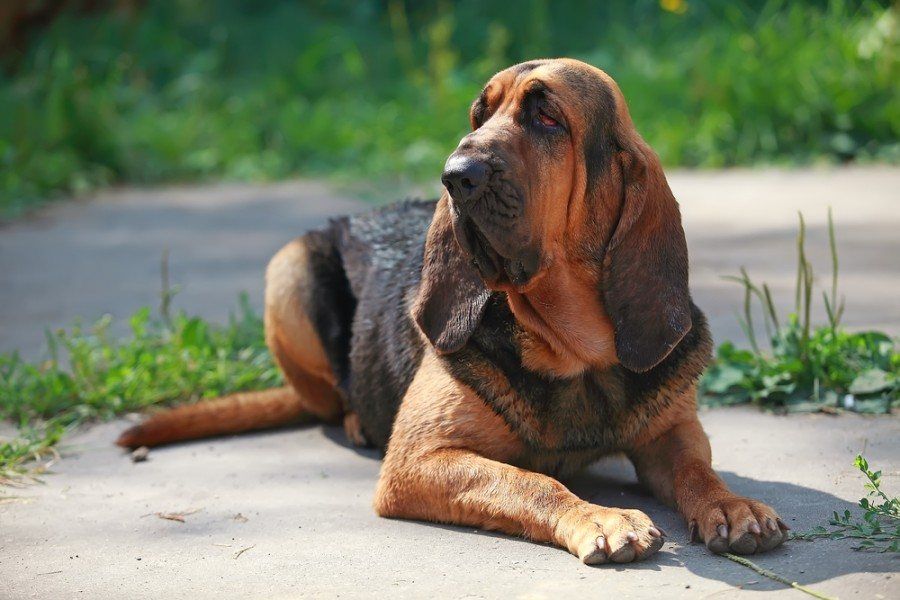
The Bloodhound’s sense of smell is legendary. That makes this pup a perfect choice for following the scent to its source. Their bark comes in handy for the same reason as for many of our entries. It allows humans to track their dogs as they independently pursue their tasks. They are very vocal animals, but interestingly, they aren’t overly energetic.
10. Bluetick Coonhound

| Origin: | United States |
| AKC Group: | Hound |
| UKC Group: | Sighthound |
Like our previous entry, the Bluetick Coonhound is all about following a scent. This breed’s quarry is raccoons and other medium-sized game. It’s worth noting that many of these animals are crepuscular or nocturnal. A loud voice is critical during hunting, and these dogs are tireless in their pursuit. They get along with other canines since people often use them in groups, and barking seems to keep the team together.
11. Dachshund

| Origin: | Germany |
| AKC Group: | Hound |
| UKC Group: | Sighthound |
Few dogs can match the incredible bravery and courage of the Dachshund. How else do you describe a dog hunting badgers, sometimes twice their size? These animals aren’t friendly creatures, especially when cornered. The dog’s small size is an asset, a condition caused by a genetic mutation. It allows them to enter their dens. Undoubtedly, their bark was as big as their bite to survive this encounter.
12. English Foxhound

| Origin: | England |
| AKC Group: | Hound |
| UKC Group: | Sighthound |
The English Foxhound filled in as a scent hound for medium and large game. Of course, the common association is the prey that gives these pups their name. This dog is the ultimate team player. They get along with other hounds, whether on the hunt or not. They’re affectionate with their families and love the kids. However, they are high-energy and quite vocal.
13. Norwegian Elkhound

| Origin: | Norway |
| AKC Group: | Hound |
| UKC Group: | Ancient Breed |
The name of the Norwegian Elkhound speaks of this dog’s job and their quarry. Barking keeps them in touch with their human companions. The UKC’s designation recognizes this breed’s ancient origins. They are related to one of 13–16 breeds scientists classify as the oldest canine breeds. Nevertheless, they are hounds at heart and integral to hunting.
14. American Eskimo Dog

| Origin: | United States |
| AKC Group: | Non-Sporting |
| UKC Group: | Ancient Breed |
The American Eskimo Dog is another example of the spitz-like breeds of this ancient origin. This pup’s name is misleading. The main influencers developing these canines were Germans. They also worked as circus performers, which couldn’t be further from what their name suggests. They are intelligent animals that their work demands. That also included barking on cue during their shows.
15. Cairn Terrier

| Origin: | Scotland |
| AKC Group: | Terrier |
| UKC Group: | Terrier |
The Cairn Terrier is probably most known for the breed’s role in the movie The Wizard of Oz. Nonetheless, their role before hitting Hollywood was a ratter scurrying around the cairns that provided hiding places for rodents. Barking let their human handlers know they found their quarry
16. Miniature Schnauzer

| Origin: | Germany |
| AKC Group: | Terrier |
| UKC Group: | Terrier |
The Miniature Schnauzer also had the seemingly undignified role as a ratter. This breed is a selectively bred dog from the larger Standard Schnauzer and others. They differ from other terriers because of their origin, but they have just as big of a bark.
17. West Highland White Terrier

| Origin: | Scotland |
| AKC Group: | Terrier |
| UKC Group: | Terrier |
The West Highland White Terrier embodies the personality and traits of their group. The breed is one example of many terriers developed in the British Isles. They had similar roles as ratters. Their history is unclear, with many crossings occurring between the various breeds. This pup stands out for its happy expression that can’t help but make you smile.
18. Chihuahua

| Origin: | Mexico |
| AKC Group: | Toy Dog |
| UKC Group: | Companion |
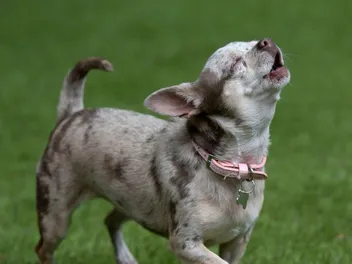
The bark of the Chihuahua seems comical because of their size. Scientists theorize these pups make their presence known because they may feel dissed because of their stature. What they lack in size, they make up with their boisterous nature. They are wary of strangers and protective of their owners, which fuels this fire. However, there may also be a genetic link to their behavior and constant barks.
19. Samoyed

| Origin: | Siberia |
| AKC Group: | Working |
| UKC Group: | Ancient Breed |
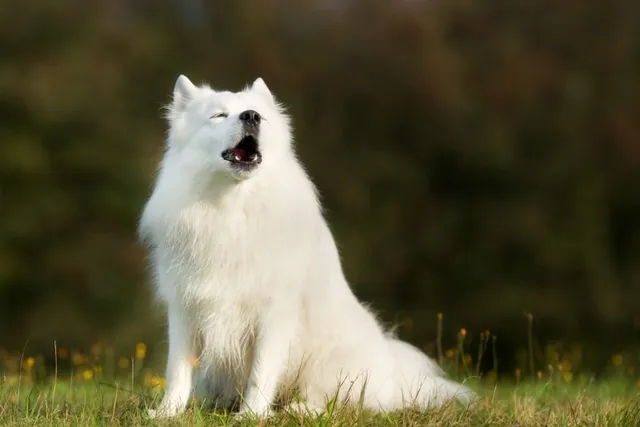
The Samoyed served many roles, given the breed’s remote location. People needed dogs to do several things. They acted as watchdogs, sled dogs, and hunting companions. The first two jobs undoubtedly made them barkers. Sled dogs probably encourage each other and ramp up the energy with their vocalizations. Their shrill barking simply helps to get the job done.
20. Siberian Husky

| Origin: | Siberia |
| AKC Group: | Group |
| UKC Group: | Ancient Breed |
Siberian Huskies have been part of mushing teams for at least 8,000 years. Barking keeps the pups engaged for sometimes strenuous work. However, that’s not the only way these dogs communicate. They also howl and what almost sounds like singing or talking. The breed is also part of the group of ancient canines with a closer relationship to their ancestors.
BONUS: Golden Retriever

| Origin: | Scottish Highlands |
| AKC Group: | Sporting |
| UKC Group: | Gun Dog |
Surprise! People may not place the Golden Retriever on top of the list of the loudest dog breeds. However, this pup takes this title—literally! A pooch named Charlies captured the Guinness World Record for the loudest dog bark on October 20, 2012. This dog let out a whooping bark measuring 113.1 dB at an event celebrating this feat. This decibel equivalent is like listening to a siren or pop concert.

What Science Says About Canine Vocalizations
The common thread we found with loud dog breeds is their job. Barking proved useful and vital for survival. People also encouraged pups to vocalize. Scientists attribute this trait to a product of domestication. Wild canines bark, but it’s usually a juvenile behavior. They must rely on stealth for hunting, as barking without a reason can adversely affect their hunting success.
Researchers have also found a link between responding to vocalizations and the proximity of the breed to their wolf ancestors. Dogs more closely related were more likely to respond to howling in a stressful way compared to modern breeds from the last 200 hundred years.
We also see the absence of vocalizing in dogs bred to be livestock protection dogs. It’s a real-life example of the boy-who-called-wolf story. We ignore frequent barking that means nothing. We heed the warning of a pup that barks only when genuine danger is present. That explains the difference between herding dogs and guardians. The latter vocalizes often, whereas the latter does not.

Conclusion
Barking has a genetic component nurtured by the breed’s original role. If vocalizing helped the animal, people encouraged it, and it eventually became hardwired into the dog’s DNA. However, there is also an environmental factor. Puppies will bark, and if the owners don’t curb this undesirable behavior, they will continue to vocalize, regardless if it’s wanted or not.
The takeaway is that owners should research the breed. Knowing the challenges ahead of time can help you make better choices for training and socialization. It’ll ensure a better fit and quality of life for your pet.
Sources
Featured Image Credit: Degtyaryov Andrey, Shutterstock
Expert dog care, straight to your inbox
Vet-reviewed advice, training tips, and the best of Dogster. Free, and you can unsubscribe anytime.
By signing up, you agree to our Terms & Conditions and Privacy & Cookies Policy.
Since 2009, Chris has written on a variety of topics. Her motto with all of her writing is “science-based writing nurtured by education and critical thinking.” She specializes in scientific topics, with a special love for health and environmental topics, and of course, pets of all shapes and sizes.
Chris lives happily with her husband and three cats in the land of 10,000 lakes, writing, wining, and boating as much as she can. She and her husband, Norm, were awarded the State of Kentucky Colonel Honor for their restoration work at Mammoth Cave National Park.
Join the conversation
Ask a question, share your story, or send private feedback.