As strange as it sounds, some dog breeds have beards or mustaches. Their comical bearded snouts are a beloved characteristic and are usually part of the breed standard. There are so many bearded dogs, each with a different size, coat type, history, and temperament. These bearded pups have a fascinating history and facts, making them the popular dogs we know today.
Let’s dive right into these dog breeds with beards and mustaches.

The 10 Dog Breeds with Beards & Mustaches
1. Miniature Schnauzer
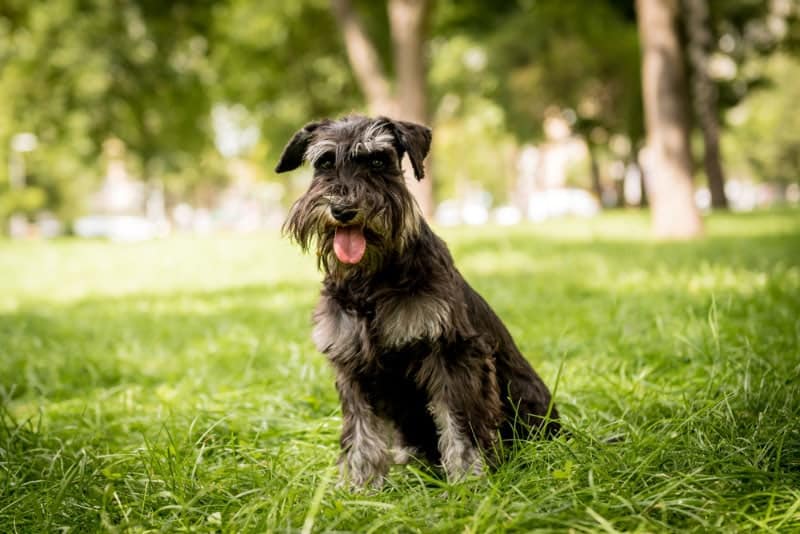
| Origin: | Germany |
| Lifespan: | 12 to 15 years |
| Height: | 12 to 14 inches |
The Miniature Schnauzer is one of the most recognizable dogs with beards. They are a small dog breed that stands at about 13 inches tall and can weigh up to 15 pounds. Miniature Schnauzers have stocky bodies, wiry coats, and bearded muzzles that give them their signature appearance. Their bearded faces can make it appear as if they have human-like expressions, which is what many people love about the breed.
Miniature Schnauzers are a popular member of the Terrier group and originate from Germany. Their rich history dates back to the 15th century when they were bred to hunt vermin (such as rats) in barnyards. Old German farmers were responsible for breeding the standard-sized Schnauzer to the miniature size.
2. Scottish Terrier
| Origin: | Scotland |
| Lifespan: | 12 to 14 years |
| Height: | 8 to 10 inches |
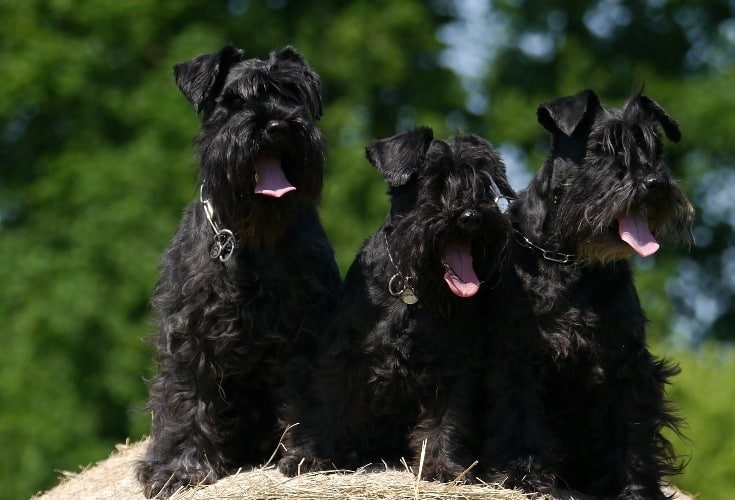
Scottish Terriers or Aberdeen Terriers are spirited dogs originating from Scotland, hence their name. These dogs are small at only 10 inches tall and have distinctive features that set them apart from other Terrier breeds. Scottish Terriers have erect ears, long wiry coats with thick beards framing their muzzles.
They are one of the five terrier breeds that originate from Scotland, specifically the Scottish Highlands where they were used to hunt vermin. Their ancestry dates back to the 1800s, making them the oldest of the Highland Terrier breeds.
Despite the breed’s beginnings as a farm dog, Scottish Terriers were associated with royalty and given as gifts by England’s King James I during the 17th century. Scottish Terriers were imported into America in the 1880s but only became popular in the 1930s.
3. Bearded Collie
| Origin: | Scotland |
| Lifespan: | 12 to 14 years |
| Height: | 20 to 22 inches |
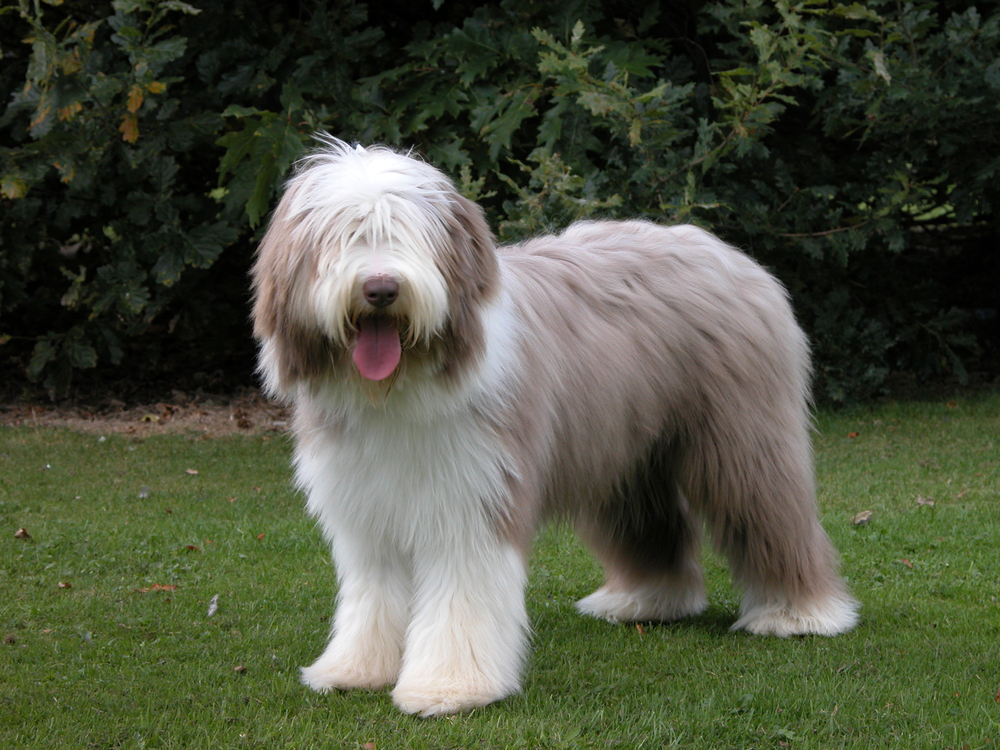
The Bearded Collie, nicknamed “Beardie”, is a type of herding dog breed from Scotland. They are recognized by their incredibly long coats and mustachioed snouts. Bearded Collies are highly intelligent working dogs with origins as sheep herders. They are one of the oldest herding dog breeds and are believed to have been around since the 1500s.
The exact origins of Bearded Collies are murky, but they likely descended from Polish lowland sheepdogs. These shaggy dogs are still used for working purposes, but they are commonly kept as family pets, too.
4. Yorkshire Terrier
| Origin: | Northern England |
| Lifespan: | 12 to 15 years |
| Height: | 7 to 8 inches |
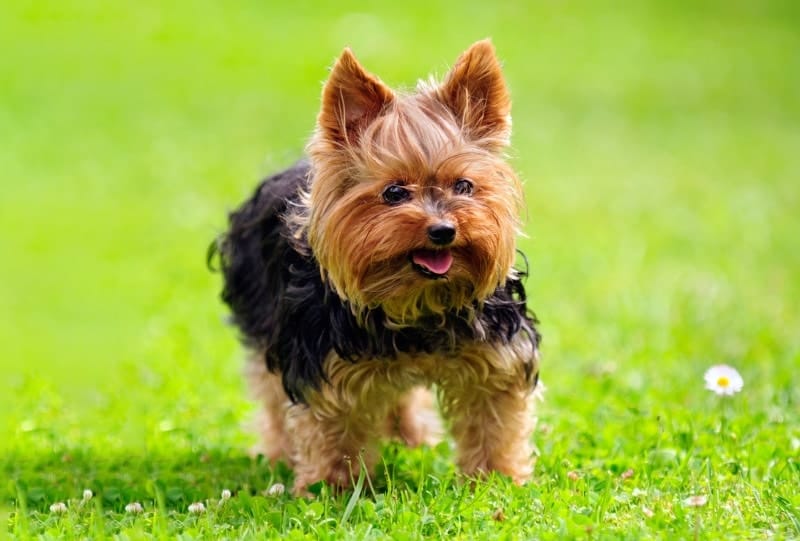
The dainty Yorkshire Terrier or “Yorkie” for short is a small dog breed originating from Yorkshire, England. Yorkshire Terriers are known for their long, silky coats that are hypoallergenic. One of the breed’s most adorable features happens to be their silky mustached muzzles. Yorkshire Terrier owners usually get their Yorkies’ mustaches trimmed to keep them looking neat.
This breed’s history has roots in Scotland, as the now-extinct Clydesdale Terrier paved the way for the Yorkshire Terrier’s existence. The Clydesdale Terrier or Paisley Terrier was the show dog version of the Skye Terrier and an ancestor of Yorkshire Terriers.
Scottish weavers were the ones to develop Yorkshire Terriers by crossing different Terrier breeds. At first, the breed was grouped as a broken-haired Scottish Terrier. They received the name “Yorkshire Terrier” in 1874 around the same time they became popular in America.
5. Affenpinscher
| Origin: | Germany |
| Lifespan: | 12 to 15 years |
| Height: | 9 to 12 inches |
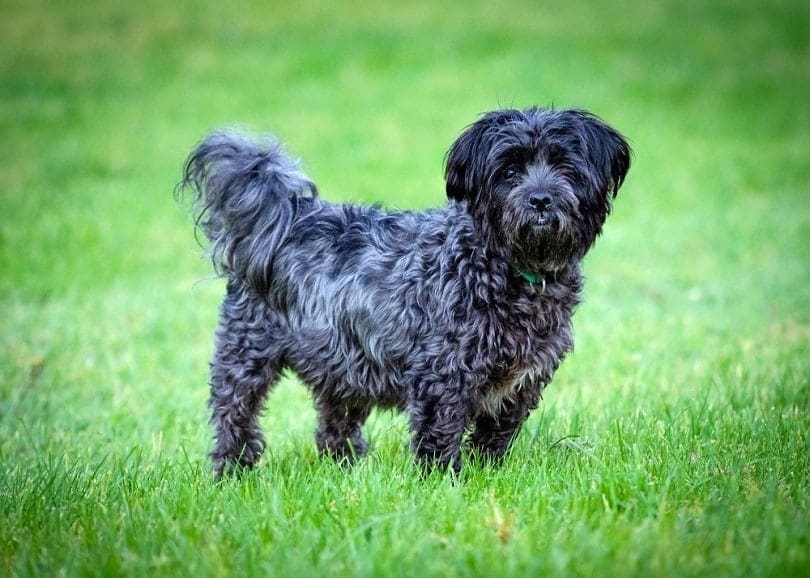
The Affenpinscher are small dogs with beards with an unusual appearance. Affenpinschers have a monkey-like face with a long mustache framing their short snouts. The French have described the breed as a “mustached little devil” because of their appearance and behavior.
Their history isn’t well-documented, so there has been a lot of controversy over the breed’s exact origins. A popular theory is that Affenpinschers likely descended from Schooshundrassen, a type of lapdog. This is based on the fact that modern-day Affenpinschers share a resemblance to Schooshundrassen.
Another theory suggests that they are a cross between the German Pinscher, Miniature Schnauzer, and Pug. What we do know is that Affenpinschers likely descended from rough-coated ratter dog breeds.
6. Sealyham Terrier
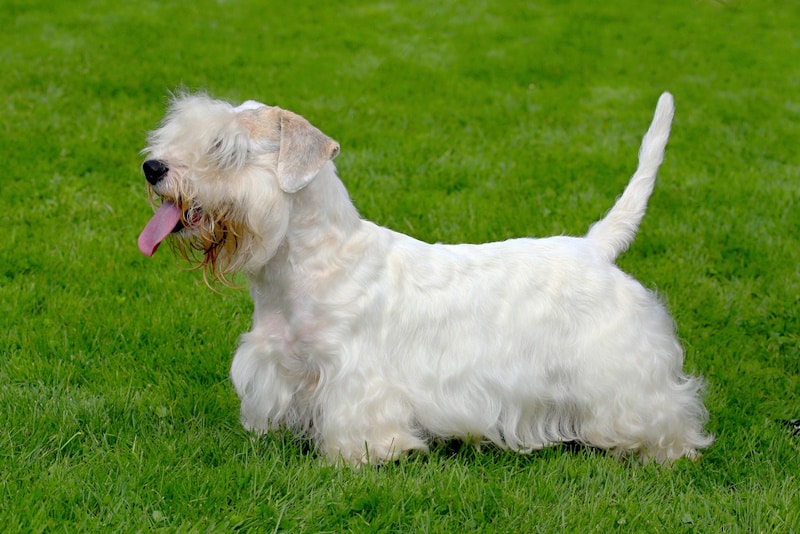
| Origin: | Wales |
| Lifespan: | 12 to 14 years |
| Height: | 10 to 12 inches |
Sealyham Terriers are rare working dogs that originate from Wales. They are medium-sized Terriers recognized by their white coat, rectangular bodies, and thick wire coat. Sealyham Terriers have earned a place on this list because of their bushy beards that are longer than the rest of their coats.
The Sealyhams Terriers’ history can be traced back to the mid-to-late 19th century. They were developed in Pembrokeshire by Captain John Edwards in the Sealyham House. Back then, Sealyham Terriers were used to hunt vermin, such as badgers. It is believed that the Wire Fox Terrier, Welsh Corgi, and the extinct English White Terrier had a role in the breed’s development.
7. Wire Fox Terrier
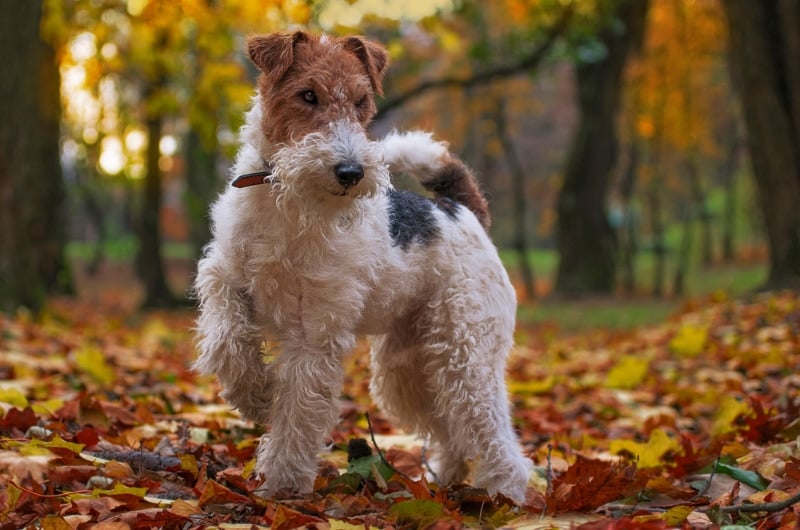
| Origin: | England |
| Lifespan: | 12 to 15 years |
| Height: | 13 to 16 inches |
The Wire Fox Terrier is a type of English hunting and tracking dog. These dogs have a show-worthy appearance with sturdy bodies, rectangular faces, and bearded faces. Wire Fox Terriers are usually groomed to have more hair along their snouts and legs than the rest of their body, which accentuates their beards. Rough-coated working dog breeds from Wales are believed to have contributed to the Wire Fox Terriers’ appearance.
The origins of the Wire Fox Terriers began during the 1700s when British fox hunting was popular. Their job was to drive the foxes from their dens so that horsemen could begin hunting them. Wire Fox Terriers were also used as ratters because of their excellent hunting and tracking abilities.
8. Brussels Griffon
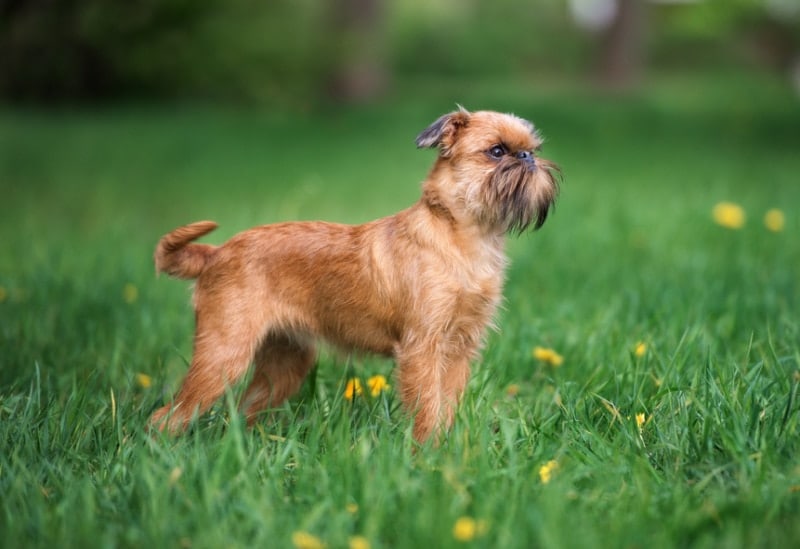
| Origin: | Belgium |
| Lifespan: | 12 to 15 years |
| Height: | 7 to 10 inches |
The Brussels Griffon is a small dog breed from Brussels, Belgium. Ancestors of the breed have been around since the 19th century and would hunt vermin.
At first glance, you might mistake the Brussels Griffon for a similar breed, the Affenpinscher. However, the Brussels Griffon is smaller and generally has a more pronounced beard on their flat snouts. It is believed that Affenpinscher-type dogs, known as Griffon’s d’Ecuries, were used to develop the Brussels Griffon.
Although Brussels Griffons are commonly kept as pets nowadays, they were originally used as ratters during the 1800s. A few decades later during the 1870s, Brussel Griffons became associated with royalty, and the breed was refined.
9. Shih Tzu
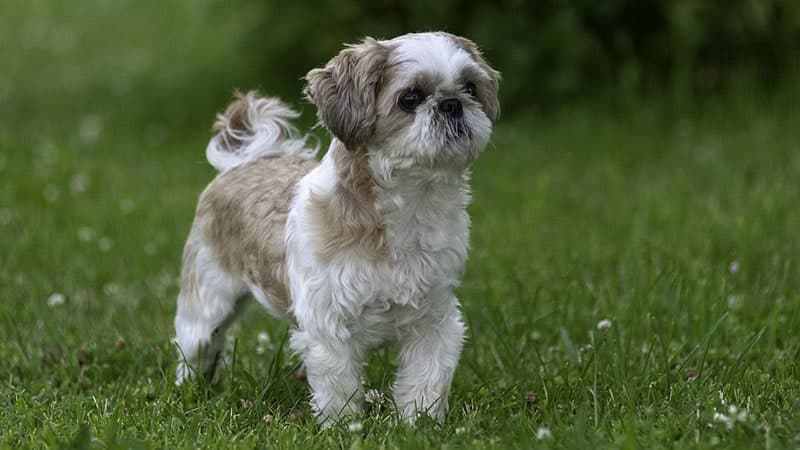
| Origin: | Tibet |
| Lifespan: | 10 to 16 years |
| Height: | 13 to 15 inches |
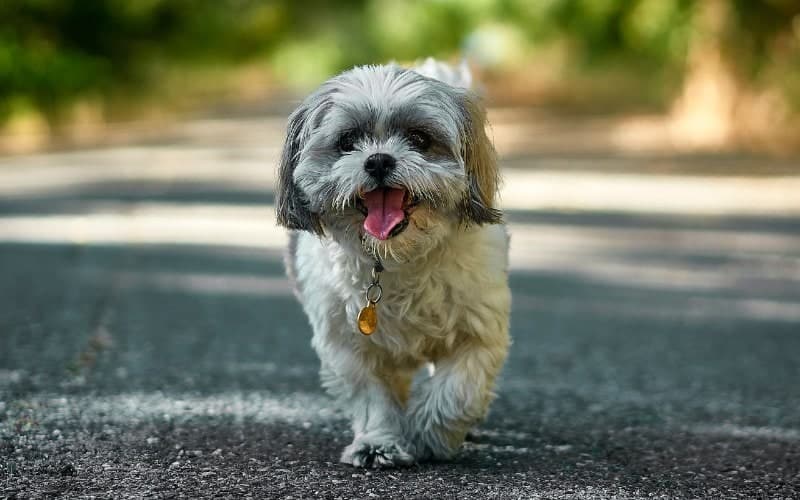
The Shih Tzu is a toy dog breed known for their luxurious coats and adorable bearded snouts. Shih Tzus are theorized to originate from Tibet and descend from Tibetan bearded dog breeds, like the Lhasa Apso. Their name translated to “little lion”, as they were associated with the Tibetan Buddhist God of Learning. However, this name also fits their appearance well.
These dogs have an ancient history throughout several Chinese dynasties and ancestors of the breed date back a thousand years ago. The Shih Tzu’s modern-day appearance is attributed to the Chinese who bred Pekingese or Pugs to the dogs Tibet sent as gifts.
Shih Tzus nearly went extinct around the 20th century, but efforts were made to increase the breed’s numbers. Nearly all modern Shih Tzus can be traced back to the 14 dogs that saved the breed from possible extinction.
10. Lhasa Apso
| Origin: | Tibet |
| Lifespan: | 12 to 15 years |
| Height: | 9 to 11 inches |
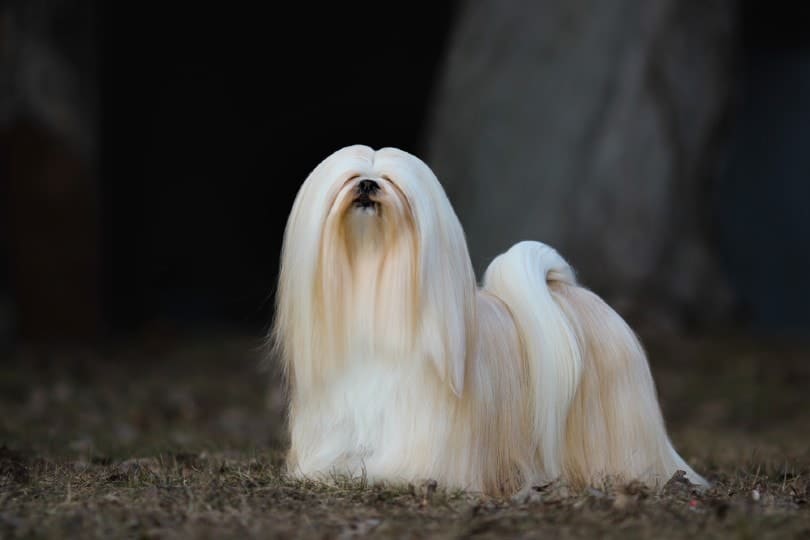
Lhasa Apsos are one of the oldest dog breeds in the world and have possibly been around since 800 B.C. These small dogs only stand between 9 to 11 inches tall, but their coat can make them appear larger than they actually are.
They originate from Tibet where they were used as watchdogs in the homes of Buddhist monasteries and Tibetan nobilities. Their name can be translated to “bearded lion dogs” because of their bearded faces and fluffy coats that resemble a lion’s mane. These small dogs stand about 11 inches tall.
It took centuries before the Lhasa Apso finally appeared in the United States after being gifted to a couple in New Jersey. Lhasa Apsos are also precursors to several popular dog breeds, such as the Shih Tzu.

Conclusion
Various bearded dog breeds are available in all shapes and sizes. Most have an ancient history and have been around for over a thousand years. Their intriguing history and unique appearances have likely kept these dogs with mustaches so popular throughout history.
Featured Image Credit: Nikolay Tchaouchev, Unsplash
 The 10 Dog Breeds with Beards & Mustaches