Get

In Your Inbox

Dogster is reader-supported. When you buy via links on our site, we may earn an affiliate commission at no cost to you. Learn more.

Turning My Messy Drinker Into a Self-Watering Masterpiece (with Video)

The finished product: Dr Karyn's self-watering planter

Hi, I’m Dr. Karyn! Read my introduction to learn more about me and my five funny dogs, Poppy, Bailey, Kodah, Ned, and Fred.

Kodah is a really messy drinker. When he quenches his thirst, we feel like we should start building an ark. A little while back we invested in a couple of ‘spillproof’ water bowls, and they worked…for a few weeks. Somehow, Kodah worked out how to push the floating level down, allowing him to make just as much of a mess as he used to. Which got me thinking that he must be doing it on purpose! Then I spotted something online that I just had to try for myself. It wasn’t going to stop the spills, but it was going to put them to good use!
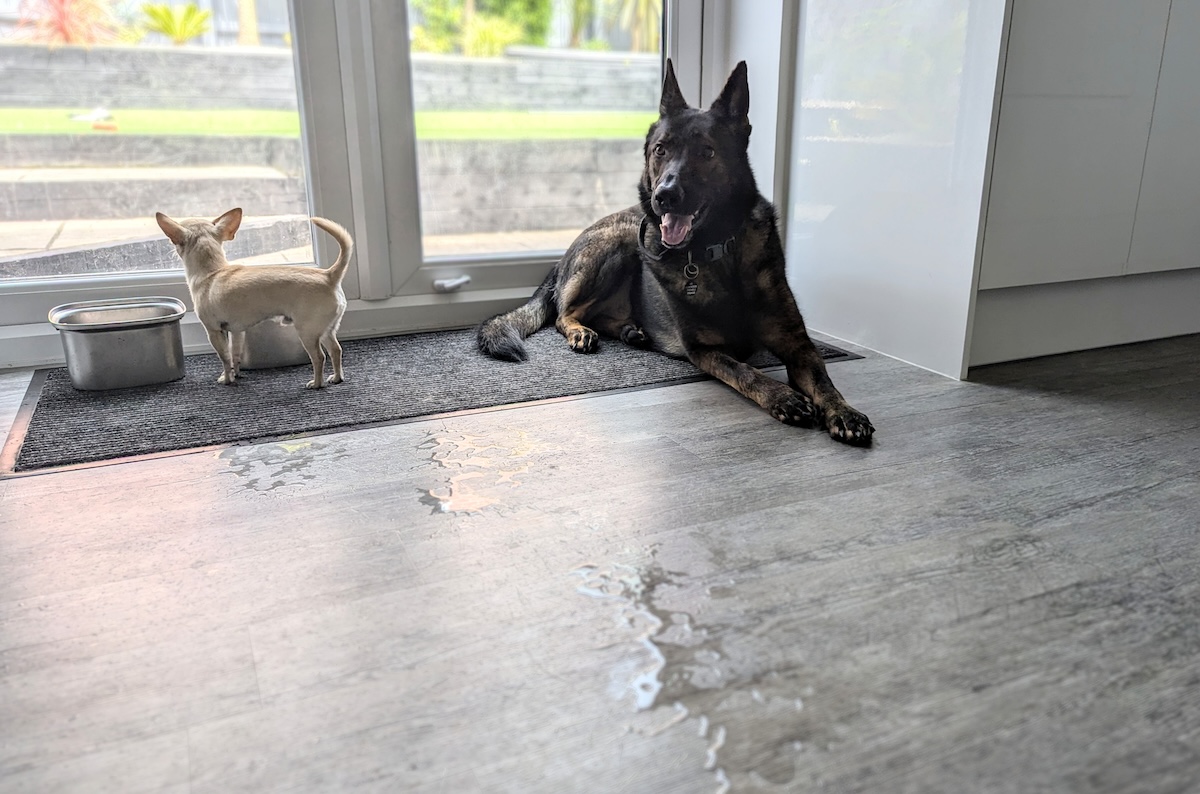

Kodah admiring his sloppy handiwork.

divider dog paws 3 oct 2024

Water Bowl Planter!

A water bowl planter was right up my alley, and if I’m going to make it, I’m going to share the process with you.

The great thing about this little project is that you may already have most of the things you need at home, and you can make it to whatever specifications you want.

Here’s what you’ll need:

  • Water bowl (ceramic or stainless steel)
  • Dish, bowl, tray, or saucer to rest the bowl in
  • Plant pot large enough to allow plenty of planting space around the bowl
  • Compost/potting mix
  • Decorative stones/pebbles
  • Hardy, non-toxic plants

Plant choice

Succulents and cacti are usually non-toxic to dogs, but you need to make sure they have no sharp points or spines, and you should double check individual plant species to be sure. I am using Sempervivum and Delosperma species, both of which are non-toxic to dogs.

Ideally, you want a dish, bowl, or tray that is just large enough to just fit your water bowl in. I was using a garden sieve that was quite a bit larger than my bowl, but I had a little trick up my sleeve to adapt this, which I will talk about later. I wanted to use the sieve as it allowed for more drainage, so I wouldn’t end up with a swamp beneath the water bowl.
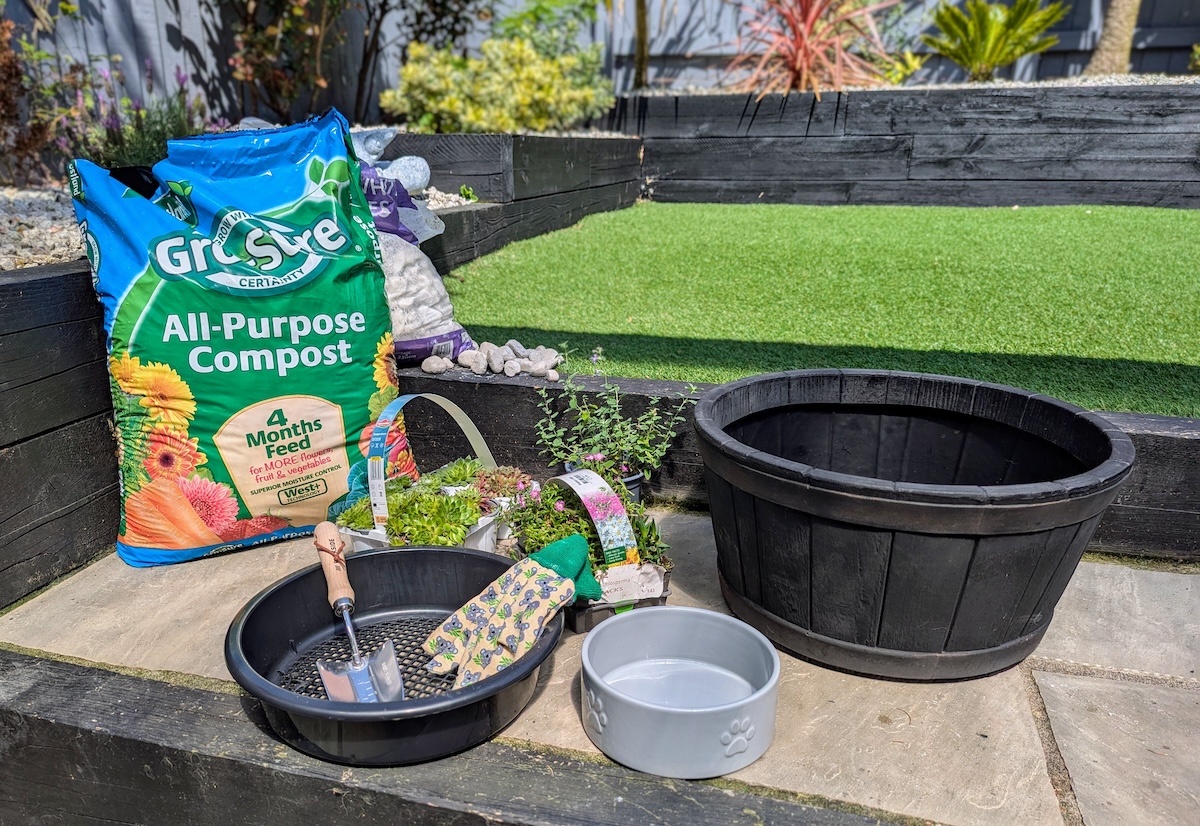
My materials.
My materials.

The Process

I started with a layer of pebbles on the bottom of the pot to help with drainage. I then filled the pot with my compost mix, patting it down to get the right height. You want the top of the water bowl to be level with, or slightly lower than, the edge of the pot. I placed the sieve and bowl into the pot – I placed mine off center to allow for some larger plants – adding a small amount of potting mix inside the sieve, and a layer that reaches the top of the sieve around the outside. The water bowl will get quite messy, but we’ll clean it at the end.

Now it’s time to place our plants and decorative pebbles. Succulents tend to grow and spread quite quickly, so leave plenty of space.

If you have a well-matched bowl and ‘under bowl’, you should be able to lift your water bowl out quite easily to clean it, with very little rock fall.
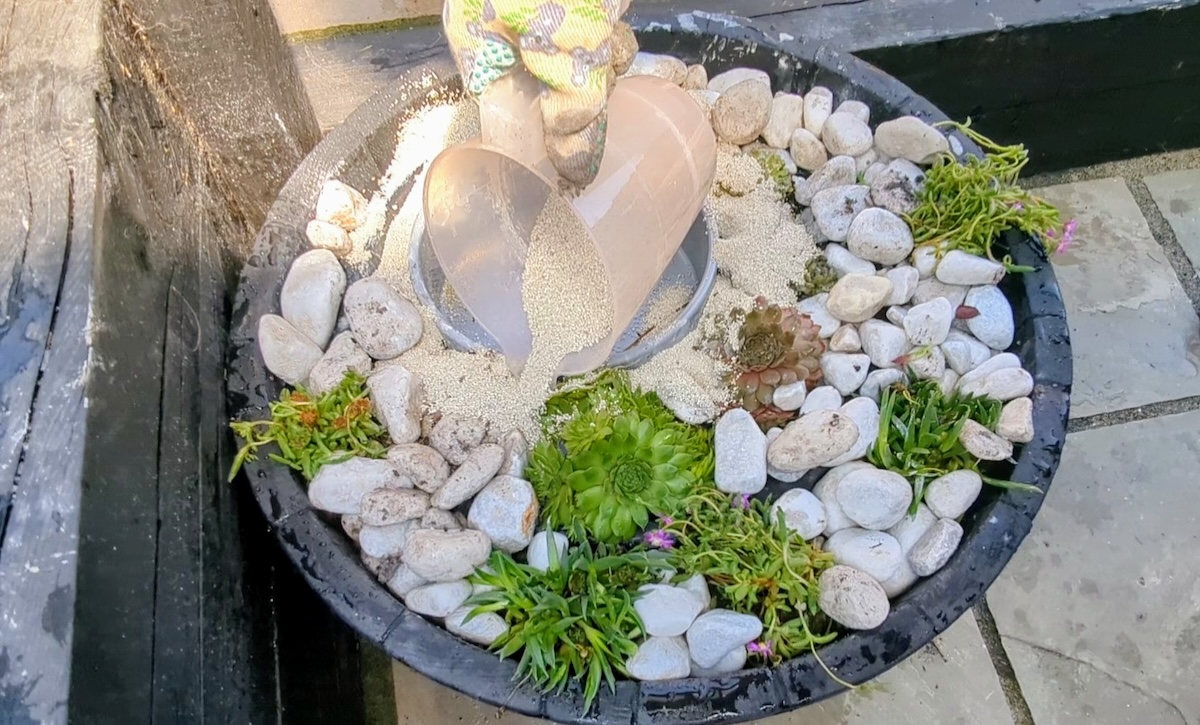
Using the cat litter 'cement'.
Using the cat litter ‘cement’.

Because I have a large gap, I am using a little secret weapon in the form of clumping clay cat litter. This was a bit of an improvisation, I will admit! But it worked really well to bind my pebbles together, without risking toxicity to my plants or my pet! I washed, watered, and wet down the pebbles, plants, and litter, and allowed this to all settle for about an hour.

I was then able to carefully lift my water bowl without the soil, plants, and pebbles collapsing into the space left behind.

The Result

With a clean bowl and some fresh water, my ‘self-watering’ planter looks fantastic, and keeps Kodah’s watery mess contained. I love it!

And I even created one for the cats using a couple of old dog bowls, some succulents, and a catnip plant!

Cyril is so impressed that he had to lie down.

But Beware!

If your dog likes to chew stones or eat plants, this isn’t going to be a good option for you. Even if you’re using dog-safe plant varieties, there are very few plants that won’t give your dog an upset stomach if they eat a lot of them.
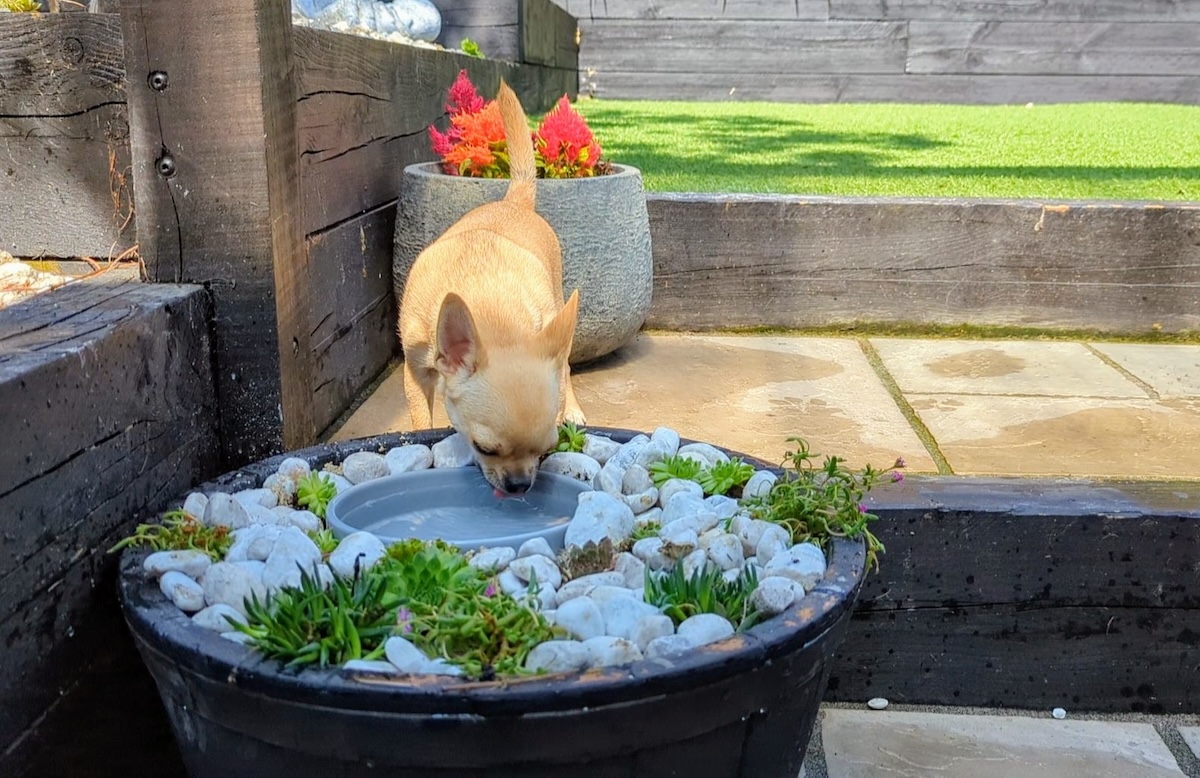
Fred is also impressed with the new water feature.

Happy Planting!

Dr. Karyn paw signature

This article is a part of Dr. Karyn's series with her five dogs.

Want content like this delivered to you?

Sign Up For Our Newsletter

News, insights, expert advice, and everything dog

* By submitting, you agree to our Terms & Conditions and Privacy & Cookies Policy.


How useful was this post?

Click on a star to rate (you can leave written feedback after clicking submit)

Help us improve Dogster for pet parents!

Your feedback really matters.

What did you like about this post? Also how can we improve it?

Join the conversation

Leave a Reply

You’re very welcome to leave a comment or question. Please know that all comments must meet our community guidelines, and your email address will NOT be published. Let’s have a positive and constructive conversation.


Talk With A Vet Online

Peace of mind,
anywhere, anytime

Affordable vet advice

Labradoodle vs. Bernedoodle: The Key Differences (With Info & Pictures)

Dog breeds mixed with Poodles have become trendy over the years and have been made famous by celebrities that own them. These crossbreeds...

Airedale Pitbull Mix: Info, Pictures, Care Guide & More

An Airedale Pitbull mix’s look is often unpredictable, but there are plenty of shared traits between their parent breeds that you can expect...

Dog Agility: Basics & Benefits of This Amazing Sport

Dog agility is probably the most well known dog sport, but how much do you know about it? Of course, it is clear...

How Far Can Dogs Smell? Average & Max Distance

Dogs have a powerful sense of smell that is estimated to be 10,000 to 100,000 times better than that of a human. This...

More related

The Truth About Castor Oil and Dogs: What Vets Need You to Know

Castor oil has been used for thousands of years in traditional medicine, including as a laxative, even for pets. And while it might...

Red vs Apricot Poodle: The Differences Explained (With Pictures)

Poodles come in various colors, each of which has varying levels of rarity. If you are considering bringing a Poodle into your home...

The Harsh Reality of Life with 10 Pets Part 1: Dogs Don’t Take Days Off

Hi, I’m Dr. Karyn! Read my introduction to learn more about me and my five funny dogs, Poppy, Bailey, Kodah, Ned, and Fred....

Can Dogs Be Left or Right Pawed? Vet-Approved Facts & Explanation

Everyone knows humans can be right-handed or left-handed, but have you ever wondered the same about your dog? As it turns out, some...

Keep reading

Can Dogs Eat Vanilla Wafers? Vet-Reviewed Facts & FAQ

Vanilla wafers are not toxic to dogs, although they certainly aren’t the healthiest. Therefore, they aren’t a good option as a treat or snack. If your dog accidentally eats a vanilla wafer, there isn’t much to be concerned about, though....

Can Dogs Eat_vanilla wafers

Can Dogs Eat Parsnips? Vet-Verified Nutrition Facts, Risks & Serving Tips

Parsnips may have a small fan club. They aren’t as popular as other vegetables in the Apiaceae family, such as carrots and celery. Some think the former are sweeter, but parsnips have a slight edge. Nevertheless, these vegetables pack a...

Dogster-Can-Dogs-Eat-Parsnips

10 Best Puppy Foods for Chihuahuas in 2026 – Reviews & Top Picks

One of the best-known toy breeds, the Chihuahua is a small, energetic dog bursting with personality. Most Chihuahua owners take their dogs everywhere, and they’re ideal “purse” dogs. Chihuahuas have unique energy needs, however. They require a balanced diet for...

two chihuahua puppies eating food from a bowl

Can Dogs Have Almond Milk? Vet-Verified Nutrition & Health Facts

Lactose intolerance is common in adult dogs, so it’s not recommended for them to consume dairy milk. Fortunately, your dog can enjoy many different alternatives, including almond milk, in moderation. In general, almond milk is safe for dogs to drink,...

a glass of Almond milk surrounded with almonds

Abound Dog Food Review 2026: Pros, Cons & Recalls

Review Summary Abound is a relatively new dog food brand that was launched in 2014. This company is owned by Kroger and is marketed as their newest store brand of dog food. Their recipes offer natural ingredients with no corn,...

Dogster_Abound Dog Food Review

Can Dogs Eat Gourds? Vet-Verified Facts & FAQ

Gourds are often used for decorative displays in autumn, both in the home and the garden. They’re all part of the Cucurbita family, which includes pumpkins and squash. Gourds are generally safe for dogs in small quantities. Still, there are...

Can Dogs Eat Gourds

9 Best Elevated Dog Bowls in 2026 – Review & Top Picks

Elevated dog bowls have certainly increased in popularity over the last few years—and why wouldn’t they? They are aesthetically pleasing, they reduce mess, and they improve your dog’s dining experience. If you have your feelers out for an amazing set...

Havanese dog eating from a raised bowl

Can Dogs Eat Sourdough Bread? Vet-Approved Facts & Risks

Sourdough bread is a popular type of bread that many people enjoy. During the pandemic, many people picked up the hobby of breadmaking while they were quarantining at home. If you’re one of those people, then you probably have a...

Can Dogs Eat_sourdough bread