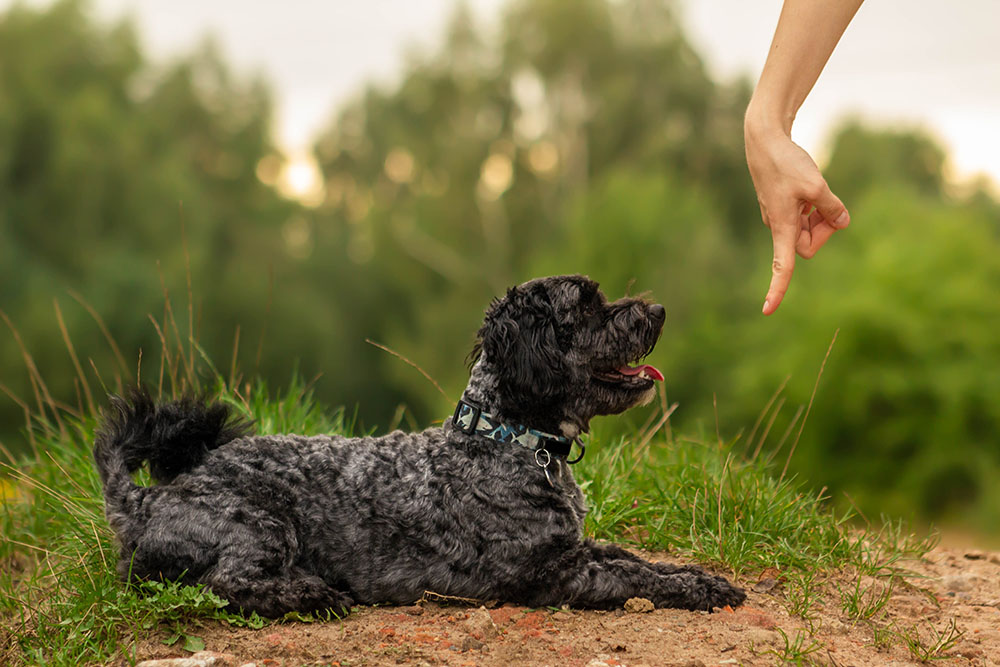
We all know the basic commands for dogs—sit, stay, lie down, heel. Sometimes, the basic commands just aren’t enough, though. There are a lot of situations in which you may wish your dog had a command to let them know the appropriate behavior. The fun thing about training your dog is that you can make their commands whatever you want them to be, so not only can you determine what types of “specialty” commands your dog should know, but you can name them whatever you want, as long as the cue is used consistently and paired with clear, reward-based training. Here are some of our favorites.

The 11 Unique Command Words for Dogs
1. Gentle
Have you ever gone to give your dog a treat, only to end up with your fingers getting nipped? Or maybe your dog is overly excited to meet a new puppy and is handling them a little too roughly? “Gentle” is the perfect command for this type of behavior. It teaches your dog to use a soft mouth and calm body control, even when they’re excited.
For many dogs, the easiest way to teach this command is to offer your dog something of interest to them, but as soon as they react too roughly, pull it back from them and give the command. If you’re offering your dog a treat or a toy and they start jumping or nipping to get to it, they’ll get the idea quickly if you continue to take it back until they calm down enough to gently take the item from you, and then immediately reward the calm, gentle behavior.
2. Ouch
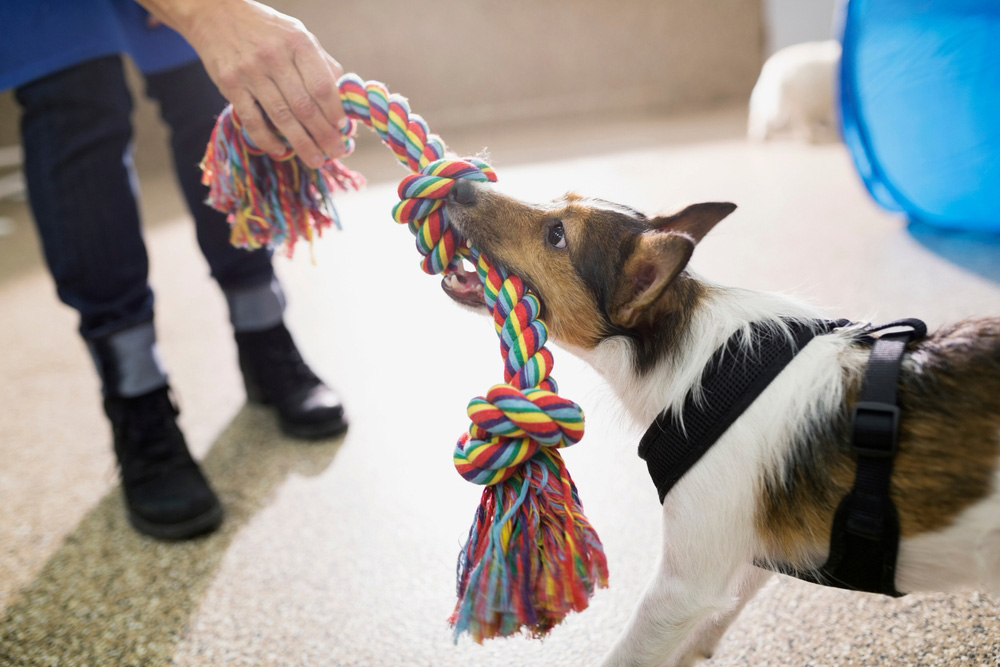
Sometimes we like to roughhouse with our dogs, but dogs often don’t realize that playing with humans should be done a little differently than it is with other dogs. If your dog is overly excited, it’s possible that they’ll play too roughly and bite or scratch you harder than intended. Training your dog “ouch” is a terrific way to let them know immediately that they need to stop what they’re doing and reassess the situation.
When your dog does something too rough, give the “ouch” command, pull away, and pause interaction briefly. If your dog continues to be too excited or rough, it’s a good idea to immediately end the game when you give the command. Over time, your dog will learn that the rough behavior results in the play stopping or ending, which helps teach bite inhibition and appropriate play intensity.
3. Quiet/Hush
There are few things more obnoxious than hearing a doorbell ring on TV and then having to listen to your dog lose their mind for the next 5 minutes. It’s even more obnoxious when there’s someone at your front door, and your dog won’t stop barking while you try to talk to them. Training your dog to “quiet” or “hush” is intended to train your dog to stop making noise, especially if that noise is excessive barking.
It’s easy to want to shout commands at your dog when they’re being loud, but the louder you are, the more likely your dog is to think that you’re joining in on their chorus. The best way to teach this command is to enlist the help of someone to serve as a guest. You can help desensitize your dog to the sound of a doorbell or knock by practicing over and over, but when they bark, give the command to “quiet” or “hush” and reward even brief pauses in barking, and provide positive reinforcement when they respond appropriately. Be patient—this command can take some time to teach!
4. Wait
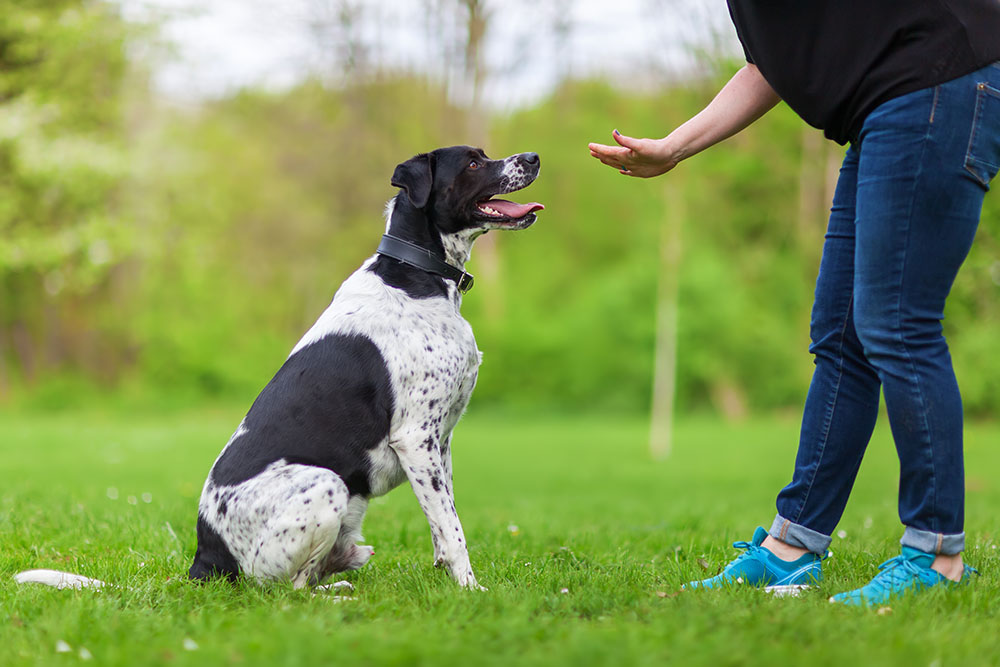
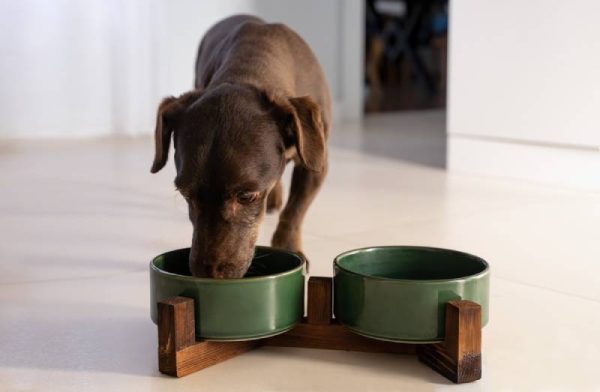
“Wait” can be used when your dog needs to learn not to jump right into something. This can be giving the command when they’re being fed, so they don’t immediately try to grab their food before the bowl is even on the ground, or you can use it when you want your dog to stay away when you open the front door or in a similar situation.
The best way to initially teach this command is to use it when dealing with treats or meals. Offer your dog their food and tell them to “wait.” As soon as your dog attempts to go for the bowl, lift it calmly and pause briefly, then lower it again once your dog shows calm behavior. This is not an appropriate training technique for dogs with resource-guarding issues, though.
You can also do this in a similar way to teaching “quiet” by enlisting the help of a friend. Tell your dog to “wait” and try opening the door. When your dog gets up, close the door calmly, and give the command again. You will likely have to do this many times for your dog to catch on!
5. Settle
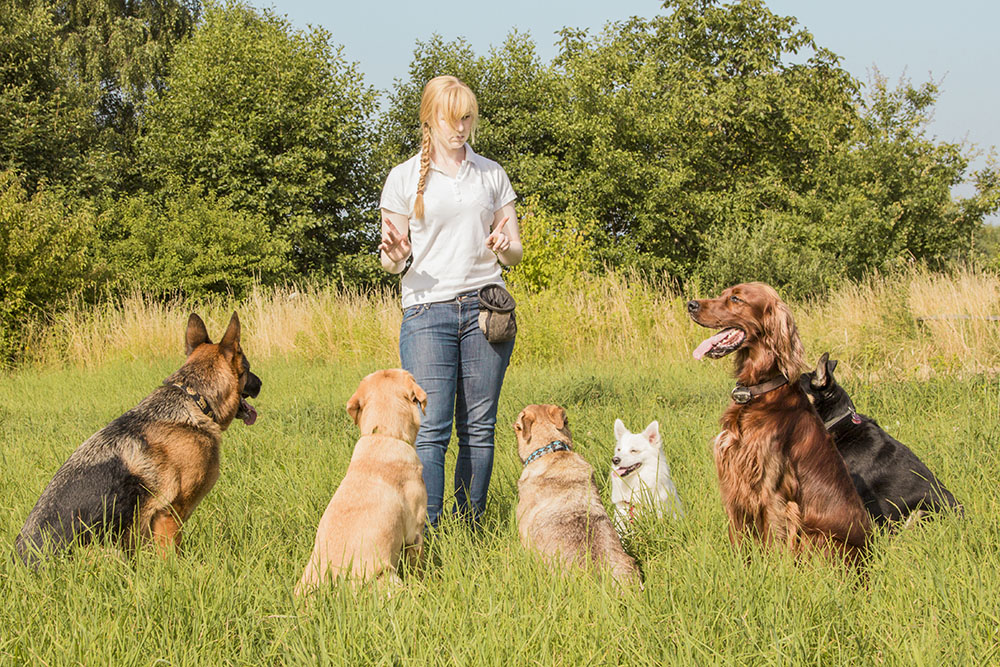
“Settle” is a great command for dogs that sometimes get way too excited and can’t get themselves back under control. If you have a dog that does backflips when they see their leash or at mealtimes, then this command can help encourage calm behavior.
Once again, teaching this command will require you to offer your dog the thing that causes them to become overly excited, give the “settle” command, and pause or remove access briefly if arousal increases. When your dog reacts calmly, make sure to offer plenty of positive reinforcement to solidify their understanding of the command, rewarding relaxed body language and reduced excitement.
6. Back Up
There are a lot of situations in which you might need to get your dog to back up, whether it’s because the situation is dangerous or your dog is simply under your feet. “Back up” is a great command for helping your dog to understand that they need to back away from the situation.
There are two good options for teaching the “back up” command to your dog. The first is to use a treat to lure your dog backward while you give the command, and give them a treat when they step back. You can do this by holding a treat slightly in front of your dog’s nose and moving it slowly toward their chest, which will encourage them to shift their weight backward. As you move the treat back, they’ll either have to back up or turn around. Try to encourage them to back up instead of turning.
The other option for treating this command is simply to give the command while you use gentle body pressure or your movement toward the dog to encourage a step back. While you’re pushing them backward, give the “back up” command and then treat them when they’ve moved back a few inches.
7. Finished/All Gone
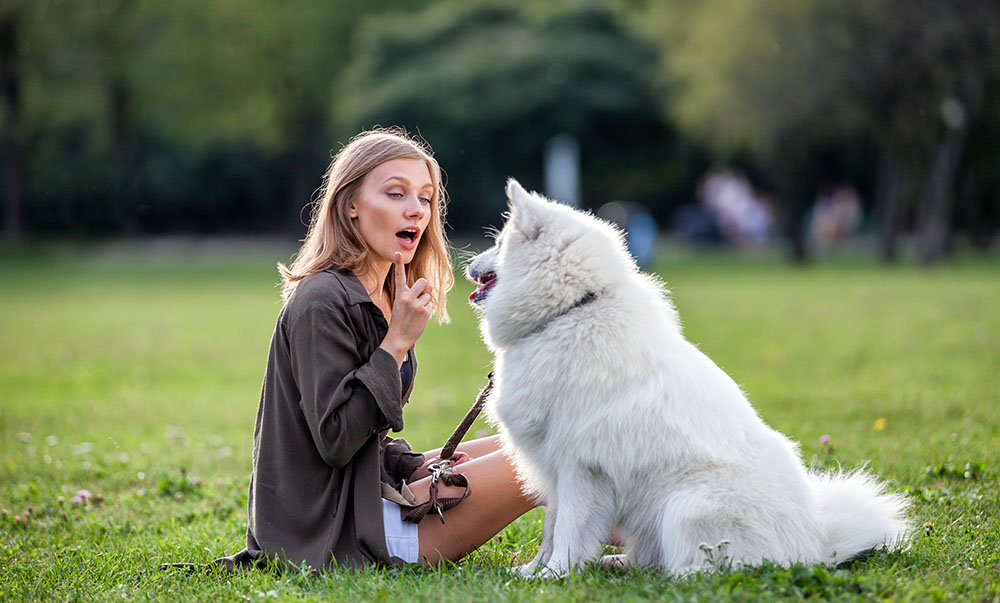
Many dogs take an interest in their owners’ snacks, and the “finished” or “all gone” commands can be used to let them know when the snack is gone and to get them to stop begging. This command is most helpful when paired with training an alternative calm behavior, such as lying down or going to a designated spot.
Give the chosen command and then show your dog your empty hands. Let them sniff them, if necessary, to fully understand that there’s nothing there. The way to reinforce this command is not to provide your dog with a treat when you give the command. They’ll eventually understand that the command means that no snacks are coming their way.
8. No Bite
There are a ton of reasons that you might not want your dog to bite when they play. The “no bite” command is a little different from the “gentle” command because it instructs your dog to specifically stop biting, but it doesn’t necessarily end the game.
When your dog bites or is being too mouthy, give the “no bite” command. Be calm and consistent in how you give this command—it’s extremely important for your dog to understand this command. Initially, you may need to stop the game entirely for your dog to start to understand. Over time, you will be able to give the “no bite” command, but continue to play as your dog learns that you aren’t necessarily trying to stop the game entirely, but that the specific behavior of biting shouldn’t be part of the game.
9. Enough/Stop
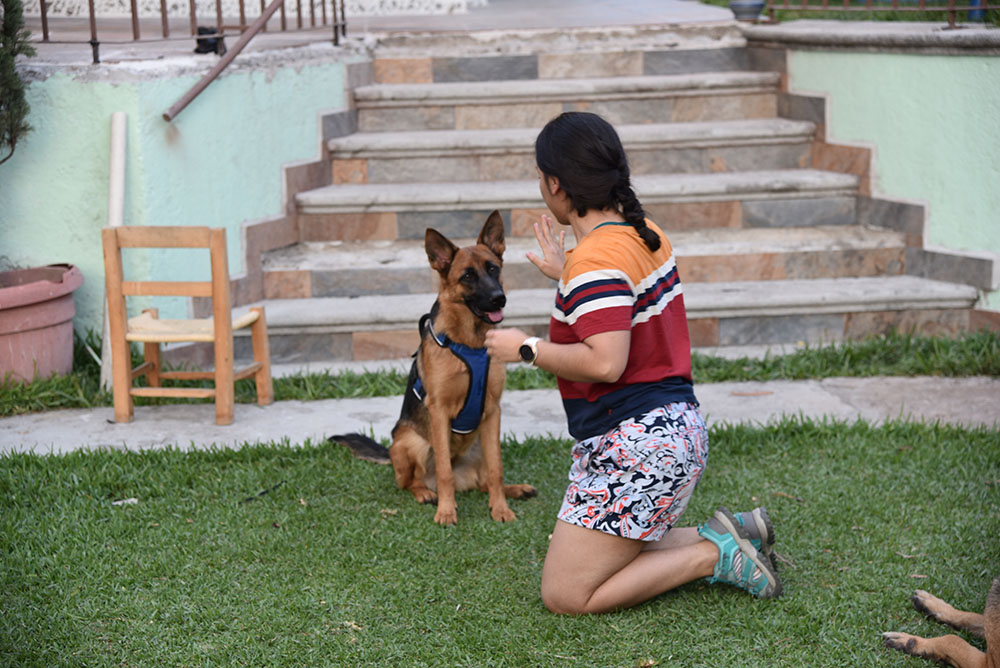
“Enough” or “stop” are good commands if your dog is doing a certain behavior and simply isn’t stopping. This can be things like humping toys or other pets or running laps around the house. Depending on how you choose to use this command, you could also use it in place of “quiet” or “hush” when your dog won’t stop barking.
To teach this command, you’ll need to be willing to use a calm, clear, and consistent voice and not give up on getting your dog to stop the behavior. Give your chosen command to your dog in a neutral or slightly upbeat tone to get their attention. If needed, you may even clap your hands loudly to get their attention. When your dog stops the undesirable behavior, provide them with positive reinforcement verbally and, for food-driven dogs, a treat.
10. Leave It
“Leave it” is a command that is becoming more popular with dog owners, and for good reason. This is an essential command for all dogs to know. You should be able to get your dog out of a potentially dangerous situation with this command. For example, if your dog tends to eat random objects or you drop medication on the floor and your dog goes for it, this command is perfect for this.
To teach “leave it,” you’ll just need some treats and patience. Sit on the floor with your dog and set a treat on the floor with your hand right by it. Give your dog the “leave it” command. When they go for the treat, cover it with your hand and remind them to “leave it.” As your dog begins to understand the command, you’ll be able to move your hand further away from the bait treat without your dog going for it. As your dog begins to leave the bait alone, give them a treat with your other hand so they understand that there is a reward associated with not eating the treat in front of them.
11. Place
Like “leave it,” the “place” command is becoming more popular. This is a good command if you need your dog to simply get out of the way for a little while. “Place” tells your dog that they need to go to a designated spot, which could be their crate, dog bed, or a specific room.
Walk your dog to the specific spot that you’ve chosen for them and tell them to “place.” Give them a treat when they land on the spot. Repeat this over and over, slowly moving further away from the selected spot to encourage your dog to take themselves to the spot, giving positive reinforcement when they do it.

Conclusion
We’re all well acquainted with the typical commands for dogs, but there are so many other commands that can not only make your life easier but also help keep your dog safe. Be patient when teaching your dog new commands, though, because some of these commands may be confusing to learn at first. If you’re dealing with a dog that gets too excited or overstimulated, then it can be even more of a challenge.
Featured Image Credit: Oskar Henig, Shutterstock
 The 11 Unique Command Words for Dogs