How to Train a Newfoundland Dog: 11 Vet-Recommended Tips

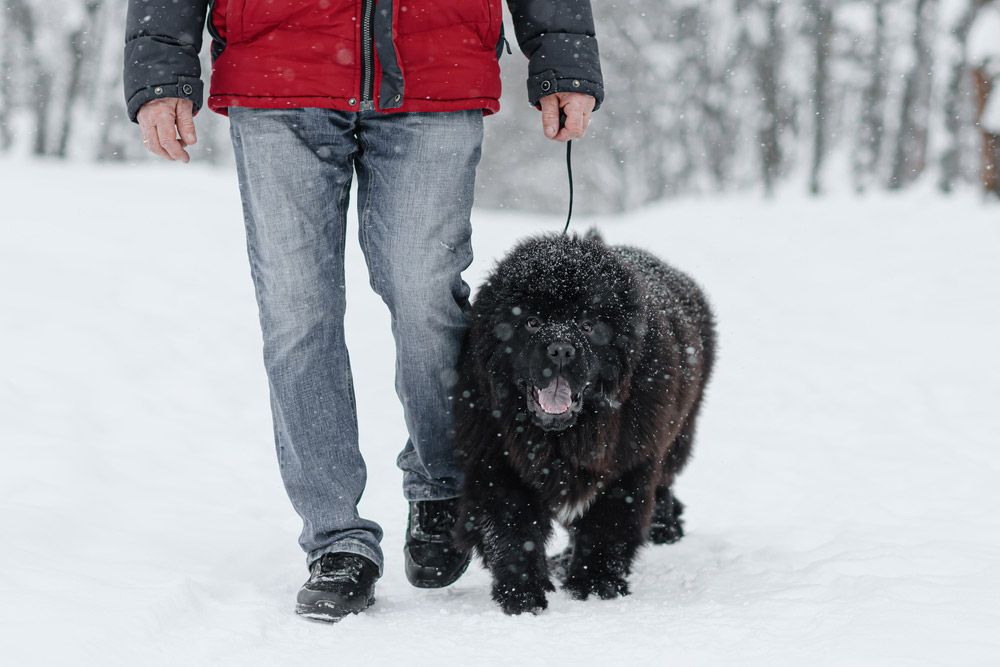
Newfoundlands are large dogs that can challenge even experienced dog owners due to their size and rapid growth rate. However, training these smart dogs is not difficult. If you are thinking about getting one of these dogs but are worried about training them, keep reading for several tips and tricks that you can use to make the process a little easier and improve your chances of success.

Before You Begin
Gather necessary training supplies like treats, a clicker (optional), a leash, and a collar or harness. You can find all these supplies at your local pet store or online. You also need a calm and comfortable environment for training sessions, like an out-of-the-way room, garage, or quiet part of the yard. Ensure that your Newfoundland has had enough exercise and mental stimulation before training to help them focus on you and the training commands.
The 11 Tips on How to Train a Newfoundland Dog
1. Desensitize Them to Touch
Keep in mind that one of the most important and often overlooked training with large dogs is getting them used to being touched. Ideally, you would start this process when they are puppies or as soon as possible. If your pup allows you to check their paws, mouth, ears, etc., your life will be easier once they are fully grown. If your Newfoundland is already fully grown, please make sure you focus on working on them getting used to being touched by pairing it with positive stimuli, such as their favorite treats.
2. Establish Basic Commands
You can also begin gradually introducing some essential obedience commands like “sit,” “stay,” “come,” and “down.” These will help keep your dog safe when you are away from home. Walking on trails and enjoying your local dog parks and dog-friendly areas will also be easier and more fun. Use positive reinforcement by rewarding your Newfoundland with treats and verbal praise when they perform the desired behavior correctly. Be consistent in your commands and hand signals, using the same cues each time so your dog can easily understand the messages that you are trying to convey.

3. Socialize Your Newfoundland
When your dog is still a puppy, introduce them to various people, animals, and environments as often as possible to promote good social skills, and continue to do so as they age. Ensure your Newfoundland puppy has at least the first round of vaccines before introducing them to healthy pets with a complete vaccination schedule.
Once the vaccination schedule has been completed, you can also take your Newfoundland on walks, visit dog parks, go swimming, or enroll them in obedience classes to expose them to different situations. The more they are exposed to a variety of stimuli and situations, the more comfortable they will be in new, strange environments.
4. Train for Loose Leash Walking
Teach your pet to walk on a loose leash without pulling, as this can be a major problem for many owners, especially older people. A Newfoundland is a large dog, so you want to be able to control them without the need for physical strength.
Start in a low-distraction environment, and gradually increase the length of your walks as your dog learns the rules of the game. You can also walk in more crowded environments when your dog is behaving. Use treats and rewards to reinforce the behavior of walking calmly beside you.
Please never use a retractable leash with a Newfoundland, you want a secure and strong leash for these big boys or girls.

5. Train for Recall
Recall is one of the most important behaviors for a dog, especially one this large as this that can unintentionally cause injuries to smaller dogs, kids, etc. who are trying to play with them. Practice the “come” command in a safe, enclosed area where your dog can focus. Use a long leash to maintain control while giving your dog freedom to explore. Reward your Newfoundland with high-value treats every time they respond to a recall, as you really want this behavior to become second nature to them.
6. Practice Patience and Consistency
Newfoundland dogs are known for their calm and gentle nature, but they can be slow learners if their attention is elsewhere or you find it hard to find a quiet area to hold your sessions. Be patient, as it can take several weeks for a dog to learn a new trick, and avoid punishment-based methods, which can make your dog less interested in attending your training sessions. Keep the sessions short, frequent, and consistent in order to maintain your dog’s attention and progress.

7. Teach Proper Social Behavior
Train your Newfoundland to be polite and well-mannered around people and other dogs. Discourage jumping, mouthing, or unwanted behaviors by redirecting their attention and rewarding appropriate behavior.
Also, be a mindful owner, and set your pup up for success by avoiding potential accidents and injuries that they could unintentionally cause on toy or small breed dogs while innocently trying to play with them. Size is important, so always keep a close eye on your Newfoundland interactions.
8. Introduce Distractions Gradually
Once your Newfoundland understands basic commands, gradually introduce distractions during training sessions. Start with mild distractions, and progressively increase their difficulty as your dog learns to ignore them. This training helps your dog learn to focus and obey commands even in challenging situations.

9. Keep Training Sessions Fun and Positive
Make training sessions enjoyable for your Newfoundland by incorporating games, toys, and playtime. Use an upbeat and enthusiastic tone to convey your excitement during training, fostering a stronger bond between you and your dog. It will also help your dog look forward to the next training session and can help speed up learning.
10. Do Advanced Training and Activities
Once your Newfoundland has mastered the basics and you have improved your training skills, you can also consider advanced training, such as agility, water rescue, or therapy dog work. These activities provide mental stimulation and help channel their instincts, which can help them behave better throughout the day.

11. Hire a Professional
Hiring a professional can be a great option if you are struggling to train your dog or it is taking longer than you think it should. A trainer will help not only your dog but also help you to improve the way you communicate with and handle your dog. This should be a no-brainer if you are struggling with a bigger size dog since you want to quickly overcome any hiccups and prevent undesired behaviors from turning into hard-to-break habits. Professional trainers have the experience and skills to train the dog quickly and can provide tips and tricks specific to your pet that can help you get better results at home.

Summary
Training large dogs is vital because they can easily get out of hand as adults. However, starting early with their desensitization to touch and social scenarios by exposing them to as many new people, places, and other animals as possible can help them feel more comfortable in any environment.
Obedience is extra important with large-sized dogs. Start with simple but important commands like “sit,” “stay,” and “come” to help keep everyone safe when you are out walking, and add distractions as your pet gets the hang of following your commands. Above all, be patient and consistent! Don't hesitate to get a professional to advise you, as this can help you better understand and get your pup to the next level.
Featured Image Credit: Anton Pentegov, Shutterstock
Expert dog care, straight to your inbox
News, insights, expert advice, and everything dog.

No spam — unsubscribe anytime.
By signing up, you agree to our Terms & Conditions and Privacy & Cookies Policy.
How useful was this post?
Click a star to rate. You can leave written feedback afterwards. (We read all feedback.)
Dr. Paola Cuevas is our Senior In-House Veterinarian at Dogster and Pangolia. She has over 19 years of experience working with an array of species and loves sharing her knowledge and experience with our readers and aims to provide assistance with any issue presented by your non-human family members. She received her degree from the University of Guadalajara, Mexico.
Her passions are animal welfare and preventive medicine, and has skills in the fields of nutrition, microscopy, clinical pathology, diagnostic imaging, and endoscopy. Paola frequently contributes pet care insight to various media outlets like PetMD, The Daily Record, Parents.com, etc.
Paola is also an animal behaviorist with extensive experience in positive reinforcement animal training.