How to Teach Your Dog to Play Nicely With Other Dogs: 9 Tips & Tricks


Whether your dog is a guard dog or a family house pet, it's important that it gets along with other dogs, especially in public spaces. For example, if you take your dog to the dog park every week, or walk outdoors around your neighborhood, the last thing you need is for your furry friend to randomly get into fights with other dogs.
Not only can it lead to your dog or the other dog getting injured, but in some cases, it can also lead to a lawsuit. So how do you teach your dog to play nicely with other dogs? Let’s discuss.

The Reasons Why Your Dog May Be Antisocial
Every dog has a different personality, which is no different than humans. However, every dog breed does have certain personality characteristics that in many cases, seem to be par for the course when it comes to the dog breed itself.
For example, Labrador retrievers are known to be friendly, sociable, and relatively happy dogs, while dogs such as Dogo Argentino have a bit of a different reputation.
It doesn't mean that Dogo Argentino can't be friendly and absolutely lovable, it just means that they have natural canine instincts that may be more susceptible to aggression -- not to mention that many people train these dogs to be aggressive. But just as humans might not like all people they meet; any dog owner will tell you that dogs are pretty much the same when it comes to judging which dogs they like and which ones they won’t.
Socialization
Puppies have a critical socialization period (usually 3 to 16 weeks of age) during which they need to have positive encounters with all manner of items, experiences, people and dogs. This is when they are susceptible to learning and forming lifelong associations both good and bad. Dogs that have not had good socialization during this time will often have difficulties with other dogs and reading body language and adjusting theirs appropriately.

Age Differences
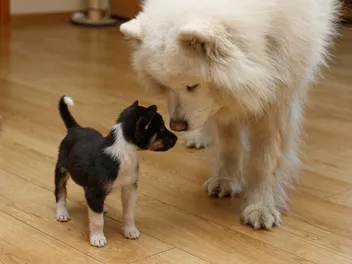
Dogs may be incompatible with each other due to age differences. Older dogs may not appreciate the energy and lackluster social skills of a playful, untrained puppy.
Social Status
Dogs of similar age can experience problems that are linked to their social status. Scuffles can result when two dogs of the same age are trying to be the "top dog" in their household.

Bad Introductions
Dogs who aren't properly introduced to one another might develop negative feelings. It is important to establish a good foundation for future interactions between dogs. Dogs who are unable or unwilling to have a safe and planned greeting with each other can become uncomfortable long-term.
Improper greetings can quickly escalate into aggressive behavior.

Tips to Teach Your Dog to Play Nice
Overall interaction and regular socialization is the best way to make sure your dog plays well. They let their playmate know when they do something they don’t like. And dogs learn how to interact with other dogs through trial and error. But here are some ways to make the process go a lot smoother.
1. Start With Basic Obedience Training
Obedience is one of the first steps to teaching your dog social skills. It's the difference between running tirelessly after your dog in the park or calling it to come back to you. While it won't solve the problem of playing with other dogs immediately, it is a very important part of the training process. You must be confident in your training before you allow your dog to play with other dogs.
For example, when your dog is distracted by and playing with other dogs, will it still be able to respond to your commands? If not, then it is time to stop playing in the park and work on obedience training. It will be easier to guide your pup towards more appropriate play if you're able to communicate clearly and effectively.

2. Reinforce a "Settle” Verbal Cue
It's important that your dog understands when it needs to calm down a bit. So, while verbal commands such as stay, sit, and come, are all good cues to teach your dog initially, you should also teach it how to settle or calm down.
You can also place the treat on your dog's mat, or make it sit or lie down. After the dog obeys your commands consistently, you can use the command when the dog interacts with people or other dogs to help reign it in.
3. Plan Your Intros Instead of Winging It
Never just let your dog off the leash to go out and make new dog friends -- this is a sure recipe for disaster, as other dogs may not take well to this. It's best to do intros in a neutral, outdoor area with a fence or with someone that you know who has a dog that's trained and sociable.
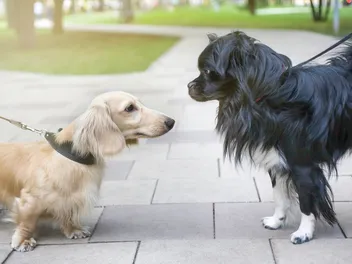
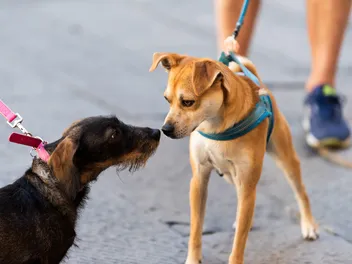
Begin by allowing the dogs to walk closer toward each other, so they can smell each other. Next, bring the dogs together and walk side by side for a few feet. Reduce the distance between the dogs if their body language is friendly and loose.
Once you and the other dog owner are confident in the dogs' reactions, let the leashes go and let the dogs greet each other fully while still keeping a watchful eye on them. If you feel the meeting is getting tense or strained the dogs begin growling, quickly move the dogs away from one another.

4. Stop Aggressive Behavior Before It Starts
Always keep a watchful eye on your dog while you're in public spaces. After all, it's your responsibility to ensure that your dog doesn't harm other dogs or people visiting the park. So, it's important to always halt any rough play as soon as you see it. Also, don’t allow your dog to jump on and accost strangers.
This is where obedience commands come into play. And 99% of the time you'll be able to read your dog's body language to determine when it's time to give a command before this happens. So, if your pup is acting aggressively or getting way too excited (which is common with puppies), it's time to calm him/her down with some verbal cues and focus on you. Ask a veterinarian about some proven calming techniques.
5. Allow Dogs Alone Time
Another important aspect of socializing your dog is to give it time to rest and be alone. Although you may imagine a playtime that lasts all day, it is important to allow your dog some downtime in order to reset and settle. If you're introducing a new dog in your home, it helps to set it up with its own space initially. This could be a crate, room, or a small space within a room.
Be sure to fill the area with treats and play toys and then take your time to fully integrate your new dog into the household. Remember that even the best of dog BFFs may need a break, so make sure they have their own time and that the newer dog has time to adjust.

6. Help Minimize Territory Disputes
Similar to small children, dogs can initiate disputes over territory and material things in your home. For example, dogs can fight for precious resources such as food bowls, chew toys, and doggie beds. So, it's a good idea to feed dogs in separate areas -- at least initially.
Also, be sure to have different living essentials for each dog, such as food bowls, bedding, chew toys, and other day-to-day items. And if either of the dogs becomes fussy about chewing bones, beds, or baby gates are a great option to help set up space boundaries.
7. Define a Set of Goals
Do you want your puppy to be able to greet other dogs without aggression? Want your dog to not jump on other dogs upon introduction to them? If so, you'll need to ensure that you have a set of consistent rules. For example, before greeting another dog, your dog must always have permission in the form of a verbal cue.
And if your dog is too anxious, you should have a command (such as "settle") to reign it in. It may help to make a list of the things that you want your dog to do or not do before you begin training--and this can definitely be of use if you decide to go with a professional dog trainer.

8. Find a Reputable Dog Trainer
Another thing that may help your dog socialize better is professional training. Look for good dog trainers who are local to your area and that have great qualifications, references, and reviews.
Trainers can socialize your dogs with other canines of similar size and who are already socially aware. Talk to your local trainers to find out how they can help and techniques that they use to help dogs manage social situations better with less aggression and anxiety.
9. Don’t Reinforce Undesired Behavior
During the period of training, it is important not to let your dog practice the undesired behavior. If they are too anxious or wound up to listen to you out on walks where dogs may appear at any time, then stick to exercising them around your yard or areas where there are unlikely to be other dogs. Regular consistent reinforcement of training is key when trying to train new behaviors.


Final Thoughts
Teaching your dog to play nicely with other dogs is a process that requires persistence and patience. Don't expect your dog to get it right overnight and be sure to always introduce it slowly to other dogs.
Also, ensure that your dog has basic obedience training before attempting to socialize with other dogs and strangers. This could mean the difference between uncomfortable situations or ones that may lead to injuries.
See Also:
Featured Image Credit: Barnabas Davoti, Pexels
Expert dog care, straight to your inbox
News, insights, expert advice, and everything dog.

No spam — unsubscribe anytime.
By signing up, you agree to our Terms & Conditions and Privacy & Cookies Policy.
How useful was this post?
Click a star to rate. You can leave written feedback afterwards. (We read all feedback.)
Nicole has loved animals of all sizes her whole life so it's no wonder she has dedicated her career to helping them through what she loves best: learning, writing, and sharing knowledge with others. She’s the proud mom of two dogs, a cat, and a human. With a degree in Education and 15+ years of writing experience, Nicole wants to help pet parents and pets around the planet to live happy, safe, and healthy lives.