Dogster is reader-supported. When you buy via links on our site, we may earn a commission at no cost to you. Learn more.

Dog Nutrition

Semi-Moist, Dry & Canned Dog Food: Vet-Reviewed Pros & Cons

Annaliese Morgan
By Annaliese Morgan · Reviewed & fact-checked by Dr. Amanda CharlesVet Approved
Dr. Amanda Charles
Reviewed & Fact-Checked byDr. Amanda CharlesBVSc MRCVS (Veterinarian)
Dr. Amanda Charles, a 2002 graduate from Liverpool University, has built a prolific career in small animal medicine. She is passionate about providing pet owners with reliable and current information, enjoying the varied aspects of veterinary work. Outside the clinic, Amanda's life is filled with the energy of her two young sons, her spirited Cocker Spaniel, along with a spunky Ragdoll cat.View authorThe information is current and up-to-date in accordance with the latest veterinarian research. Learn more
Updated on June 17, 2026
Share
different kinds of dry and wet pet food

The world of dog food, diets, and what to feed your dog specifically has become an ever-changing topic. With so many brands, flavors, and types these days, it has almost become a complicated and mysterious affair to unravel. Yet it shouldn’t be. Your veterinarian, vet tech/nurse, or veterinary nutritionist are by far the best people to take tailored advice regarding dog diets from; however, arming yourself with the basics makes it all a lot easier and more interesting.

Before you choose the flavor and brand, your first decision, in the majority of cases, needs to be the type of food structure you wish to feed to your dog. Three of the popular forms are: dry (kibble or biscuits), wet (moist or canned), and semi-moist, but which is best?

divider dog paws 3 oct 2024

What Does My Dog Require in Their Food?

Nutrition is defined as a solid or liquid that is capable of nourishing a living being, allowing normal function of cells and promoting life.

In brief, any diet you feed your dog must contain the correct amounts of six essential nutrients:

  • Protein
  • Fat (lipids)
  • Carbohydrates
  • Vitamins
  • Minerals
  • Water

Regardless of the form of the food, it's important to make sure it is complete, balanced and suitable for your dog’s size and life stage. "Complete" means the food contains all the required nutrients, and "balanced" means the nutrients are present in the correct ratios. Foods labeled with the nutritional adequacy statement from the American Feed Control Officials (AAFCO) help you identify foods that meet your dog’s individual needs.1

Dogs, unlike cats, are not obligate carnivores, which gives canines the flexibility to eat both meat and plants. However, vegetarian diets are not generally advised in dogs, and this is best discussed with a professional if this is of interest to you.

Dogs do not need the same variety in their diets as we do. They do not have the same perception of food as humans do and have far fewer taste buds. Therefore, dogs do not require as much variety and choice of foods, but consistency is important. Always be sure to weigh out or measure your dog's food to prevent weight gain or weight loss, as well as other nutritional imbalances and problems.

divider dog paws 3 oct 2024

Pros & Cons of Semi-Moist Dog Food

Image Credit: sophiecat, Shutterstock

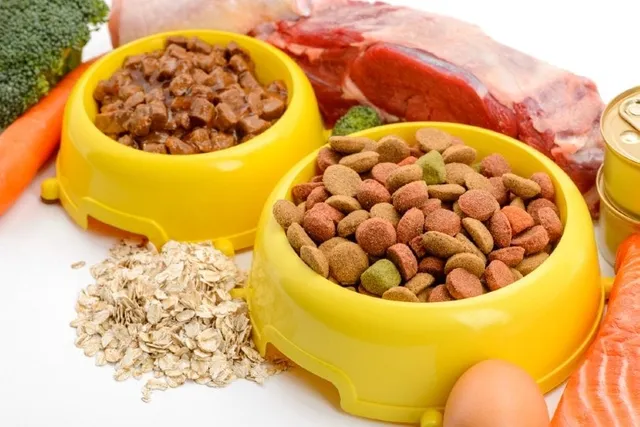
This is perhaps the least popular of the three types of dog food and the least recommended. However, this format of dog food still holds good levels of water despite only being semi-wet when compared to dried food. For example, in general, the water content of semi-moist dog food ranges between 20–65%, except in Europe where it is 14–60%.

Semi-moist dog food is somewhere in the middle of kibble and canned meat and is more like a soft/squishy dry kibble.

Advantages of Semi-Moist Dog Food

  • Available as a complete diet or as snacks/treats
  • Provides good levels of water and is therefore supportive of hydration
  • Generally more palatable than dry food
  • Convenient and easy to feed and often store

Disadvantages of Semi-Moist Dog Food

  • More expensive than dry food
  • Ingredients vary but tend to contain higher levels of simple carbohydrates, which could be problematic for some dogs, especially if they have an underlying health condition like diabetes
  • Often contains artificial colors, chemical preservatives, and chemical flavor enhancers
  • May not be as widely available as dry or canned food due to being less popular
  • Does not aid in dental or oral care

What Kind of Dog Should Eat Semi-Moist Dog Food?

Fussy dogs or those that have difficulty chewing may benefit from semi-moist food. However, it is not commonly recommended by vets. Most varieties are high in simple carbohydrates and therefore should be avoided for dogs with diabetes that require blood sugar regulation.

divider dog paws 3 oct 2024

Pros and Cons of Dry Food

Image Credit: 279photo Studio, Shutterstock

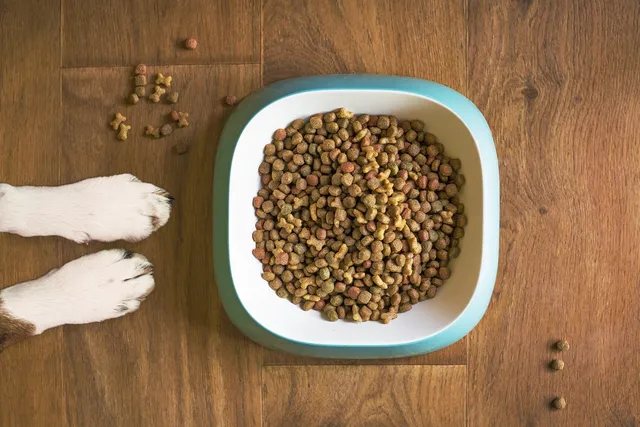
Dry dog food is also known as biscuits or kibble. It is often the staple diet used by pet parents and also the bedrock of the pet food industry. Of the three forms of dog food, dry food contains the least amount of water (less than 20% in the US and less than 14% in Europe). The reduced amount of water content naturally increases the amount of water your dog will drink. Fresh water needs to be available at all times regardless of the diet type, but if you happen to switch from canned food to kibble, you will notice the increase in drinking!

Dry dog food is the most popular for a reason. This is due to its many advantages.

Advantages of Dry Dog Food

  • Convenient and readily available in-store and online
  • Easiest and simplest to feed and manage portions
  • Cheapest to buy
  • Most are complete and balanced diets
  • Plenty of choices: bag size, flavor, brand, etc.
  • Some dry foods are better for their dental health
  • Less messy, both for the environment and your dog's face and fur
  • Kibble lasts longer and doesn’t spoil as fast
  • Can be used as treats or in interactive toys or puzzles

Disadvantages of Dry Dog Food

  • Some dogs may not find the kibble as palatable as other forms of dog food
  • Doesn’t provide hydration
  • Tougher to chew for dogs with missing teeth or jaw issues.
  • Usually requires air-tight storage
divider dog paws 3 oct 2024

Pros & Cons of Canned or Moist Food

Image Credit: New Africa, Shutterstock

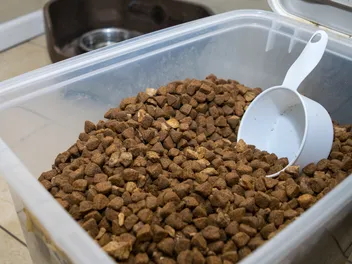
Canned food is likely the second most popular choice of dog owners and is the formation of soft meat and meat derivatives in various flavors packed into a container.

Moist dog food contains considerably more water when compared to dry food. Usually, this is more than 60–65%, depending on the country.

Advantages of Canned Dog Food

  • Meaty and often more palatable than dry food
  • Contributes to hydration automatically due to the higher water content
  • Available in a variety of packaging: cans, trays, and pouches offering storage convenience
  • Complete and balanced diet in most cases

Disadvantages of Canned Dog Food

  • More expensive than other forms of dog food
  • Messier
  • Quickly spoils
  • Requires refrigeration after opening
  • May not be as widely available as dry food due to kibble being more popular
  • Does not aid with dental or oral care
  • Portions need to be larger due to high water content
divider dog paws 3 oct 2024

Conclusion

No one of these forms of dog food is completely better than the other. The aim is to feed a complete diet and the best quality or brand that you can afford to feed your dog, as well as one they will eat and that you can buy consistently. Swapping foods regularly can promote fussy eaters and gastrointestinal upset.

The choice is yours, but consider all the pros and cons listed to see which fits best for your lifestyle and your dog. You may find a little trial of each may be needed to ascertain the best choice, but always consult with your veterinarian first, as they will be more than happy to help you make a choice.

Sources

Featured Image Credit: New Africa, Shutterstock

Want content like this delivered to you?

News, insights, expert advice, and everything dog

Annaliese Morgan
Authored by

Annaliese Morgan

Is Wet or Dry Dog Food Better? Vet-Approved In-Depth Comparison

Is Wet or Dry Dog Food Better? Vet-Approved In-Depth Comparison

Ah, the age-old question—should you serve your dog wet or dry food? Both dry kibble and wet food certainly have their perks, but both have their downfalls. Ult…

Ashley Bates
By Ashley Bates · 3 days ago
Can You Mix Wet and Dry Dog Food? Vet-Verified Pros & Cons

Can You Mix Wet and Dry Dog Food? Vet-Verified Pros & Cons

Do you ever mix wet and dry dog food together? Many people do, but is it a good idea? Some pet owners believe that mixing the two will provide their canine com…

Sophie Herlihy
By Sophie Herlihy · 3 days ago
Is Dry Dog Food Bad for Dogs? Vet-Reviewed Pros & Cons

Is Dry Dog Food Bad for Dogs? Vet-Reviewed Pros & Cons

There has been controversy surrounding dry food in the dog food world for years now. Proponents of raw food and fresh food diets argue that dry dog food is unh…

Kit Copson
By Kit Copson · 2 weeks ago
What is Kibble Dog Food? Vet-Reviewed Facts & FAQ

What is Kibble Dog Food? Vet-Reviewed Facts & FAQ

A quick glance at the dog food aisle in shops will show you just how many different types of dog foods there are. There are foods with different flavors, nutri…

Sarah Psaradelis
By Sarah Psaradelis · 3 days ago
June 17, 2026

Is It Alright if My Dog Only Eats Wet Food? Vet-Approved Facts & FAQ

We all want to ensure that we are feeding our dogs a well-balanced diet that meets all their nutritional needs. Not only are there an overwhelming number of ch…

Lindsey Lawson
By Lindsey Lawson
Is It Alright if My Dog Only Eats Wet Food? Vet-Approved Facts & FAQ
June 29, 2026

Can Dogs Eat Only Dry Food? Vet-Approved Health Facts & Tips

One of the biggest worries for many owners is how to create a proper diet for their dogs so they can have plenty of energy while maintaining an ideal weight. W…

Ed Malaker
By Ed Malaker
Can Dogs Eat Only Dry Food? Vet-Approved Health Facts & Tips
June 27, 2026

How to Choose a Dog Food: 5 Vet-Approved Tips & Advice

As crucial as it is for your pet’s health, picking the best dog food is rarely easy. Several exceptional products are available, but wading through the complic…

Nicole Cosgrove
By Nicole Cosgrove
How to Choose a Dog Food: 5 Vet-Approved Tips & Advice
June 27, 2026

Can I Feed My Dog Store-Bought Kibble? Vet-Approved Nutrition Facts

As owners humanize their dogs and the pet industry pushes innovation, dog food has diversified significantly in recent years. Fresh, freeze-dried, and homemade…

Nicole Cosgrove
By Nicole Cosgrove
Can I Feed My Dog Store-Bought Kibble? Vet-Approved Nutrition Facts
June 17, 2026

How Much Canned Food to Feed a Dog: Vet Approved Nutrition Advice

Learning how much to feed your dog and what type of food to offer at various life stages is crucial when deciding on a dog’s diet. It is vital to check out pro…

Ashley Bates
By Ashley Bates
How Much Canned Food to Feed a Dog: Vet Approved Nutrition Advice
June 17, 2026

Freeze-Dried Dog Food: 8 Vet-Verified Pros & Cons

Freeze-dried raw dog foods are becoming a popular option because of their high palatability and ability to provide a raw diet rich in vital nutrients. These di…

Brooke Billingsley
By Brooke Billingsley
Freeze-Dried Dog Food: 8 Vet-Verified Pros & Cons
June 29, 2026

Raw vs Cooked Dog Food: Vet-Reviewed Pros, Cons & What to Choose

One of the most common questions that people ask when it comes to their dogs is what kind of food to feed them. There is a great deal of debate regarding raw v…

Nicole Cosgrove
By Nicole Cosgrove
Raw vs Cooked Dog Food: Vet-Reviewed Pros, Cons & What to Choose
June 17, 2026

6 Pros & Cons of Putting Water in Kibble: Vet-Verified Nutrition Facts

Rehydrating dog food can be a really beneficial habit. It sounds like the perfect thing—you spice up your dog's food bowl while providing extra moisture in the…

Ashley Bates
By Ashley Bates
6 Pros & Cons of Putting Water in Kibble: Vet-Verified Nutrition Facts

Love Dogs? So Do We! Join the Dogster Community

Stay informed with expert pet care insights delivered straight to your inbox! Discover professional guidance on animal behavior, feeding tips, trusted product picks, and much more.

You may opt-out at any time. View our Privacy Policy for more information.

The Dogster app on a phone