

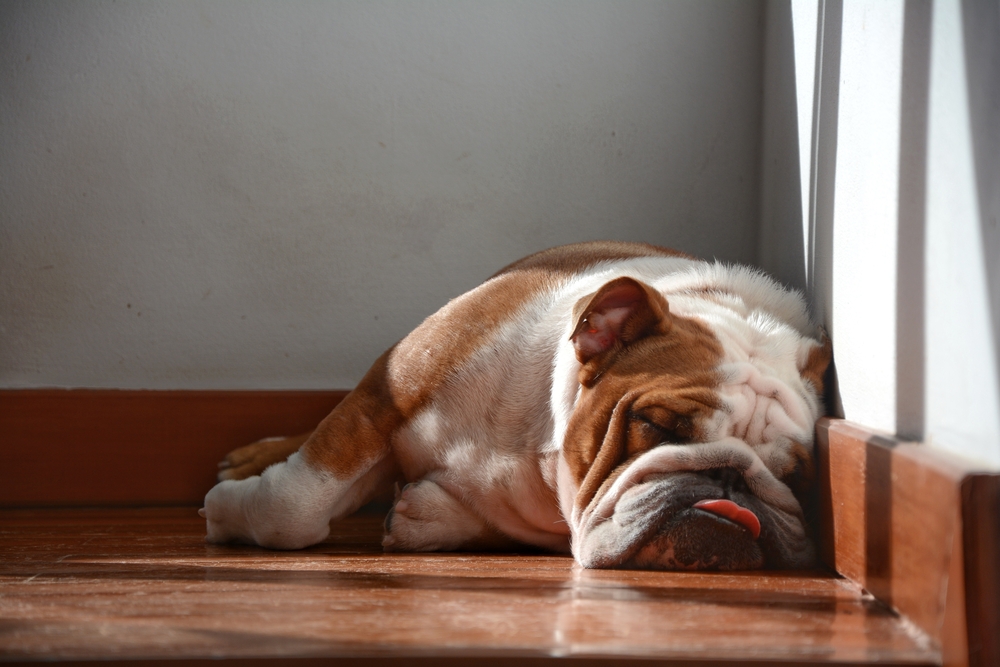
Does your dog sound like a grumpy old man? They let out a dramatic groan every time they lie down. It sounds exactly like you after a long day at work, complete with the heavy sigh and the sense that gravity is personally attacking them. Sometimes it’s adorable. Sometimes it’s concerning. The question is: should you worry?
Dogs groan like a grandpa when lying down for several reasons, ranging from complete contentment to serious medical issues. Paying attention to context and other symptoms helps you determine whether your dog is just being dramatic or actually needs veterinary attention.
Here are six reasons your dog might be groaning, and what you can do about it.

1. They’re Perfectly Content
One of the most common reasons dogs groan is pure happiness. Some dogs make little noises of contentment when settling into a comfy spot or getting attention from their favorite people. It’s the canine equivalent of that satisfied sigh you make when you finally sit down after being on your feet all day.
If your dog seems fine in every other way and only groans occasionally while getting comfortable, there’s probably nothing to worry about. They’re just expressing satisfaction with their current situation.
2. They’re Tired
Being exhausted makes everyone groan a little. You’ve probably done it yourself without even realizing it after a long day. Dogs do the same thing, especially after intense exercise, extended play sessions, or travel.
If your dog had a big day and groans once or twice while settling down, it’s likely just fatigue. However, if they’re groaning constantly or every time they shift position, investigate further. Excessive groaning suggests something beyond simple tiredness.
3. Stomach Problems
Digestive issues cause discomfort that leads to groaning. Mild problems like diarrhea, vomiting, bloating, or constipation can make lying down uncomfortable. More serious conditions, including tumors creating abdominal pressure, also cause groaning.
You might notice your dog groaning when changing positions because movement exacerbates their discomfort. Watch for other symptoms like loss of appetite, unusual bathroom habits, or visible abdominal discomfort.
4. Ascites (Fluid in the Abdomen)
Ascites means excess fluid floating freely in your dog’s abdomen, not contained within organs. This causes noticeable swelling and abdominal distention. It’s a symptom of extremely serious conditions, including liver failure, heart failure, cancer, and peritonitis.
Dogs with ascites groan from pain and discomfort. The fluid also makes breathing difficult, so they may groan while trying to breathe better. If your dog’s abdomen looks swollen or distended, treat it as a medical emergency, even if they don’t have a diagnosed condition. Some cancers and diseases show minimal signs until they become life-threatening.
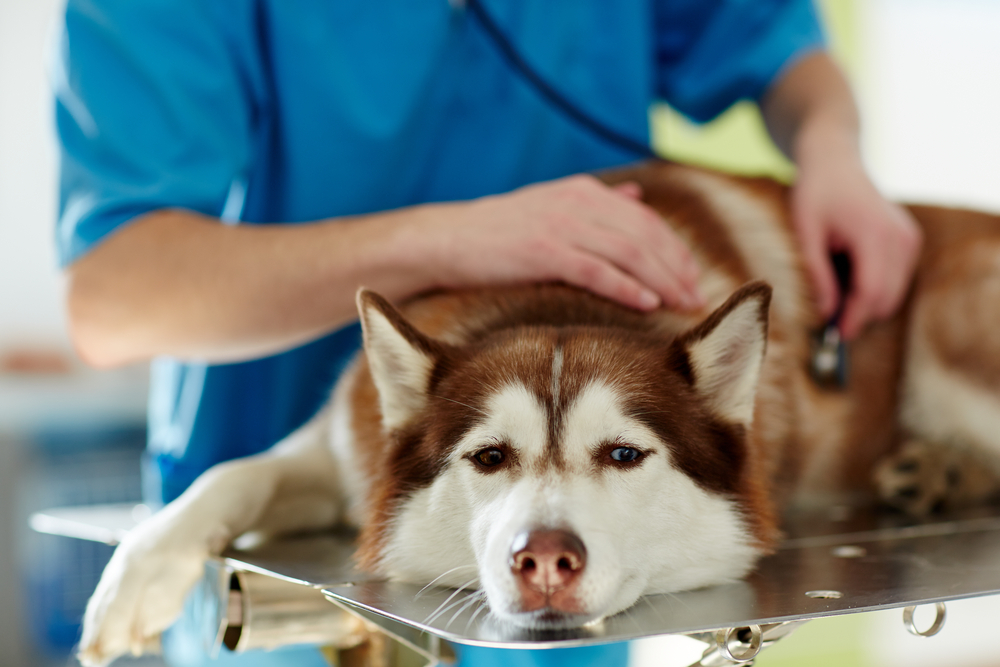
5. Pain
Pain is a major cause of groaning in dogs. Chronic conditions like arthritis make lying down, standing up, or repositioning painful. Acute pain from new injuries or sudden illnesses also triggers groaning. Dogs recovering from surgery frequently groan as they move.
Modern veterinary medicine offers excellent pain management options for dogs. If your dog seems to be groaning from pain, talk to your vet about solutions. Never give your dog human medications, including over-the-counter pain relievers or prescription narcotics. Some of these are deadly to dogs. Always consult your vet before administering any medication.
6. Confusion
Older dogs may develop canine cognitive dysfunction (CCD), similar to dementia in humans. This causes confusion that can increase vocalizations, including groans and moans. New situations and low-light environments make confusion worse.
Dogs recovering from anesthesia might also groan while trying to understand their surroundings. Anesthesia-related confusion improves as the medication wears off. Cognitive changes from CCD can be managed but may not be fully reversible with current treatments. Discuss options with your vet.
When to Actually Worry
If you can’t tell whether your dog is groaning from contentment or discomfort, have them evaluated by a vet for safety. Get them seen as soon as possible if groaning is accompanied by:
- Lethargy
- Loss of appetite
- Limping or stiffness
- Excessive licking or chewing
- Yelping when touched or handled
- Visible abdominal swelling
Since some causes of groaning are life-threatening conditions, having your vet rule them out quickly is critical. Don’t wait for symptoms to worsen before seeking help.
Final Thoughts
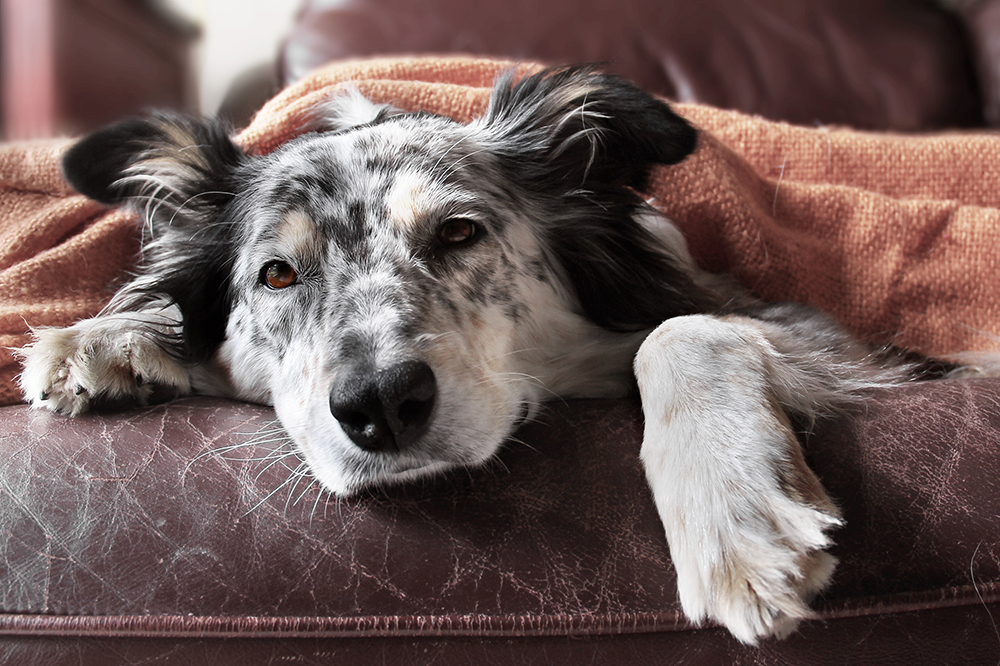
Most groaning is harmless. Your dog is either content, tired, or just being a bit dramatic about the effort required to lie down. If it happens occasionally without other concerning symptoms, you’re probably fine.
However, persistent groaning, especially combined with behavioral changes or physical symptoms, warrants veterinary attention. Trust your instincts. You know your dog’s normal behavior better than anyone. If something feels off, it probably is.
When in doubt, call your vet. They’d rather you check in about nothing than ignore something serious until it’s too late. Your dog can’t tell you what’s wrong, so it’s up to you to notice when their groaning means more than just “this bed is so comfortable.”
Feature Image Credit: Yobab, Shutterstock
Did You Know?
 1. They’re Perfectly Content