When Do Puppies Start Barking? Vet-Reviewed Facts & Tips



There is nothing more exciting than bringing home a brand-new puppy! That new puppy smell, their soft fur, and the adorable squeaks and yaps are so heartwarming! While puppies are capable of cute vocalizations, you may be wondering when exactly they begin to bark.
The answer depends on a few factors, including the puppy’s breed, but generally, most puppies will begin producing early vocalizations as young as 3 or 4 weeks old. It may not sound much like a bark at first, but by 7 or 8 weeks old, they ramp it up and begin making louder, more piercing barks.
Let’s take a deeper look at when puppies start barking, why they bark, and how to manage excessive barking as they grow.

Barking Is a Form of Communication
Barking can be triggered by many different factors, but first and foremost, it’s a form of communication. Your dog is trying to attract attention, either from you or other dogs, though it should not always be encouraged. There are many different types of barks that dogs and puppies have. Some of these do require your close attention, while those reinforced over time through repeated responses may become more frequent,
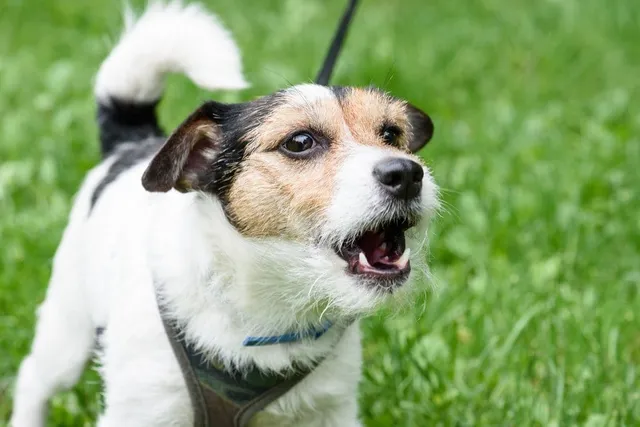
Dogs and puppies typically bark when they’re playing, enthusiastic, alert, or warning you of danger. However, dogs can also bark due to boredom, stress, frustration, and learned reinforcement, and barking is not necessarily synonymous with aggression. It’s important to learn the difference, so you can guide your puppy toward appropriate communication and manage excessive barking when needed.

When Do Puppies Begin Barking?
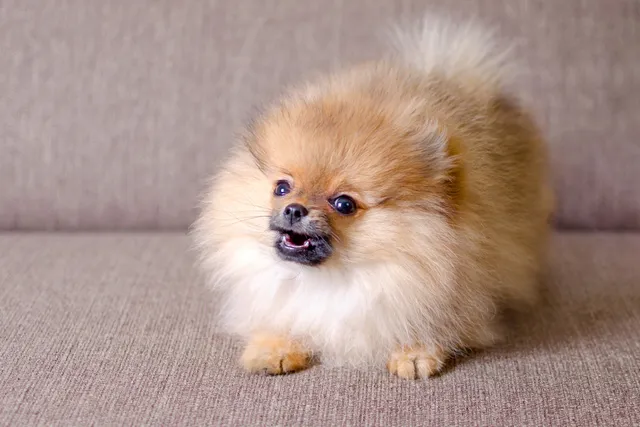
Your puppy’s first bark will be vastly different from their bark as an adult. They will begin making small vocalizations as young as 3–4 weeks old. At around 5–8 weeks old, these small vocalizations will begin to coalesce into a real bark, although they may still be softer and less consistent than an adult’s.
Puppies typically bark as a part of their learning and development, while they are playing with their littermates or communicating with their mother. There are many possible reasons for a puppy to bark. Also, just because some puppies are capable of barking at this age, it doesn’t necessarily mean they will. If you have a young puppy that’s not barking yet, there is typically nothing to be concerned about.
Other factors, like your dog’s breed and unique temperament, can also play a part in how soon they begin barking, so you may not hear your pup barking for months! Puppies also learn from the dogs around them. If your puppy has come into your home and there are no other dogs around, it may take them longer to bark, or if you have many barking dogs in the house, they may begin copying them through social learning and environmental exposure.
Generally, though, in the first few weeks of your puppy’s life, they’ll be mostly silent.

Socialization Is Key
While socialization and learning from other dogs are vital to your puppy’s development, bad habits can also be picked up. For example, if your puppy is brought up around dogs that bark for any and every reason, they’ll likely follow suit. It’s important that your dog socializes and learns from dogs that are calm, well-behaved, and properly trained, as well as through positive experiences guided by you, as this will go a long way toward helping your puppy behave well, too.
While barking should be paid attention to, it is a normal form of communication and should not be suppressed entirely, but excessive or contextually inappropriate barking can be managed through consistent, reward-based training.

How Do You Stop Barking From Becoming a Habit?
Before attempting to control your puppy’s barking, you should determine the root cause. This could be stress, separation anxiety, boredom, or pent-up excess energy. Make sure your pup is getting enough attention and physical and mental stimulation—typically, a well-exercised and stimulated dog should not bark excessively. Be sure they're not in a stressful environment before attempting to control their barking.
Training your new pup is an in-depth process, but if they are barking excessively, there are a few things that you can do to help:
- Make sure all your puppy’s needs are met (exercise, mental stimulation, attention).
- Ignore attention-seeking barking and reinforce calm or desired behaviors.
- Be calm and consistent when training your puppy.
- Use appropriate redirection, such as engaging your puppy in an alternative behavior.
- Stay consistent.
- Avoid inadvertently reinforcing barking by giving attention immediately after it occurs, and instead reward quiet behavior.
If you need guidance on stopping your dog's barking from becoming a habit, we suggest you speak to a vet.
Final Thoughts
When a puppy begins to bark depends on several factors, including their breed, environment, and temperament, but it typically begins at around 5–8 weeks old. It will be a quiet, sweet sound at first and then develop into a full-blown bark by the time the dog is around 2–3 months old. All dogs develop at different speeds, though, and some may only begin barking after a few months, and even then, rarely. Usually, this is nothing to be concerned about because all dogs develop at their own pace.
Featured Image Credit: Pixabay
Expert dog care, straight to your inbox
News, insights, expert advice, and everything dog.

No spam — unsubscribe anytime.
By signing up, you agree to our Terms & Conditions and Privacy & Cookies Policy.
How useful was this post?
Click a star to rate. You can leave written feedback afterwards. (We read all feedback.)
Nicole has loved animals of all sizes her whole life so it's no wonder she has dedicated her career to helping them through what she loves best: learning, writing, and sharing knowledge with others. She’s the proud mom of two dogs, a cat, and a human. With a degree in Education and 15+ years of writing experience, Nicole wants to help pet parents and pets around the planet to live happy, safe, and healthy lives.