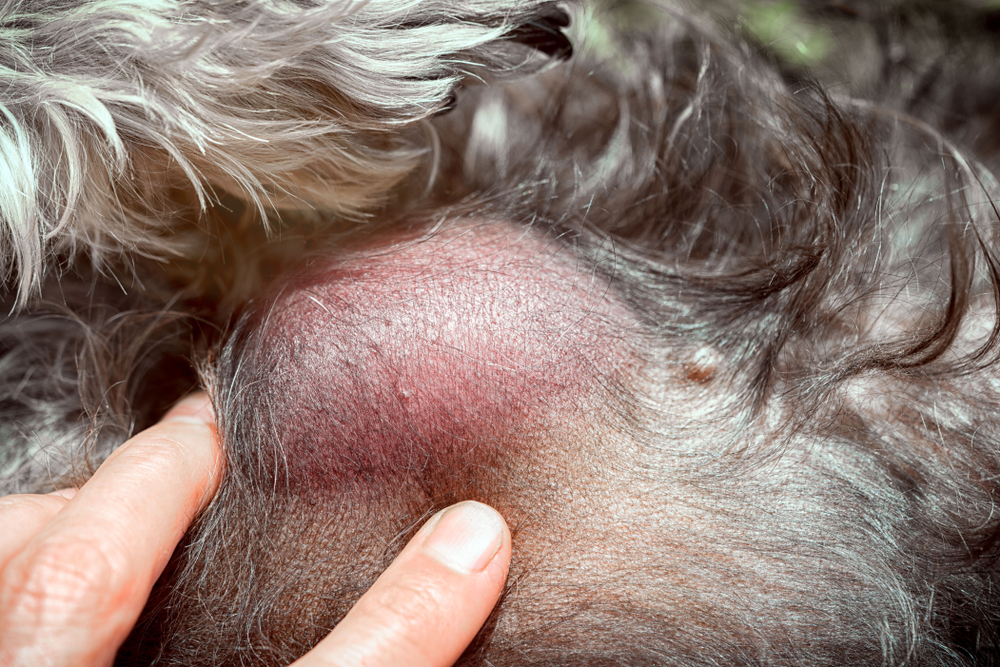
Finding a lump on your dog is one of those moments that stops you cold. One minute you’re giving them a scratch behind the ears, the next you’re feeling something under your fingers on their chest that definitely wasn’t there before. It’s hard not to spiral toward the worst possible explanation.
The honest answer is that lumps on dogs are extremely common, and the majority are benign. But some are not, and knowing the difference matters. Here’s what you need to understand.
Benign vs. Malignant: The Distinction That Matters
Every lump on a dog falls into one of two categories. Benign lumps stay put. They don’t invade surrounding tissue, and they don’t spread to other parts of the body. Malignant tumors, by contrast, can do both, which is why early detection and diagnosis are so important. You cannot reliably tell which category a lump belongs to just by looking at it or feeling it, which is why a vet visit is always the right call for any new growth.
The Lumps That Are Usually Nothing to Worry About
Several common lumps in dogs are benign, though all of them still warrant a vet diagnosis to confirm.
Lipomas are probably the most frequently found. These are soft, movable fatty lumps that develop beneath the skin, most often in older dogs and those with weight management issues. They typically appear on the torso, flanks, and legs, and can grow quite large, which makes them look more alarming than they actually are. Most lipomas don’t require any treatment, though surgery may be considered if one grows large enough to cause discomfort or restrict movement.
Histiocytomas are pink, fleshy, button-like growths most commonly seen in young dogs under three years old, though they can appear at any age. They tend to look worse before they get better, but usually disappear on their own without any treatment as the immune system does its work.
Papillomas are wart-like growths caused by a viral infection, with a distinctive cauliflower-like appearance. They’re contagious and spread between dogs through direct contact or shared objects like toys and water bowls. Most commonly, they appear around the mouth of younger dogs, though older dogs can develop them elsewhere on the body. Like histiocytomas, they usually resolve on their own as the dog’s immune system matures, though some persist.
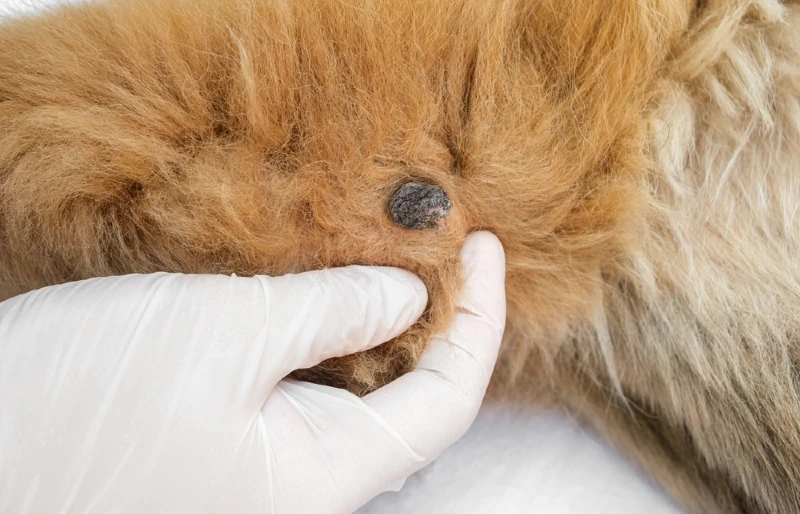
Basal cell tumors typically develop on the head, neck, and forelimbs. They are usually firm, raised, and hairless, and can occasionally develop into cysts or ulcerate. Most are benign, but around 10% are malignant, which reinforces why having them assessed by a vet matters, regardless of how innocuous they look.
Skin tags are another common finding, particularly in older dogs or certain breeds. They’re overgrowths of fibrous tissue that develop in areas where skin rubs together or against a hard surface, and are usually close to the dog’s natural skin colour or slightly darker.
The Lumps That Need Urgent Attention
Malignant tumors are less common but far more serious. These are the ones where speed of diagnosis genuinely affects outcome.
Mast cell tumors are the most frequently diagnosed malignant skin tumors in dogs. They can affect dogs of any age, though older dogs are more commonly affected, and certain breeds carry a higher predisposition. Their appearance varies significantly, which is one of the reasons they can be easy to overlook or misidentify. When mast cell tumors grow rapidly, they are more likely to spread, so prompt diagnosis and treatment are critical.
Malignant melanomas are fast-growing skin tumors that spread quickly. They typically appear as raised, often ulcerated nodules that vary in colour, and are most commonly found on the nail beds or along the lips rather than the main body. They are rare on haired skin and are seen most often in older dogs.
Fibrosarcomas develop from the overgrowth of connective tissue and usually appear as a single firm lump beneath the skin, most commonly on the limbs and trunk. While they tend not to spread widely to other areas of the body, they can invade muscle and bone locally and are often painful, particularly when located on the limbs. Surgical removal is typically recommended, along with further staging to assess the extent of the cancer.
Squamous cell carcinomas are firm, irregularly shaped growths that tend to develop in lightly pigmented, sparsely haired areas of skin. There is a recognised link between UV exposure and this type of tumor, similar to the connection seen in human medicine. Dogs with light-coloured coats are more commonly affected.

When Should You Actually Be Worried?
The straightforward answer is: any new lump that hasn’t been assessed by a vet deserves a check-up. You don’t need a list of alarming symptoms to justify making an appointment. That said, get your dog seen as soon as possible if the lump is firm or strangely shaped, if it’s growing rapidly, or if it’s changing in texture or colour. Also seek prompt attention if your dog seems uncomfortable around the area or is showing other signs of illness.
The encouraging reality is that catching a malignant tumor early significantly improves a dog’s prognosis. Many can be surgically removed before they have a chance to spread. Waiting to see whether something changes is rarely the right approach with lumps, and it’s always better to be reassured by a vet than to spend weeks wondering.
If you need to speak with a vet but can't get to one, head over to PangoVet. It's our online service where you can talk to a vet online and get the advice you need for your pet — all at an affordable price!

Summary
Lumps on dogs are common and often harmless, but the only way to know for certain is to have them checked. Benign growths like lipomas, skin tags, and papillomas rarely need treatment. Malignant tumors like mast cell tumors and fibrosarcomas can be serious, but are far more manageable when caught early. Any new lump on your dog warrants a vet visit, and if it’s growing quickly or changing in appearance, don’t delay.
Featured Image Credit: Elena11, Shutterstock
Did You Know?
- Our brand-new posts are rounded up and included in our weekly emails. Don’t miss out on the latest – sign up for our newsletter below!
 Benign vs. Malignant: The Distinction That Matters