Dogster is reader-supported. When you buy via links on our site, we may earn a commission at no cost to you. Learn more.

Dog Health & Care

Is Xanthan Gum Bad for Dogs? Vet-Verified Safety Information

Nicole Cosgrove
By Nicole Cosgrove · Reviewed & fact-checked by Dr. Marta Vidal-AbarcaVet Approved
Dr. Marta Vidal-Abarca
Reviewed & Fact-Checked byDr. Marta Vidal-AbarcaBVSc GPCert Ophthal MRCVS (Veterinarian)
Dr. Marta has over 16 years of veterinary experience, working across the UK and Spain as a remote veterinary consultant and in the clinic. She graduated from Cardenal Herrera-CEU University in Valencia, Spain. She holds two Ophthalmology Certificates, GPCert Ophthal from ESVPS and UAB. She has wide experience in small animal internal medicine and surgery with a soft spot for dogs. Marta is a member of the Royal College of Veterinary Surgeons, and her main fields of interest are ophthalmology and critical care medicine. Dr. Marta loves being able to share the most helpful information with pet parents across the world as one of Pangolia's in-house veterinarians. She wants to provide details that can help in all aspects of pets' lives with their beloved ones. She loves knowing that she can support our readers and communicate about any medical topic that might be relevant to their pet's health and well-being.View authorThe information is current and up-to-date in accordance with the latest veterinarian research. Learn more
Updated on June 27, 2026
Share
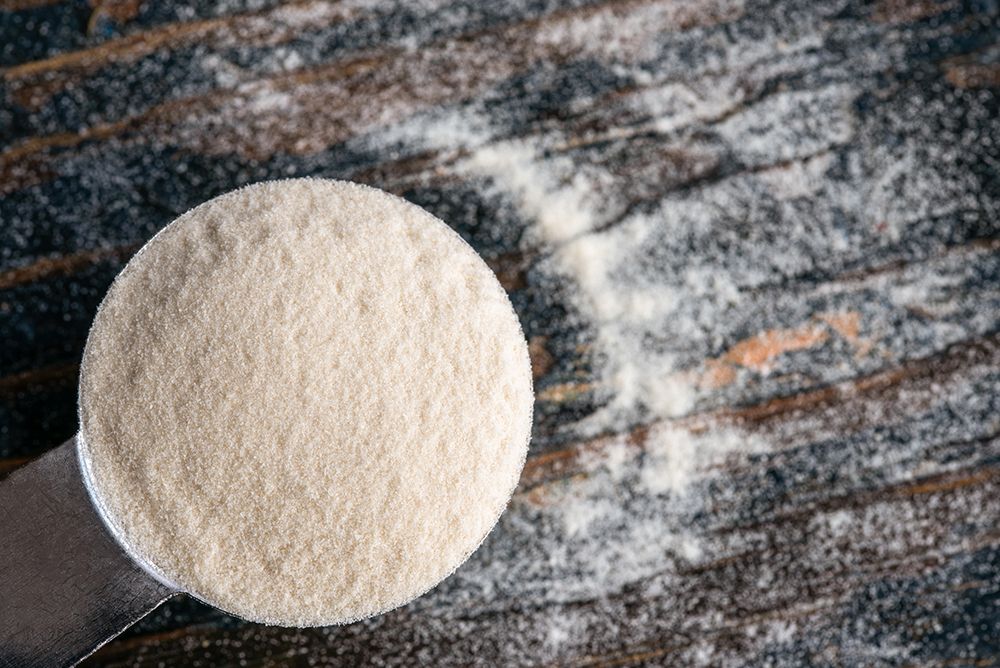
scoop of xantham gum powder

Anyone who cares enough about what their dog eats has probably spent time poring over ingredient labels and has seen xanthan gum included in quite a few foods. That doesn’t mean that they know what xanthan gum is or what it does, though.

Given how complicated some food labels can be and how much debate there can be over the healthiness of certain ingredients, it is not surprising that many people have no idea if xanthan gum is good for their dogs or not. So is xanthan gum safe for dogs? In short, yes, xanthan gum is safe for dogs when used as a food additive.

Today, we’re going to dig into this once and for all, so you never have to wonder about this particular ingredient ever again.

divider dog paws 4 oct 2024

Is Xanthan Gum Safe for Dogs?

Xanthan gum is considered safe for canines when it’s consumed as a food additive. A 1973 study showed that a group of Beagles fed different amounts of xanthan gum mixed with their food over a 2-year period had no toxic effects.¹ So, as best we can tell, xanthan gum is safe for dogs. However, there haven’t been any recent wide-scale studies that have evaluated its safety in canines. FEDIAF (the European Pet Food Industry Federation) is working to gather data and get more solid evidence on the use of xanthan gum in the pet food industry.²

It’s true that it can cause digestive problems in large doses, but it’s almost impossible to feed your dog enough to get to that point. You’d have to feed them so much food that the food itself would likely do more damage than the xanthan gum itself.

It’s also worth noting that xanthan gum’s safety has been studied as an additive in dog food. If your pet eats pure xanthan gum, it’s best to contact a vet for advice. Fortunately, it doesn’t have a smell or taste that attracts dogs, so it’s unlikely that your pup would suddenly decide to down an entire bag of the stuff.

If you have a question about your dog's health or behavior, why not Ask a Vet for free? Our veterinary team answers reader questions and provides trusted advice to help you better understand your dog.

Dogster ad with veterinarian and dog offering free expert advice

What Is Xanthan Gum and What Does It Do?

Xanthan gum is made when a bacteria called Xanthomonas campestris ferments a type of sugar, creating a sticky, gummy-like substance. The resulting compound is mixed with alcohol, then filtered and dried, creating a white powder that is easily mixed inside a variety of foods.

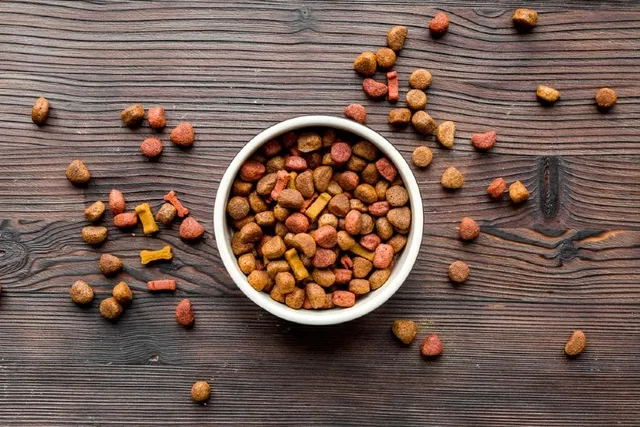
Xanthan gum is put in dog foods to thicken and stabilize them. It helps ingredients like oil from separating from the rest of the mixture. It’s mostly found in canned foods, as it keeps everything thick and moist and extends the shelf life.

It’s just an additive, rather than an integral ingredient in dog foods. It doesn’t really offer much in the way of nutritional value, and it’s primarily used to make the food look more attractive and palatable. It’s worth noting that this effect is primarily for the owners. Dogs don’t care how their food looks—they rely on scent and taste to determine if something’s worth eating. However, if an owner thinks that their dog’s food looks gross or unhealthy, they’re unlikely to buy it again, no matter how quickly their pup devours it.

Image Credit: Dmytro Zinkevych, Shutterstock

Why Is Xanthan Gum Controversial?

There have been a few slight controversies surrounding the use of xanthan gum in dog food in recent years, but nothing major. Many of them are likely a case of mistaken identity, in fact.

The biggest objection comes from proponents of natural diets. Xanthan gum is an additive, and many people believe that you should never serve your dog additives of any kind, as they’re not part of the animal’s natural diet.

However, xanthan gum poses little risk to your dog’s health. That said, feeding it to your dog has little benefit, so it’s purely a matter of personal preference.

The other big issue comes from people who confuse xanthan gum with xylitol. Xylitol is an artificial sweetener used in chewing gum and toothpaste and as a sugar substitute in “diet” products. It is extremely toxic to dogs and can be lethal even in small amounts, as it quickly leads to hypoglycemia (low sugar levels) and liver failure.

Xanthan gum is not xylitol, and it has almost nothing in common with it beyond starting with the letter “x.”

Image Credit: sulit photos, Shutterstock
Dogster divider_v2_NEW_MAY_24_

Final Thoughts: Should You Feed Your Dog a Food With Xanthan Gum in It?

If you’ve been serving your pup food that has xanthan gum listed on the label, there’s no reason to panic. Xantham gum is safe for dogs and it shouldn’t have any adverse effects on their health. That said, it is probably not doing much for them either, so if you feel like cutting it out of their diet, feel free. It is purely a matter of preference.

Regardless, this isn’t an issue that’s worth losing sleep over. Your dog won’t miss it if it is gone, but they won’t react poorly to its inclusion in their chow.

Of course, either way, your dog will likely try to convince you that your choices have led to them starving to death and that they need just one more bowl of food!

See also:

Sources

Featured Image Credit: Michelle Lee Photography, Shutterstock

Want content like this delivered to you?

News, insights, expert advice, and everything dog

Nicole Cosgrove
Authored by

Nicole Cosgrove

Join the Conversation

2 Responses

CH
Carol Hoyer says:
February 15, 2025

Is petrodex advance dental care toothpaste safe?

Joe Burns
Joe Burns says:
February 15, 2025

Hi Carol, thanks for reaching out to us. Yes, Petrodex Advance Dental Care Toothpaste is generally considered safe when used as directed. It is formulated for dogs and free from harmful ingredients such as fluoride. Always follow the instructions on the packaging and if you're unsure of anything feel free to get in touch with one of our vets at PangoVet. You can book a video consultation with our team at https://pangovet.com. Hope this helps! :)

Is Glycerin in Dog Food & Treats Bad for Dogs? Vet-Reviewed Safety Guide

Is Glycerin in Dog Food & Treats Bad for Dogs? Vet-Reviewed Safety Guide

We all know that one key to a healthy dog's life is high-quality dog food. You look for ingredients such as whole meats and grains and ensure the diet is compl…

Chris Dinesen Rogers
By Chris Dinesen Rogers · 3 days ago
Can Dogs Eat Cornstarch? Vet-Approved Nutrition Guide & FAQ

Can Dogs Eat Cornstarch? Vet-Approved Nutrition Guide & FAQ

Cornstarch is a commonly used ingredient in cooking and baking, often as a thickening agent for casseroles or soups. It is an excellent source of fiber and, as…

Nicole Cosgrove
By Nicole Cosgrove · 2 weeks ago
What Is Powdered Cellulose in Dog Food? Vet-Approved Safety Facts & FAQ

What Is Powdered Cellulose in Dog Food? Vet-Approved Safety Facts & FAQ

Choosing the best food for our furry companions is no easy task. With more options and specialized diets available than ever, pet parents are often left in the…

Luxifa Le
By Luxifa Le · 2 weeks ago
Xylitol Poisoning in Dogs: Our Vet Explains the Signs, Treatment & Prevention

Xylitol Poisoning in Dogs: Our Vet Explains the Signs, Treatment & Prevention

Xylitol is an artificial sweetener found in a large number of household foods and products. Chewing gum, toothpaste, baked goods, peanut butter…the list goes o…

Dr. Joe Mallat
By Dr. Joe Mallat · 2 weeks ago
June 29, 2026

My Dog Ate Gum, What Should I Do? 3 Vet-Approved Steps to Take

If your dog ate gum, your first thought might be that they are going to have an intestinal blockage, but that’s not actually the biggest concern. Instead, the…

Keri-Beth Clur
By Keri-Beth Clur
My Dog Ate Gum, What Should I Do? 3 Vet-Approved Steps to Take
June 17, 2026

Can Dogs Have Cinnamon? Vet-Approved Facts & FAQ

We have to be very careful as pet owners when it comes to our spice cabinets. Some are perfectly harmless to pets while others can cause reactions, or even tox…

Ashley Bates
By Ashley Bates
Can Dogs Have Cinnamon? Vet-Approved Facts & FAQ
June 17, 2026

Inulin for Dogs: Vet-Verified Benefits, Uses & Side Effects

Inulin is a type of hormone growing in popularity because scientists have linked it to several health benefits for humans. It is natural to wonder if it is als…

Ed Malaker
By Ed Malaker
Inulin for Dogs: Vet-Verified Benefits, Uses & Side Effects
June 29, 2026

Can Dogs Have Tums? The Surprising Answer!

If that mouth-watering pepperoni pizza that you wolfed down for dinner gave you terrible heartburn, you can take a few antacids and be good to go. But what if…

Genevieve Dugal
By Genevieve Dugal
Can Dogs Have Tums? The Surprising Answer!
June 29, 2026

Calcium Carbonate for Dogs: Vet-Reviewed Benefits, Uses & Side Effects

Making sure your dog gets all the necessary nutrients in their diet is vital for them to live a long, healthy, and happy life. Commercial complete dog food con…

Nicole Cosgrove
By Nicole Cosgrove
Calcium Carbonate for Dogs: Vet-Reviewed Benefits, Uses & Side Effects
June 17, 2026

Can Dogs Use Human Toothpaste? Vet-Verified Info & Facts

Dog owners know that if there’s one step of the grooming process where you can’t slack off, it’s dental care. Preventing periodontal disease takes dedicated br…

Nicole Cosgrove
By Nicole Cosgrove
Can Dogs Use Human Toothpaste? Vet-Verified Info & Facts
June 17, 2026

Should You Add Olive Oil to Your Dog’s Food? Read This First

“Healthy for humans” doesn’t always mean healthy for dogs. If you drizzle olive oil on your salad or use it to cook nearly everything, you’re not alone. This M…

Dan Seymour
By Dan Seymour
Should You Add Olive Oil to Your Dog’s Food? Read This First
June 29, 2026

Worst Things for Dogs to Eat: Vet-Reviewed Safety & Toxicity

Due to their tendency to investigate everything with their mouths, dogs can sometimes get into trouble. Not all edible things are good for canines, and in fact…

Genevieve Dugal
By Genevieve Dugal
Worst Things for Dogs to Eat: Vet-Reviewed Safety & Toxicity

Love Dogs? So Do We! Join the Dogster Community

Stay informed with expert pet care insights delivered straight to your inbox! Discover professional guidance on animal behavior, feeding tips, trusted product picks, and much more.

You may opt-out at any time. View our Privacy Policy for more information.

The Dogster app on a phone