How Long Will It Take to Neuter a Dog? Vet-Approved Facts & FAQ
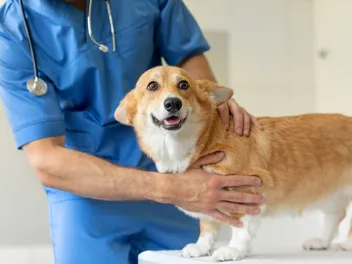
Neutering your dog is an important step in preventing unwanted litters, reproductive issues, and behavioral problems. It’s a safe, quick, and effective surgery, and most dogs recover in a short time with no complications or lasting problems.
Male dogs can be neutered in 5 to 20 minutes, depending on their age and size1. The dog will then take about 15 to 30 minutes to recover from the effects of anesthesia and a week or two to recover fully from the surgery.

How Is Neutering Performed?
Puppies can be neutered as early as 8 weeks under certain circumstances, but it’s best to wait until at least 6 months. Older dogs that haven’t been neutered as puppies can still be neutered as adults provided the vet thinks they’re healthy enough.
Neutering is the removal of the testicles under general anesthesia. Your dog will be fully asleep and intubated, meaning a breathing tube is inserted in his throat. He’ll also receive medication for sedation and pain relief prior to anesthesia.
During surgery, your dog’s oxygen level and heart rate are monitored carefully. An incision is made in the skin at the base of the penis near the scrotum, which is the skin that holds the testicles. Both testicles are removed, and the incision is stitched closed with sutures beneath the skin. The external skin may be closed with glue, staples, or stitches.

Recovery From Neutering
Neutering is a routine procedure, and most dogs recover without issue. Dogs take about one to two weeks to recover fully. During this time, you may be asked to restrict your dog’s activity with leashed walks and a slow return to exercise. Your vet will advise you on aftercare.
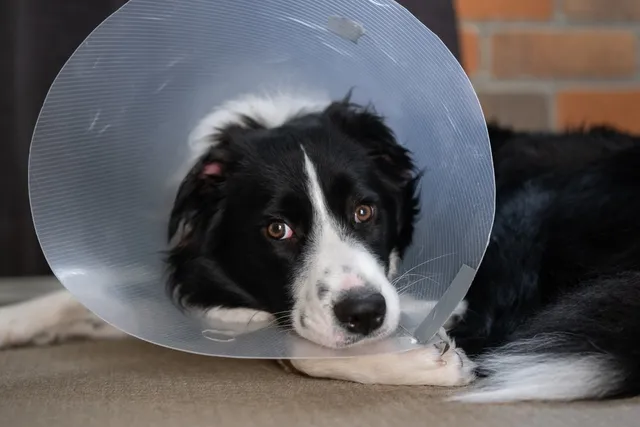
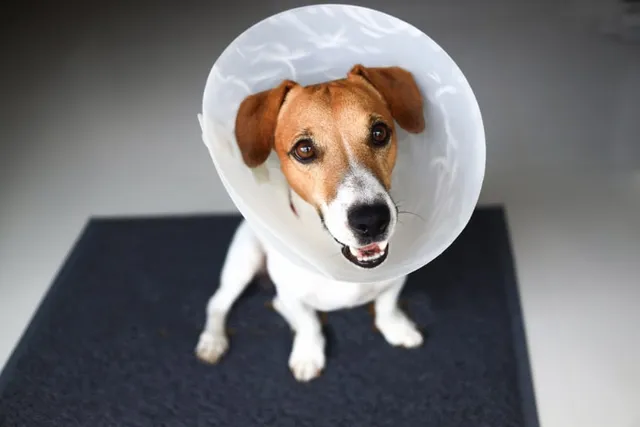
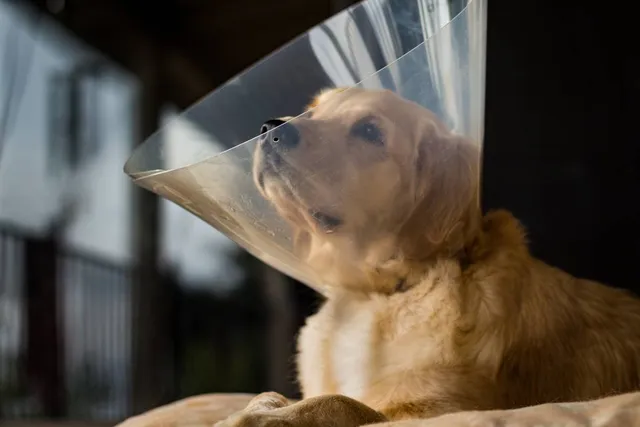
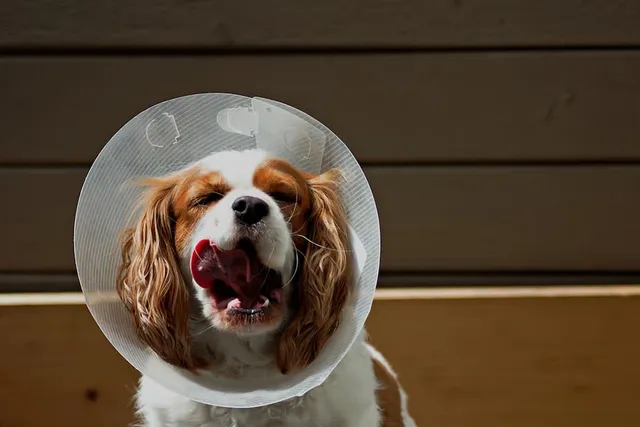
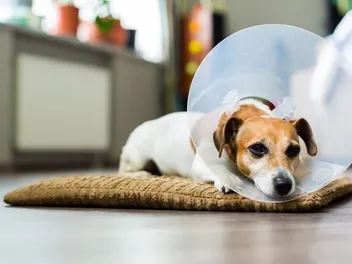
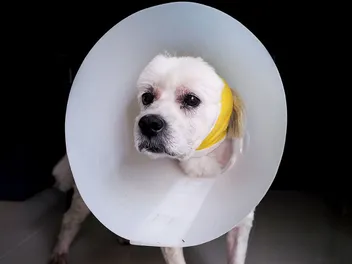
Your dog may need a collar or dog cone to prevent him from licking or biting at his incision. You can use an e-collar or a pillow collar, whichever is more comfortable for your dog and prevents him from accessing his incision.
During the recovery period, you must monitor the surgical site for redness, discharge, or swelling. Your dog may be on pain medication and an antibiotic.

Are There Risks to Neutering?
Healthy male dogs have the lowest risk for neutering and are less likely to develop serious complications. The challenge with active young dogs is keeping their activity restricted after surgery, but the complications are typically mild.
Older male dogs are more prone to complications. These dogs may have medical conditions that prevent rapid healing or impact their organ function, and by extension, their safety while undergoing anesthesia. It’s important to discuss your options with your vet and pull pre-surgical bloodwork to check organ function.
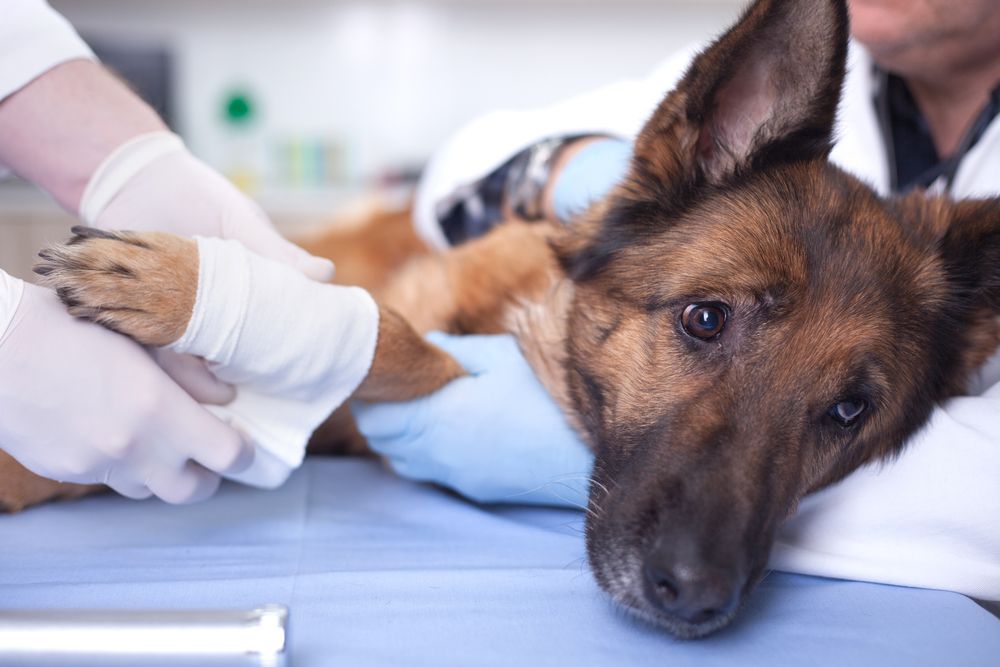
The most common post-operative complications with neutering include inflammation or infection at the incision, swelling under the skin, bleeding, and popped stitches that allow the incision to open. These complications may be caused by a dog chewing, licking, or biting at the incision or being too active during the recovery period.
If you like to talk with a vet to clear out any other doubts you might have regarding this topic, you can consult one online.

Conclusion
Neutering your dog is not only a smart choice for his health but for the larger community. Your dog should be neutered at an appropriate age to prevent behavioral problems, health problems, and contributing to overpopulation. The surgery is quick and relatively pain-free, and most dogs recover with no complications.
See also:
Featured Image Credit: VP Photo Studio, Shutterstock
Expert dog care, straight to your inbox
Vet-reviewed advice, training tips, and the best of Dogster. Free, and you can unsubscribe anytime.
By signing up, you agree to our Terms & Conditions and Privacy & Cookies Policy.
Nicole has loved animals of all sizes her whole life so it's no wonder she has dedicated her career to helping them through what she loves best: learning, writing, and sharing knowledge with others. She’s the proud mom of two dogs, a cat, and a human. With a degree in Education and 15+ years of writing experience, Nicole wants to help pet parents and pets around the planet to live happy, safe, and healthy lives.
Join the conversation
Ask a question, share your story, or send private feedback.