Get

In Your Inbox

Dogster is reader-supported. When you buy via links on our site, we may earn an affiliate commission at no cost to you. Learn more.

How Long Does It Take to Spay a Dog? Vet-Reviewed Facts & FAQ

Share

woman and labrador dog consulting with the vet

Spaying your dog is a big decision; although common, it’s a major surgery. However, it’s ideal for most dogs since it prevents unwanted pregnancies and reproductive problems in the future. So how long does a spay take? A female dog spaying procedure takes between 20 and 90 minutes, depending on the age, size, and heat cycle of the dog.1 Female dogs in heat can take longer because their reproductive tract has a prominent blood supply and is more delicate.

divider dog paws 3 oct 2024

Spay Surgery

You’re welcome to use our images, but we require you link directly to this site for credit (ex. Image from Dogster)

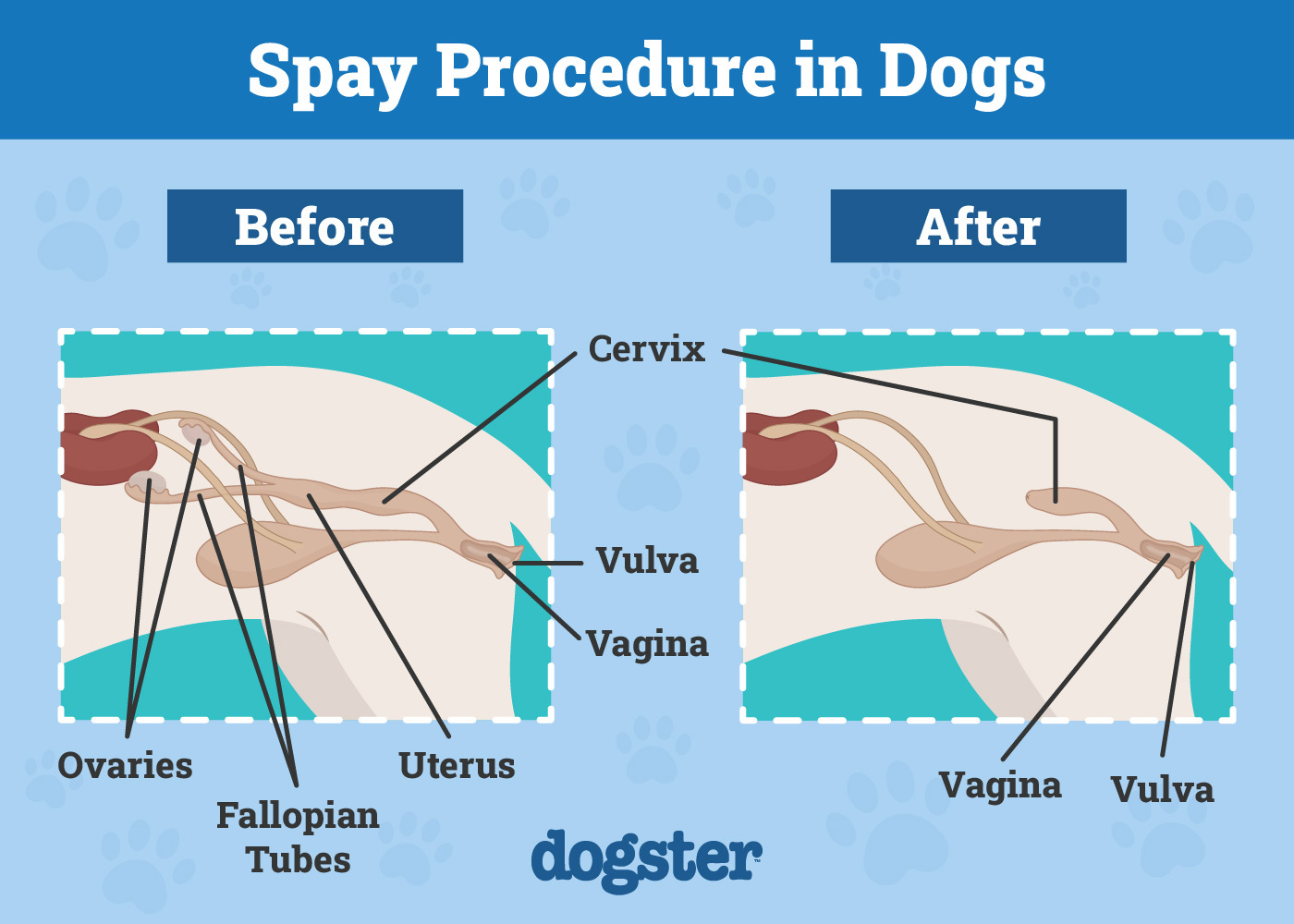
Spaying is the common name used for ovariohysterectomy, a surgical procedure that removes the uterus and ovaries to sterilize a female dog and prevent reproduction. Some vets will perform an ovariectomy, which just removes the ovaries, but it’s not as common. A spaying surgery is performed under general anesthesia, so your dog will be asleep. Her heart rate and respiration rate will be monitored closely throughout the procedure.

Typically, the vet will run bloodwork before surgery to check your dog’s organ function and ensure she’s healthy enough for anesthesia. Before the anesthesia, your dog will receive a sedative to reduce anxiety and pain. Then, your dog is put under anesthesia, and the abdomen is clipped to prepare for surgery. When ready, an incision is made through the skin of the abdomen. Depending on your dog’s size, this incision can be big or small. The vet will use a spay hook to find the uterus and bring it out of the abdomen.

The ovaries are clamped off with a surgical tool, and the vet ties off each ovary and removes it with a scalpel. Depending on the technique used, the uterus may be left in the abdomen or may be removed. If everything goes well, the vet will close the abdomen with sutures beneath the skin, which dissolve on their own, and staples or sutures on the skin. These may need to be removed after recovery, which gives your vet an opportunity to check the incision.

Your dog will be given pain medication and allowed to wake up, which may take 20 minutes to an hour. Most dogs can go home on the day of the surgery, but your vet may wish to keep your dog overnight or longer.
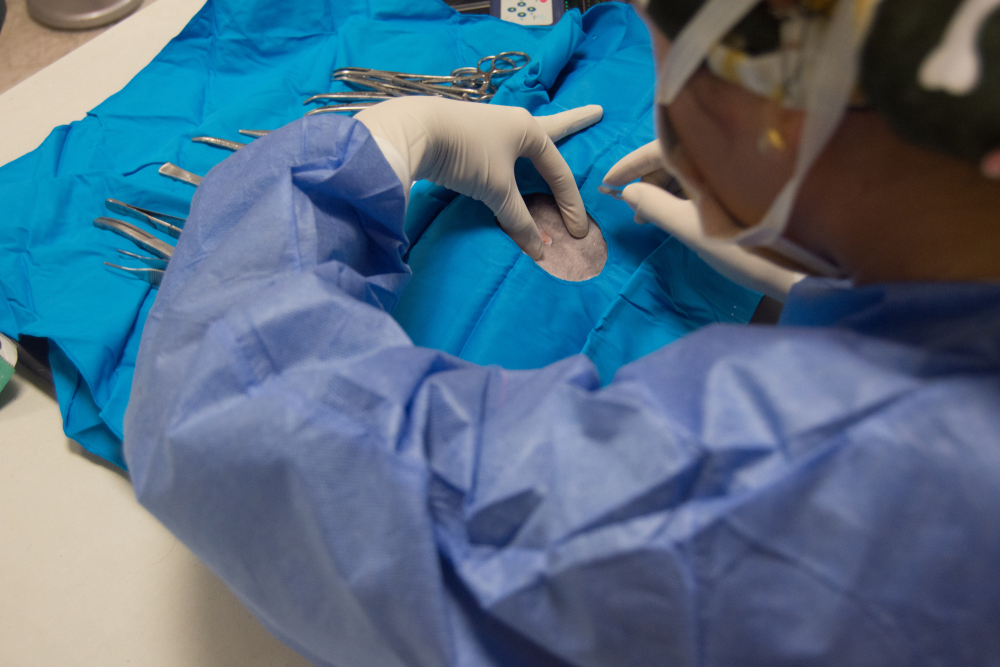

Vet about to do a surgery
Image Credit: AndresDica, Shutterstock

Dogster divider_v2_NEW_MAY_24_

Spaying Post-Operative Recovery and Complications

Spays are common surgeries that typically have no complications. The risks include pain, infection, excessive bleeding, and opening of the surgical site. Anesthesia also has risks, including death, which is why it’s important to get a pre-surgical examination and bloodwork. Most dogs recover from a spay with no issues, but following the post-operative instructions is important.

Your dog will probably need a dog cone, e-collar, or pillow collar to prevent her from licking or biting at the staples or sutures, which can cause infection or opening. Her activity will also be restricted to leash walks and rest for one to two weeks following surgery. A little discomfort is normal and can be managed with pain medication. Excessive pain, swelling, redness, heat, odor, or discharge from the incision could indicate a problem.

Complications usually arise from a dog licking or biting the surgical site. If you have any concerns, contact your vet.

If you need to speak with a vet but can't get to one, head over to PangoVet. It's our online service where you can talk to a vet online and get the advice you need for your dog — all at an affordable price!


PangoVet_Mention-in-Content Savings V1

Dogster divider_v1_NEW_MAY_24_

Benefits of Spaying

Spaying a female dog prevents overpopulation, which is why most shelters and rescues spay female dogs before adopting them out. Removing the ovaries and uterus not only eliminates pregnancies but also prevents the heat cycle and the hormone fluctuations that go along with it.

When females go into heat, they can experience an urge to roam and find a mate. They may also become more vocal during this period and bark or whine. Most females are good at keeping themselves clean, but a dog in heat can leave bloody discharge around.

There are numerous health benefits to spaying as well. Spaying at the appropriate time can prevent a potentially deadly and painful uterine infection called pyometra, as well as uterine and ovarian cancers. Studies show that female dogs spayed before their first heat cycle have a 0.5% chance of developing breast cancer. Spayed dogs also generally live longer than their intact counterparts.

divider dog paws 3 oct 2024

Conclusion

Spaying female dogs is generally recommended for their health benefits and advantages. Female dogs that are spayed at an appropriate age are at a lower risk for reproductive problems and cancers, as well as dangerous behaviors like roaming in search of a mate. Spaying also prevents unwanted litters and helps with the overpopulation of dogs in animal shelters and rescues.

See Also:


Featured Image Credit: SeventyFour, Shutterstock

Want content like this delivered to you?

Sign Up For Our Newsletter

News, insights, expert advice, and everything dog

* By submitting, you agree to our Terms & Conditions and Privacy & Cookies Policy.


How useful was this post?

Click on a star to rate (you can leave written feedback after clicking submit)

Help us improve Dogster for pet parents!

Your feedback really matters.

What did you like about this post? Also how can we improve it?

Join the conversation

Leave a Reply

You’re very welcome to leave a comment or question. Please know that all comments must meet our community guidelines, and your email address will NOT be published. Let’s have a positive and constructive conversation.


Talk With A Vet Online

Peace of mind,
anywhere, anytime

Affordable vet advice

Ask Dr. Paola- I Need Help With My Dogs Anxiety! (March 16, 2026)

Welcome to our “Ask Dr. Paola” series, where every Monday we bring expert advice straight from Dr. Paola Cuevas (MVZ) to help our...

The Cleaning Mistakes That Ruin Wool Rugs (And What to Do Instead)

The instinct when something lands on your rug is often to scrub it out fast. For wool, that instinct will make things significantly...

Marigold Shocks Her Owner By Delivering 17 Irish Doodle Puppies in a Single Day

The one question vets hate hearing as they ultrasound expectant canine mothers is “how many puppies are there?” The reason is that, on...

Dogster’s Weekly Photo Contest Winners: Out Adventuring (March 12, 2026)

Every week our team gets the privilege of sorting through our readers photos to choose what dogs will win this weeks contest! See...

More related

What Time Should I Feed My Dog? Vet-Verified Feeding Guide

Canine nutrition can feel like an impossible labyrinth to navigate, whether you’re a first-time dog owner or not. There is so much information—and...

10 Best Dog Toys in 2026 – Reviews & Top Picks

Dog toys can provide exercise, mental stimulation, and even companionship for your dog. They can also buy you some peace while your pup...

Do Dogs Naturally Know How to Swim? Breeds, Tips & FAQ

It’s a common assumption that all dogs are natural swimmers, an idea largely influenced by the well-known “dog paddle” swim style. However, this...

Nicotine Poisoning in Dogs: Our Vet Explains the Signs, Causes & Treatment

Did you know that nicotine can be highly toxic and even fatal if your pet ingests it? Depending on the source of the...

Keep reading

10 Best Legume-Free Dog Foods in 2026 – Reviews & Top Picks

Food sensitivities can make shopping for dog food difficult, especially if your dog is allergic to common ingredients like legumes. While there are benefits to adding legumes to your dog’s diet, there are several reasons that you might prefer to...

dog eating from bowl in kitchen

Are Plastic Bowls or Containers Bad for Dog Food? Vet-Approved Guide

Plastic is in the limelight—raising many concerns. As the pet market grows, so does the controversy about using certain products. But with so many plastic dog food packaging and food bowls still dominating the market, are they really so bad?...

poodle dog eating

Are Pig Ears Good for Dogs? Vet-Verified Facts & Guide

Pig ears have been popular dog treats for quite a while, but it’s always a good idea to investigate whether any treat is suitable for your dog. When it comes to pig ears, the answer is “sort of.” Pig ears...

Pig Ears

Can Dogs Eat Duck? Vet-Verified Health Benefits

It’s hard to resist when your dog is begging for a scrap or two from your dinner plate. But before giving your pet any people food, you should be sure that it’s safe to do so. Some human foods are...

Can Dogs Eat_Duck

10 Best Dog Foods in Canada in 2026: Reviews & Top Picks

Choosing the right dog food can be a difficult task. There are countless brands and options on the market, so knowing which will be the healthiest is hard. While you might be tempted to choose the first food you see...

Hunting dog eating

10 Best Organic Dog Foods in 2026 – Reviews & Top Picks

There are currently no rules that manufacturers need to follow when calling a dog food natural or organic. As such, you need to check the ingredients and sources yourself to ensure that what you’re buying is natural. Furthermore, you have...

labradoodle puppy with dog bowl

Can Dogs Eat French Fries? Vet-Approved Nutrition Facts & FAQ

French fries are an incredibly popular human treat. The fried slivers of potatoes, typically covered in salt, are commonly served at fast food chains and takeaways, and it is also possible to buy packaged fries that have already been fried...

Can Dogs Eat French Fries

Can Dogs Eat Bugs? What the Science Says

Any dog owner has probably seen their dog eat a bug here and there, as dogs love to snoop and sniff outdoors. Dogs are curious beings and love to investigate the world around them, which can mean playing with a...

Can Dogs Eat_bugs

Love Dogs? So Do We! Join the Dogster Community

Stay informed with expert pet care insights delivered straight to your inbox! Discover professional guidance on animal behavior, feeding tips, trusted product picks, and much more.


Sign up for the Dogster Email Newsletter