8 French Bulldog Eye Problems: Vet-Reviewed Common Types & Symptoms


We all love our dogs and want what is best for them. When it comes to managing their health, it can feel like a daunting responsibility. To what conditions is your pup most susceptible, and how can those conditions be treated?
This article will shed light on eight eye issues that French bulldogs commonly face, explaining their symptoms and treatment methods. If you want to brush up on your knowledge or if your dog is experiencing eye discomfort, this article will cover everything you need to know.

The 8 Types of Eye Problems For French Bulldogs
1. Eye Infection
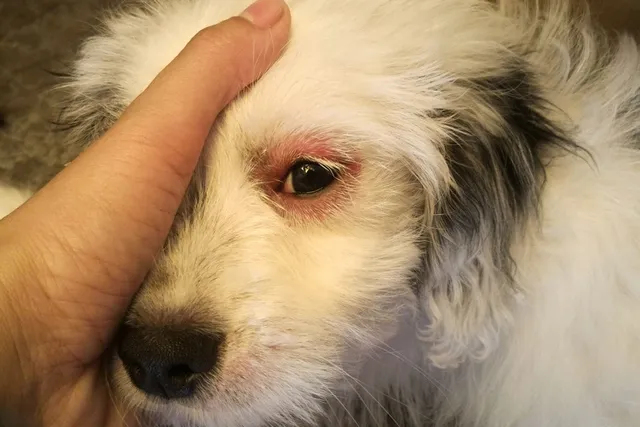
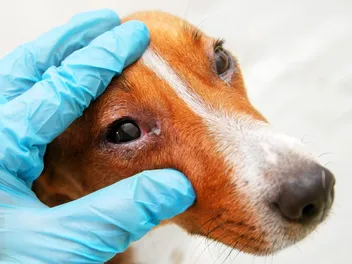
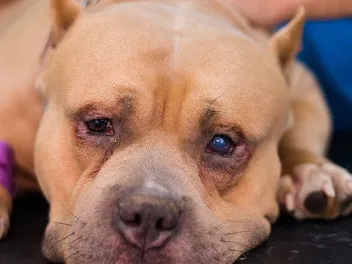
Eye infections1, just like in humans, can cause significant discomfort. An eye infection can progress quickly and lead to complications such as impaired vision, and it is vital to reach out to your vet if you think that your dog’s eye is infected.
Some of the causes of eye infections are allergies, viruses, bacteria, foreign objects, or injuries. Signs of an eye infection discolored ocular discharge, redness, swelling, excessive pawing at the eye, and/or excessive blinking.

How To Treat
2. Cataracts
Cataracts2 refer to the hazy portions of the ocular lens caused by proteins clumping together to form cloudiness. Cataracts are often inherited, but they can also be caused by outside factors, such as injuries or diabetes mellitus. They are often seen in older patients.
How To Treat
3. Distichiasis
When an eyelash is rooted in an odd spot, often causing it to grow inward toward the eye, it is called distichiasis. Distichiasis3 is most commonly a hereditary issue. Depending on the seriousness of the condition, the symptoms will vary. The severity is determined by the number of eyelashes growing abnormally, their size, and their stiffness.
If there is a single eyelash that is small and soft, an affected dog may be asymptomatic. However, you may notice inflammation, discharge, and pain if there are several long, stiff eyelashes. If your dog blinks or paws at their eye often, it could be a sign that they are in pain.

How To Treat
4. Entropion
Entropion occurs when the eyelid turns inward. It causes the eyelid and hair on the eyelid to scratch the cornea, leading to pain. It can lead to other serious complications, such as corneal ulcers. Symptoms of this condition include excessive blinking, watery eyes, and discharge.
How To Treat
5. Dry Eye
Keratoconjunctivitis Sicca (KCS), also known as dry eye, is an inflammation of parts of the eyes, typically caused by a lack of tear production. An impaired tear film can be caused by several things like hypothyroidism and nervous system issues. Symptoms include irritation of the eyes, constant blinking, and discharge. Corneal ulcers and scarring may also occur.

How To Treat
6. Cherry Eye
Cherry eye is essentially the prolapse of the third eyelid gland. Dogs have third eyelids as an added feature of protection. When the gland in the lid pops outward, it is called “cherry eye.”
The primary indicator of cherry eye includes a red, swelling lump in the lower eyelid, typically near the muzzle or nose. The swelling can be significant, covering a large portion of the eye, or it can be smaller and appear less frequently.
Regardless, if your dog displays any signs of having cherry eye, reach out to your vet immediately. It is crucial to receive treatment as quickly as possible to limit damage to the eyelid and eye.
How To Treat
7. Pink Eye
Pink Eye, clinically known as conjunctivitis, is a condition in which the tissue coating the eye and inner eyelids is inflamed. It can be caused by allergies, viruses, and bacteria. Symptoms of pink eye are redness of the eye, swelling of the eyelid, watery eyes, discharge, excessive blinking or pawing, and eyelids that stick together.

How To Treat
8. Corneal Ulcers
Corneal ulcers are erosions through several layers of the cornea, the transparent outermost layer of the eyeball. A corneal ulcer is a serious complication, and if you believe your dog may have one, reach out to your vet immediately. If the condition is left without treatment, your dog can lose their vision permanently. Signs of corneal ulcers include rubbing the eye or attempting to keep the eye closed. Discharge is another common symptom.
How To Treat
When To Contact Your Vet
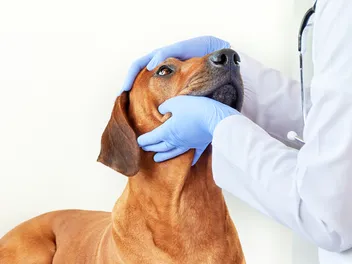
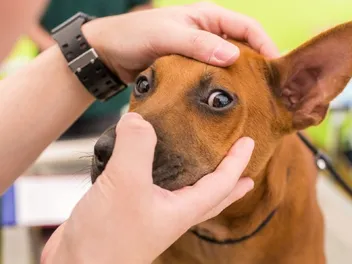
Any sudden changes in the behavior of your pet regarding their vision or eye comfort should be assessed by your vet as soon as possible.

Conclusion
As frightening as it can be to realize our dogs are suffering, it is important to recognize the signs before their condition becomes more serious. We hope this article has helped you become more informed on the eye complications your French bulldog may experience and allows you to get help for your dog as soon as it is needed.
Related Reads:
Sources
Featured Image Credit: Damir Mijailovic, Pexels
Expert dog care, straight to your inbox
News, insights, expert advice, and everything dog.

No spam — unsubscribe anytime.
By signing up, you agree to our Terms & Conditions and Privacy & Cookies Policy.
How useful was this post?
Click a star to rate. You can leave written feedback afterwards. (We read all feedback.)
Pets are Jordyn’s passion, especially cats. Whenever she has the opportunity, she loves to learn about animals and share her knowledge with everyone. She is devoted to her mischievous tabby cat named Jack and works hard to buy him his favorite toys and treats. Discovering new ways to better care for her pet is always on the top of her to-do list, and she is eager to help pet parents everywhere who have similar pursuits. In her free time, she loves to write, read, and take long walks. She has a creative spirit, which often helps her to come up with funny cat names.