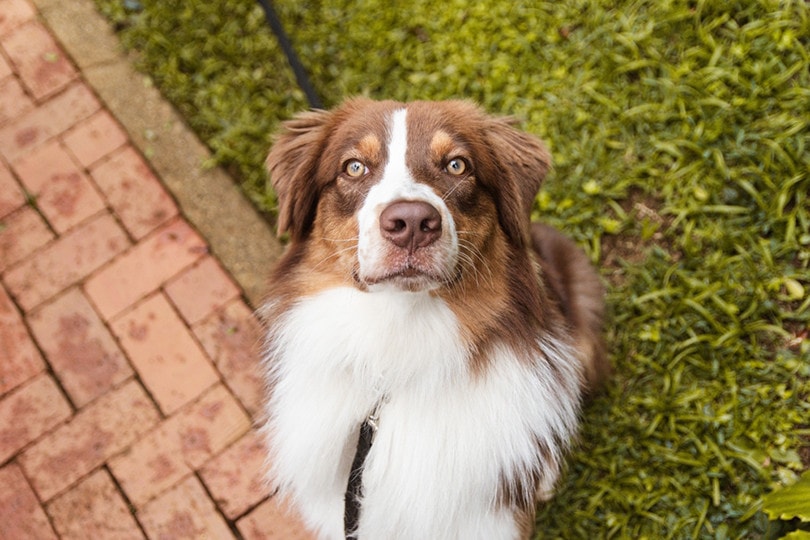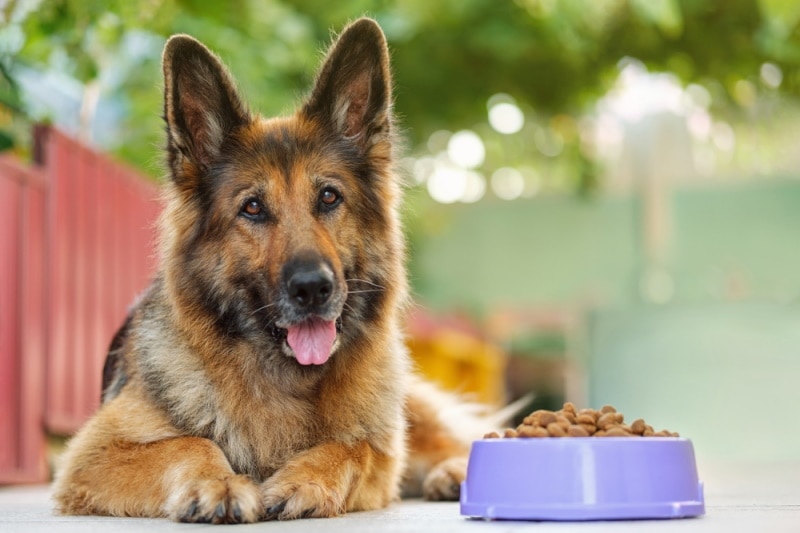
The love that comes with having a dog as a companion is so wonderful, but the fact that we can’t talk with our beloved dog seems like such an injustice. But thanks to body language and their gorgeous gazing eyes, we can understand them a lot easier. Any dog owner knows how heart-melting puppy dog eyes are, and a dog that gazes into your eyes with that look has you wrapped around their paw.
There is more to our dog’s big brown eyes than we may realize, so we decided to share these 15 fascinating facts about your dog’s eyes.

The 15 Most Fascinating Facts About Dogs’ Eyes
1. Dogs Are Not Entirely Colorblind
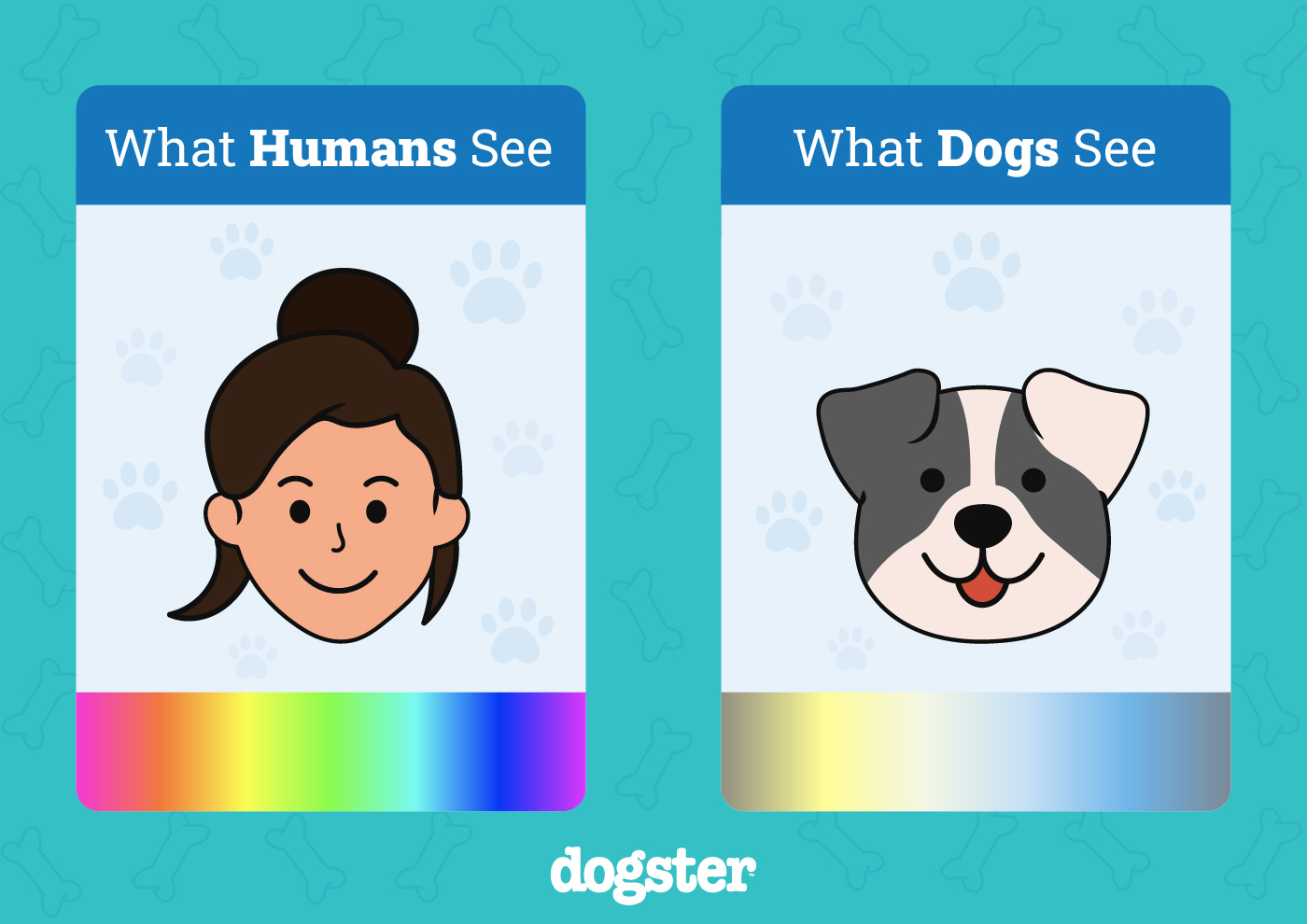
While humans have three functioning cone cells, which allow us to see color, dogs have two, making them dichromates. Contrary to the belief that dogs only see in black and white, they see color, similar to a human who is red-green color blind. They struggle to differentiate red from green but can easily see blue and yellow tones. For this reason, you will notice that many agility obstacles are made up of yellow and blue.
To compensate for the lack of color, dogs use smell, texture, and other sensory signals to perceive their surroundings accurately.
2. Dogs Have Excellent Night Vision
Dogs are thought to be able to see in light five times as dimly as humans. They descended from wolves, who hunt and move primarily at dawn, dusk, and night, which requires the ability to see in low light conditions and darkness. Like humans, their eyes contain rods that allow them to see in the dark, but dogs’ eyes have more rods.
3. Dogs Have a Third Eyelid
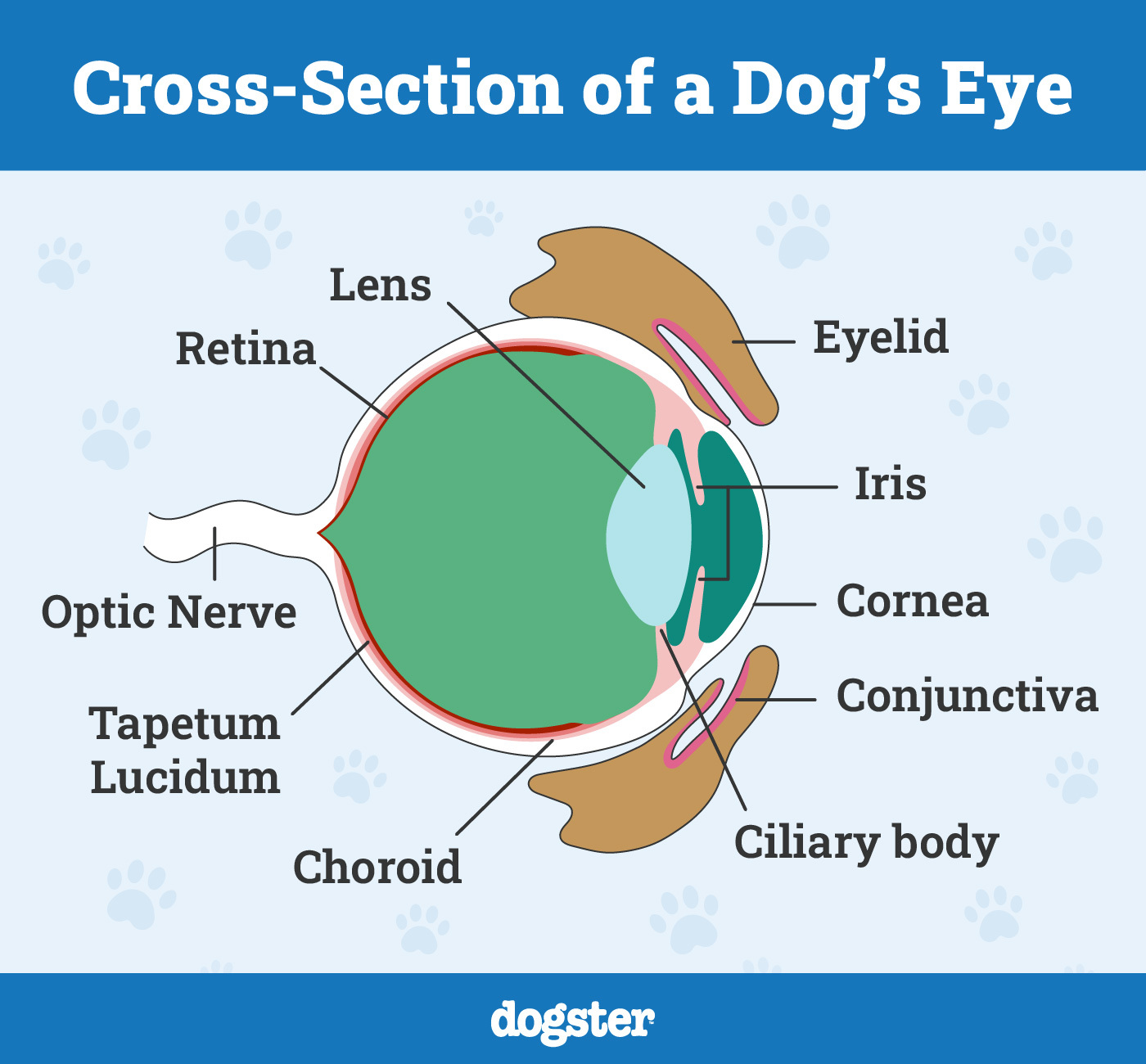
When your dog is tired or feeling under the weather, you may notice pink tissue expanding across part of the eye. This tissue is considered a third eyelid, known as a nictitating membrane. Its primary function is to keep the eyes moist, produce tears, protect from injury and infection, and keep the cornea clean. While all dog breeds have a nictitating membrane, the coloration varies between species, ranging from clear to cloudy.

4. The Familiar Spots Above Dogs Eyes Are Known as Pips
You may be familiar with the spots of fur of contrasting colors above your dog’s eye. These are known as pips, but some people refer to them as floaters. They are commonly seen in Doberman Pinschers, German Shepherds, Rottweilers, English Toy Spaniels, Bernese Mountain Dogs, and Gordon Setters.
5. Dogs Have Amazing Peripheral Vision
Dog eyes are more widely spaced and directed outward than human eyes, which gives them excellent peripheral vision. A dog can see 250–270 degrees, whereas humans can only see 180 degrees. The trade-off is a narrower range of visual accuracy, so dogs lack depth perception.
6. Dogs’ Eyes Have a Mirror Like Layer in Their Eyes
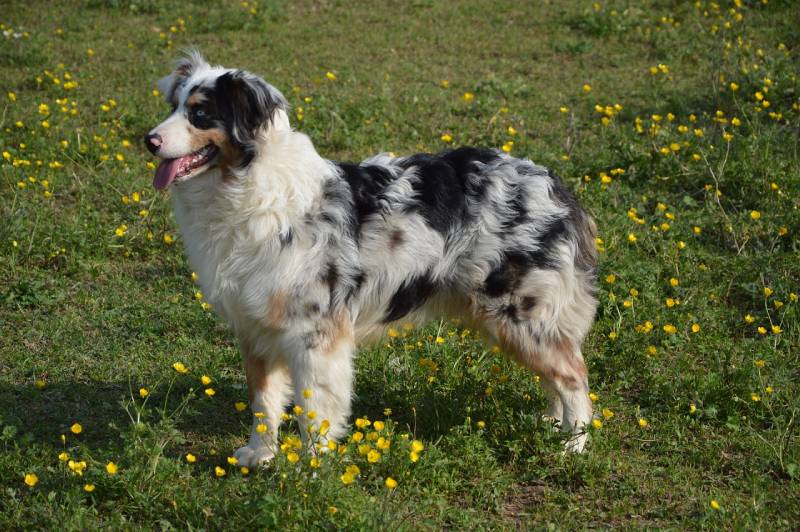
The glimmer you notice in your dog’s eyes when light hits their face is there for a reason. Their eyes have a mirror-like layer behind the retina, known as the tapetum lucidum. The green color is caused by the layer of shiny cells that line the tapetum lucidum. Its function enables dogs to see in small amounts of light by reflecting the light that enters the retina, allowing the eyes a second chance to detect it.
8. Dog’s Eyes Can be Various Colors
Most dog eyes are shades of brown, but they can have other colors, too. Some dogs even have two different colored eyes, which is a condition known as heterochromia. This condition is usually genetic, but some dogs can develop it later in life due to glaucoma, cataracts, or injuries.
Some dogs may have green or hazel eyes, but the colors are rare.

9. The Blue in a Huskies Eye Is Just an Optical Illusion
Huskies are prized for their beautiful blue eyes, but the reality is that they are only blue due to genetics. Huskies have blue eyes due to a mutation in the ALX4 gene on canine chromosome 18, which causes the pigment in their eyes to become blue.
Their eyes are not blue, but they appear blue due to the way the eyes absorb and reflect light. This illusion resembles how the sky appears blue, but we know space is not blue at all. Blue eyes are found in approximately 40% of Huskies.
10. Dogs Can See in Ultraviolet
UV light is invisible to the human eye. It was previously assumed that other mammals could not see ultraviolet wavelengths due to their eye lenses being similar to humans. According to one study, dogs have special lenses that make them UV-sensitive, allowing them to detect a broader spectrum of wavelengths. The dog’s eye was tested, and it allowed more than 61% of the UV light to pass through and reach the photosensitive receptors in the retina.

11. Dogs Love Gazing Into Their Humans’ Eyes
Dogs, like humans, will stare into the eyes of someone they adore to express admiration. According to a 2015 study, eye contact between dogs and their owners increases oxytocin levels, which improves bonding and feelings of love.
A study found that dogs maintain eye contact with humans for an average of 40 seconds.
12. Swelling Under Your Dogs Eye Could Indicate a Tooth Problem
Because dogs have large upper carnassial teeth with roots that extend just below the eye, an abscess on the tooth can cause swelling, which can easily be mistaken for an eye infection. Tooth fractures in dogs are most commonly caused by chewing on hard objects like bones, which can chip the enamel or fracture the tooth, allowing bacteria to enter.
If you want more information or are concerned about the health of your pet, you should contact your vet.
If you need to speak with a vet but can't get to one, head over to PangoVet. It's our online service where you can talk to a vet online and get the advice you need for your pet — all at an affordable price!
13. Dogs Have a Blind Spot Under Their Noses
Have you ever placed your dog’s favorite snack right in front of them and noticed that they didn’t see it? That’s because most dogs, except flat-faced species, have prominent noses that can block some of their vision.
That may also lead you to wonder if dogs can see their noses. Their field of vision with both eyes is narrower than ours, but their snouts are within that field of vision. They always see their noses, but their brains do a clever trick and block it out because it’s always there.
14. Dogs Don’t Have Eyebrows
Humans have eyebrows above their eyes to prevent sweat from dripping into their eyes when they perspire, but dogs don’t need eyebrows because they do not sweat as we do. While dogs don’t have a physical patch of hair in the shape of an eyebrow above their eyes, they do have a brow ridge on their facial bone structure, which may create the illusion that dogs could have eyebrows.

15. Dogs Have Whiskers Over Their Eyes
It seems normal for a dog to have whiskers on their chin or cheeks, but over their eyes sounds a bit odd. Dogs have those strange hairs on the top of their eyes, known as supraorbital whiskers, which are especially important for protection. A dog’s eyes are vulnerable to being poked and injured, and the whiskers protect them by causing a reflexive blinking reaction. They can also help a dog determine if they can squeeze through tight spaces without becoming stuck.

Conclusion
We hope these facts were an eye-opener and have helped you appreciate your dog’s eyes and sight a little more. When you catch your dog gazing at you, take a moment to gaze back to acknowledge and enjoy the connection. The next time you shop for a toy, look for blue and yellow colors, and when your dog’s eyes glow in the moonlight, you’ll realize how exceptional they are.
See also:
- Conjunctivitis in Dogs: Signs, Treatment & Causes (Vet Answer)
- Can Dogs Wear Glasses? Our Vet Explains the Benefits of Eyewear
Featured Image Credit: Crystal Alba, Shutterstock
 The 15 Most Fascinating Facts About Dogs’ Eyes