Why Do Dogs Eyes Glow in the Dark? Anatomy Facts Explained (Vet Reviewed)


One of the early roles that dogs served for humans was a hunting companion. Many factors influenced this choice, including the animals’ vision in lower light levels. While canine eye anatomy is similar to humans, stark differences do exist.
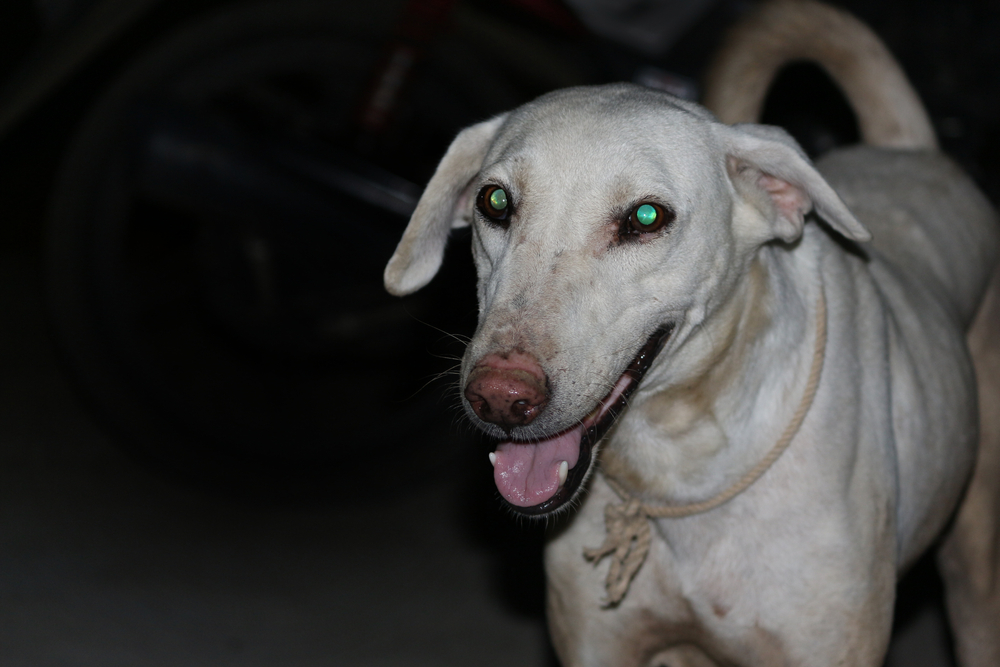
Dogs’ eyes can seemingly glow in the dark. You may notice this phenomenon if you try to photograph your dog at night. The reason for the glowing appearance lies in a structure that canines and other vertebrates possess that humans lack: the tapetum lucidum. Its function is to improve vision in low light levels. It gives animals a competitive edge on both sides of the predator-prey relationship.

Canine Eye Anatomy
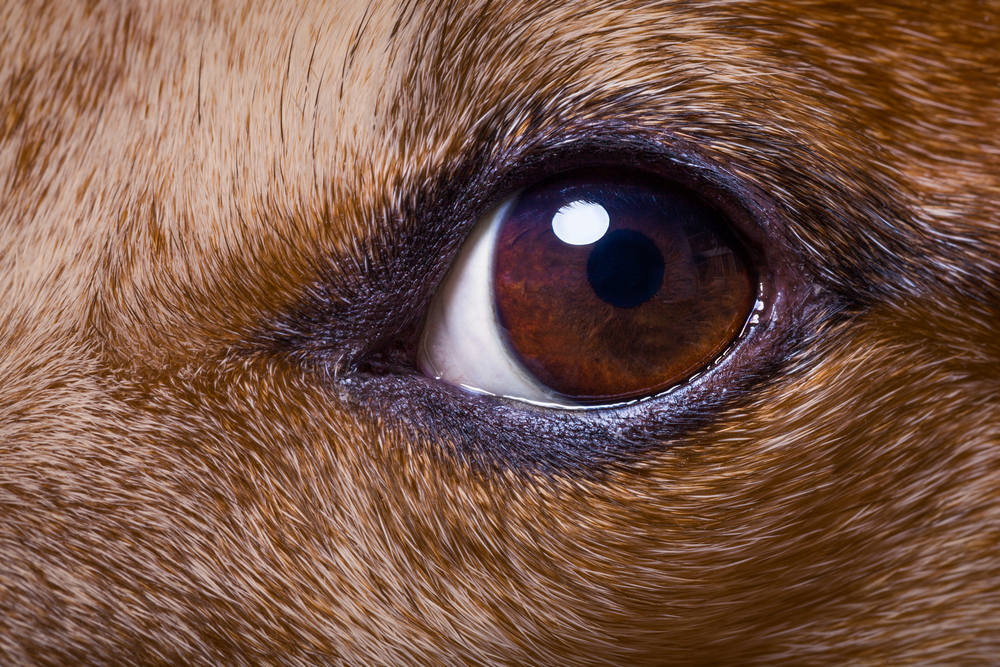
Human and canine eyes are similar in many ways. They have several structures in common, including the pupil, iris, and sclera or white of eyes. Photoreceptors are specialized cells in the retina (back of the eye) that allow us to see in various lighting conditions. Photoreceptors are divided into cones, for mid to bright light and color vision, and rods, that detect motion and help us see in dimly lit situations, and it’s the same for canines.

There are several adaptations that canine eyes have that aid their ability to see relatively well in the dark. These include having a larger pupil size to allow in more light, the ability to dilate and constrict the pupil to a greater degree than humans, having more rods and increased sensitivity of the rod photopigment, rhodopsin. However this comes at a cost to visual acuity (ability to see details in objects, clarity of vision).
The tapetum lucidum is an iridescent crystalline reflective structure present behind the retina that serves to reflect light back to the retina. This increases the availability of light energy to see, sort of like giving the retina a second chance to use the light.
Dogs evolved as crepuscular animals (active at dawn and dusk) and humans as diurnal (active during the day). This is probably the reason behind our differently functioning ability to see in low light conditions.

The Tapetum Lucidum
Sitting behind the retina at the back of the eye, the tapetum lucidum is a reflective structure found in some vertebrate animals that is thought to improve their ability to see in low light levels.
The eye-shine you see in your dog’s eyes at night is the reflection of light from the tapetum lucidum. It can be seen when light shines towards your dog's eyes in low light levels; such as if you are out walking your dog in the evening and car lights go past, you may catch a glimpse of your dog’s eyes seeming to glow in the dark. Your dog’s eyes cannot produce light and shine it out like a torch, only reflect incoming light from external sources.
Dogs aren’t the only animals that have a tapetum lucidum, although they vary in shape and size through different species and even different breeds of dogs. Nocturnal and crepuscular species also have it, giving them the same competitive edge. That includes deer, minks, and raccoons. Even crocodiles and sharks have a tapetum lucidum. Humans, many primates, squirrels, red kangaroos and pigs are amongst those that don’t have one.
Several factors can affect the appearance of the glow in your pet’s eye. It varies with the animal. The concentration of zinc also plays a role. The color can vary as the lenses become more dense with age. The breed even makes a difference. For example, the Miniature Schnauzer has a turquoise glow, whereas the tapetum lucidum takes on a light-yellow cast in Labrador Retrievers.
The tapetum lucidum may appear red in dogs with blue eyes and white coats. Like people, the flash of a camera highlights the blood vessels in our eyes, making it look this way.


Other Changes in the Tapetum Lucidum and Its Glow
The appearance of the tapetum lucidum correlates with the animal’s coat color, which accounts for some differences across breed and species lines. However, other genetics can also influence it. Researchers have identified a mutation that causes the degeneration of the tapetum lucidum in laboratory Beagles. The scientists noted a failure of zinc accumulation. Otherwise, the dogs’ vision was normal.
Another study involving Dachshunds found an association between the absence of the tapetum lucidum and the merle gene. It gives dogs a mottled or harlequin coat appearance. However, it’s also linked to several birth defects affecting eye structure.
Final Thoughts
The eerie glow of your dog’s eyes in the dark isn’t unusual or uncommon in the animal kingdom. It’s a valuable adaptation for species that are active at night, dawn, or dusk. It allows them to see more in low light levels and helps them survive in challenging conditions. The next time your dog’s eyes seem to be glowing in the dark, it is actually light reflecting off the tapetum lucidum giving them a second chance to use the light to see in the dark.
Featured Image Credit: Mayur Shelkar, Shutterstock
Expert dog care, straight to your inbox
Vet-reviewed advice, training tips, and the best of Dogster. Free, and you can unsubscribe anytime.
By signing up, you agree to our Terms & Conditions and Privacy & Cookies Policy.
Since 2009, Chris has written on a variety of topics. Her motto with all of her writing is “science-based writing nurtured by education and critical thinking.” She specializes in scientific topics, with a special love for health and environmental topics, and of course, pets of all shapes and sizes.
Chris lives happily with her husband and three cats in the land of 10,000 lakes, writing, wining, and boating as much as she can. She and her husband, Norm, were awarded the State of Kentucky Colonel Honor for their restoration work at Mammoth Cave National Park.
Join the conversation
Ask a question, share your story, or send private feedback.