Dog Warts: Signs, Diagnosis & Treatment (Vet Answer)
In this article
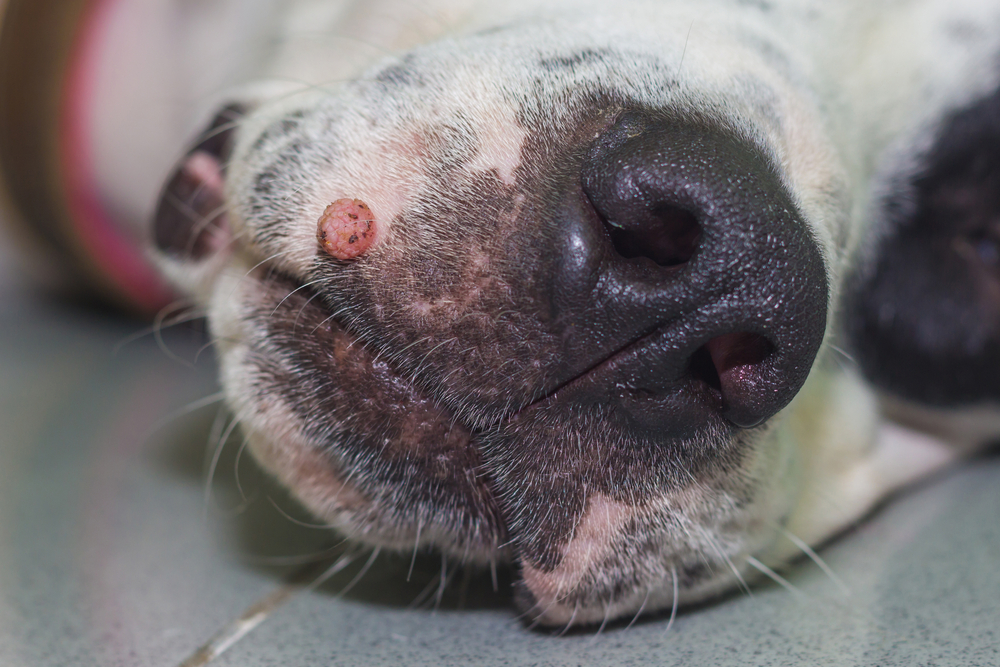
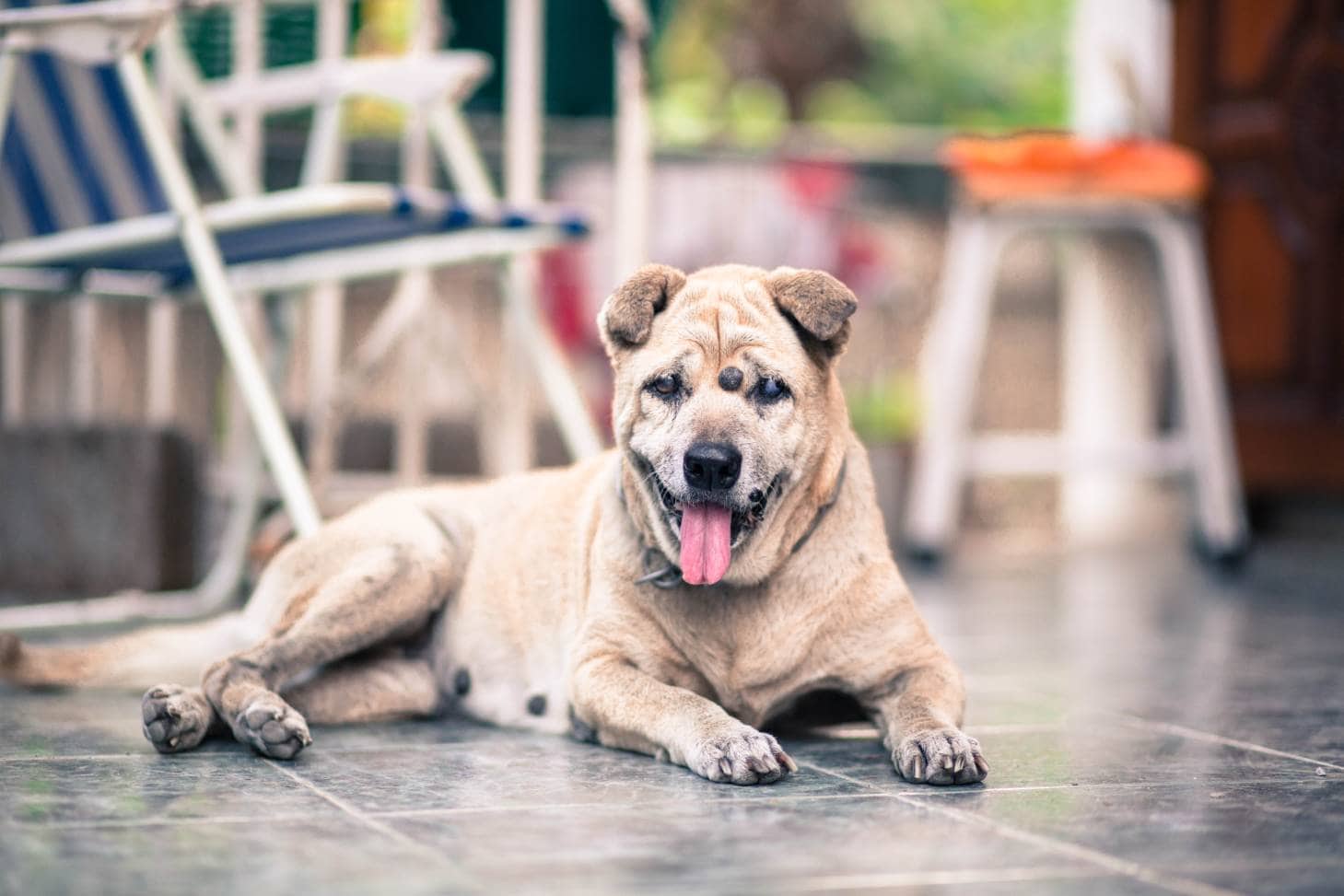
Just like humans, dogs can get warts, so it’s not unusual to spot one of these knobbly, hairless lumps poking through your dog’s fur. And just like in humans, warts on dogs may not be all that pretty to look at, but they are completely harmless. However, there are quite a few lumps and bumps that dogs can get that look like warts but aren’t, some of which can be harmful, so it’s important to be able to tell the difference.
Let’s learn a bit more about how to recognize warts on our dogs and what you need to do about them.

What Are Warts?
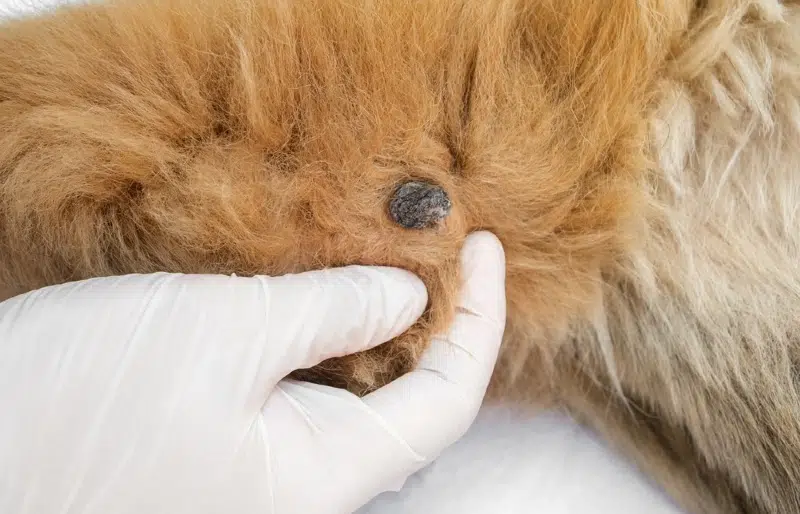
The technical term for a wart is “papilloma,” and you might be surprised to learn that, just like warts on people, they are actually benign tumors caused by a virus. In dogs, it is the canine papillomavirus, of which there are 24 identified strains, while we have our own human papillomavirus.1 These unsightly lumps are harmless, and in the majority of cases, our dogs are not aware of them and almost certainly don’t care about the look of them!
Papillomas often appear around the mouth of younger dogs or can grow on the skin all over the body, limbs, and face. They are dry, bumpy, isolated lesions. Most of the time, they grow outward, but from time to time, they can grow inward into the deeper layers of the skin, particularly if they are on the feet, and this type of papilloma can be slightly painful when touched.

Signs of Dog Warts
Warts are sometimes described as looking like a small head of cauliflower. However, many types exist, so they can vary in appearance. Some dogs will develop just one or two warts that are small and often easy to overlook. However, some dogs will have entire regions of the body covered in warts of various sizes, which can cause certain issues. For example, warts around or in the mouth can make it hard to eat and drink normally, while warts on their feed can cause lameness.
Get in touch with a veterinarian for guidance and advice on the best course of action.
What Causes Warts in Dogs?
Because papillomas are caused by a virus, they are contagious, so dogs can spread them through direct contact with each other or from contact with bedding, as the virus can survive in the environment for a short period of time. Over time, dogs often develop an immunity to the virus that causes papillomas, and they may regress on their own, particularly in the case of oral papillomas in young dogs.
How Are Warts Diagnosed?
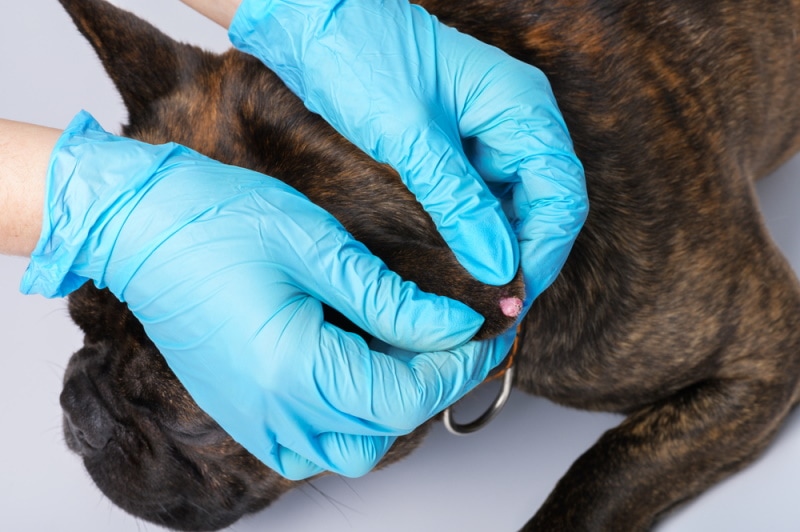
Your vet will usually be able to confirm the diagnosis of a wart based on its appearance, but if there is any doubt or concern that it could be something more sinister, they may recommend taking a sample of a small piece or removing the entire lump to send for analysis at the lab.
What Is the Treatment for Warts on Dogs?
In the majority of cases, warts don’t need treatment, you just need to keep an eye on them. However, if your dog chews, licks, or scratches at the wart, making it bleed, painful, or infected, your vet may recommend removing it using electrocautery, cryotherapy, or surgery. Vets don’t use the same sort of over-the-counter wart treatments that are used on people, as they can be painful and make the wart feel sore and irritated as they work, and your dog will likely want to chew or bite them while the treatment takes effect.
When a Wart Isn’t a Wart
We know that papillomas aren’t typically dangerous; however, there have been a small number of cases of oral papillomas that have transformed into malignant carcinomas, so it is always important to keep an eye on these lumps.2
What is extremely important is making sure that the wart on your dog is in fact a wart and not something more dangerous. Below are some lumps that can look similar to warts, some of which are just as harmless, but others, like mast cell tumors, that are a form of malignant cancer.
1. Sebaceous Adenoma

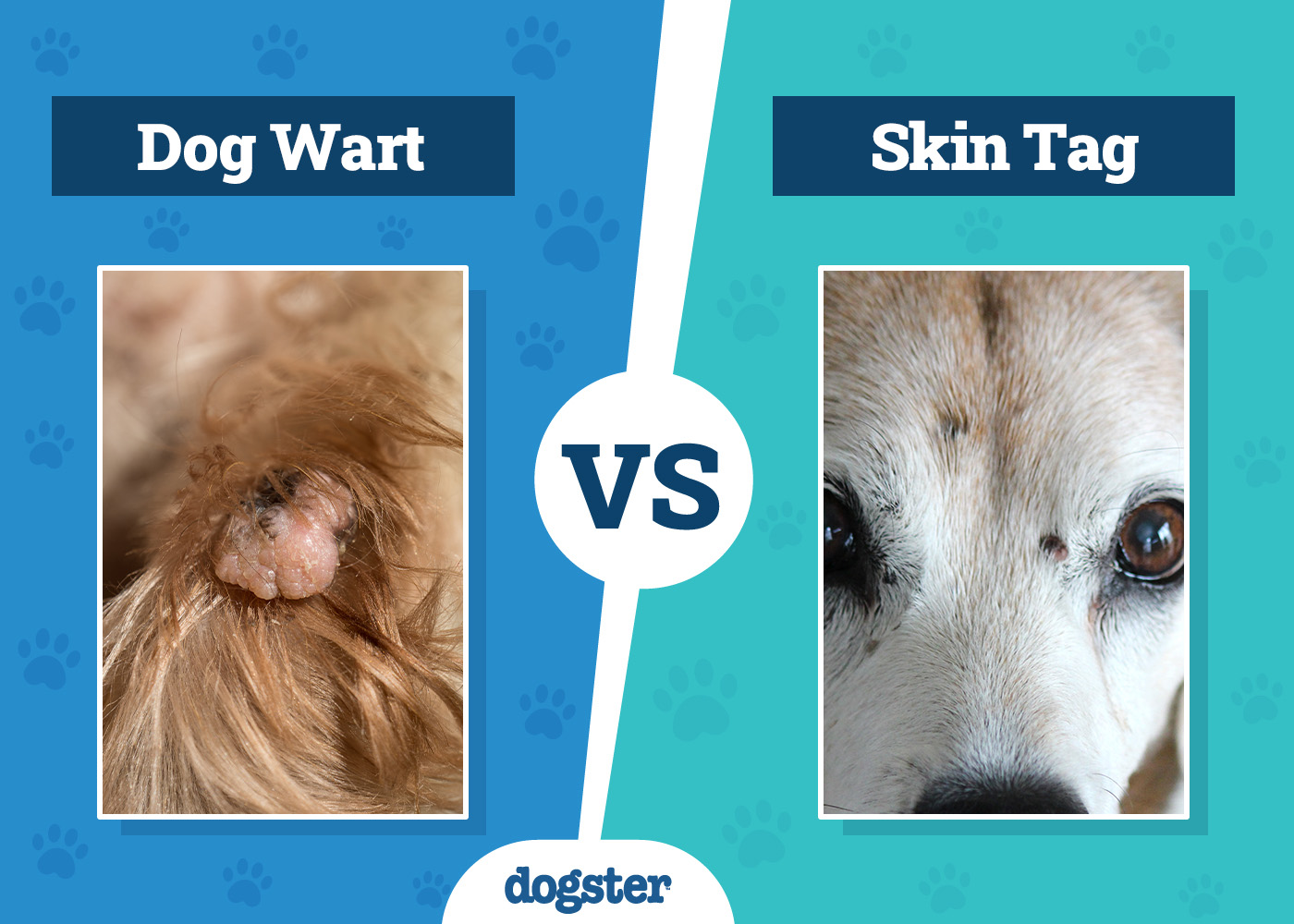
Almost indistinguishable from papillomas, these lumps are often mistakenly referred to as “old dog warts” and are particularly common on curly or wiry-coated breeds. like Bichon Frise, Poodles, and Miniature Schnauzers. While warts tend to appear as isolated or few in number, dogs with sebaceous adenomas tend to get more as they get older.
These lumps are benign, but because they are associated with sebaceous glands, they can become inflamed, painful, or infected, in which case they may need to be removed.
2. Skin Tags

These benign little skin growths are softer than papillomas, are harmless, and only need to be removed if they are growing large or becoming traumatized.
3. Ticks

Confusion between these usually happens the other way around, with warts being mistaken for ticks, which can be quite traumatic if you try to remove them! Ticks are usually more painful to touch, and you should be able to spot their tiny legs where they attach to the skin.
4. Tumors

A tumor is defined as any solid mass of abnormal cells; some are benign, and others are cancerous. There are a few cancerous tumors that can look like warts, but the most important one to be aware of is the mast cell tumor. These tumors are the most common form of skin cancer in dogs and range from low-grade to highly aggressive metastatic forms, and early diagnosis is the cornerstone of treatment success. They are usually raised, round, hairless lesions on the skin that are often itchy and may get larger and smaller over time.
5. Calluses

These lumpy lesions appear in locations where bony protrusions are close to the skin and are under pressure, like the elbows, knees, and ankles. These rarely require treatment, but they can be a sign that you need to make sure your dog has somewhere soft to rest.
6. Oral Masses

Apart from oral papillomas, there are quite a few types of tumors that can grow in and around the mouth. Many, like fibromatous epulis or gingival hyperplasia (overgrowth of gum tissue), are benign, but some can cause problems with eating and swallowing, and some masses are cancerous, so an accurate diagnosis is important.
7. Eyelid Cysts

These little lumps that form from the oil-producing glands that line the eyelids look very similar to warts. They can become infected or cause corneal ulcers as they rub against the surface of the eye, so surgical removal is often required.
8. Nipples
This might seem like an odd one to include, but sometimes, a dog’s nipple can look very wart-like, and many owners have been fooled. Although a knobbly nipple isn’t necessarily cause for concern, any changes in the mammary area should be monitored for mammary tumors.
Frequently Asked Questions (FAQ)
Can I Catch Warts From My Dog?
The good news is that each papillomavirus is species-specific, which means that our dogs can’t catch them from us, and we can’t catch them from our dogs.
Where Can I Find Dog Warts?
Dog warts can be found on any part of the skin, particularly around a dog’s mouth, around the eyes, and between the toes.
Final Thoughts
Warts, or papillomas, are common, benign skin lumps on dogs caused by various strains of the canine papillomavirus. In most cases, they are completely harmless and may even disappear over time.
There are many other lumps that can appear on our dog’s skin that aren’t warts, however, some of them can be painful or even deadly, so it is important to be certain that your dog’s wart isn’t something else. If you have any doubts at all, the sensible thing is to make an appointment with your vet to have it checked out. Hopefully, they will just put your mind at ease, but if that wart is something more sinister, the earlier it is diagnosed and treated, the better.
Related reads:
Sources
Featured Image Credit: Snezhana G, Shutterstock
Expert dog care, straight to your inbox
Vet-reviewed advice, training tips, and the best of Dogster. Free, and you can unsubscribe anytime.
By signing up, you agree to our Terms & Conditions and Privacy & Cookies Policy.
Dr. Karyn Kanowski, BVSc MRCVS (Vet)
Dr. Karyn is originally from Queensland, Australia, and has resided in the UK for the past 10 years. She graduated from The University of Queensland School of Veterinary Science in 2010, and also holds a Bachelor’s degree in Zoology. Karyn is passionate about using experience, evidence, and working with pet owners to provide the best solutions for pets. She also believes in making reliable information about animal health accessible to everyone. 5 cats and 4 dogs let her share their home with her and her husband, and when she is not practising as a veterinary surgeon, she spends her time writing, gardening, and cleaning up pet hair!
Join the conversation
Ask a question, share your story, or send private feedback.