In this article
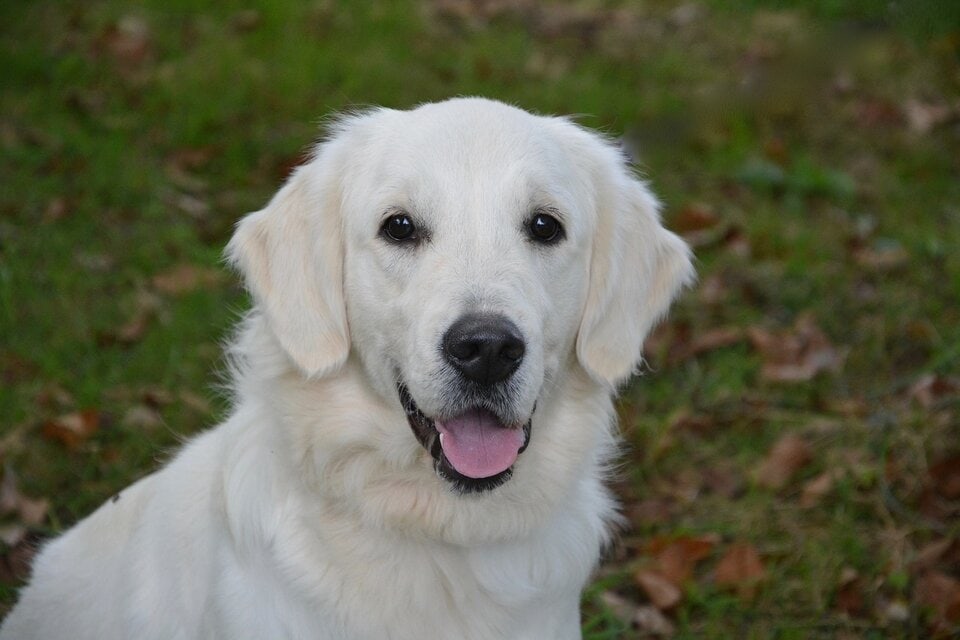
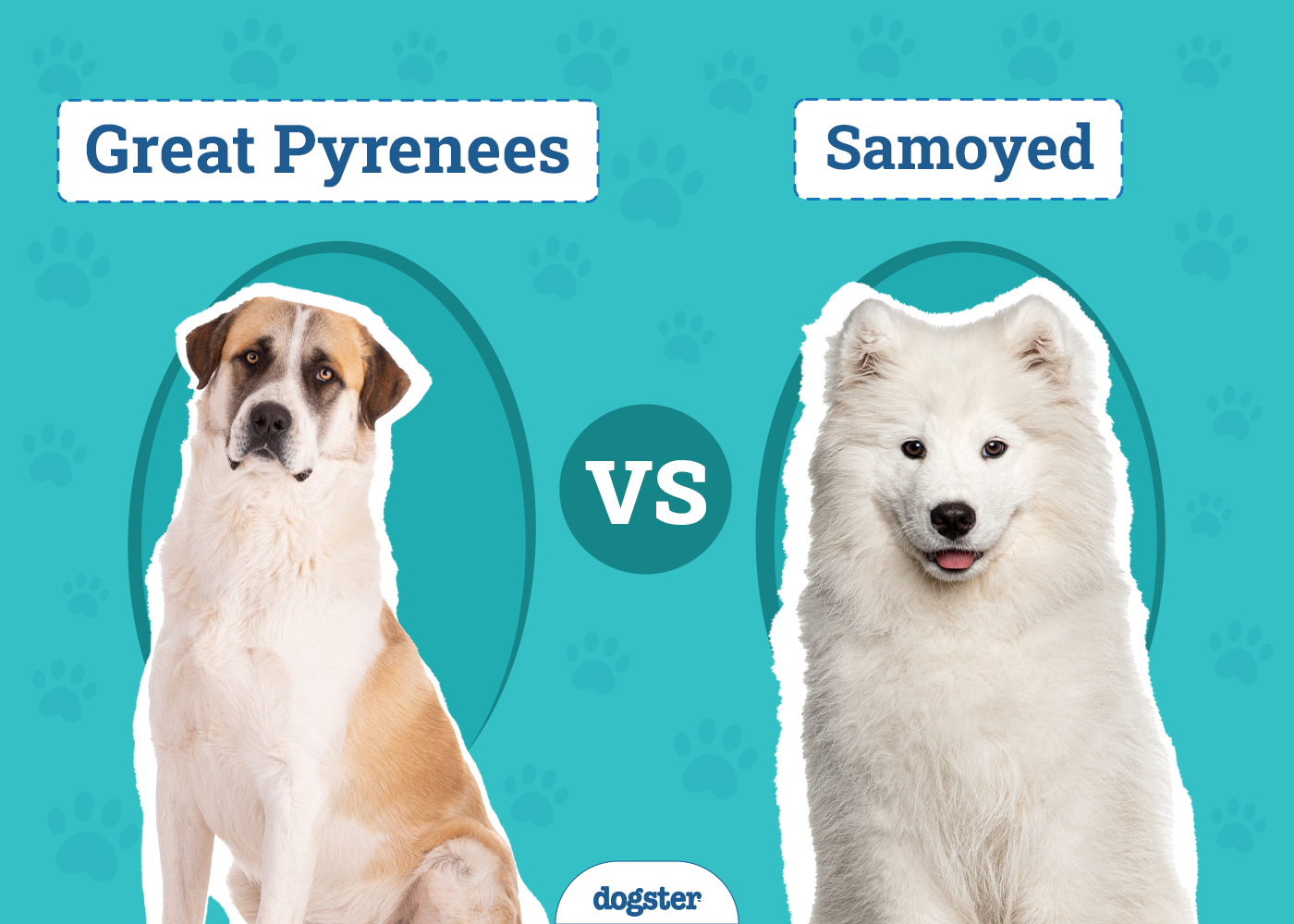
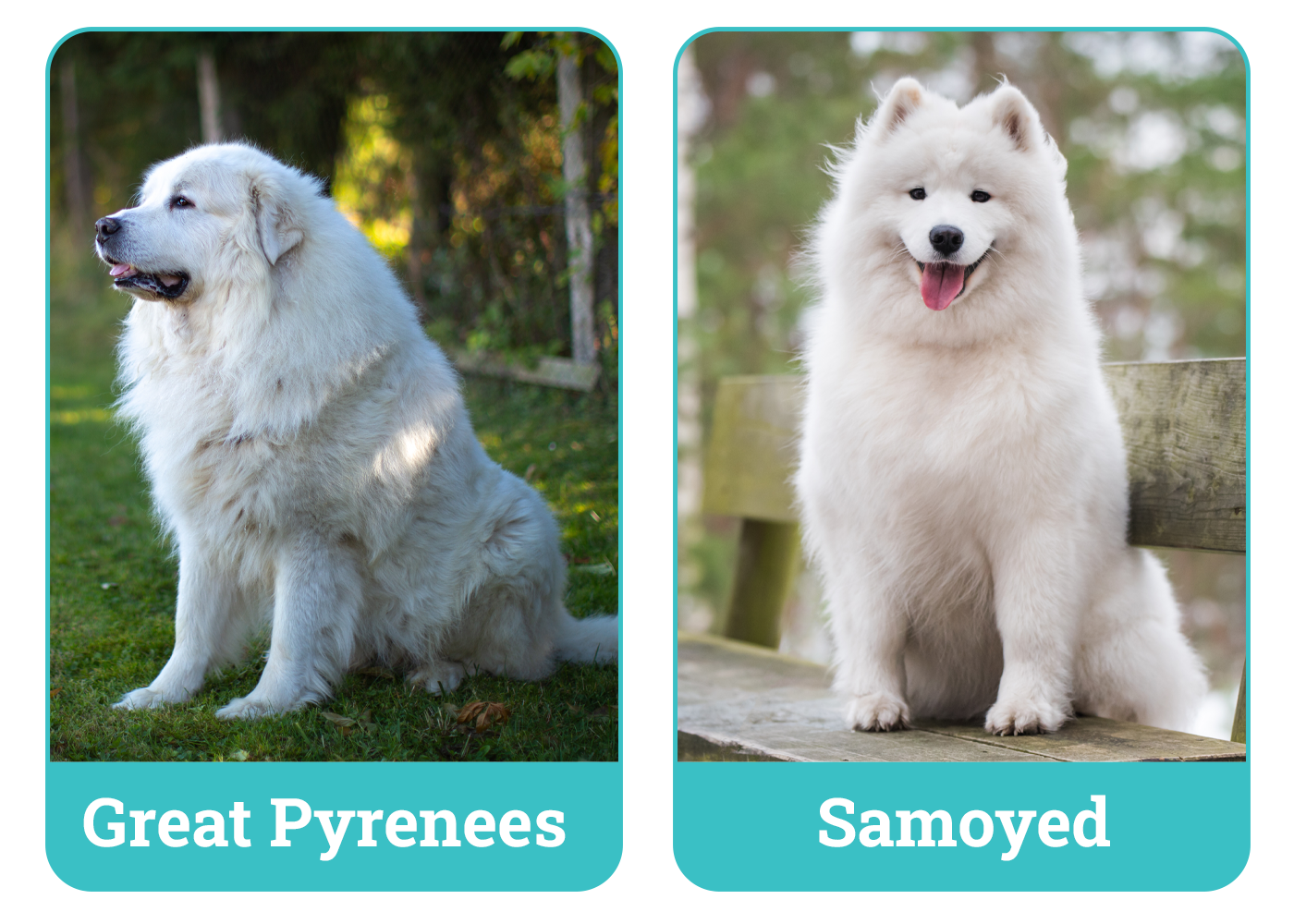
View 3 More +Both the Samoyed and the Great Pyrenees have similar coat colors, but they don’t resemble each other when it comes to their physique. Their sizes, ears, and tails are noticeably different. However, both are great dogs that deserve plenty of attention from the canine-loving community.
Whether you are interested in getting one of these breeds as a pet of your own or are just curious about how they stack up against each other, you’ve come to the right place! Here, we lay out everything on the table, so to speak, and outline the differences and similarities between the Great Pyrenees and the Samoyed. Let’s get started!

Visual Differences
At a Glance
- Average height (adult): 25–32 inches
- Average weight (adult): 85–100+ pounds
- Lifespan: 10–12 years
- Exercise: 1+ hours a day
- Grooming needs: Moderate
- Family-friendly: Yes
- Other pet-friendly: Often
- Trainability: Smart, independent, explorative, gets bored easily
- Average height (adult): 19–24 inches
- Average weight (adult): 35–65 pounds
- Lifespan: 12–14 years
- Exercise: 1.5–2+ hours a day
- Grooming needs: Moderate
- Family-friendly: Yes
- Other pet-friendly: Sometimes
- Trainability: Sociable, intelligent, adventurous, eager to please
Great Pyrenees Overview
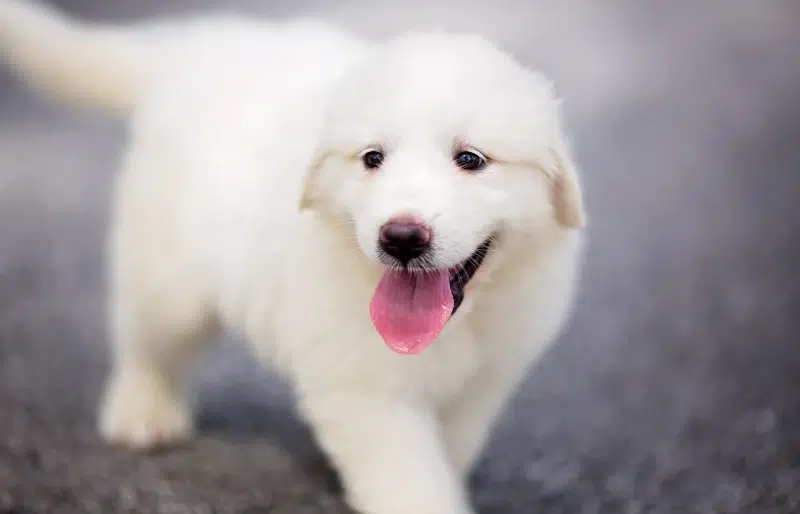
Sometimes referred to as the “Dog of the Mountains,” the Great Pyrenees comes from the mountain ranges of Europe, where they historically served as flock guardians. While they are known as the Great Pyrenees in the United States, on the continent of Europe and in the U.K., they are called the Pyrenean Mountain Dog. In France, they are referred to as Le Chien de Montagne des Pyrenees.
It is believed that this breed evolved from mountain guard dogs that originated thousands of years ago. The Great Pyrenees was imported into the United States in 1931 by Mr. and Mrs. Francis V. Crane. They set about launching the breed in their Massachusetts kennel. The American Kennel Club officially recognized the Great Pyrenees in 1933. This athletic yet elegant dog breed has a gorgeous, thick white coat and confident gait. These dogs can easily acclimate to cold weather and harsh climate conditions.
Personality / Character
Although they are big in stature, the Great Pyrenees are known for being calm and patient. Working as a guardian of sheep flocks, their patience is deeply ingrained in them. They would hang out calmly all day watching the sheep, just in case predators got close. Confident and fearless, this breed is happy to guard their family members and their household. Among their human companions and animal friends, the Great Pyrenees are loving and affectionate.
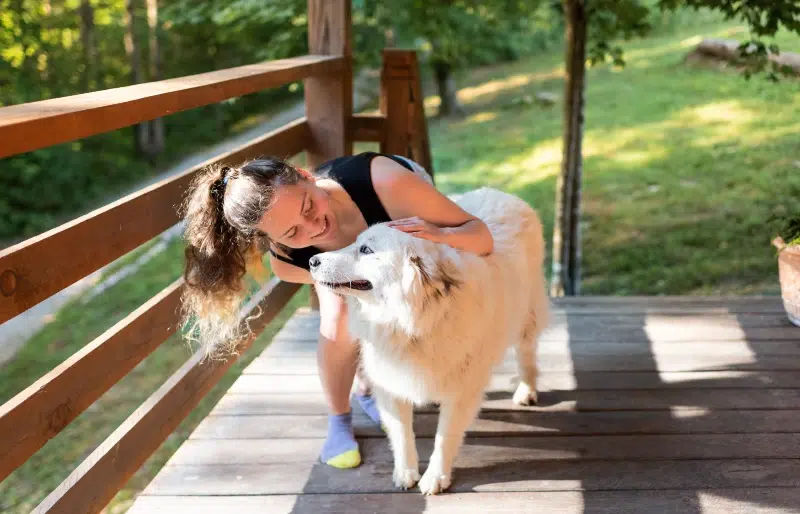
These dogs can get along well with other dogs and cats that live in their household. They also enjoy meeting new dogs in social situations. They get along with kids and enjoy being playful when the time is right. However, their large size can cause accidental injuries if things get too rambunctious. They’re also known for knocking things over in the house, so pet-proofing might be necessary.
Training
Training is extremely important for the Great Pyrenees, but the process can be a challenge. Although smart, they are not genetically inclined to take the lead, as they’ve spent generations as an independent-minded animal sitting on a mountain without much, if any, human direction. This could result in a pup not having much interest or drive to learn commands and tricks from their human companions.
That said, it’s not impossible to train the Great Pyrenees. Obedience is essential when living as a household pet. If you’re not experienced with dog training, we recommend working with a professional trainer for a few weeks while your Great Pyrenees develops their skills.
Exercise
The Great Pyrenees is not highly active, as this breed was meant to stand guard in one area for most of the day. Still, they should get about 1 hour’s worth of physical activity outdoors each day to ensure their health and happiness. They’re easy to exercise via daily walks once or twice a day. If they have a fenced yard to spend time in, they’ll likely patrol the space for fun and extra exercise.

Health & Care
The Great Pyrenees has a thick, double coat that requires daily brushing to keep tangles from developing and shedding to a minimum. Shedding becomes especially problematic during the fall and spring seasons, when multiple daily brushings may be necessary.
Regular veterinarian visits are necessary to stay ahead of developing health problems. This breed is generally healthy, but there are a few conditions that they are susceptible to developing:
- Hip and elbow dysplasia
- Bloat (like most big dog breeds)
- Eye problems
Suitable For:
The Great Pyrenees are independent and large, but they are also patient and loving. They can be difficult to train due to their independence and lack of interest in learning commands and tricks. Professional help can make the process easier and more productive. This breed gets along well with people of all ages, making them a great pet choice for households of many types.
They are extremely large dogs, so they can make a home feel cramped when it comes to apartment settings. A house with a fenced yard is ideal. This breed can be trained as an effective guardian to protect the household. Those who enjoy low-energy outdoor adventures, family time in a fenced backyard, and a giant cuddle companion on rainy days may find that the Great Pyrenees is perfect for them.

Samoyed Overview

The first Samoyeds lived in Siberia, where they worked as reindeer herders and hunters alongside the Samoyede tribespeople. The Samoyedes revered their dogs and cared for them as beloved family members. Therefore, the Samoyed dog developed a deeper understanding of humankind and learned how to live alongside their human companions with complete loyalty and trust.
Samoyeds later went to the Arctic, where they experienced heartbreaking hardships to complete expeditions in the 19th century. Most of these dogs never returned. The first Samoyed imported into the United States came from Russia and was registered with the American Kennel Club in 1906. Most Samoyeds living and being bred in the United States today are thought to be descendants of imported dogs after World War I ended.
Personality / Character
Samoyeds are known for creating strong bonds with their human companions. This sociable and affectionate dog breed loves being with their family members. They don’t like spending much time at home alone and are prone to developing separation anxiety.
These are true working dogs with plenty of agility and athleticism to maintain. They love to play, adventure, and solve problems during their waking hours. The Samoyed is a smart breed that is good with kids and can get along with other pets in the house, as long as they are socialized from a young age and introduced in a managed manner.

Training
Unlike the Great Pyrenees, the Samoyed tends to be easier to train because they are not as independent and are eager to please. They enjoy learning new tricks and commands, especially when it means being praised for a job well done. However, these dogs tend to have short attention spans, so training sessions should be short and frequent. Training can be accomplished without professional help, though books and videos that offer guidance can be extremely helpful.
Exercise
These energetic dogs need and enjoy more exercise than Great Pyrenees do, so owners should aim to provide about 2 hours of exercise each day. This can come in the form of walks, hikes, and trips to the dog park. Exercise can be separated into two or three different sessions throughout the day. In addition, an opportunity to run in a fenced yard and to play games while indoors is important to ensure that all physical and mental stimulation needs are met.

Health & Care
The Samoyed is endowed with a thick double coat like the Great Pyrenees, so they need about the same type of grooming care for health and happiness. Daily brushing is best to keep shedding to a minimum. These dogs should be getting enough outdoor exercise to keep their nails naturally trimmed. Their ears can be cleaned with a damp cloth or cotton ball every couple of weeks, and bathing should take place only when necessary. There are certain health conditions that Samoyeds can inherit, which include:
- Aortic stenosis
- Hip and elbow dysplasia
- Hereditary glomerulopathy
- Eye problems
Suitable For:
This impressive dog breed can do well in households with children and single adults alike. They are playful and easy for kids to enjoy spending time with. They are adventurous, loyal, and trustworthy and make great outdoor buddies during the weekend. They do require plenty of daily exercise and are prone to separation anxiety, which are things that every prospective owner should seriously consider before making any commitments to this pet. While a house with a fenced yard is best, apartment living may be acceptable if long daily walks and regular outdoor adventures are experienced.
Which Breed Is Right for You?
If you enjoy outdoor adventures, running, and long hikes, the Samoyed can make an excellent companion. If you prefer leisurely walks and hanging out at the beach, the Great Pyrenees might be the right pet for your household. Grooming requirements are similar, but it is likely to be more time consuming to groom a Great Pyrenees since they are bigger. Feeding a Great Pyrenees is also more expensive than feeding a Samoyed, which is something to keep in mind. Furthermore, both breeds can be tough to manage for first-time dog owners.
Ultimately, it is important to research each breed and consider talking to current owners to find out what they have to say. It all comes down to your lifestyle and preferences.
- Related Read: Samoyed Chow Chow Mix: Pictures, Care, Info, & More
Featured Image Credit: Top – Beatrice Foord-St-Laurent, Shutterstock | Bottom – Barcs Tamás, Unsplash