Diatomaceous Earth for Dogs: Vet-Approved Types, Pros, Cons & FAQ


In this article
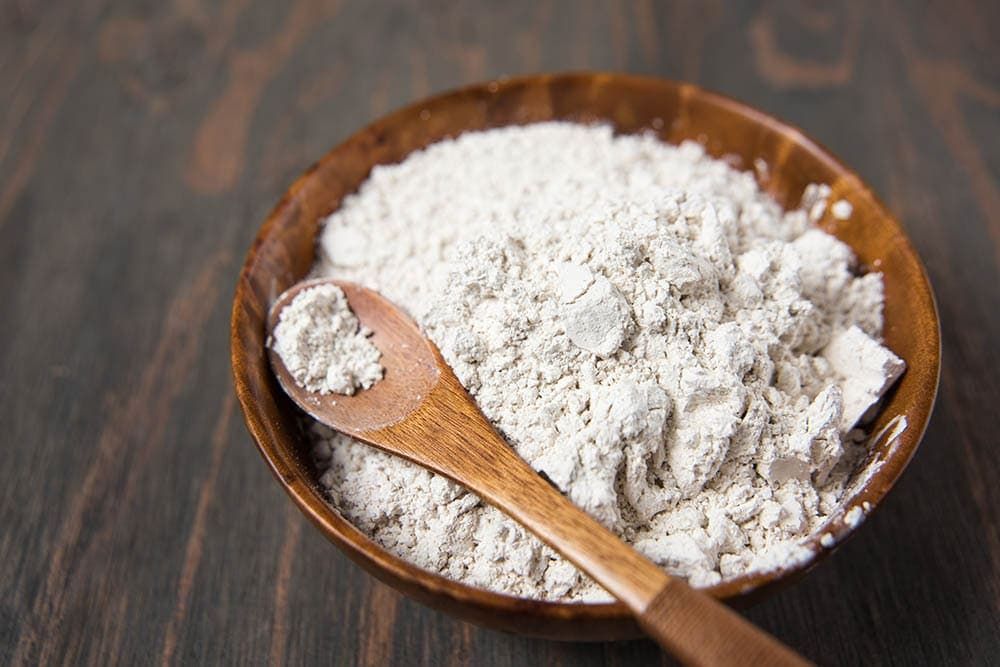
Diatomaceous earth is primarily touted as a natural parasite-fighting material. You can find it at various places, from health stores to online marketplaces, making it one of the more accessible “natural” methods of parasite control. However, diatomaceous earth doesn’t look like earth, and it isn’t just dirt either.
How this substance works isn’t that complicated, luckily. Plus, diatomaceous earth is entirely safe for dogs while being deadly to insects. Therefore, it does have some benefits as pest control.
Let’s look at what this stuff is and how it works.

How Does It Work?
Diatomaceous earth is the crushed fossils of marine life and freshwater organisms. It is incredibly high in silica and looks like broken glass underneath a microscope. Of course, this isn't harmful to pets, as the pieces are extremely small. However, the shards are jagged enough to harm insects.
While there isn’t as much evidence on this substance as some others out there, it is thought that the shards stick to insects and pierce their protective coating. Ultimately, this enables bacteria to infiltrate the insects, leading to their demise. Others claim that the silica shards dehydrate the insect, which may also occur.
On top of parasite control, these shards can be utilized for other things. For instance, diatomaceous earth is also high in many nutrients, so some dog owners use it as a supplement.

What Are the Different Types of Diatomaceous Earth?
You’ll see this substance commonly sold as “food-grade diatomaceous.” If you want to utilize it for your pet, this is the diatomaceous earth you want. It’s made for eating and considered safe for people. After all, you only want the best for your pet.
“Filter grade” diatomaceous earth also exists, but it isn’t usually sold on commercial marketplaces or to pet owners. Instead, this diatomaceous earth is mostly used for commercial uses, such as construction. It isn’t edible, so you shouldn’t give it to your canine.
What Are Its Uses?
Diatomaceous earth is mainly utilized as a parasite-fighting substance. When you choose food-grade diatomaceous earth, you can treat your dog for internal and external parasites. However, the science behind its effectiveness is vague. This substance isn’t as powerful as prescription medication or other parasite-fighting methods.
Some sources claim that this may be a good supplement, and various companies sell it as such. However, the science doesn’t back up this usage.
It does make a good coat deodorizer. Usually, this is considered a side effect, though. If that’s all you want to use it for, there are more straightforward options.

The 4 Advantages of Diatomaceous Earth
There are several advantages to using diatomaceous earth on your canine. Sadly, not many of these have science to back them up. Instead, they’re largely anecdotal.
1. Parasite Control
The main benefit of this substance is its supposed ability to kill parasites. However, not many studies have been done on dogs. Still, a few studies have been done on farm animals, such as steers and chickens. These studies have found that diatomaceous earth may have benefits as a parasite treatment.1 However, more studies need to be done on canines.
For instance, no studies compare this substance to prescription options. Therefore, while it may work a bit, we don’t know how it works compared to more traditional options.
If you're worried about your dog having parasites, we recommend talking with your vet for more information and a care plan.
2. Inexpensive
This substance is very inexpensive compared to other parasite-fighting methods. However, you will need to reapply it often. It doesn’t stay on your dog very long, which can increase the cost of this treatment. One bag may not cost very much, but you may find that you need more bags than you’d expect.
3. Deodorizer
This substance can function as a pretty effective deodorizer. It sucks up oils naturally, which can help prevent smells from occurring. However, there are more effective methods for keeping your dog smelling good. This can be considered a useful side effect, if anything.
4. Mineral Content
Diatomaceous earth can be utilized as a supplement in some cases. It is high in various minerals, as that’s what it’s made of. Therefore, some people use it as a supplement for themselves or their dogs. That said, there are more effective ways to increase your dog’s mineral consumption—and getting your dog to eat this substance can be challenging.
The 3 Disadvantages of Diatomaceous Earth
There are several reasons that you may want to avoid this supplement. Diatomaceous earth is often claimed to be extremely safe. However, this isn’t the case. It has been linked with various medical issues, particularly when it's breathed in.
1. Lung Problems
When inhaled, the small particles in the diatomaceous earth can harm the lungs. In the short term, this often looks like coughing and shortness of breath. It can affect both humans and canines. Remember, when you apply it to your dog’s coat, the particles will consistently be released into the air. Therefore, you and your dog will constantly be breathing them in. If this occurs for a long time, it can cause silicosis, a chronic lung condition.

2. Skin Irritation
The tiny shards in diatomaceous earth may not be extremely harmful to the skin but can irritate it. Plus, the substance soaks up oils. While this can be helpful, it can also have a drying effect. It can lead to cracks and sores if you leave it on your canine all the time (like you’d need to do for parasite prevention). Your dog may become itchy, damaging the skin further. Secondary infections can occur once the skin is broken.
3. Eye Problems
Diatomaceous earth can cause many issues if it gets inside the eye. As you’d imagine, the eye doesn’t like being stabbed by tiny, sharp particles. It hurts and can cause damage if left unchecked. While most dogs will be fine, the irritating powder can sometimes get stuck in the eye and cause many problems.

Frequently Asked Questions
Will diatomaceous earth hurt my dog?
It is possible. While many claim it’s completely safe, this isn’t backed by science or most vets. There aren’t any current studies about using diatomaceous earth on dogs, so we can’t know what the side effects will be. However, there are logical conclusions we can draw.
For instance, we do know that diatomaceous earth can cause lung issues. It can even lead to incurable, chronic lung conditions that may be fatal. It can also cause skin irritation. It is extremely abrasive, which is why it can kill insects. However, it can also irritate canines.
We can’t know whether your dog will experience any of these issues. However, there is always a possibility. Many problems may not appear until your dog has used it for a long time. But at that point, the issues caused may be incurable.
What happens if a dog sniffs diatomaceous earth?
If your dog sniffs this irritating substance, there is a good chance some of the particles will make it into the lungs. From there, they can be irritating until the dog expels them. Depending on how much is inhaled, this may cause short-term breathing problems or coughing. If your dog sniffs diatomaceous earth regularly, it may cause more serious lung issues.
Is diatomaceous earth safe for dogs to eat?
We don’t have any studies highlighting the side effects of consuming diatomaceous earth. However, it may cause gastrointestinal upset. The small particles can irritate the lining of the stomach and intestine. If a small amount is eaten once, it may only cause your canine to get somewhat sick. They may vomit or act lethargic. However, long-term usage can lead to stomach lining erosion, leading to other issues.
Before giving any new medication to your dog, we recommend you consult a veterinarian for the best advice on which would be the best treatment for your pup.

Conclusion
Diatomaceous earth is often advertised as a natural way to fight insects. Some companies even sell it as a supplement, since it contains many minerals. However, there are no current studies on its effectiveness compared to traditional options. It likely isn’t as effective as prescription-grade medication.
Furthermore, this substance may cause side effects. Lung irritation and even chronic issues can likely develop after utilizing this substance. For instance, silicosis would likely occur after long-term usage.
Therefore, this substance isn’t recommended by most veterinarians.
Sources
Featured Image Credit: Anna Hoychuck, Shutterstock
Expert dog care, straight to your inbox
News, insights, expert advice, and everything dog.

No spam — unsubscribe anytime.
By signing up, you agree to our Terms & Conditions and Privacy & Cookies Policy.
How useful was this post?
Click a star to rate. You can leave written feedback afterwards. (We read all feedback.)
Kristin loves to help pet parents create a fulfilling life for their pets by informing them on the latest scientific discoveries and helping them choose the best products for their pets. She currently resides in Tennessee with three cats, four dogs, two fish, and a lizard, though she has dreams of owning chickens one day!