6-Month-Old Puppy: What to Expect (Vet-Reviewed Guide)


In this article
Welcoming a brand-new puppy into your home is an exciting and rewarding experience. From two to six months, your little bundle of fuzzy joy experiences so much growth. When they hit six months old, your furry friend is in a crucial stage of development; they’re the equivalent of a human teenager! They are undergoing significant behavioral and physical changes and will need their owner to adapt to their changing needs and guide them through training and consistency.
In this article, we'll explore what to expect from your six-month-old puppy, including developmental milestones, typical behaviors, training tips, and essential care requirements.

Developmental Milestones

At six months old, your puppy has transitioned from the early stages of puppyhood to adolescence. While they may have reached their full size if they are a toy or a small breed, they are still growing and maturing both physically and mentally. Medium, large, and giant breeds will take longer to finish growing, and this may be up to 24 months.
Some key developmental milestones to expect include:

Typical Behaviors
Understanding your puppy's behavior at six months old can help you navigate this transitional phase more effectively. Some typical behaviors you may encounter include:
1. Sleep
Do not be alarmed if your puppy sleeps a lot. Puppies under the age of 6 months may sleep as much as 15–20 hours a day. Once they pass the 6-month mark, they may sleep a little bit less, around 14–16 hours per day.
2. Exploration

Curiosity is a hallmark of puppyhood, and at six months old, your puppy may be even more adventurous. Supervise necessary exploration to ensure your puppy's safety and prevent them from getting into mischief.
3. Playfulness
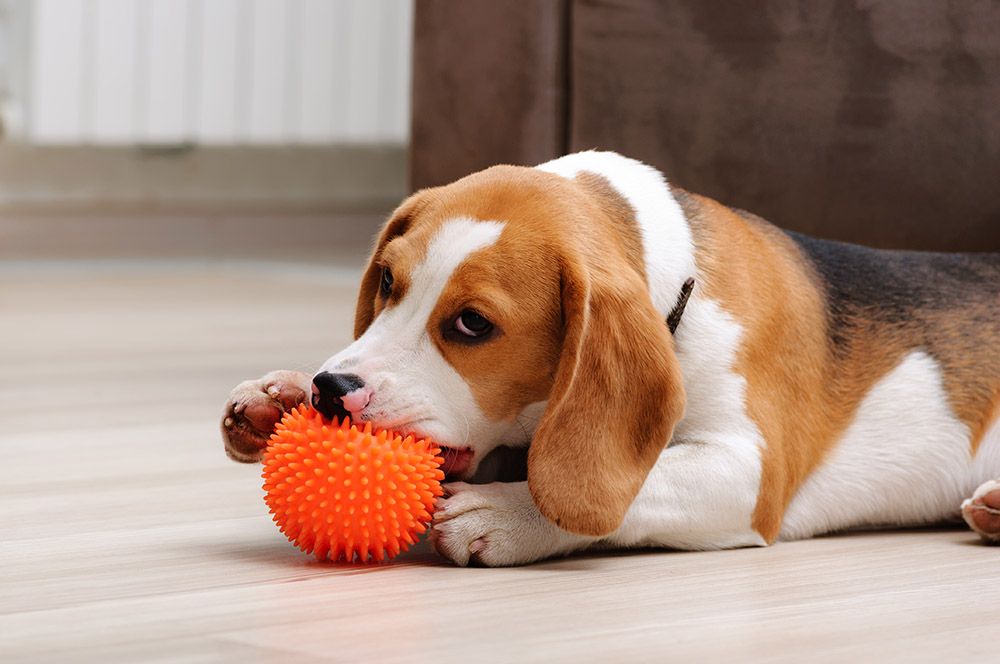
Puppies love to play, and at six months old, they may have boundless energy for games of fetch, tug-of-war, and chase. Provide plenty of opportunities for physical and mental stimulation to keep your puppy entertained and engaged.
4. Testing Boundaries

Adolescent puppies may test boundaries and challenge authority as they assert their independence. Consistent training and positive reinforcement techniques can help establish rules and reinforce desired behaviors.
5. Attention-Seeking
Your puppy may seek attention and affection from you and other family members, craving companionship and reassurance. Spend quality time together, engage in interactive play, and provide plenty of positive reinforcement to strengthen your bond.

Training Tips

Training is an ongoing process that requires patience, consistency, and positive reinforcement. Read along for some tips for training your 6-month-old puppy effectively.
- Basic Commands: Continue to reinforce basic commands such as sit, stay, come, and down. Use positive reinforcement techniques such as treats, praise, and toys to reward desired behaviors.
- Socialization: Expose your puppy to various people, animals, environments, and experiences to promote socialization and prevent fear or anxiety. Puppy classes and supervised play dates can be beneficial for building confidence and social skills.
- Leash Training: Introduce leash training gradually, using a lightweight leash and harness. Practice walking on a loose leash in a controlled environment before venturing into busier and more populated areas.
- Consistency: Be consistent with your training methods and expectations to avoid confusion. Set clear boundaries and enforce rules consistently to establish good habits and prevent unwanted behaviors.
- Continuing Potty Training: Establish a regular walking routine and pick a “potty spot” outside so your pup knows to relieve themselves there every time. If accidents happen in the house, try using an enzyme spray to clean carpets and furniture.
If you're looking for an all-in-one, pet-friendly, enzyme cleaner, we highly recommend the Hepper Advanced Bio-Enzyme Pet Stain & Odor Eliminator Spray.

- ADVANCED ENZYMATIC CLEANER - Penetrates the most stubborn smells and stains at the deepest molecular levels to dissolve any pet mess you encounter and lift it away at the source.
- FOR ANY MESS, ON ANY SURFACE - This pet odor eliminator cleans your carpets, floors, furniture, fabrics, and more. Whether it's urine, feces, vomit, or drool, you can erase all foul spots and smells!
- FRESH, NATURAL ODOR - Our unique formulation doesn't rely on dangerous or unpleasant chemical fragrances to get the job done. We eradicate smells and stains, not just cover them up.
It eliminates tough stains and odors easily and is excellent for accident prevention. Plus, it comes with a 100% satisfaction guarantee! Click here to order now.
At Dogster, we’ve admired Hepper for many years, and decided to take a controlling ownership interest so that we could benefit from the outstanding products of this cool pet company!
Essential Care Requirements
Meeting your puppy's basic care needs is essential for their health, well-being, and happiness. Here are some key care requirements to keep in mind:
1. Diet and Nutrition
Provide a balanced diet formulated for puppies to support their growth and development. Consult with a veterinarian to determine the best feeding schedule and dietary recommendations for your puppy's age, breed, and size. Always choose high-quality and well-balanced food for your puppy at all stages of life.
We recommend getting advice from a veterinarian if you have any questions or concerns regarding your pet's diet and development.
2. Exercise

Engage in regular exercise and play sessions to help your puppy burn off excess energy and maintain a healthy weight. Aim for a combination of physical activity and mental stimulation to meet the range of needs of your puppy. Adjust the duration and level of exercise based on their age and developing joints and skeletal system, making sure not to overdo it.
3. Grooming
Maintain your puppy's grooming routine, including brushing their coat, checking their ears and paws, and brushing their teeth. Regular grooming not only keeps your puppy looking their best but also promotes good hygiene, gets them used to you handling their paws, ears and teeth, and prevents health issues. Speak to a vet about ear hygiene and cleaning, as some dogs may need regular ear cleaning, while others won’t require it. The majority of dogs do not need their nails trimmed if they are walking on different terrains, but it’s important to get your puppy used to you touching and handling their paws and nails, in case they need trimming. Pet wipes make cleaning your pet’s coat at home easy!

- Gentle Care For All Pets - Infused with moisturizing hypoallergenic ingredients & enriched with cucumber & aloe fragrance for healthier fur, coat & skin, the ultimate dog and cat cleaning wipes
- Deep Cleans From Head to Tail - Tackle the toughest dirt & messes with our extra strong pet wipes for dogs, cats and other pets while being gentle on sensitive areas like the face, ears, butt & paws
- Freshness On The Go - Each dog grooming wipes pack contains 30 counts of premium dog wipes that leaves your pets fresh. Packed in resealable packaging, keeping the cat wipes fresh & ready whenever
Whether your dog needs a quick refresh or cleanup of a sensitive area, pet-safe wet wipes are a convenient and on-the-go option, since keeping your dog clean doesn't have to mean giving them a full bath. We like Hepper's Wash Wipes because they're specially formulated to be safe for dogs of all ages, sizes, and breeds. The hypoallergenic formula contains natural, moisturizing ingredients that effectively remove dirt without irritating your dog's skin.
At Dogster, we’ve admired Hepper for many years, and decided to take a controlling ownership interest so that we could benefit from the outstanding products of this cool pet company!
4. Healthcare

Schedule regular veterinary check-ups and vaccinations to monitor your puppy's health and prevent illnesses. Discuss parasite prevention, dental care, and spaying or neutering with your veterinarian to ensure your puppy's long-term well-being.
Conclusion
Navigating the myriad of joys and challenges of puppyhood is a journey that is deeply rewarding and one that requires dedication, patience, and love. By learning about your 6-month-old puppy's developmental milestones, typical behaviors, training needs, and essential care requirements, you can provide them with the support and guidance they need to thrive. With proper care and attention, your puppy will continue to grow into a happy, healthy, and well-adjusted adult dog, bringing joy and companionship to your life for years to come.
Related read: 5-Month-Old Puppy
Featured Image Credit: tetiana_u, Shutterstock
Expert dog care, straight to your inbox
News, insights, expert advice, and everything dog.

No spam — unsubscribe anytime.
By signing up, you agree to our Terms & Conditions and Privacy & Cookies Policy.
How useful was this post?
Click a star to rate. You can leave written feedback afterwards. (We read all feedback.)
Nicole has loved animals of all sizes her whole life so it's no wonder she has dedicated her career to helping them through what she loves best: learning, writing, and sharing knowledge with others. She’s the proud mom of two dogs, a cat, and a human. With a degree in Education and 15+ years of writing experience, Nicole wants to help pet parents and pets around the planet to live happy, safe, and healthy lives.