Get

In Your Inbox

Dogster is reader-supported. When you buy via links on our site, we may earn an affiliate commission at no cost to you. Learn more.

What Were Schnauzers Bred For? History of This Breed

Share

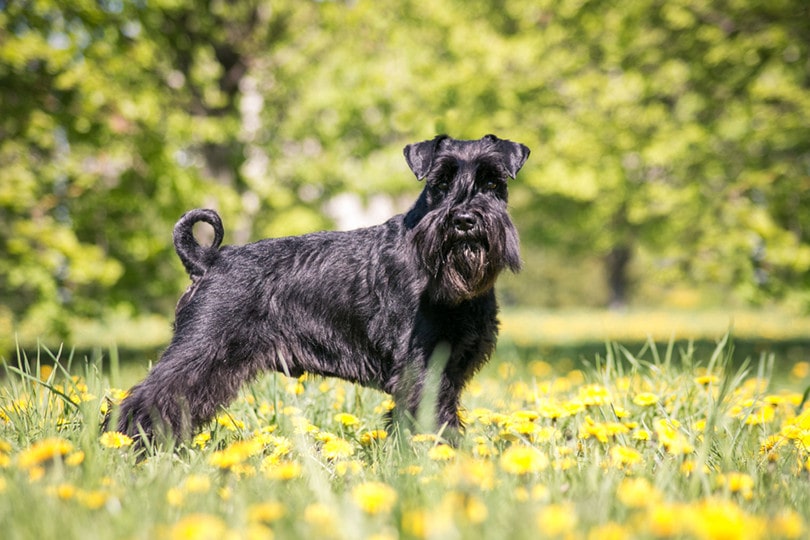
Standard Schnauzer

Originally, Schnauzers were developed to be all-around farm dogs. They were bred to chase away rodents and rabbits, which were common threats to stored grains and the fields. They worked without input from a human and instead, were sent to wander in fields and chase away pests as they came. In some cases, they were also used to guard farms against people and larger animals.

However, different-sized Schnauzers were bred for different purposes. The Miniature Schnauzer was more likely to be used as a ratter. The Standard Schnauzer was used for just about everything, even Red Cross jobs and police work. The Giant Schnauzer was bred to guard livestock and help drive them to market. Their size made them less able to chase away rats and rabbits, but they were quite effective at guarding.

divider single dog paw oct 2024

The Emergence of the Schnauzer

Miniature Schnauzer
Image By: otsphoto, Shutterstock

The Standard Schnauzer was the original of the three Schnauzer sizes. They date back to the Middle Ages, when dogs similar to the modern breed were used to perform all sorts of household and farming tasks. Since they were all-around farming dogs, they had to perform a variety of services.

We don’t know exactly how these dogs came to be. It is likely that they were bred using a variety of other breeds, including the German Poodle and the German Pinscher. Different scholars have different suggestions. However, this canine was likely more useful in the winter due to their coat, which may be why they grew in popularity.

By the mid-19th century, this dog became more popular among German dog fanciers. They made many crosses with the breed, which eventually led to the creation of the three variants. It is also likely that other breeds have Schnauzer blood in them, as these dogs were likely used in many breeding lines.

This breed was not given their name until the turn of the century, when they were named after their prominent “mustache.” They were also standardized into a purebred dog and allowed to compete in dog shows, which were relatively new at the time. It took a while for the modern breed to emerge. However, the first evidence of this breed has them fairly similar to the one that we know today.

Unlike some other breeds, this one has not changed much in the modern era.

divider dog paws 4 oct 2024

The Breed Becomes International

Miniature Schnauzer
Image By: Debra Anderson, Shutterstock

As the breed continued to flourish, they slowly found themselves spreading around the world. They were first imported into the United States around 1900. However, they were not imported in large numbers until WWI.

Even so, these dogs are not bred extensively in the United States and have not become that popular. Therefore, they are usually only bred by those who are extremely passionate about the breed. Often, the puppies are not bred explicitly for pet purposes but for the furthering of the breed.

In 1925, the Schnauzer Club of America was formed. However, it quickly split into two groups in 1933—one for Standard Schnauzers and another for Miniature Schnauzers. The standards set for both breeds have varied throughout the years.

Now there are about eight different regional Schnauzer clubs throughout the country. Most of these provide plenty of help to new owners. Many even keep records of breeders, making it far easier to find a dog to adopt.

divider dog paws 3 oct 2024

Conclusion

The Schnauzer is an old dog. However, their history does not feature the twists and turns that breeds usually take. For the most part, these dogs have been used as versatile working dogs throughout the centuries—from small medieval farms to WWI Red Cross stations.

The Standard Schnauzer was the first breed, but then they were quickly separated into three different breeds. The actual name and standard for the dog came quite late in their history. However, the older versions looked and acted quite similarly to the new ones. So, this breed has not changed much over the years.

Related Reads:


Featured Image Credit: Eve Photography, Shutterstock

Want content like this delivered to you?

Sign Up For Our Newsletter

News, insights, expert advice, and everything dog

* By submitting, you agree to our Terms & Conditions and Privacy & Cookies Policy.


How useful was this post?

Click on a star to rate (you can leave written feedback after clicking submit)

Help us improve Dogster for pet parents!

Your feedback really matters.

What did you like about this post? Also how can we improve it?

Join the conversation

Leave a Reply

You’re very welcome to leave a comment or question. Please know that all comments must meet our community guidelines, and your email address will NOT be published. Let’s have a positive and constructive conversation.


Talk With A Vet Online

Peace of mind,
anywhere, anytime

Affordable vet advice

Dogster’s Weekly Photo Contest Winners: Best Easter Photo (April 9, 2026)

Every week our team gets the privilege of sorting through our readers photos to choose what dogs will win this weeks contest! See...

We Didn’t Just Add a Dog to Our Life – We Built a Life With Him

“We didn’t just bring a dog home—we built a life together.” Most people are quietly taught a version of pet ownership that looks...

What Most Airlines Won’t Let You Do With Your Dog (Even If You Pay Extra)

Airline pet policies are notoriously hard to navigate. The information is scattered across different pages, buried in FAQ sections, and often contradicts what...

Designer Breeds: Best of Both? New Study Says No

“I’ll take a highly trainable, low-shedding lapdog, hold the heart disease and anxiety!” Something I always found amusing was when people would point...

More related

Can Dogs Eat Hominy? Vet-Verified Facts & FAQ

Hominy comes from corn and is made by soaking the corn kernels in lye or lime. The kernels are then rinsed off to...

Puppy Deworming Schedule: Our Vet Explains

Loving your dog means more than petting them and giving them kisses. It also involves duties like deworming them and taking them to...

How Do Search & Rescue Dogs Find Missing People? The Fascinating Answer

Dogs play many roles in our everyday lives. Some are companions, others are used for farm work, and many are employed as service...

Pocket Pitbull Dog Breed: Info, Pictures, Care Guide & More

Small but mighty, Pocket Pit Bulls pack a lot of strength, energy, and personality into their compact bodies. This designer dog is a...

Keep reading

Can Dogs Eat Crackers? Vet-Reviewed Facts & FAQ

How great are crackers? Slathered with dip, layered with cheese, or eaten just on their own, they are simple yet delicious snacks. But is that the case for dogs? Most of us are probably aware that our dogs will happily...

Can Dogs Eat Crackers

8 Best Dog Foods With Glucosamine in 2026 – Reviews & Top Picks

The energy and activity level of your dog can decrease as they get older. Even though many older dogs prefer to nap instead of run, they may also be less mobile because of pain. A natural ingredient called glucosamine can...

labrador dog watching its food at home

Can Dogs Eat Salt? Vet-Verified Facts, Risks & FAQ

Salt is a pantry staple, used to cook with, season with, and preserve. Some people can’t enjoy a meal without adding an extra dusting of salt, especially to meaty dishes like steaks, stews, chips, or eggs. It may make you...

Can Dogs Eat Salt

Can Dogs Eat Tangerines? Vet-Approved Facts & FAQ

If you enjoy the sweet, tart taste of citrus fruits like tangerines, you might be tempted to share the delicious goodness with your dog. Fortunately, most dogs can safely eat parts of tangerines in small quantities. In this article, we’ll...

Can Dogs Eat Tangerines

Nutro vs Blue Buffalo Dog Food: Our 2026 Comparison

Choosing the best food for your dog can be tricky, given the quality of kibbles available today. Nutro and Blue Buffalo are well-regarded pet food brands that have many fans, not only canine but also human. They both offer a...

Dogster_Dog Food Nutro VS Blue Buffalo

10 Best Bowls for Puppies in 2026 – Reviews & Top Picks

Puppies haven’t necessarily learned the same feeding etiquette as some adult dogs. They can be inclined to wolf their food down and spread debris all over the floor. They transfer food to the water bowl, and vice versa, and give...

Great Dane Puppy Eating

Can Dogs Eat Pickles? Vet-Verified Nutrition Facts & FAQ

If your dog is begging for a taste of a pickle, it can be tempting to give in to your pup’s adorable charms. But don’t unscrew the lid of your jar just yet—although pickles are not often toxic to dogs,...

Can Dogs Eat_Pickles

What Is Chicken By-Product in Dog Food? Vet-Verified Facts & FAQ

Chicken is the most common first ingredient in dog food. But it’s often followed by “chicken meal,” “chicken by-product,” or “chicken by-product meal.” But what exactly is a chicken by-product? Chicken by-product is simply the part of the chicken that...

man buying pet food

Love Dogs? So Do We! Join the Dogster Community

Stay informed with expert pet care insights delivered straight to your inbox! Discover professional guidance on animal behavior, feeding tips, trusted product picks, and much more.


Sign up for the Dogster Email Newsletter