Get

In Your Inbox

Dogster is reader-supported. When you buy via links on our site, we may earn an affiliate commission at no cost to you. Learn more.

Why Does My Dog Bark at His Bone? 4 Likely Reasons

black & brown Bernese Mountain Dog chewing on bone

Dogs do many odd things that come off as quite comedic to us humans. One such behavior is the habit that some dogs have of barking at bones or other toys. This behavior is especially funny to see happen with a toy your dog plays with regularly. Why would dogs do this, though?

It seems almost counterproductive to bark at an inanimate object. Humans know that shouting at inanimate objects doesn’t suddenly make them come to life, but dogs don’t know that. Could that be why dogs sometimes bark at their bones?

divider dog paws 4 oct 2024

The 4 Reasons Your Dog Barks at Their Bone

1. Playfulness

Dogs love a good game, although the game rules may not always be clear to humans. Some dogs may exhibit this unusual behavior as part of the game they are playing with their bone. Dogs become highly stimulated by exciting objects, and some begin to express this high level of stimulation through barking.

Barking could be used as an invitation to the bone to join the game, or it could just be your dog letting out some excitement about the game they’re preparing to play.

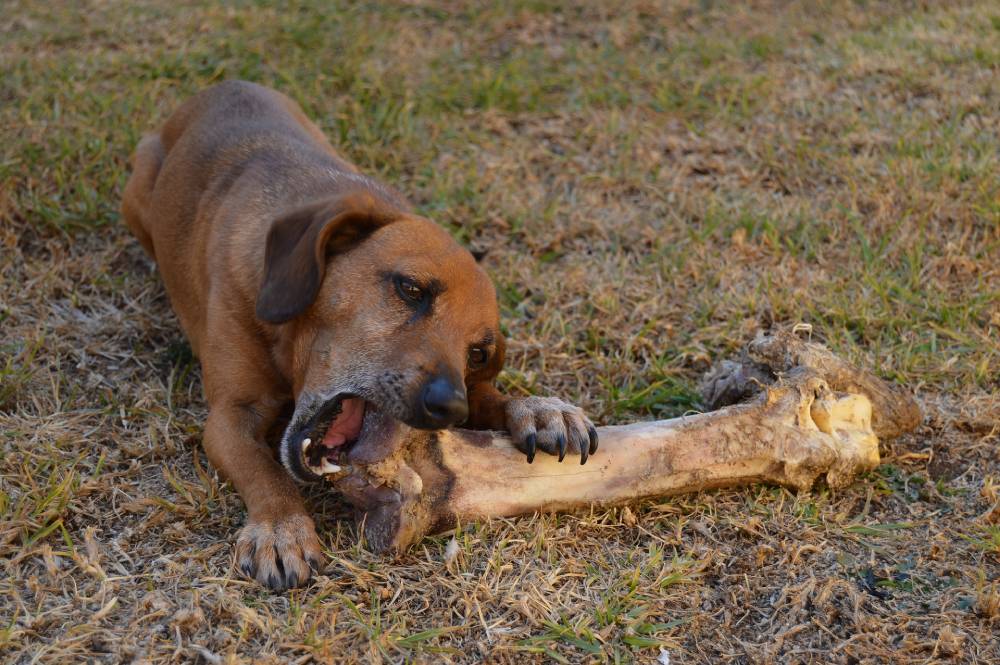
brown dog biting large bone
Image Credit: Michelle, Pixabay

2. Curiosity

Dogs are intelligent, social, and curious by nature. Barking at objects may be a way of your dog expressing their curiosity toward an object, and it is most likely to occur for this reason with a new item your dog is not familiar with. If barking for the sake of curiosity, your dog is most likely barking to see how the object will respond. Will it fight or run? (Spoiler alert: it probably won’t do either).

Barking can be a quick and easy way for your dog to adequately assess an unfamiliar situation for responses from everyone or everything involved in the interaction.


3. Fear

Like curiosity, fear is a major motivator for your dog to assess a situation quickly. If your dog is fearful of their bone, they may bark at it to “warn” it to stay away or to verbalize their displeasure. Your dog could show fear toward a toy, even one they are familiar with, for various reasons.

This commonly occurs if the object moves suddenly and unexpectedly, like if it falls from a surface or is accidentally kicked. Fear can also occur when your dog has had a negative experience with the object. This can be related to pain, like your dog might experience if they chew on a bone while they have a toothache, or to other negative experiences, like if your dog was punished for chewing on something similar.

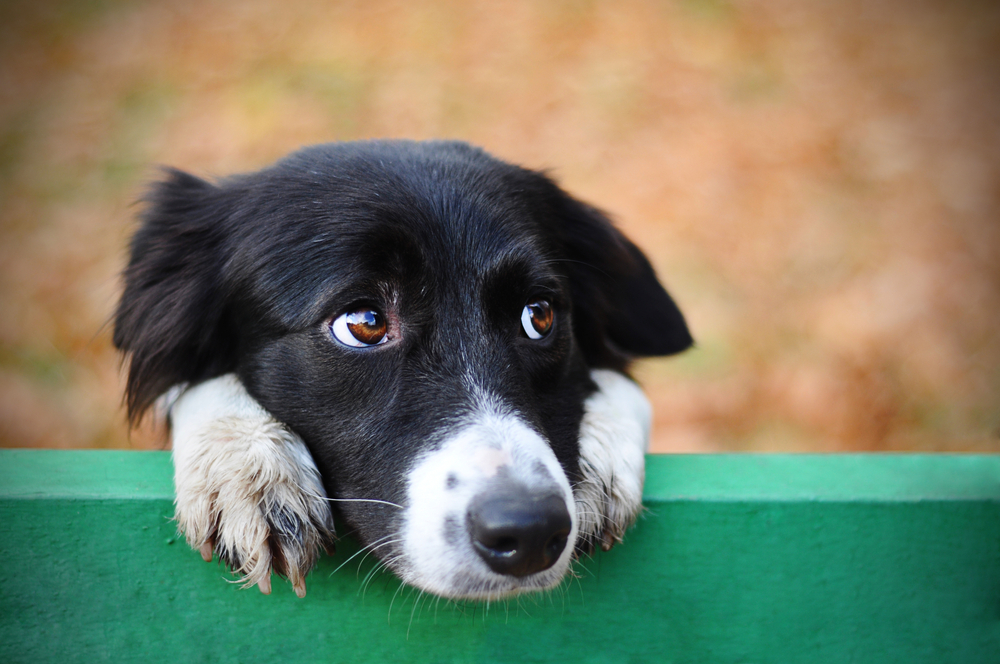
scared dog hiding in grass
Image Credit: Isa KARAKUS, Pixabay

4. Dominance

In rare instances, your dog may be attempting to assert dominance in an uncomfortable situation, causing them to bark at their bone. It’s possible that your dog is turning their discomfort in a situation toward their bone, but it’s also possible that your dog has misidentified the bone and thinks it is a threat to their dominance.

This could occur in specific situations, like if your dog has resource guarding issues and feels like their bone is “encroaching” on their space during a meal or while eating a treat. If your dog has resource guarding or other undesirable behaviors that lead to dominance tendencies, then you should consult your vet, a veterinary behaviorist, or a trainer with experience with dogs that have resource guarding tendencies.

The Other Factors to Consider

All these causes have the potential to be caused by your dog’s desire to demand action, either from you or the bone. Barking is one of the ways that dogs know they can demand attention. Some dogs bark at objects to either draw your attention to the object or attempt to get the object’s attention, not realizing the object is inanimate.

This type of behavior is commonly seen in dogs that bark at things like squirrels and birds. They may be barking due to fear or playfulness, but the purpose of the barking is to demand action from the other animal to either get them to participate in play or leave. If your dog has taken to barking at their bone, see if there seems to be a form of interaction they are looking for on your part.

Naughty dog barking on vacuum cleaner during house cleaning
Image Credit: Jaromir Chalabala, Shutterstock

divider dog paws 4 oct 2024

Conclusion

There are not a lot of reasons that your dog may be barking at their bone or other toys. The good thing is that this makes it relatively easy to narrow down the cause. However, it can be difficult to ascertain how your dog feels about a situation. Keep an eye out for situational and specific body language cues to help determine if your dog is enjoying the interaction.

If your dog seems fearful or aggressive toward their bone, it’s a good idea to begin looking for the cause of why your dog is uncomfortable with something that should be a fun toy.


Featured Image Credit: Janosch Diggelmann, Unsplash

Want content like this delivered to you?

Sign Up For Our Newsletter

News, insights, expert advice, and everything dog

* By submitting, you agree to our Terms & Conditions and Privacy & Cookies Policy.

How useful was this post?

Click on a star to rate (you can leave written feedback after clicking submit)

Help us improve Dogster for pet parents!

Your feedback really matters.

What did you like about this post? Also how can we improve it?

Join the conversation

Leave a Reply

You’re very welcome to leave a comment or question. Please know that all comments must meet our community guidelines, and your email address will NOT be published. Let’s have a positive and constructive conversation.

Talk With A Vet Online

Peace of mind,
anywhere, anytime

Affordable vet advice

How to House-Train an Adult Dog: The Umbilical Cord Method (Vet-Approved)

Have you just adopted an adult dog only to discover they aren’t house-trained? They might say you can’t teach old dogs new tricks,...

8 Best Training Collars for Puppies in 2026 – Reviews & Top Picks

Picking out the perfect accessories for your new puppy is one of the best parts of dog ownership. You can choose the things...

Dog-Friendly Activities in Omaha (2026 Guide)

Vacationing with your dog is far preferable to vacationing on your own, but not every city or town is dog-friendly. However, if you’re...

Is a Pit Bull Hypoallergenic? Vet-Approved Facts & Tips

Being an allergy sufferer and a dog lover means you either can never own a dog or must carefully consider the particular dog...

More related

What It Means When Your Dog Walks Around Holding a Toy: 4 Vet-Reviewed Reasons

Our dogs do all sorts of things that we can’t explain, but love to watch. If you’ve noticed your dog casually carrying around...

How to Protect Your Dogs While Out Walking: 12 Vet-Approved Tips & Tricks

Taking your dog for a walk can be fun for you and your pet, and it helps them get the exercise that they...

How Strong Is a Dogo Argentino’s Bite Force? PSI Measurements & Facts

Dogs bite as a way to defend themselves, and the force of their bite depends on their size, the strength of their jaw,...

7 Dogs That Look Like Coyotes: Info, Pictures & History

While dogs and coyotes are part of the same genus (Canus), there are many differences between the two species. Coyotes have never been...

Keep reading

Can Dogs Eat Cornmeal? Vet-Verified Facts

Cornmeal is often used in commercial dog food, so it is reasonable to assume that it’s safe for your dog to eat. And this is true; cornmeal isn’t toxic to dogs, it provides nutrients and energy, and it is something...

Can Dogs Eat Cornmeal

Can Dogs Eat Brown Rice? Vet-Approved Facts & FAQ

Brown rice is an excellent carbohydrate to include in your dog’s diet. It’s seen as one of the more nutritious types of rice that is safe for your canine companion while being easy to digest. Many households have white or...

Can Dogs Eat_Brown Rice

10 Best Rawhide Alternatives for Dogs In 2026 – Reviews & Top Picks 

While some owners swear by rawhide chews, because they are especially good at keeping power chewers busy for hours at a time, many owners refuse to use them. Some manufacturers use chemicals like bleach and hydrogen peroxide to remove the...

A dog and it's antler A brown and white dog lying on it's bed chewing on a deer antler

Can Dogs Eat Lollipops? Vet-Reviewed Facts & FAQ

Not all snacks are good for our canine companions. That’s why it’s so important to check before ever giving your pet a new food. When it comes to an ordinary candy like a lollipop, though, you might wonder if giving...

5 Ollie Dog Food Alternatives in 2026: Comparison & Reviews

When it comes to your dog’s health, Ollie pet food is one fresh-food brand that is becoming increasingly popular. This brand is on a mission to feed dogs with only the best and freshest ingredients available. Unfortunately, as they grow...

dog eating wet food

Regular vs Premium Dog Food: What’s the Difference? Vet Reviewed Facts

As consumers demand, manufacturers will supply. Consumers spoke throughout the early 2000s, asking for a more balanced diet for themselves and their pets. The market then exploded with trending phrases like “Premium,” Super Premium,” and “Ultra Premium.” The truth about...

Dogster_Regular vs Premium Dog Food

Christmas Dog Treat Recipes: 6 Great Options (Vet Approved)

Christmas is a time for celebration and an excellent excuse to share our appreciation for those we love. If you have a furry four-legged family member, there’s no reason you can’t make them feel special this holiday season, too! Yuletide...

Christmas Dog Treat Recipes

Is Dry Dog Food Bad for Dogs? Vet-Reviewed Pros & Cons

There has been controversy surrounding dry food in the dog food world for years now. Proponents of raw food and fresh food diets argue that dry dog food is unhealthy due to being highly processed, but others have a more...

pouring dog food