What Were Boston Terriers Bred For? Facts & History


In this article
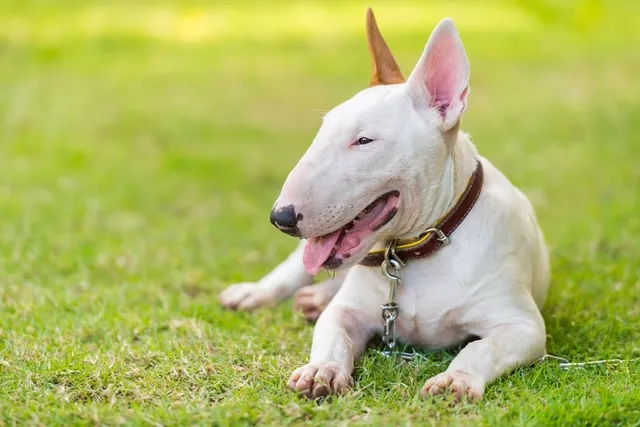
With its large expressive eyes, pointed ears, and tuxedo-like coat, the Boston Terrier is one of the world’s most beloved canines. Although the breed had a violent origin, today’s Bostons are gentle, loving, and incredibly humorous. The dog’s English ancestors were much larger, and were bred for pit fighting and bull baiting. After England passed the Cruelty to Animals act of 1835, dogfighting was banned. Interest in breeding Bull Terrier mixes accelerated after the passage of the act, and soon, kennel clubs and dog clubs helped popularize the Boston Terrier as a loyal companion.

19th Century
The creation of the Boston Terrier began in Southborough, Massachusetts. Joseph Burnett, a chemist who manufactured vanilla extract, lived in the town in a large mansion. His son, Edward Burnett, owned an all-white Bulldog named Burnett’s Gyp. In the late 1860s, Burnett’s Gyp was mated with an English Bulldog and White English Terrier mix named Hooper’s Judge. The couple only produced one puppy named Well’s Eph. Well’s Eph had white markings and a dark brindle coat. Eventually, the dog was mated with a female named Tobin’s Kate with a golden brindle coat. The couple’s offspring are the ancestors of the true Boston Terriers we know today.
In the late 19th century, the Industrial Revolution helped elevate the social standing of ordinary citizens. This upward mobility allowed the middle-class residents of the United States to afford dogs as pets, and soon, the French Bulldog, Bull Terrier, and Boston Terrier became sought-after breeds. Each dog had its origins in dogfighting, but breeders focused on preserving the round face of the Bulldog and the compact Terrier body. Unlike the Bull Terrier that was considered the gentleman’s companion in England, the Boston Terrier was bred to be smaller and appeal to women.
Because of its curved skull and massive eyes, the Boston Terrier was initially named the “roundhead.” Some breeders also wanted to call it the American Bull Terrier, but Bull Terrier fanciers objected, and the dog was named the Boston Terrier after its birthplace.
In 1891, the Boston Terrier Club of America was established, and breeders tried to convince the American Kennel Club (AKC) that the Boston Terrier was worthy of show dog status. The AKC made history in 1893 when it officially recognized the Boston Terrier as an established breed.
The Boston Terrier became a favorite of middle and upper-class households in the last years of the 19th century, and the dogs soon became more popular than the pug or toy spaniel. However, the late 19th century Boston Terriers were much different from today’s breed. Breeders could not agree on standards for the dog’s colors, body shape, or size. In the early 20th century, the dog’s appearance became more standardized.

20th Century
Boston Terrier breeders had used the French Bulldog as part of their breeding stock, but they wanted to differentiate the ear shape and colors of the Bostons from the bulldogs. French Bulldogs have rounded ears, but the breeders separated that trait so that Bostons would have pointed ears. Boston fanciers and breeders eventually agreed on a standard set of colors, markings, and body shapes. Solid black, seal and the brindle pattern became the coat colors, and other traits like banded muzzles and white areas on the collar and legs became elements of the standard.
Boston Terriers gained the nickname the “American Gentlemen” because of their tuxedo coat patterns, and after 1910, the dogs became the most popular canines in the United States. Advertisers used the dog to promote playing cards and tobacco products, and in 1914, the AKC published revised standards for the breed. Small Boston Terriers sold quicker than the larger dogs weighing close to 35 pounds, but the standard weight shrank down to 25 pounds through inbreeding and line-breeding.
Between 1900–1950, AKC registered more Bostons than any other breed in the United States. The dog’s popularity exploded in the early 20th century, and Boston University decided to make the breed its official mascot in 1922. The author Helen Keller and jazz musician Louis Armstrong were both given Boston Terriers as gifts and became fans of the breed.
Although the dog’s popularity waned during the Great Depression, it remained one of the top breeds towards the end of the century. In 1979, the Boston Terrier was named the state dog of Massachusetts.

Present Day
The Boston Terrier continues to steal the hearts of dog lovers around the world. In 2023, the AKC published its most popular dogs in America list, and the Boston Terrier ranked 23rd. Pet parents are drawn to the dog because of its infectiously friendly personality and large “puppy dog” eyes. Breeders continue to carry on the standards set in the early 20th century, but some have ventured into crossbreeding the Bostons with other dogs.
Here are some of the most common crossbreeds in the United States:

Final Thoughts
Although its ancestors were used to catching vermin and fighting to the death, the Boston Terrier has evolved into a faithful companion and infinite source of joy and entertainment. Although breeds like the American Foxhound were bred in the United States in the early 18th century, the Boston Terrier was the first U.S. breed recognized by the AKC. Most canines took several decades to gain acceptance and recognition by the AKC, but the Boston Terrier’s path only took 18 years (1875–1893).
See Also:
Sources
https://www.akc.org/expert-advice/dog-breeds/boston-terrier-history-birthplace-roundhead/
https://bostonterriernetwork.com/index.php/category-blog/83-the-history-of-boston-terriers.html
https://bostonterrierclubofamerica.org/about-boston-terriers/boston-terrier-history.htm
https://thebostonterrierclub.co.uk/history-of-the-boston-terrier-uk/
https://www.akc.org/expert-advice/dog-breeds/most-popular-dog-breeds-of-2021/
Featured Image Credit: bubutu, Shutterstock
Expert dog care, straight to your inbox
News, insights, expert advice, and everything dog.

No spam — unsubscribe anytime.
By signing up, you agree to our Terms & Conditions and Privacy & Cookies Policy.
How useful was this post?
Click a star to rate. You can leave written feedback afterwards. (We read all feedback.)
Nicole has loved animals of all sizes her whole life so it's no wonder she has dedicated her career to helping them through what she loves best: learning, writing, and sharing knowledge with others. She’s the proud mom of two dogs, a cat, and a human. With a degree in Education and 15+ years of writing experience, Nicole wants to help pet parents and pets around the planet to live happy, safe, and healthy lives.