10 Interesting Labradoodle Facts That You Should Know

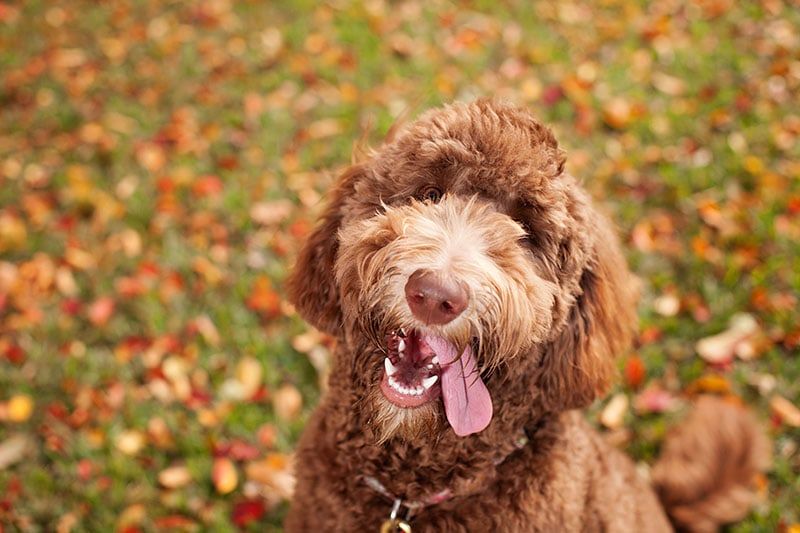
Labradoodles are a popular hybrid dog that's a cross between a Labrador Retriever and a Poodle. These dogs have remained a favorite amongst dog lovers because of their loving and loyal personalities and intelligence. They’re often great choices for first-time dog owners because of their easygoing nature and patience with children.
While they’re most known for their reputation as hypoallergenic dogs, there’s so much more to love about this wonderful breed. Here are some of our favorite interesting facts about Labradoodles.

The 10 Amazing Labradoodle Facts
1. Labradoodles Appeared in the 1980s
While crossbreeding dogs has been around for centuries, the creation of the Labradoodle is most often attributed to Wally Conron. He worked for the Royal Guide Dog Association of Australia and had received a request from a woman looking for a guide dog that wouldn’t trigger her husband’s allergies.
Wally had tried training several Poodles, but none of them were successful candidates. He eventually developed the Labradoodle in 1989, which was much calmer than the Poodles, and successfully became a seeing-eye dog.

2. They Have Mostly Hypoallergenic Coats
Labradoodles are often advertised as hypoallergenic dogs, but it's important to remember that it's impossible for a dog to be 100% hypoallergenic. This is because dog allergies are caused by a specific protein found in a dog's skin, saliva, and urine.1 When someone with dog allergies comes in contact with this protein, they will experience allergic symptoms.
So, dogs that shed more aren’t necessarily causing allergies because of their hair. Loose dog hair often carries dead skin, which is what triggers allergies.
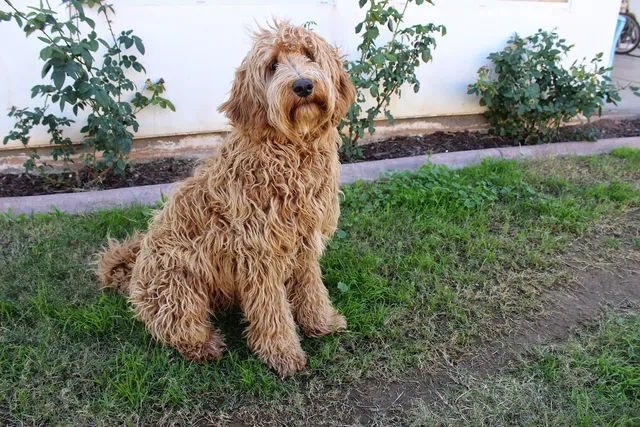
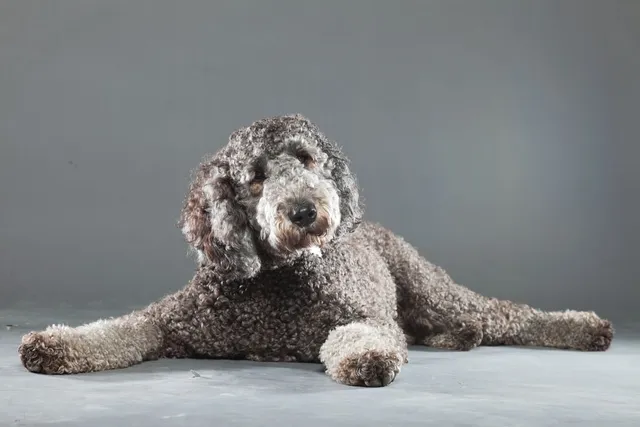
The level of shedding from Labradoodles also depends on the type of coat that they inherit. Labradoodles with curlier coats tend to shed less because their coats more closely resemble a Poodle's low-shedding coat. Labradoodles with wavy coats often shed more because their coats are more similar to a Labrador Retriever’s coat.
3. They’re Relatively Easy to Train
Both the Labrador Retriever and Poodle are known for being highly intelligent. Poodles are among the smartest dog breeds,2 and Labrador Retrievers are often loved because of their intuition and ability to connect with people easily.
This combination makes them relatively easy to train, and they make wonderful pets for first-time dog owners with little experience with dogs. Just keep in mind that Labradoodles tend to have a lot of energy, so it's important for them to get plenty of physical exercise as well as mental stimulation to prevent boredom and destructive behaviors.

4. They’re Excellent Candidates as Service Dogs
It's no surprise that Labradoodles are popular choices for becoming service dogs. After all, they were first intentionally bred to be seeing-eye dogs. Along with their intelligence and eagerness to please, Labradoodles are also excellent service dog candidates because of their low-shedding coats.
This makes them less likely to trigger allergies and more compatible with homes that have individuals with dog allergies. Labradoodles also have an unintimidating appearance, which can be extremely helpful for making people feel comfortable and at ease in their presence.
5. They Come in Different Sizes
While Labrador Retrievers have one standard size, Poodles come in a few different sizes. Labradoodles can be bred with Toy Poodles, Miniature Poodles, and Standard Poodles. A Labradoodle's size will depend on what type of Poodle the Labradoodle has as its parent.
Labradoodles can also be bred with each other, and this is one way that helps breeders maintain a consistent size throughout all their litters of puppies. Because of the varying ways that Labradoodles can be bred, their sizes can range from small and medium dogs to large dogs.

6. They Aren’t Recognized as an Official Dog Breed
Despite being around for several decades, the Labradoodle isn't recognized as an official dog breed by the American Kennel Club (AKC). This is because they're still considered a crossbreed of the Labrador Retriever and the Poodle.
Despite this, you can find several different Labradoodle associations and clubs that help preserve and protect the health of the breed. So, even though they may not be a registered dog breed, there's still a fan favorite, and many are working to protect their health and well-being.
7. They Love Water
It's very likely that your Labradoodle puppy will enjoy playing in the water. This is because both Labrador Retrievers and Poodles were originally bred as retrieving dogs. This makes sense for the Labrador Retriever as it literally has the word “retriever” in its name. However, many people are surprised to find out that Poodles were intended to be dogs that could swim easily.
Their coats are designed to keep them warm as they swim. In fact, the fancy Poodle cut was actually intended to prevent Poodles from retaining too much water in their coats and to help them swim quickly without losing body heat.

8. They Like Having Jobs
While Labrador Retrievers and Poodles aren’t classified as working dogs, they still enjoy having a job to do. This is why Labradoodles often become successful service dogs. Their intelligence enables them to learn tasks quickly, and they love mental challenges and receiving praise and affirmation from people.
Pet Labradoodles may not have official jobs, but you can certainly give them jobs around the house. For example, you can teach them to fetch or carry items. Your Labradoodle will appreciate a daily routine that’s highly incorporated with yours. It will love feeling helpful and being able to accompany you as you go about your day.
9. They Require a Lot of Grooming
Labradoodles tend to require more attention to grooming than many other dog breeds. This is mostly because their coats are comprised of thin and curly hair that's prone to tangling and matting. You can have a professional groomer shave down your Labradoodle’s coat to a shorter and more manageable length.
However, if you want your Labradoodle to have the signature floppy look with curly locks of hair, you have to make sure to brush their coat daily to prevent tangles and mats. Matted hair can be dangerous for any dog because it can end up tugging at the skin, which causes irritation and increased itching. More severe cases can lead to skin lesions, infections, and flea and tick infestations.

10. Only Buy Labradoodle Puppies from Reputable Breeders
Due to the Labradoodle's sweet personality, intelligence, and low shedding coat, it was inevitable for this breed to become extremely popular. Unfortunately, their rise in popularity also attracted people who didn't have their best interests in mind. People more interested in making a profit rather than caring for their well-being engaged in unethical breeding practices to sell as many Labradoodle puppies as possible.
Therefore, if you're interested in bringing home a Labradoodle puppy, it's important to work with reputable breeders that have ethical breeding programs. Your best bet is to work with a breeder that's registered with a Labradoodle Association, such as the Australian Labradoodle Association of America. These breeders must adhere to rigorous rules and standards to ensure that they're producing healthy Labradoodle puppies.
Final Thoughts
The Labradoodle has a noble origin story, and these dogs continue to make many people’s lives better. They’re known to have caring and loyal natures, and it’s important for their owners to reciprocate and be just as attentive and loyal to them.
Despite not being an officially recognized dog breed, Labradoodles are truly the gift that keeps on giving, and anyone is lucky to have one in their life.
See also:
15 Pros & Cons of Having a Labradoodle (Lifestyle Fit & FAQ)
When Will My Labradoodle Go Into Heat? Vet Reviewed Facts & FAQs
Featured Image Credit: The Dog Photographer, Shutterstock
Expert dog care, straight to your inbox
News, insights, expert advice, and everything dog.

No spam — unsubscribe anytime.
By signing up, you agree to our Terms & Conditions and Privacy & Cookies Policy.
How useful was this post?
Click a star to rate. You can leave written feedback afterwards. (We read all feedback.)
Jessica is a freelance writer who spends bigger part of her day researching and writing while her furry companion Cavapoo, Nora, snoozes beside her. She loves dogs, pets and animals because there’s so much to learn from them, and they do so much for us. As a dog mom, she understands the strong connection that pet parents have with their pets. So, she loves sharing helpful information that pet owners can use to better understand their beloved pets. When she isn't writing, you may find her walking dogs, tending to her plants, or drinking her nth cup of coffee.