Italian Greyhound Dog Breed Info, Pictures, Facts, Traits & More


In this article
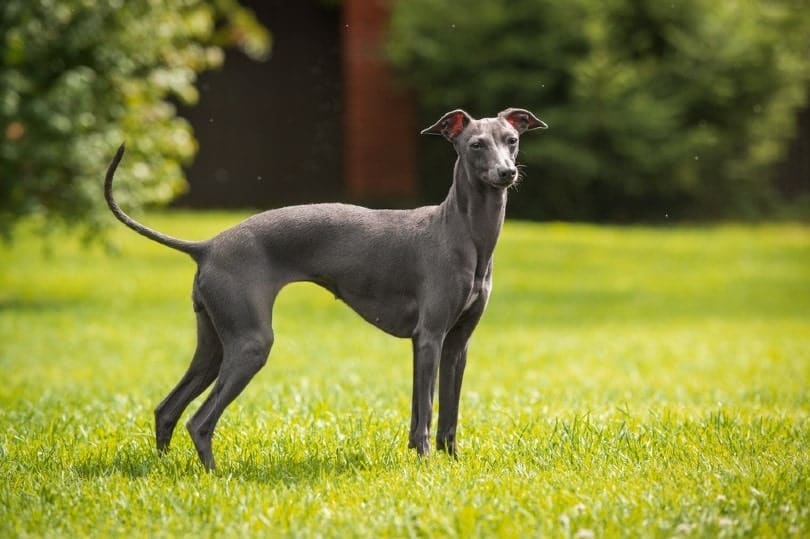
View 8 More +The Italian Greyhound is becoming increasingly popular due to their small size and affectionate nature. If you are thinking of bringing this breed into your home, it’s a good idea to learn all about them first. Keep reading as we discuss the size, temperament, appearance, and health conditions of the Italian Greyhound so you can determine if they’re the right fit for you.
| Height: | 13–15 inches |
| Weight: | 7–14 pounds |
| Lifespan: | 14–15 years |
| Colors: | Fawn, blue, red, black, sable, seal, white and black, cream |
| Suitable for: | Apartment dwellers, seniors, families, first-time dog owners |
| Temperament: | Affectionate, gentle, intelligent, quiet |
The Italian Greyhound is an ancient breed believed to have originated more than 2,000 years ago in the Mediterranean during the time of the Roman Empire. They were a popular companion and hunting dog that later became a status symbol in Italy during the Renaissance, and you can see them depicted in many popular paintings from that era. Today’s owners fall in love with the dog’s friendly personality and deep affection toward family members.
Italian Greyhound Characteristics

Italian Greyhound Puppies

Like most dogs, Italian Greyhounds are extremely playful and curious as puppies and can get into mischief without constant supervision. Their small size and delicate nature means they can be easily injured and must be handled gently, especially by small children.
As with all puppies, early socialization and training are essential for Italian Greyhounds to grow into well-rounded, happy, and confident adult dogs. This involves exposing them to a wide variety of different people, places, and other animals in a positive and gradual way to help them learn about the world around them.
Temperament & Intelligence of the Italian Greyhound 🧠
Italian Greyhounds have a friendly and affectionate temperament. They are loyal and enjoy being close to their family members, with many owners describing them as being constantly underfoot. These dogs also like to sit on your lap and will frequently climb into bed with you if you let them. They typically have a gentle and quiet nature and don’t usually bark too much.
Italian Greyhounds are intelligent dogs and relatively easy to train. However, they can occasionally be stubborn and find it hard to keep focused, so consistency and patience are essential for success. They respond well to positive reinforcement and being on a routine.
Are These Dogs Good for Families? 👪
The Italian Greyhound makes a wonderful family pet. They are intelligent, friendly, and playful, so they can be great fun to spend time with. They like to stay close by and will follow you around the home or sit on the couch with you while you watch TV. They are also adaptable to different living environments, and their small size makes them well-suited to apartment living.
They are delicate and sensitive dogs, though, and can be unintentionally injured during boisterous play. For this reason, they might be best suited for families with calm older children.
Does This Breed Get Along With Other Pets? 🐶 😽
Italian Greyhounds usually get along well with other animals, especially if they get plenty of socialization as puppies. These friendly dogs often enjoy the company of other canines.
Italian Greyhounds are known to have a high prey drive, though, so they may chase smaller animals, even cats.

Things to Know When Owning an Italian Greyhound
Food & Diet Requirements 🦴
To stay healthy, your Italian Greyhound will require a high-quality balanced diet tailored to their size and life stage (whether a puppy, adult, or senior).
Look for commercial dog food that lists real meat like beef or chicken as the first ingredient, and seek advice from your vet on the best choice for your pup.
Exercise 🐕
While the Italian Greyhound is a small breed, they still require regular exercise to stay healthy and happy. Daily walks, along with plenty of playtime, are vital for keeping your pet healthy and happy. This breed has a large amount of energy but tends to tire out fairly quickly, so you may need to hold a few sessions throughout the day for the best results.
Bear in mind that while small, Italian Greyhounds can run fast when they want to, especially if they catch sight of potential prey. Off-leash exercise is usually best in an enclosed area.

Training 🎾
The Italian Greyhound is an intelligent dog and responsive to training. However, they are also known to be stubborn at times, so it can be hard to keep them focused during training. Short, regular training sessions using positive reinforcement like treats, praise, and affection are best.
Grooming ✂️
Italian Greyhounds are relatively low-maintenance dogs with a short coat that only requires occasional brushing. You will also need to brush their teeth as frequently as possible to maintain dental health and to clip their nails occasionally, especially if you hear them clicking on the floor.

Health and Conditions 🏥
Male vs. Female
Male Italian Greyhounds are usually larger than the females and anecdotally, are slightly more outgoing, with many pet parents describing them as clown-like. The females may be easier to keep focused and train. However, individual dogs vary in their temperament and behavior, regardless of their sex.
3 Little-Known Facts About the Italian Greyhound
1. They are quite fast
Despite their small size, breeders created the Italian Greyhound for speed, and they can reach 25–30 mph!
2. They can jump
Italian Greyhound is an agile jumper and often enjoys dog agility.
3. They are sensitive to the cold
Due to their small size and short coat, an Italian Greyhound doesn’t handle low temperatures well and frequently needs a jacket when traveling outside in cold climates.

Final Thoughts
The Italian Greyhound is a wonderful breed that makes a loving family pet. They are friendly and playful and enjoy companionship, so they don’t tend to like being left alone for long. Their small size makes them well-suited to many different living arrangements, and they are generally quiet dogs.
Due to their size, they are quite delicate, so it’s important to be careful with them and avoid boisterous play, especially with young children. They are also sensitive to cold or wet weather because of their short coat and lack of body fat.
Sources
https://vcahospitals.com/know-your-pet/dental-disease-in-dogs
https://vcahospitals.com/know-your-pet/von-willebrands-disease-in-dogs
https://www.akc.org/expert-advice/health/luxating-patella-dog/
https://www.petmd.com/dog/conditions/musculoskeletal/c_dg_legg_calve_perthes_disease
https://vcahospitals.com/know-your-pet/progressive-retinal-atrophy-in-dogs
Featured Image Credit: Alexandra Morrison Photo, Shutterstock
GetIn Your Inbox
Want content like this delivered to you?
News, insights, expert advice, and everything dog

Ed Malaker is a seasoned writer who has contributed to a wide range of blogs covering everything from tools to guitars, and pets to fitness. When Ed isn't writing, he is usually making DIY projects around the house or working in the garden.


