Irish Dane Dog Breed: Info, Pictures, Care & More

In this article
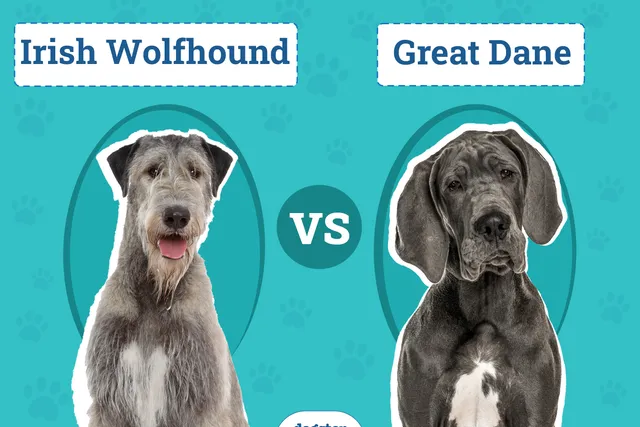
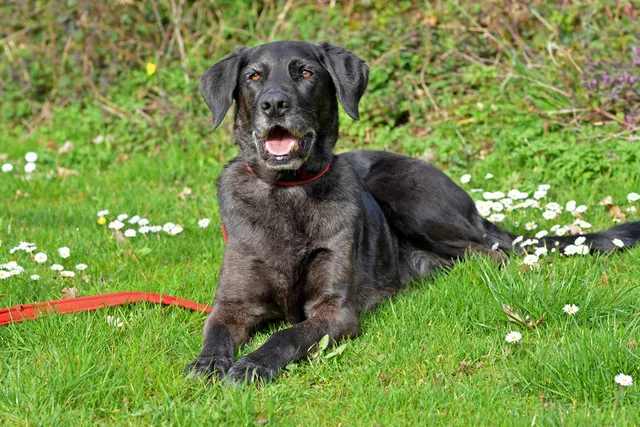
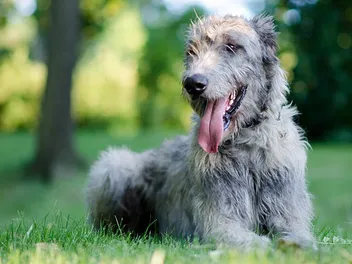
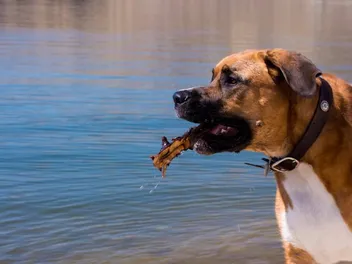
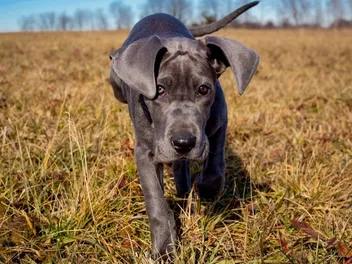
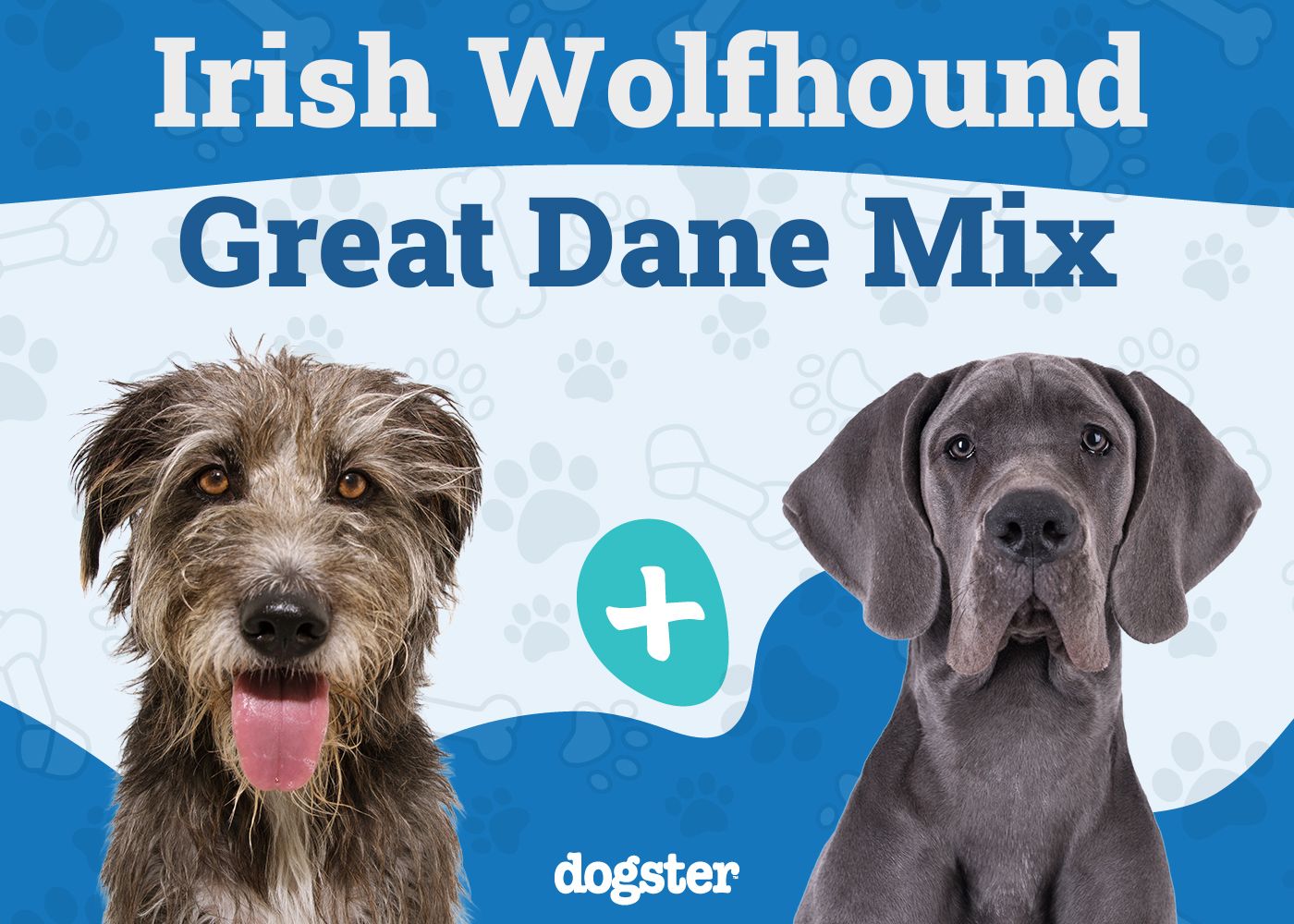
The Irish Dane is a mixed breed between an Irish Wolfhound and a Great Dane. They are massive dogs, as you can imagine.
However, because they are hybrids, their traits aren’t very predictable. A puppy might be more similar to an Irish Wolfhound or a Great Dane. Most are somewhere in the middle of these two breeds, though what traits they will inherit is a complete mystery.
Some level of surprise is inherent in this breed, so make sure that’s something you’re up for before you choose a hybrid dog.
Still, Irish Danes seem to inherit some similar traits.
Breed Overview
Height:
Weight:
Lifespan:
Colors:
Suitable for:
Temperament:
For instance, they are enormous. Their exact size does vary quite a bit, but you can expect them to be extremely tall. Their height is based on their parents, though a great deal of randomness is at play too.
They tend to be highly imposing creatures. Training is required. Not because they are aggressive, but because they are just so big. There is no way to control them physically, so they have to be trained well.
As a mixed breed, they are not currently recognized by the AKC or any other major kennel club.
Irish Dane Characteristics

Irish Dane Puppies
Finding an Irish Dane puppy for sale is extremely rare. Few breeders specialize in these dogs. Most of them are happy accidents or the result of backyard breeders – two options that can lead to lower-quality puppies. However, a few breeders do specialize in this dog breed. For the most part, they seem to be breeders that are already producing Irish Wolfhounds or Great Danes. They simply branch out into this crossbreed.
Irish Danes are expensive because these dogs are massive. It takes a lot of money to care for the parents. Imagine how much a Great Dane eats! Veterinary care will cost more since the dogs will require higher doses of medication and an extra hand for surgeries.

Temperament & Intelligence of the Irish Dane 🧠
While these dogs may look scary, they aren’t. They are gentle giants and love people.
They often consider themselves lapdogs, though they are far too large for most laps. They will attempt to cuddle with just about anyone. These dogs spread their affection equally, making them good family dogs.
They also tend to get along with strangers, though they aren’t necessarily as people-oriented as other breeds. They are squarely in the social category.
However, their attachment to people does make them a bit prone to separation anxiety. This is a relatively common issue across many breeds. It is only a substantial issue in the Irish Dane’s case because of their large size. An anxious Irish Dane can be highly destructive. You don’t want a 100-pound, anxious dog running through your house!
They can be a bit territorial if not socialized properly. We highly recommend puppy classes, which will help kickstart their training and socialize them with other dogs.
If you adopt an Irish Dane, you must socialize them properly. Otherwise, they may be wary and territorial towards strangers. Because they’re such big dogs, this can turn dangerous very fast.
They are somewhat easy to train. They are pretty people-oriented, so they often want to please you. However, they are not nearly as trainable as some other breeds, like the German Shepherd, for instance.
Are These Dogs Good for Families? 👪
Irish Danes are very people-oriented and gentle. They spread their affection out widely and love to cuddle. Despite their larger size, they aren’t active. We recommend them for families with low- to moderate activity levels.
Their large size and laidback nature make them very good for kids. They are unlikely to get hurt by children simply because they outweigh them by so much! Injuries to dogs are one of the most common causes of dog bites. The child hurts the dog, and the dog automatically bites back.
This can also lead to fear-based biting. The dog doesn’t want to get hurt again, after all.
Because they are much larger than children, Irish Danes usually don’t have either of these problems.
Many people assume that they would knock over children due to their bigger size. However, they are not particularly rowdy and usually have a pretty good idea of where their body is. It makes these sorts of accidents rather rare.
Smaller dogs are just as likely to knock down a small child as a larger one. In fact, most small dogs are a bit hyperactive and may be more likely for this reason.
Does This Breed Get Along with Other Pets? 🐶 😽
This breed is extremely social and not terribly territorial. For this reason, they often get along just fine with other dogs.
Of course, it is essential to socialize them from a young age anyway. You want them to feel comfortable around other dogs and know how to communicate effectively – both of which take time.
Once again, puppy classes are a great option for this. They can help you get off to the right foot on training and help them figure out how to interact with other dogs.
For the most part, these canines don’t need tons of socialization to get along with other canines, though. They’re pretty laid back.
However, cats and other small pets are a different story. Irish Danes tend to see smaller animals as prey. They will chase them. It is just in their nature. Some of them may have greater prey instincts than others. But, all of them will likely chase cats.
Irish Wolfhounds were made to hunt, and they’ve contributed half of this mixed breed’s DNA. Therefore, you can expect the Irish Dane to have stronger hunting instincts as well.
Things to Know When Owning an Irish Dane
Food & Diet Requirements 🦴
As you might imagine, these dogs eat a lot. They are very large and therefore require a lot of food to function. You can expect to spend quite a bit on their food each year.
Still, we recommend purchasing a higher-quality food that is specifically made for bigger dogs. Irish Danes have the same nutrition requirements as other breeds for the most part. General macronutrient needs don’t change based on a dog’s size or breed.
However, they may benefit from some specific nutrients that support joint health, like glucosamine.
Their joints carry around more weight each day. This extra weight makes them wear down faster, leading to hip and joint problems when the dog is younger. Their joints often need all of the help they can get!
Their nutrition as puppies is paramount to preventing these issues as well. Large-breed puppies have specific nutritional needs that smaller puppies don’t have. Feeding them the correct diet can prevent problems from occurring later on.
We recommend feeding puppy food specifically designed for larger puppies. An all-life-stage formula is often preferred since these puppies keep growing for a long time. Be sure to keep them on an appropriate food the whole time they are growing – which will take longer than a year.
You should be sure to feed your dog the appropriate amount. Overfeeding puppies can result in health problems down the line. Not only will their calories be too high, but they may also consume too much calcium.
Exercise 🐕
Surprisingly, these dogs do not have extensive exercise needs. In fact, they’re pretty laid-back animals. Like many large-breed dogs, they’ll spend much of their time lying around.
However, you should still plan on exercising these canines regularly. They still require movement and will be much better off with a daily exercise routine. They love to run, in particular.
We recommend a fenced-in yard. But this is not strictly necessary. As long as you take your canine on plenty of walks and jogs, they will often meet their exercise needs well enough. These are great dogs to take jogging on a bicycle.
The average Irish Dane will need 45 to 90 minutes of light to moderate activity each day. These canines are not going to exercise intensely. That just isn’t their purpose. However, moderate activity is recommended to keep their bodies in tip-top shape and their minds active.
Be sure not to over-exercise this breed. While you should provide them with up to 90 minutes of exercise a day, that doesn’t necessarily mean that you should force them to exercise. Be particularly careful with puppies.
Overexercising can put too much weight on their joints, creating all sorts of problems down the line.
Puppies are particularly prone to this damage, as their joints are still developing.
Training 🎾
All dogs need to be trained – especially when they are as large as an Irish Dane. Without the proper training, they can easily hurt someone accidentally.
Luckily, these dogs are fairly people-oriented and easily listen to commands. They want to please you during training, so they often try to do what you want.
They aren’t necessarily as trainable as some other dogs out there. Irish Danes are not the same as German Shepherds. They are not as devoted or intense as some working dogs out there. However, they are more than willing to listen to most commands.
They train easily and quickly. Training classes are highly recommended, but anyone who has ever trained a dog may be able to train this breed without any of the extra help.
Be sure to socialize as well as train these dogs. You should be sure that they are introduced to a wide variety of people and dogs. You can take them to puppy classes. However, you shouldn’t rely on classes alone for socialization. After all, these classes are an artificial environment.
We recommend taking them out and about around town as well. Look up dog-friendly stores and restaurants near you.
The more you introduce your canine to these situations, the more comfortable they will be as adults. Your job is to make these daily occurrences completely normal.
Grooming ✂️
With their short single-layered coat, these dogs do not require much grooming in the least. In fact, they require significantly less grooming than most other dogs out there. If you’re looking for a low-maintenance dog, they may easily fit into that category.
They will shed moderately, but their short hair makes this a bit less of a problem than other dogs. They require brushing every week or so to handle this excess hair and help keep their coat clean.
Brushing removes hair, dirt, and debris from your dog’s coat. They may not have very much hair, but a quick grooming routine can easily remove much of the dirt and dust. This elongates the amount of bathing you’ll need to do, potentially preventing skin irritation and similar issues.
All dogs will need an occasional bath. They will roll in the mud and get stinky. However, you should aim to keep baths to a minimum. Too much bathing can reduce their natural skin oils and cause skin irritation.
You’ll need to brush their teeth a few times a week at the least. Every day is better, but we understand that not all pet parents can pull this off! Brush them as much as possible, but not more than once a day. Speak to your vet about proper toothpaste to use for your dogs, as different canines may need different formulations.
Clip their nails whenever they become too long – usually once or twice a month. If you can hear your dog’s nails clicking on a hard surface, they likely need their nails clipped.
Health and Conditions❤️ 🏥
The Irish Dane inherits many health problems from both parents. Most of these are structural. Their joints just aren’t prepared to carry around all their weight for very long. As you might imagine, this quickly leads to joint problems.
Here are some of the most common health concerns the Irish Dane has.
Male vs. Female
Males are often larger than females. However, this is not always the case. Because this is a mixed breed, their weight tends to vary by a lot. Therefore, it isn’t odd for females to easily outweigh males.
The huge diversity of sizes makes it difficult for a sizing difference to develop based on gender alone.
As far as temperament goes, all of these dogs have very similar temperaments. Their level of aggression or territorial nature does not depend on their gender. Differences are much more likely to be related to genetics and socialization.
There is little reason to adopt a female over a male or vice versa. What gender you pick is largely up to your personal preferences or whatever is available at the time.
3 Little-Known Facts About the Irish Dane
1. They are not recognized by any major kennel club.
The name “Irish Dane” often makes people think that this breed is purebred. However, they are really a mix between an Irish Wolfhound and a Great Dane. They are not currently recognized by any major kennel club. For the most part, these clubs only recognize purebred dogs, which these canines are not.
2. Irish Danes tend to be unhealthy.
Most mixed breeds are pretty healthy. They inherit their traits from a larger gene pool, which often translates into fewer genetic problems.
Most purebred dogs are inbred, at least somewhat. That’s what makes their traits so set in stone; they aren’t inheriting from a large number of options. This practice has also led to many different health problems, though.
However, Irish Danes typically aren’t that much healthier than their purebred parents. Many of their health problems come from their sheer size – not genetic predispositions.
3. Finding an Irish Dane can be difficult.
These dogs are not extremely common like some other mixed breeds. There are very few (if any) breeders that specialize in them. Instead, they are occasionally produced by Irish Wolfhound and Great Dane breeders.
Some backyard breeders may also produce puppies. However, these amateur breeders often don’t perform the proper health testing or seek vet care. Therefore, they usually produce lower-quality puppies.

Final Thoughts
Irish Danes are a mixed breed between a Great Dane and an Irish Wolfhound. As you might expect, these dogs are massive. They take up a lot of space and require training to ensure that their house manners are on-point.
They are extremely gentle creatures, though. Like the Great Dane, they are well-known as gentle giants that are great in families and larger households. However, their Irish Wolfhound genetics do contribute to a stronger-than-usual prey drive. They will chase cats and other small animals.
While we don’t recommend them in homes with small pets, they do seem to get along just fine in homes with other dogs. They are social animals and often not too territorial. As long as they are socialized from a young age, they get along with people and dogs alike.
Because of their massive size, these dogs tend to require a lot of upkeep. Their food will be fairly expensive, simply because they eat a lot. Any vet expenses will also cost more. All pet equipment will need to be larger and therefore will carry a higher price tag as well.
Be sure you have the financial means to care for one of these dogs before adopting them.
Related Reads:
Expert dog care, straight to your inbox
News, insights, expert advice, and everything dog.

No spam — unsubscribe anytime.
By signing up, you agree to our Terms & Conditions and Privacy & Cookies Policy.
How useful was this post?
Click a star to rate. You can leave written feedback afterwards. (We read all feedback.)
Kristin loves to help pet parents create a fulfilling life for their pets by informing them on the latest scientific discoveries and helping them choose the best products for their pets. She currently resides in Tennessee with three cats, four dogs, two fish, and a lizard, though she has dreams of owning chickens one day!