Get

In Your Inbox

Dogster is reader-supported. When you buy via links on our site, we may earn an affiliate commission at no cost to you. Learn more.

How to Groom a St. Bernard: 6 Tips & Tricks

Share

saint bernard great pyrenees mixed breed dog

St. Bernards are quite hairy, so they need a decent amount of grooming. While they aren’t as high-maintenance as some other breeds, they are very large. Therefore, even a basic brushing session will take quite a while!

Besides their coat, you also need to pay attention to your dog’s feet and around their face. These areas may even need to be trimmed. Plus, you also have to worry about your dog’s teeth.

That may seem like a lot, but we’re here to lay it all out clearly. Here’s how to groom a St. Bernard.

Dogster divider_v2_NEW_MAY_24_

The 6 Tips on How to Groom a St. Bernard

1. Brush, Brush, Brush

The longest part of your grooming routine will be brushing your dog’s coat. You’ll need to use a slicker brush to remove dead hairs and prevent matting. Choosing a large brush is important here, as a St. Bernard is on the larger size.

Brushing also helps keep your dog clean. It can remove dirt and dust, elongating the time between baths.

You’ll want to brush at least every other day. Sometimes, you may need to brush even more, depending on how much your dog is currently shedding. During shedding season, your dog may shed twice as much as usual, so you’ll need to adjust as necessary.

Close up pet hair brush with pet fur clump
Image Credit: RJ22, Shutterstock

2. Use a Comb

Even if you brush your dog regularly, their coat may still get tangled. These tangles should be removed with a comb—choose a stainless-steel option for durability.

There isn’t a particular amount you should comb your dog as it depends on how often you find tangles. It’s best to have the comb on hand when brushing your dog. That way, if you find a tangle, you can brush through it right away.


3. Bathe Occasionally

Dogs need baths just like people. However, dogs do not need nearly as many baths. Too much bathing can dry out your dog’s skin and remove their natural oils. In time, this can cause dryness and eventually cause your dog’s coat to shed even more.

Therefore, you should only bathe your dog when you absolutely need to. If your St. Bernard rolls in mud, you should probably give them a bath. However, there is no need to implement a weekly bathing schedule.

We highly recommend picking up a high-quality shampoo formulated for dogs, too. This will help limit these more negative side effects.

saint bernard dog taking a bath
Image Credit: Marco 1978 Pereira, Shutterstock

4. Trim Their Toe Fur

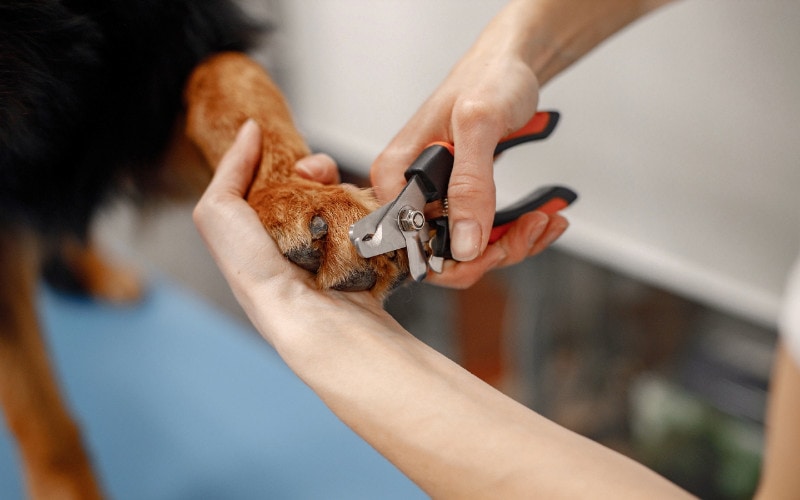
While St. Bernards don’t need their whole coat to be trimmed, they do need the fur between their toes trimmed. This hair can get matted easily and cause pain. Plus, it can “snowball” in snowy weather, making it hard for your dog to walk properly.

This fur doesn’t have many benefits when long, so there isn’t much of a need for it. It’s often best to give it a quick trim. You can do this yourself or go to a groomer. You don’t have to trim the fur super close, just enough to prevent it from sticking out from between their toes.


5. Check Their Ears

St. Bernards have longer fur in their ears. This fur needs to be trimmed, as well. It can hold onto dirt and moisture, leading to ear infections. You’ll also need to keep an eye out for dirt and debris inside your dog’s ears. If necessary, you can use a damp cotton ball to clean around your dog’s ears. (Never stick anything down into your dog’s ears; just clean the outside.)

If your dog has particular trouble with their ears, you can speak to your vet about ear-cleaning drops. These have a bit of extra oomph that can help keep your dog’s ears cleaner. Using a cleanser may be necessary for some dogs.

If you need to speak with a vet but can't get to one, head over to PangoVet. It's our online service where you can talk to a vet online and get the advice you need for your dog — all at an affordable price!

PangoVet_Mention-in-Content Savings V1


6. Dental Care

Your St. Bernard also needs their teeth taken care of—dental health is extremely important for dogs. Poor dental care can be deadly in some cases as abscesses can form, opening up the body for infection.

Luckily, preventing these issues is pretty straightforward. All you need to do is brush your dog’s teeth a few times a week with canine-safe toothpaste. This helps prevent dental problems before they occur.

Furthermore, you may need to pay for professional cleanings from your vet. However, these will be fewer and farther between if you brush your dog’s teeth regularly.

dogster paw divider

Conclusion

St. Bernards are usually considered to need moderate maintenance. While they only need to be brushed and have some other basic hygiene tasks done, their larger size makes these grooming sessions take longer. Their longer fur can also get matted, so grooming isn’t optional.

You should set aside 30 minutes to groom your St. Bernard every other day. However, you may need to groom them every day during the heavy-shedding season.


Featured Image Credit: audreyelizabeth, Shutterstock

Want content like this delivered to you?

Sign Up For Our Newsletter

News, insights, expert advice, and everything dog

* By submitting, you agree to our Terms & Conditions and Privacy & Cookies Policy.


How useful was this post?

Click on a star to rate (you can leave written feedback after clicking submit)

Help us improve Dogster for pet parents!

Your feedback really matters.

What did you like about this post? Also how can we improve it?

Join the conversation

Leave a Reply

You’re very welcome to leave a comment or question. Please know that all comments must meet our community guidelines, and your email address will NOT be published. Let’s have a positive and constructive conversation.


Talk With A Vet Online

Peace of mind,
anywhere, anytime

Affordable vet advice

Ask Dr. Paola- Help! My Dog Gets Reoccurring UTIs (March 9, 2026)

Welcome to our “Ask Dr. Paola” series, where every Monday we bring expert advice straight from Dr. Paola Cuevas (MVZ) to help our...

DIY Repellents for the Dog Who Thinks Everywhere Is His Toilet

Dog urine and everything nice have a complicated relationship. One thrives, the other suffers, and if you’re reading this, you already know which...

Dogster’s Weekly Photo Contest Winners: I Dig, Therefore I Am (March 5, 2026)

Every week our team gets the privilege of sorting through our readers photos to choose what dogs will win this weeks contest! See...

Ways to Stop Dog Boredom Before It Destroys Your House

Your dog is staring at you. They’ve paced between the door and the couch. They’ve sighed dramatically from their bed. The message is...

More related

10 Most Popular Dog Breeds in Georgia: 2026 Update (With Pictures)

Georgia has both very rural areas and very urban areas, and the dogs that are popular in each area are different. For instance,...

How to Train a Shar Pei: 12 Vet-Verified Tips & Tricks

The Chinese Shar Pei or simply the Shar Pei is a strong, smart, and loyal dog. Hailing from China, they have an imposing...

Do Dachshunds Howl a Lot? What to Know

Dachshunds, also known as “wiener dogs,” are a breed of short-legged, long-bodied hounds that are often found in households across the world. Generally,...

9 Best Dog Nail Clippers for Thick Nails in 2026: Reviews & Top Picks

Trimming your dog’s claws is a challenge at the best of times, even without the added difficulty of owning a breed with naturally...

Keep reading

Can Dogs Eat Frosted Mini Wheats? Vet-Reviewed Risks & FAQ

Frosted Mini-Wheats are a popular cereal known for their high fiber and sugary coating. They might be a delicious breakfast for a person, but are they good for dogs? Most importantly, are Frosted Mini Wheats safe for dogs to eat?...

Can Dogs Eat Frosted Mini Wheats

What Is DHA in Dog Food? Vet-Reviewed Benefits, Drawbacks & FAQ

DHA is an omega-3 fatty acid that is found in fish oil. It is a popular ingredient in dog food because it is thought to have many health benefits. These include reducing inflammation, improving heart health, and aiding in cognitive...

dog eating dog food

Can Dogs Eat Palm Oil? Vet-Verified Facts & Info

You probably don’t have a bottle of it in your pantry. However, you probably consume palm oil every day. It’s big business, with global production for 2024 estimated at 80,194 million metric tons.¹ It has become widespread in a broad...

Can Dogs Eat Palm Oil

Can Dogs Eat Garlic? Vet Reviewed Risks & Nutrition Advice

Garlic has more of an impact on humans than just causing bad breath. It has medicinal properties, boosts the immune system, lowers blood pressure, and detoxes the body. However, some foods that positively impact the human body can have the...

Can Dogs Eat Garlic

Can Dogs Taste Spice? Vet-Verified Facts & Risks

Dogs find many human foods tasty. However, due to differences in our anatomy, dogs experience taste differently from humans. When it comes to spiciness, dogs are capable of tasting spice and can even feel the heat, but their taste for...

a variety of spices on wooden table

Can Dogs Drink Human Breast Milk? Nutrition & Health Facts

Many pet owners consider their dog to be their baby, and there’s nothing wrong with that. However, there are some things that we shouldn’t be sharing with our pets, and breast milk is one of them. In addition to being...

Can Dogs Drink Human Breast Milk

Can Dogs Eat Nectarines? Vet-Verified Facts & Safe Alternatives

As pet parents, we are responsible for knowing what types of foods are safe for our beloved animals to eat. When it comes to dogs, we have to be very cautious not to offer certain foods or leave them out...

Can Dogs Eat Nectarines

8 Best Low Sodium Dog Foods In 2026 – Reviews & Top Picks

There are tons of dog foods out there—so much so that some pet stores have almost half of their floor space dedicated to it. One type of dog food that doesn’t get a lot of coverage, though, is low-sodium dog...

Dalmatian dog eating dry food from a bowl

Love Dogs? So Do We! Join the Dogster Community

Stay informed with expert pet care insights delivered straight to your inbox! Discover professional guidance on animal behavior, feeding tips, trusted product picks, and much more.


Sign up for the Dogster Email Newsletter