In this article
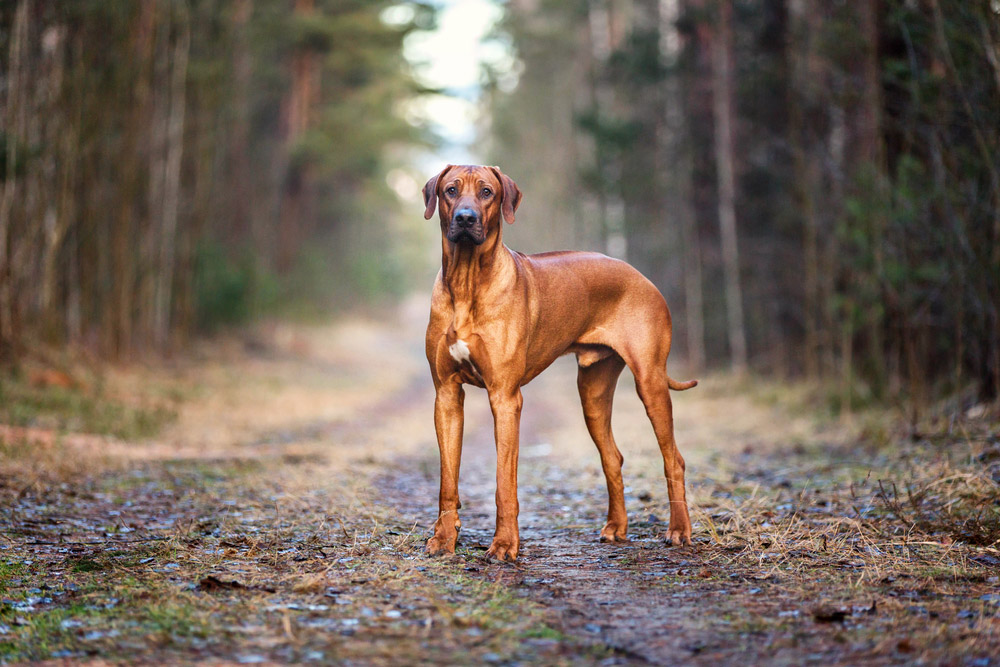
View 4 More +The Rhodesian Ridgeback is an excellent family companion. These dogs are big but have a gentle disposition, and they are intelligent, loyal, and protective of their human families. Males typically weigh up to 85 pounds, while females reach around 70 pounds. In terms of height, both males and females can stand up to 26 or 27 inches tall at maturity, sometimes even more.
The Rhodesian Ridgeback was bred for big game hunting and guarding. They are powerful and athletic with a strong prey drive and are relatively fast, given their size upon reaching maturity. In this post, we’ll focus on the things that will affect your Rhodesian Ridgeback’s size, along with ideal diets for the breed and how to keep an eye on your Rhodesian Ridgeback’s size and weight.

Rhodesian Ridgeback Overview
This breed is also referred to as the African Lion Hound. Natives of South Africa, these dogs became well known for their tracking and baying skills. Interestingly, they were used for hunting lions but never killed one. Instead, they drove the lions to the hunter for the shot.
The Rhodesian Ridgeback’s history began in the 16th century when Europeans first explored the Cape of Good Hope. They noticed a semi-domesticated dog with hair growing in the opposite direction along the back, hence the name. They have a ridge of hair that grows in the opposite direction from the rest of the coat, running along the back from the shoulders to the hips. Two identical crowns, also called whorls, lie at the beginning of this ridge on opposite sides from each other. This ridge that runs along the back is the Rhodesian Ridgeback’s hallmark.
The breed was recognized by the AKC in 1955 and became the 112th dog breed admitted into the club. However, the AKC is not the only recognition of these dogs; the Rhodesian Ridgeback Club of the United States was formed in 1957 and is dedicated to educating about the breed and encouraging rescue awareness.
Factors Affecting the Size of a Rhodesian Ridgeback
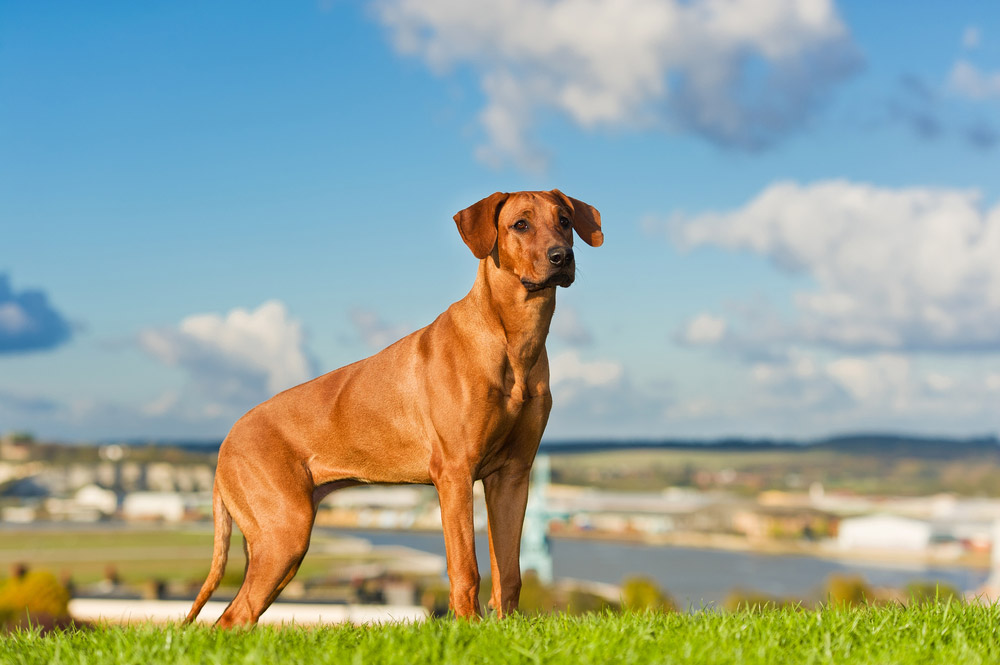
Many factors influence the size of the Rhodesian Ridgeback, such as the stage of life (puppy, adolescent, adult), gender, and genetics.
Regarding gender, females are typically a little smaller than their male counterparts, with their weight reaching 70 pounds and 24 to 26 inches in height. Males, in comparison, reach approximately 80 pounds. Some Rhodesian Ridgebacks may be bigger if both parents are large.
When Does a Rhodesian Ridgeback Stop Growing?
Typically, these dogs stop growing at 18-24 months, but some will continue to fill out and gain muscle up to 2.5 years of age. As they are a large breed, it takes longer to reach their mature adult size than small and medium-sized dogs.
Ideal Diet for Maintaining a Healthy Weight
As a Rhodesian Ridgeback dog owner, it’s important to feed age-appropriate nutrition for large breeds to help them grow at the right rate and fill out according to their life stage. These dogs are powerful and athletic, and they require a complete and balanced diet comprised of high-quality protein, healthy fats, vitamins, minerals, and antioxidants.
Good nutrition starts in puppyhood. As Rhodesian Ridgebacks are large breed puppies, they need tailored nutrition for their rapid growth. Special large breed puppy diets are formulated to regulate calories and calcium and stop them from growing too fast. This reduces the risk of these developmental problems, while still allowing them to reach the same adult size. Speak to a vet for help with choosing the best diet for your dog to keep them at optimal health.
If you need to speak with a vet but can't get to one, head over to PangoVet. It's our online service where you can talk to a vet online and get the personalized advice you need for your pet — all at an affordable price!
Knowing if Your Rhodesian Ridgeback is a Healthy Size
The height references in this article is when your Rhodesian Ridgeback is measured from the ground to their shoulders.
Regarding weight, you could hold your Rhodesian Ridgeback and step on a scale at home. Make note of your weight first, then weigh holding your dog. You then subtract your weight from the number of the combined weight. However, this may be a difficult task given how big they get, and you may consider taking your fully-grown Rhodesian Ridgeback to the vet for an official weigh-in.
As discussed above, their weight and size can vary based on genetics and their age and gender, so a helpful tool for monitoring your dog’s weight at home is called the ‘Body Condition Scoring (BCS).’ This hands-on system uses a scale from 1 to 9, with a score of 4–5 considered ideal. It focuses on assessing your dog’s shape and body fat in three key areas:
- When feeling over your dog’s rib cage. You should be able to feel individual ribs without having to press too hard. The ribs should not be readily seen though (this may indicate your dog is underweight)
- Feel around your dog’s waist. When looking from the top there should be an ‘hourglass’ shape and from the side an upward curve of the tummy.
- Feel along the spine that runs down the middle of the back and the tops of the hips and shoulders. In a dog at an ideal weight, they will be able to be felt but with a layer of fat/muscle over them.
Conclusion
If you’ve considered owning a Rhodesian Ridgeback, it’s to understand their size upon reaching maturity (around 85 pounds for males, 70 pounds for females) to confirm you have adequate space in your home to share with them.
These dogs need a large amount of exercise and do not do well with apartment living. It’s best to have a safe, fenced yard for your dog to run in and ensure you have the time to walk your dog daily.
See also:
- Do Rhodesian Ridgebacks Like Water? Tips, Facts & FAQ
- Are Rhodesian Ridgebacks Good with Kids? History, Tips & FAQ
Featured Image Credit: Osetrik, Shutterstock