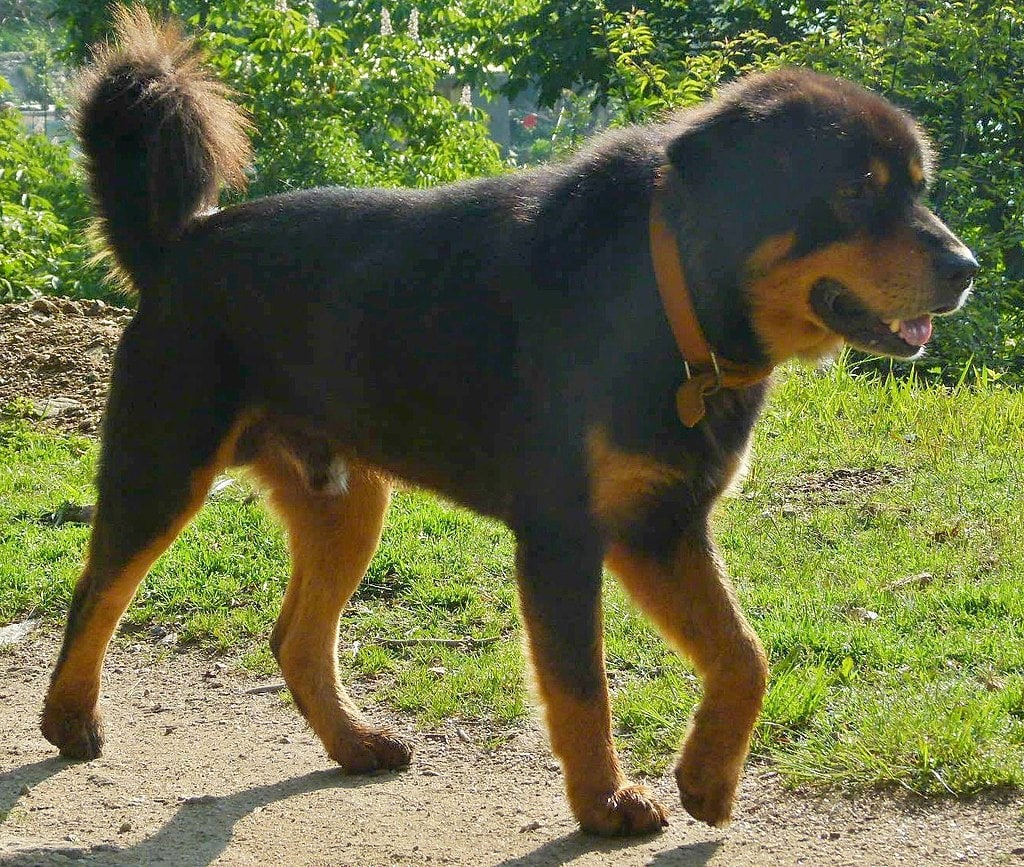
The Himalayan Sheepdog is a large and powerful breed that takes protecting their family seriously. These dogs are friendly and sociable with human and dog family members but are much more standoffish when dealing with people and animals outside of the home. This is not to say that a Himalayan Sheepdog cannot learn to socialize well, but the act is not instinctive, and training from a young age is necessary.
Breed Overview
Height:
26–30 inches
Weight:
60–90 pounds
Lifespan:
10–11 years
Colors:
Fawn, brown, black
Suitable for:
Families and singles, homes with yards, farm and ranch settings
Temperament:
Loyal, intelligent, playful, active, protective
This dog breed is highly active and is always looking for something to do. They enjoy working on farms but can enjoy long and happy lives in family environments if training, exercise, and adventures are focused on. There is much to learn about this interesting breed, especially if you plan to adopt one for your family.
Himalayan Sheepdog Characteristics
Energy
+
High-energy dogs will need a lot of mental and physical stimulation to stay happy and healthy, while low-energy dogs require minimal physical activity. It’s important when choosing a dog to make sure their energy levels match your lifestyle or vice versa.
Trainability
+
Easy-to-train dogs are more skilled at learning prompts and actions quickly with minimal training. Dogs that are harder to train will require a bit more patience and practice.
Health
+
Some breeds, due to their size or their breeds potential genetic health issues, have shorter lifespans than others. Proper exercise, nutrition, and hygiene also play an important role in the lifespan of your pet.
Lifespan
+
Some dog breeds are prone to certain genetic health problems, and some more than others. This doesn’t mean that every dog will have these issues, but they have an increased risk, so it’s important to understand and prepare for any additional needs they may require.
Sociability
+
Some dog breeds are more social than others, both towards humans and other dogs. More social dogs have a tendency to run up to strangers for pets and scratches, while less social dogs shy away and are more cautious, even potentially aggressive. No matter the breed, it’s important to socialize your dog and expose them to lots of different situations.
These amazing dogs start small enough to fit in an adult human’s hand. But they grow quickly and require a great deal of attention as they age. Once fully grown, these dogs can weigh up to 90 pounds and give you a run for your money if you have not already established yourself as the pack leader.
Temperament & Intelligence of the Himalayan Sheepdog
These dogs are active, intelligent, protective, and eager to please. They get big quickly and are naturally strong, so they require training to learn how to live in a family household from the time that they are puppies (preferably, 12 to 16 weeks of age) and throughout adulthood. Training ensures a soft touch when spending time with children and an open mind when meeting new people and animals for the first time.
Himalayan Sheepdogs enjoy playing catch and hide-and-seek in the yard, but they also like to snuggle up on a lap when it’s time for the family to settle down for a movie. They are extremely protective over their human family members and will make sure that everyone at home knows when strangers get anywhere near the family property.
Are These Dogs Good for Families?
These can be great family dogs, but they must be trained and socialized. Without training, they can overcome children and try to take leadership over the human adults in their life. With training at an early age, these dogs can learn to be gentle with children and to obey their human family members.
Does This Breed Get Along With Other Pets?
The Himalayan Sheepdog is a strong and mighty dog that does not necessarily get along with other dogs and animals. These dogs should be socialized with other dogs that do not live within the household while they are still puppies, around 8 to 12 weeks of age. If they do not get used to hanging out with other dogs while still young, they likely will not take well to other dogs when they get older.
Aggression and shyness are both signs that a Himalayan Sheepdog is not comfortable around other dogs. These dogs may chase and hunt down smaller animals, such as cats, birds, and chickens. They should always be supervised while spending time around smaller animals.
Owning a Himalayan Sheepdog is a great deal of fun but requires plenty of commitment. These dogs are large and determined, so they need a firm yet loving hand to ensure their health and safety. Owners should understand their food and diet requirements, exercise needs, training possibilities, and common health conditions before adopting a Himalayan Sheepdog.
Food & Diet Requirements
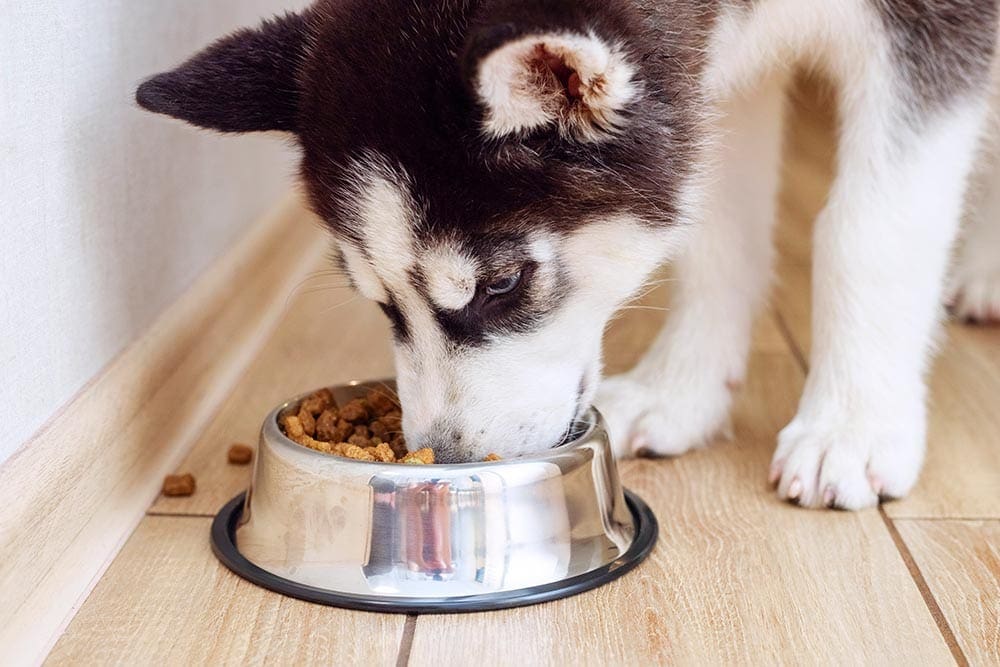
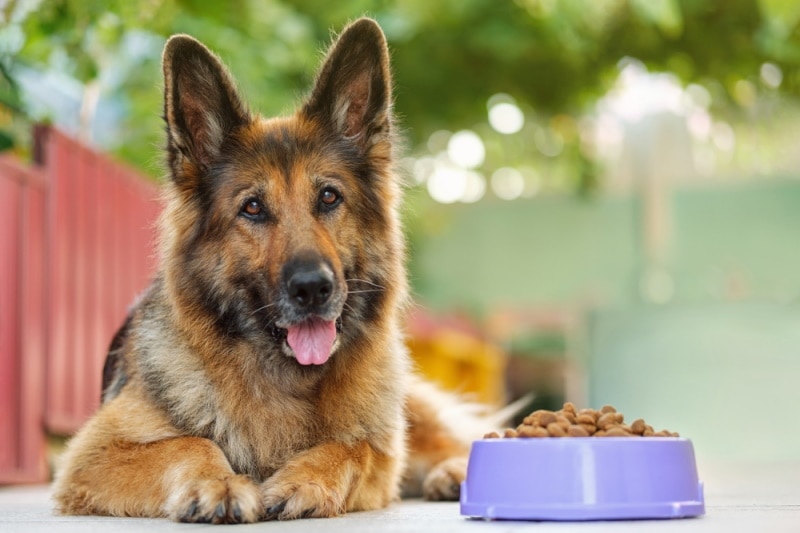
These large dogs can eat up to 3 cups of dry commercial food (or the equivalent of wet), split into at least two different meals each day. The food that they eat should be high in protein and low in empty carbs like corn and soy. Their food should contain whole foods, like real chicken and sweet potatoes. It is always a good idea to consult with a veterinarian when choosing a new food for a Himalayan Sheepdog.
All Himalayan Sheepdogs require plenty of exercise each day to stay fit, healthy, and happy as time goes on. These pooches should go on daily walks outdoors, for at least 30 minutes at a time. They can also use time in a fenced yard playing fetch or roughhousing with other dogs living in the household. When the weather is not cooperative for outdoor exercise, owners can play games like hide-and-seek and tug-of-war indoors for both body and mind stimulation.
Training
Without obedience training, Himalayan Sheepdogs can become strong-willed and confrontational, which could be a problem for families, especially those with small children. Therefore, obedience training should be started as soon as a Himalayan Sheepdog puppy is adopted and taken home for the first time. It is never too early to teach these dogs how to come, sit, stay, and heel. In addition to obedience training, Himalayan Sheepdogs can learn how to become guard dogs and can do a great job on the agility field.
Grooming ✂️
These dogs have dense, thick hair that tends to shed all year long. Therefore, they require brushing at least twice a week to keep shedding to a minimum and keep the coat looking shiny and healthy. They do not need baths because they do a great job of keeping themselves clean. It is important to thoroughly dry off this breed when they get wet due to rain or playing in the damp grass. Otherwise, their coat may get musty.
While these dogs are generally healthy, there are a few health conditions that they are susceptible to due to their lineage.
Minor Conditions
Arthritis
Glaucoma
Serious Conditions
Hip dysplasia
Elbow dysplasia
Patellar luxation
Male vs. Female
There are a few small differences between male and female Himalayan Sheepdogs, but the differences do not make one or the other better. For instance, girls seem to be a little easier to potty train than boys, but both sexes can be successfully potty-trained during puppyhood. Another small difference is that females tend to be more independent, while males like more interaction with their human companions.
3 Little-Known Facts About the Himalayan Sheepdog
1. They’re Great at Agility
Although the Himalayan Sheepdog is renowned for their ability to herd sheep, this breed is also an excellent agility competitor. They are fast, focused, and competitive by nature, which makes them champs on the agility course.
2. They Can Handle All Types of Weather
While these dogs are known to stay warm during cold winter months, they shed during the summer, which enables them to stay comfortable even when it is hot outside. Owners should trim their fur to ensure their comfort during the hot summer months.
3. They Have Multiple Names
This breed goes by many names throughout the world, including Bhatia, Himalayan guard dog, Himachal Pradesh, Himalayan Mastiff, and Gaddi. The name of this dog breed all depends on what part of the world that you happen to live in.
Final Thoughts
All in all, the Himalayan Sheepdog is a great family pet due to their intelligence, loyalty, and protectiveness. However, owning one of these dogs requires a great deal of commitment. Make sure the entire family is up for the responsibility before even considering adopting one of these dogs. What is your favorite trait of the Himalayan Sheepdog? Let us know in the comments section!
Rachael has been a freelance writer since 2000. In this time she has had an opportunity to research and write about many different topics while working to master the art of fusing high-quality content with effective content marketing strategies. She is an artist at heart and loves to read, paint, and make jewelry. As a vegan, Rachael is obsessed with helping animals in need, both in her community and anywhere in the world where she feels she can make a difference. Animals also happen to be her favorite topic to write about! She lives off the grid in Hawaii with her husband, her garden, and her rescue animals including 5 dogs, a cat, a goat, and flock of chickens.
Why This FDA Approval Is Such Important News For years, veterinarians and pet parents have struggled with a frustrating reality in canine behavioral...
The UK has wonderful green fields, quaint villages, lots of history, stunning views, and blue oceans, making it full of beautiful vacation destinations....
If you own a Siberian Husky, then you’re well aware of their high energy levels. But did you know that Huskies also have extremely high metabolisms? This does have something to do with their high energy levels, but it has...
Dogs are facultative carnivores, meaning they can be quite adaptable when it comes to food. Although their ancestors evolved to eat a primarily carnivorous diet, dogs can do well on diets that have a lot of, a little of, or...
Our senior pups have hopefully lived a long, happy life, and they deserve to continue even as they age. When our dogs start to reach their golden years, their body starts to slow down a little. No matter how healthy...
Made with flour, water, yeast, and salt, pita is a simple snack originally by the Middle East and Mediterranean cultures that easily assimilates into most meals and party foods. Whether you prefer to use it as a mini pizza crust...
Potatoes are a ubiquitous food that has made its way into almost every facet of modern life. Potatoes make up some of the most popular sides and snacks in the modern world. They are also present in numerous popular dishes....
Dogs often have a way of charming their way to eating their humans’ table food. While many of us find them irresistible and often give in, feeding them scraps of our own food, it’s important to know if the food...
In this article, we’ll look at three of the most common protein sources found in commercial dog food: lamb, chicken, and salmon. Chicken is by far the most widely used protein. In fact, some chicken components may even be found...
Do you have a German Shepherd? If so, you’re probably wondering how much food to feed him. It can be tricky to figure out the right amount, especially since puppies and adults have different nutritional needs. In this blog post,...
Stay informed with expert pet care insights delivered straight to your inbox! Discover professional guidance on animal behavior, feeding tips, trusted product picks, and much more.
You may opt-out at any time. View our Privacy Policy for more information.
Sign up for the Dogster Email Newsletter
You may opt-out at any time. View our Privacy Policy for more information.
You may opt-out at any time. View our Privacy Policy for more information.