Black Great Dane: Info, Pictures, Origin & History

In this article
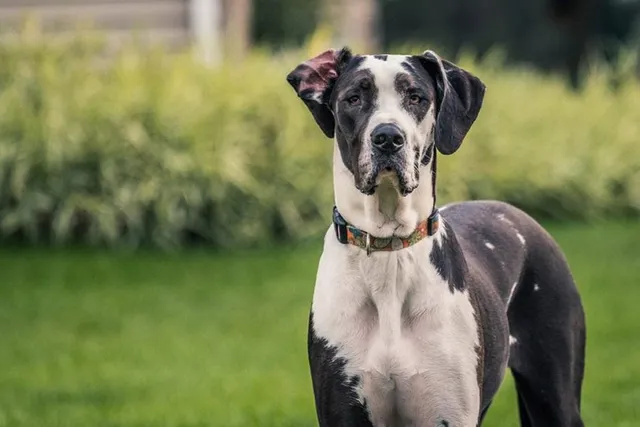
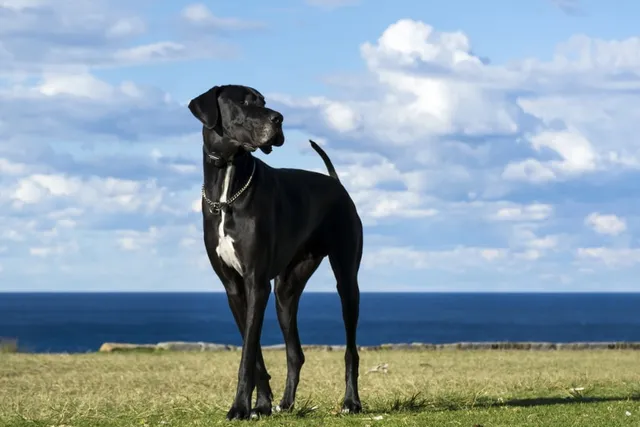
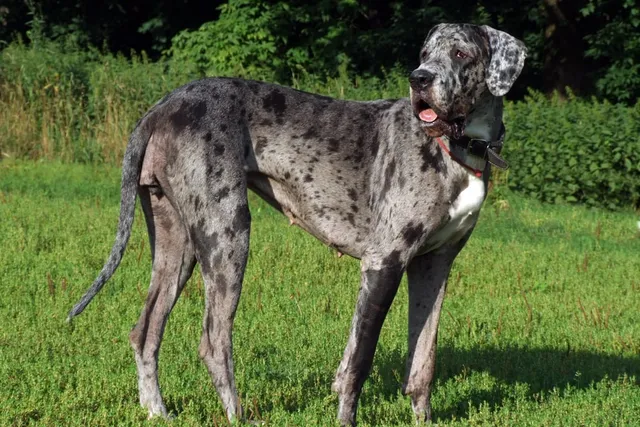
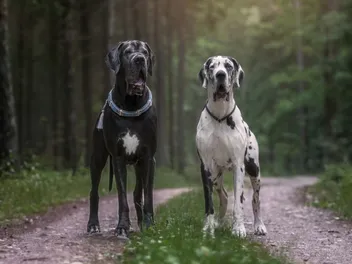
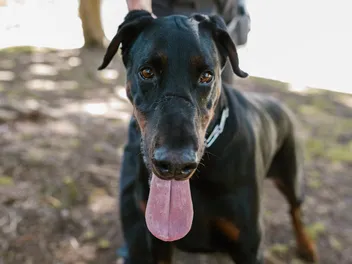
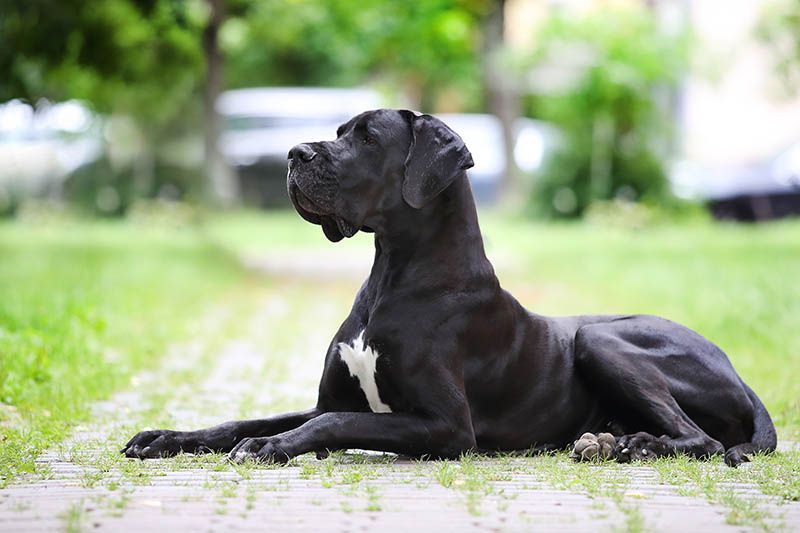
Black is a standard coat color of the Great Dane. In other words, the black variation is recognized and allowed to compete in most dog shows. While it is somewhat rare, it isn’t so rare that it's hard to find puppies with this coat color. Many breeders regularly produce black Great Danes, and they don’t usually cost more than other colorations.
Breed Overview
Height:
Weight:
Lifespan:
Colors:
Suitable for:
Temperament:
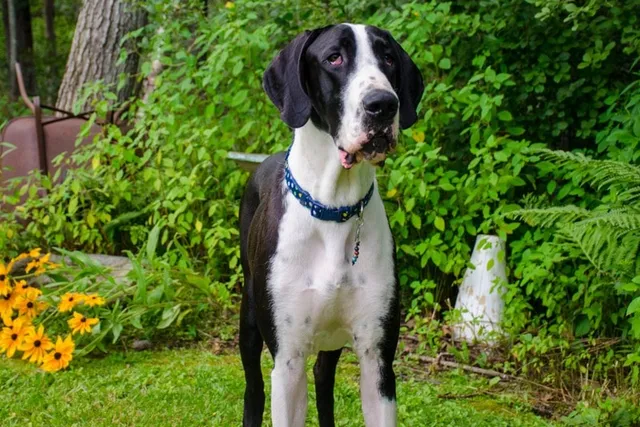
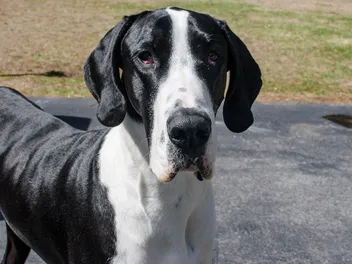
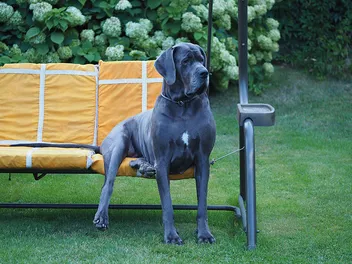
Many of these dogs do have white markings on their chest. However, that doesn’t mean that completely black Great Danes don’t exist.
Mostly, these dogs act like all the other Great Danes out there and they aren’t much different from your average Great Dane. The only difference is their coloration.
Black Great Dane Characteristics

The Earliest Records of Black Great Danes in History
Black Great Danes are common throughout history—common enough to end up in the breed standard today. The coloration was likely around starting at the breed, even if it never was the most common coloration.
This breed first showed up in the 16th century. At the time, there were reports of long-legged dogs being utilized in England. These dogs were mixed breeds descending from English Mastiffs and Irish Wolfhounds. However, there was no breed standard at this time, and all the dogs varied quite a bit. It would take a lot longer for the breed to become the one we know today.

How the Black Great Dane Gained Popularity
Originally, these dogs were utilized to hunt boar, deer, and bear. Mostly, they were owned by nobility, as they were the only individuals with the land to hunt these animals. Sometimes, the favorites were chosen to stay in the bedroom of their lord (which was a rare occurrence, in those days).
These dogs were called “chamber dogs” and outfitted with fancy collars. Sometimes, they were reported to help protect their sleeping masters.
This breed was originally utilized to hold the bear, deer, or another animal in place while the huntsman killed it. However, when firearms became popular, this use largely fell into obscurity. Therefore, owning one of these dogs became more of a luxury.
Formal Recognition of the Black Great Dane
In the 1880s, the breed was first recognized as its own breed in Germany. It was recognized that the breed was no longer the same as the English Mastiff, which was still imported into Germany at the time. The Great Dane was described as much leaner and taller than the English Mastiffs the breed originally developed from. Slowly, Germany began to focus on the Great Dane and stopped importing English Mastiffs.
However, in Germany, this breed was called the “German Dog.” A breed club was founded shortly later, and the breed slowly spread as “official” throughout Europe.
Still, the name Great Dane was given to the breed by a French naturalist. The name spread throughout Europe and eventually became the most common name for the breed in English-speaking countries. However, the original name still sticks in Germany, where the breed is commonly called the “German Mastiff.”

Top 5 Unique Facts About the Black Great Dane
1. The Great Dane wasn’t developed in Denmark
Despite the name, Denmark didn’t have anything to do with the Great Dane’s development. Instead, the breed was largely developed in Germany utilizing some English breeds, such as the English Mastiff. This name started out as a mistake that just “stuck.”
2. This breed is very old
This breed is extremely old. It likely developed as a distinctive type of dog about 400 years ago. However, it wasn’t until the 1800s that the breed developed into the exact dog that we know today.
3. The Black Great Dane originally went by many different names
Because this breed is so old, it was referred to by many names by different people. For instance, it was commonly called the “German Mastiff” by those in France. This name likely comes from its resemblance to the English Mastiff, which was probably one of the foundation breeds of the Great Dane.
4. This breed may date back to 1121 BC
There is a description of a dog that sounds similar to the Great Dane appearing in Chinese literature in 1121 BC. However, because we don’t know exactly what this dog is (and because the description is all the way in China), we can’t say for sure that it is a Great Dane. However, it was claimed to be a Great Dane by the Great Dane Club of Italy.
5. The Great Dane was developed for boar hunting
Originally, this breed was developed to hunt boar. The boars in Germany were very fierce and difficult to kill. Therefore, this large dog breed was developed just for the job. However, this usage fell out of practice pretty early when the firearm was invented and widely distributed.
Therefore, the Great Dane has been a companion animal for quite some time.


Does the Black Great Dane Make a Good Pet?
The Great Dane has been a companion animal for many different years. While these dogs are extremely large, they are very gentle and make good family pets. Many people describe them as being great with children. Often, they are very well-behaved indoors and not known for being hyperactive.
However, these dogs do need extensive training. Their large size means that you cannot simply manhandle them into behaving. For instance, if a Great Dane pulls on a leash, you are going with them. Therefore, leash training and other basic training are absolutely vital. Otherwise, you may have an uncontrollable dog on your hands.
Of course, while these dogs are described as being gentle, you do need to socialize them. It’s important that they interact with plenty of other dogs at a young age. Otherwise, they may become fearful of others and new situations.
Don’t let their gentleness be an excuse to skip training and socialization. If they are raised well, great Danes can make wonderful pets. Black Great Danes act exactly like other Great Danes. Therefore, there is no temperament reason to pick one color over another.
Conclusion
Black Great Danes are a recognized coloration of the breed. This color variant has likely been around for a very long time. In fact, it was likely one of the founding colors of the breed. It isn’t associated with a difference in aggression or temperament. Therefore, choosing a black Great Dane specifically is only about aesthetics.
This breed is extremely old and has a long history. While the breed was originally bred for boar hunting, it has been a companion animal for a very long time. Today, the breed is often considered great with children. However, their large size does indicate a need for more intensive training.
Featured Image Credit: Dulova Olga, Shutterstock
Expert dog care, straight to your inbox
News, insights, expert advice, and everything dog.

No spam — unsubscribe anytime.
By signing up, you agree to our Terms & Conditions and Privacy & Cookies Policy.
How useful was this post?
Click a star to rate. You can leave written feedback afterwards. (We read all feedback.)
Nicole has loved animals of all sizes her whole life so it's no wonder she has dedicated her career to helping them through what she loves best: learning, writing, and sharing knowledge with others. She’s the proud mom of two dogs, a cat, and a human. With a degree in Education and 15+ years of writing experience, Nicole wants to help pet parents and pets around the planet to live happy, safe, and healthy lives.