In this article
View 6 More +Australian shepherds are pretty common in the United States. In fact, they are one of the most common companion animals in the country. While black Australian Shepherds aren’t terribly common, they do exist. In fact, there are four recognized colors of this breed and one of them is black. Therefore, while this dog may be rarer than most, they aren’t extremely rare as some may have you believe.
Breed Overview
Height
18 – 23 inches
Weight
35 – 70 pounds
Lifespan
13 – 15 years
Colors
Black, red, merle, red merle, blue merle, tricolor
Suitable for
Homes with yards, families with and without kids
Temperament
Friendly, loyal, affectionate, playful, intelligent, trainable
Besides their completely black coat, these dogs act exactly the same as other Australian Shepherds. They are not classified as their own breed, nor do they have different behavioral qualities.
These dogs have a different history and origin than most people expect. While they have the name “Australian,” they aren’t exactly Australian.
Australian Shepherd Characteristics

The Earliest Records of Black Australian Shepherds in History
The Australian Shepherd actually started in America, making it one of the few dogs that began in America. In the 1500s, herding dogs were being brought into America. These dogs came from a wide variety of different places, depending on the settlers that brought them. Practically every settlement with livestock had at least some herding dogs.
When these herding dogs were brought to America, they were separated into a separate breeding pool. All the dogs in America began to breed together on a separate path than those left in Europe and elsewhere.
However, the Australian Shepherd didn’t form as a breed until closer to the 19th century. At this point, collies were being imported from Australia, which is where the breed got its name from. These dogs were bred together with the existing American herding dogs until they gave us the breed we know today as the Australian Shepherd.

How the Black Australian Shepherd Gained Popularity
It took a while for this dog to gain popularity. The black coloration was likely apparent in this breed since the beginning. Therefore, the black Australian Shepherd was likely known at least somewhat, despite the fact that this breed probably wasn’t known by its name until later.
Furthermore, black-colored Australian Shepherds were probably just as rare as they are now. Therefore, most of these herding dogs probably had other colorations.
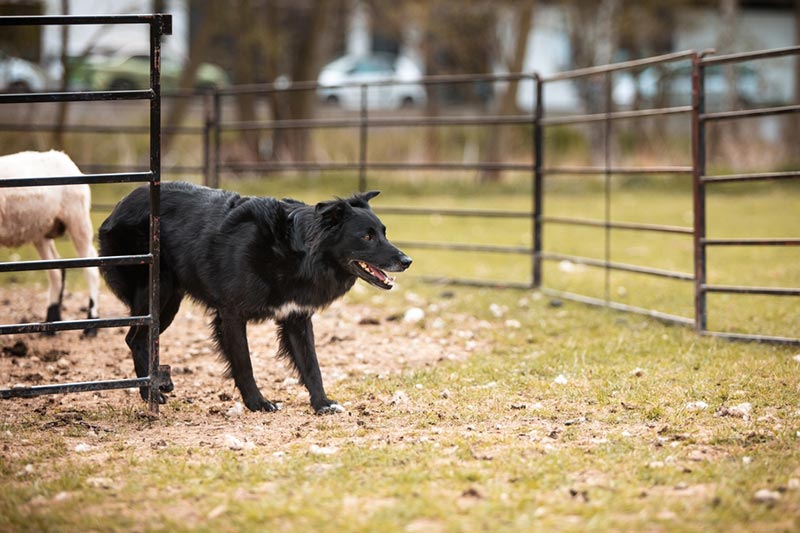
After this breed was developed, they quickly became renowned for their herding abilities. However, at this time, they were only working dogs. Ranchers purchased them to herd cattle and sheep, not for companion purposes. Over time, these dogs became a staple on western ranches, as it was difficult to find any herding dog that was better.
The breed didn’t break into the mainstream until the middle of the 20th century. At this time, the dog began to appear in rodeo performances. During these shows, the Australian Shepherd performed tricks, thanks to their high intelligence and trainability. Eventually, through these shows, the dog was slowly seen as a companion animal.
Formal Recognition of the Black Australian Shepherd
As the breed became popular outside of the ranches, a breed club was created to establish a guideline for the breed. The black Australian Shepherd likely existed at this time, as the color appears in the breed standard. However, it was not the “most common” color at the time. Instead, the tri-color Australian Shepherd was more popular.
The United Kennel Club recognized the breed in 1979, while the American Kennel Club didn’t recognize the breed later in the 1990s. Surprisingly, it isn’t rare for the United Kennel Club to recognize America-based breeds before the American Kennel Club does.

Top 6 Unique Facts About the Black Australian Shepherd
1. The rodeos made them popular
These dogs weren’t seen outside of ranches throughout much of their early development. However, as rodeo shows became more popular, so did these dogs. Americans would see Australian Shepherds in rodeos and decide that they wanted one themselves.
2. Bi-colored eyes are quite common
Having eyes of two colors is pretty common in this breed. Seeing a dog with one brown eye and one blue eye, for instance, isn’t surprising. Experts argue about where the dog originally got this trait from. However, because the breeding of this breed wasn’t written down, we don’t know for sure.
3. They’re called many different names
Officially, the breed’s name is Australian Shepherd. However, this isn’t completely accurate, since they aren’t from Australia. Therefore, they have been called many other names, too. For instance, they were once called Spanish shepherds before their name was changed, as many of the dog’s earliest ancestors came from Spain.
They are also called blue heelers, a name you’ll still find today to some extent.

4. Black isn’t the only Australian Shepherd color.
Australian Shepherds come in four different colors, and black isn’t one of the most common. Most people recognize the blue Australian Shepherd, which tends to be the most popular matter. However, you can also find these dogs in blue merle, red merle, and red.
5. They were largely working animals.
These dogs were not companion animals in the beginning. Instead, they were bred largely for herding purposes on American ranches. Today, they still act like working dogs and have the same needs as working dogs. Generally, this means that these dogs require a lot of exercise and mental stimulation; they aren’t for the average pet owner.
6. Australian Shepherds can have short tails.
While it isn’t extremely common, Australian Shepherds can be born with rather short tails. If you see an Australian Shepherd with a short tail, it is likely because the dog’s tail was short at birth – not because it was bobbed later on. However, this trait only exists in about 20% of all Australian Shepherds.

Do Australian Shepherds Make a Good Pet?
Australian Shepherds can make a good pet. However, this isn’t always the case. These dogs require a lot of work. Therefore, it is vital that they are adopted by the right kind of person who can really give them the attention they need. Otherwise, they can be a bit destructive.
These dogs require quite a bit of exercise and mental stimulation. Otherwise, they can become bored and a bit too excited. They may try to make their own fun, which generally means getting into something.
Their intelligence is great because it means they can be trained easily. However, this also means that they require quite a bit of entertainment, and sometimes they’re intelligent in ways you really wish they weren’t, like opening gate latches.
In Conclusion
Australian Shepherds do come in a black coloration. However, this is rarer than the other colors. Therefore, if you’re set on having a black Australian Shepherd, you’ll probably need to look for a while before you discover one.
Besides being black, these dogs are exactly like other Australian Shepherds. They have the same needs and temperament. Therefore, their coloration doesn’t have a significant impact on what it’s like to own them.
Featured Image by: marketalangova, Shutterstock