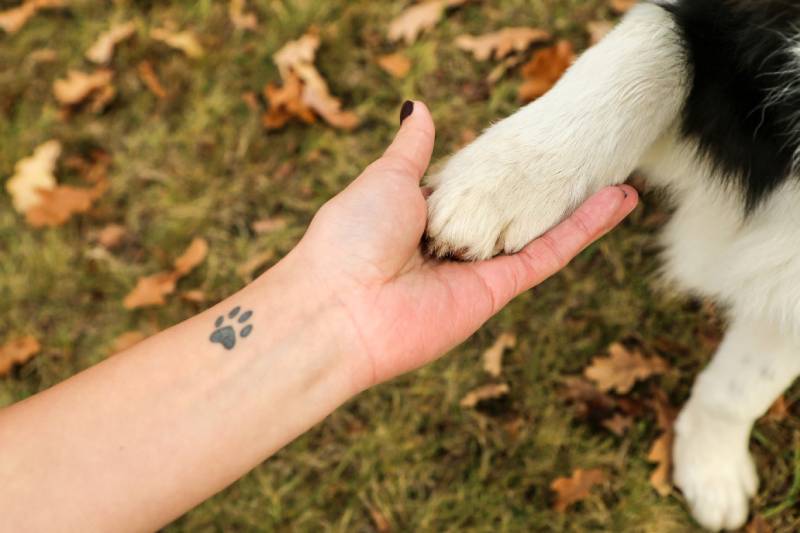
Dogs are amazingly communicative and use their faces and bodies to let us know what they need. Paws are another way our dogs talk to us, and they can be surprisingly expressive! If your dog puts their paw on you, they likely want to tell you something, whether it’s positive or negative.
In this article, we’ll look at 10 reasons your dog might put their paw on you and how you can figure out what it means.

The 10 Reasons Your Dog Puts Their Paw on You
1. They’re Trying to Get Your Attention
Dogs are intelligent and learn from their surroundings. Using their paws to communicate is something they learn as puppies, and they can even pick up movements from us. If your dog puts their paw on you insistently, they’re likely trying to get your attention.
It could be one heavy-handed paw or a repeated tapping motion. Either way, your dog could be signaling to you that they want you to focus on them, whether for a head scratch or to let you know something’s bothering them. Insistent paws can get frustrating for owners, particularly if your pup is persistent!
But every time you give in and give them attention, they reaffirm that using their paw does get your attention.

2. They’re Saying, “I Love You.”
Just like a dog using its paws for attention, they can use them to convey affection, too. You’ve more than likely put your hand on your dog’s head or back and affectionately stroked them, sometimes even doing it absent-mindedly. This behavior is something your dog can learn to do, and they use the touch to let you know they’re here and love you.
Service dogs use touch techniques to reassure people when they visit hospitals and nursing homes; their touch can provide comfort to patients in need. If your dog places their paw on you and looks into your eyes, it must just be their way of saying, “I love you.”
3. They Want You to Continue What You’re Doing
If you’ve been stroking your pup and cuddling them, but you pull away, you might feel a paw on your arm or leg. In that situation, giving you their paw (perhaps paired with a pleading look) can mean they want you to continue with what you are doing!
Some dogs will follow with a head nudge or place their head on your lap.

4. They Want You to Stop
On the opposite end of the scale, if you’re petting your dog and you stroke an area they’re uncomfortable with, they might place their paw on your hand or arm to stop you. This applies to any situation your dog might not like, such as when you get the harness out or begin to brush them. It’s essential to listen to what your dog is telling you and watch out for changes in body language.
A relaxed dog might use their paw to say “hands off” at first, but even the most pleasant dog will have a limit as to what they’re prepared to put up with.
5. They’re Petting You Back
This reason is similar to the affectionate, loving paw discussed earlier. Because dogs learn from their owners, they might try and pet you with their paws. When petting your dog or sitting near them, they might use their paw to stroke you or place their paw on you to reciprocate the gesture.
The pleasant feeling they get when they’re petted is something they could want to share with you, so they’ll make physical contact and extend the interaction with you because they like it so much.

6. They’re Anxious
Some dogs try to alert us to how they feel using their paws, and anxiety is often conveyed through physical touch. If our dog is anxious about a place, person, or situation, they might paw you to look for comfort and reassurance.
Often, nervous paws are paired with other anxious canine body language you can look out for.
Signs of an anxious dog include:
- Yawning
- Lip licking
- Shaking or trembling
- Scooting close to you
- Lowering their ears
- Tucking their tail in
If your dog is showing signs of anxiety, we suggest you speak to a vet.
If you need to speak with a vet but can't get to one, head over to PangoVet. It's our online service where you can talk to a vet online and get the advice you need for your dog — all at an affordable price!

7. They Want to Play
Like an anxious dog, a dog that wants to play will be brimming with playful energy. Canine body language is sometimes tricky to understand, but a playful dog is always easy to single out! Your dog might have their tail wagging enthusiastically with a big doggy “grin” on their face and tap you with their paw impatiently.
Some dogs even bring a toy over to their owners and hold it in their mouth while they give a paw, signaling that they desperately want you to join in the fun!

8. They’re Insecure
Dogs are emotional and rely on their owners for direction on how to act. If your dog feels insecure about a situation, is stressed, or has something bothering them, they might paw you and look for reassurance. Just like with anxious dogs, other strong emotions such as fear or even possessiveness can trigger your pup to place their paw on you; your reaction often teaches them how to react and behave.
For example, if you push their paw off, they might learn not to come to you for that reassurance. If you react fearfully or angrily to whatever is making them uneasy (such as an approaching person), they’ll often respond similarly.
9. They Want Food
If your dog begs at the table or sits beside you and purposefully places their paw on you when you’re near their food bowl, they could be telling you that they’re hungry. Dogs will quickly learn that giving you their paw means they get food, so they’ll put their paw on you again and again!
This learned behavior can get intense if your dog does it every time you have food; the more you give them food when they give a paw, the more they’ll ask for it!
10. They Want to Go Potty
Lastly, potty-trained dogs might use their paw (usually along with other signals) to tell you they need to go outside. Barking, tail wagging, and staring intently at the door are signs your dog needs to go, so keeping an eye on their toileting schedules and getting to know their behavior can help you determine whether the paw they’re giving you is urgent!

Final Thoughts
Knowing why your dog is putting their paw on you is half the battle when finding out what they need. Most of the time, your dog will use their paws to communicate with you; knowing their behavior and personality can help you figure out what is bothering them, and being clued up on canine body language is the key to effective communication. Paws included!
Also see:
Featured Image Credit: JakubD, Shutterstock
 The 10 Reasons Your Dog Puts Their Paw on You