De-Extinction of the Dire Wolf - Brave New World or Colossal Mistake?

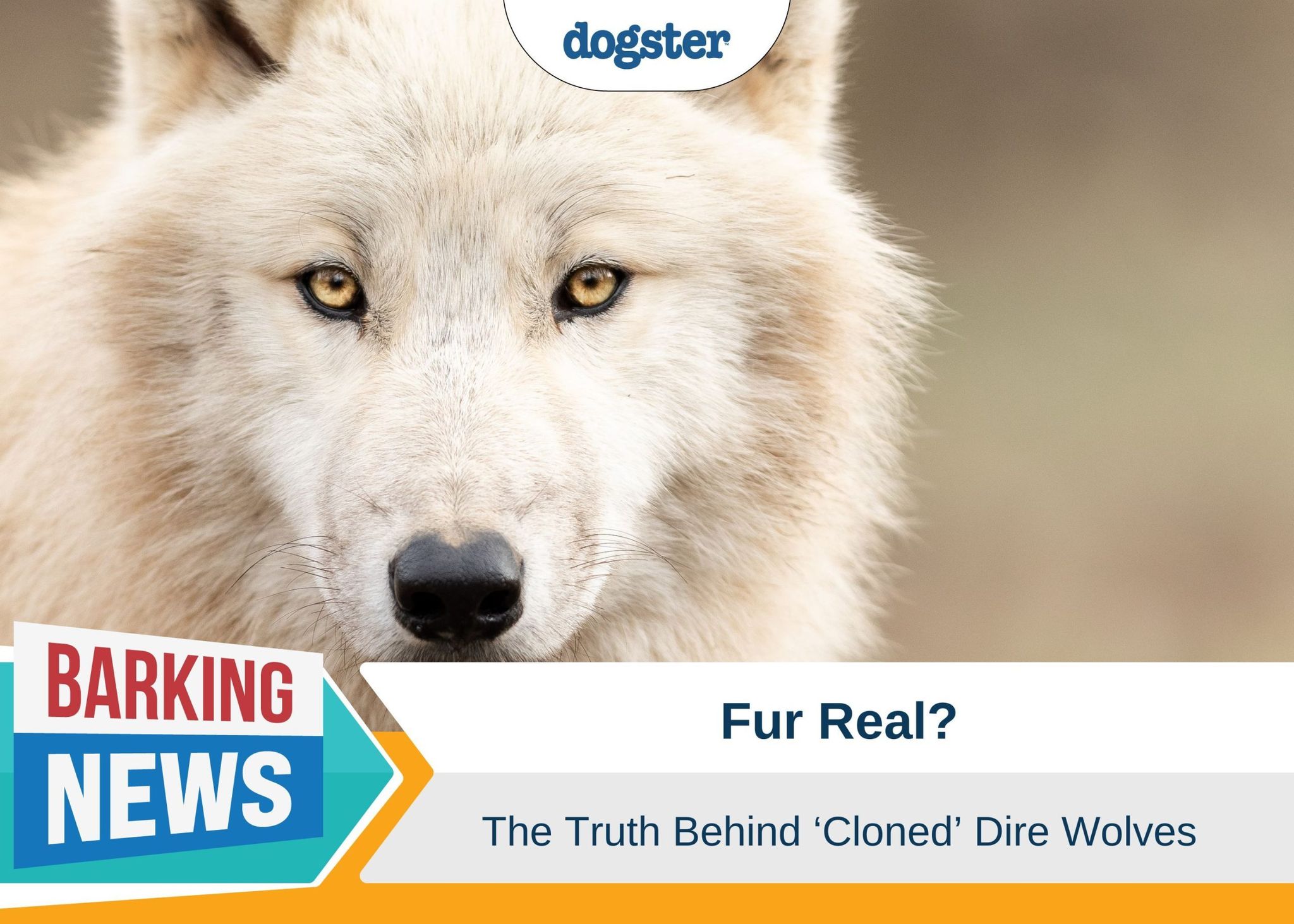
For over three decades, the world has been equal parts exhilarated and terrified by the idea of bringing dinosaurs back to life, and it’s a concept that shows no signs of becoming extinct anytime soon. Thanks to a team of scientists at Colossal Laboratories and Biosciences, the first and only de-extinction company, this particular area of science may be one step closer to being fact, not fiction…or is it?
The US company recently made headlines by announcing that in October 2024, they had successfully brought the dire wolf back to life, in the form of Remus and Romulus, named for the twin brothers who, according to ancient mythology, were raised by a she-wolf and responsible for the founding of Rome. Three months later, they were joined by a female pup named Khaleesi, a name plucked from the phenomenally popular Game of Thrones series. Of course, serious fans may take umbrage at the idea of the Stark family sigil being named after the Mother of Dragons!
While it may be easy to be distracted by the hype surrounding such an exciting scientific breakthrough, one needs only scratch the surface of Colossal’s research to see that this may not be the giant leap in genetics they’d have us believe.

The Colossol Movement
The razzle dazzle of Collosal’s website feels less like that of a genetics lab, and more like an enormous sales pitch, dripping with enough buzzwords and hyperbole to get any investor’s heart racing.
Combining the science of genetics with the business of discovery, we endeavor to jumpstart nature’s ancestral heartbeat. To see the Woolly Mammoth thunder upon the tundra once again. To advance the economies of biology and healing through genetics.
Under the guise of sustainability and species preservation, Colossal are hoping to “return the dire wolf to its rightful place in the ecosystem” after a 10,000-year absence, with the Woolly Mammoth next on the de-extinction list. While their plans to bring back animals like the Dodo or Thylacine (aka Tasmanian Tiger), whose disappearance from the planet was the direct result of senseless over-hunting, may be considered a noble attempt to right some human wrongs, one has to wonder about the virtue of reintroducing creatures whose demise was the result of natural selection. To which “rightful place in the ecosystem” are they referring?
A genetically distinct species from extant canines, the dire wolf – Aenocyon dirus – disappeared from the Earth around 10 to 16 thousand years ago. Although the time of their extinction has some overlap with the arrival of humans on the North American continent, most paleontologists believe that the giant canine predator was simply unable to compete with the smaller, more agile canid species.
Similarly, another focus of Colossal’s de-extinction program, the Woolly Mammoth, became extinct around 10 to 12 thousand years ago. A close relative, but not ancestor, of today’s elephant species, the mammoth’s extinction has been attributed to the shift in habitat and ecosystems seen at the end of the Pleistocene epoch. Although the pressure of hunting by humans may have been a feature as the ice age drew to a close, it is unlikely to have been significant enough to play a major role in their extinction.

What Is De-Extinction, and Why Is It Happening?
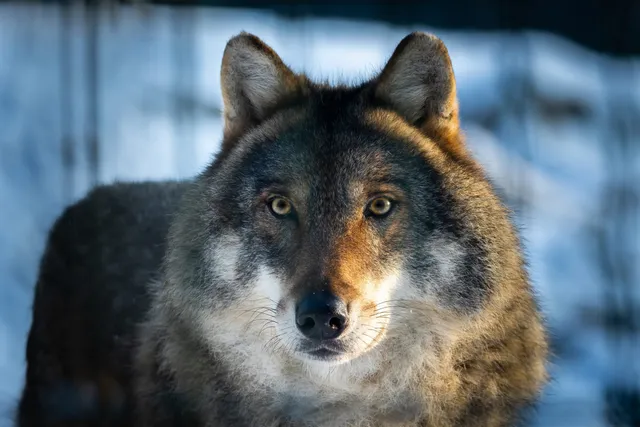
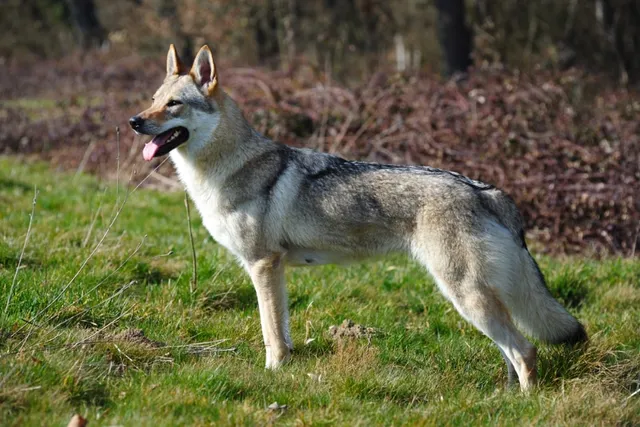
The animals that Colossol claims to have brought back from extinction are dire wolves in name only. Due to a lack of viable DNA found in fossilized remains, the animals created in Colossol’s lab are the result of manipulating the genes of the common gray wolf, Canis lupus, to create an analogue to the dire wolf, and its classification as Aenocyon dirus is controversial.
Although the question of whether or not Remus, Romulus, and Khaleesi are indeed dire wolves is up for debate, Colossal’s scientists are excited for what their creations may mean for other de-extinction and species preservation efforts.
One of the more challenging aspects of bringing a species back from the brink of extinction is the inherent lack of genetic diversity within a dwindling population. Through genetic manipulation, scientists are hopeful that they can increase this diversity within a natural population, giving an endangered species a better chance of survival, and this is the real value of their groundbreaking work. It is perhaps just a little less headline-grabbing than bringing a species back from extinction.
Why the Dire Wolf?
You might wonder why Colossal would choose to start with a species that was not a victim of modern hunting or habitat destruction, or one with a bit more ‘wow’ factor. Thanks to Game of Thrones, the dire wolf has just enough star power to grab headlines, whilst not being so physiologically different from modern-day wolves as to be problematic in terms of care and husbandry – the ideal ambassador for less ‘exciting’ species.
It seems unlikely that reintroducing a species like the dire wolf is an end game project for the company, but one that is interesting enough to attract the attention of the public and investors, upon whose support all future ventures will no doubt rely.

What Are the Implications of De-Extinction?
It would be easy to be caught up in the possibilities and potential of de-extinction, not only from an ecological perspective but also from an evolutionary one.
Your scientists were so preoccupied with whether or not they could, they didn't stop to think if they should.
Where do they go?
The extinction of a species doesn’t happen in isolation, particularly when we are talking about an apex predator or an important prey species. When their numbers dwindle, the species around them will prosper or suffer as a result, something that is not always considered. How would today’s ecosystem cope with the reintroduction of the dire wolf?
Even those species whose more recent extinction has been at the hands of modern humans may find themselves unable to reintegrate into a habitat or food chain that has adjusted to their absence. And certainly, we cannot hope to bring back such animals before first addressing the issues that wiped them from the planet in the first place.
Who do they belong to?
When a private company is behind the recreation – or indeed, creation – of an animal species, do they own the rights to that animal? Could such ownership rights outweigh the rights and welfare of the animals themselves? And how long before curious geneticists or exploitative capitalists start experimenting with interspecies hybridization?
It seems that as technology advances, the line between science and science fiction becomes less distinct, and the films we once suspended reality to enjoy may become cautionary tales.
The problem inherent in privately funded scientific advancement is that its continued existence and progress depend greatly on its ability to attract and retain investors. And for every entrepreneur and philanthropist who seeks to support and preserve ecological diversity, there will be another who is just as keen to exploit it. Recreating an ambassador species like the dire wolf to generate support for conservation research is understandable, but it is a door, once opened, that will be very hard to close, especially once dinosaurs start coming through it.
Perhaps this cynic has just watched too many Jurassic Park films, but if it’s a choice between caution and restraint over an Indominus Rex, I know which one I’m choosing.
Did You Know?
- Our breaking news articles are included in our weekly emails. Don't miss out on the latest and sign up for our newsletter below!
Expert dog care, straight to your inbox
News, insights, expert advice, and everything dog.

No spam — unsubscribe anytime.
By signing up, you agree to our Terms & Conditions and Privacy & Cookies Policy.
How useful was this post?
Click a star to rate. You can leave written feedback afterwards. (We read all feedback.)
Dr. Karyn Kanowski, BVSc MRCVS (Vet)
Dr. Karyn is originally from Queensland, Australia, and has resided in the UK for the past 10 years. She graduated from The University of Queensland School of Veterinary Science in 2010, and also holds a Bachelor’s degree in Zoology. Karyn is passionate about using experience, evidence, and working with pet owners to provide the best solutions for pets. She also believes in making reliable information about animal health accessible to everyone. 5 cats and 4 dogs let her share their home with her and her husband, and when she is not practising as a veterinary surgeon, she spends her time writing, gardening, and cleaning up pet hair!