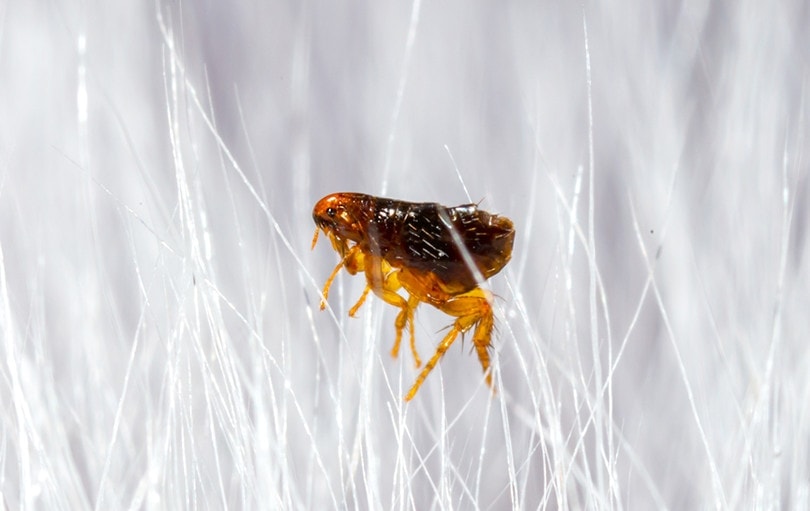
Will Baking Soda Kill Fleas? Our Vet Explains

In this article
One of the common pitfalls of pet ownership is that they often come with unwanted hitchhikers. Once fleas have invaded, it can be a massive undertaking to eliminate them from both your pets and your home.
Fortunately, there are a whole host of ways in which to treat and prevent fleas from living on your pets and in your house, most of which can be found at your local vet, pet store, or even online. The most effective flea preventions are those that need a veterinary prescription, so if you are looking to stop these pesky parasites in their tracks, your vet is the best place to start.
Sometimes we are in search of a more natural alternative, or something that will do in a pinch, which leads to the question: will baking soda kill fleas?
Simply put, it might, but it is far better off being used to bake cakes.

Baking Soda vs. Fleas
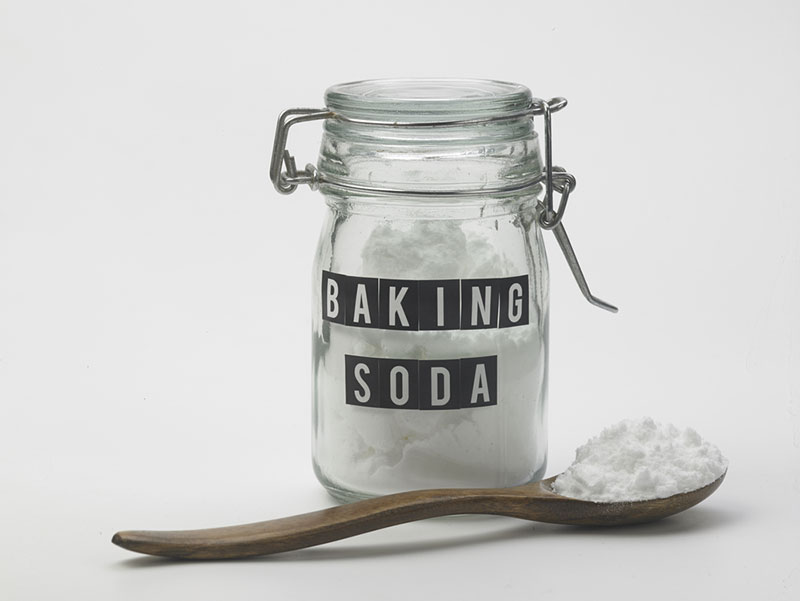
A common item in most kitchens, baking soda not only gives rise to cakes, muffins, and bread, but it also has a myriad of helpful uses,1 from cleaning and whitening, deodorizing and polishing, to putting out grease fires!
Amongst its many, many other useful applications, baking soda can also kill fleas by dehydrating and destroying their exoskeleton, but it is not particularly efficient at doing so. It is relatively safe to use on and around pets, provided they do not ingest it in large quantities, and large quantities are what you would need to mount an offensive against fleas using baking soda.

What Should We Use to Kill Fleas?
As with most things, when it comes to the effective elimination and prevention of flea infestations, you get what you pay for. In most cases, solutions that are “cheap and cheerful” are also usually ineffectual and of questionable safety.
When we see fleas on our pets, we are only seeing one part of their life cycle, and if you have adult fleas, you will also have their eggs and larvae. Most prescription or veterinary-only flea products will treat all parts of the flea life cycle, killing adult fleas and preventing more from replacing them. In most cases, controlling fleas at the pet level will be enough, but in severe infestations, treatment of the whole house, including the outside, will be needed. Depending on the severity of the infestation, this may mean using a household spray or powder, or a full-scale fumigation.
For pets that live exclusively indoors, it is true that the risk of fleas is lower, but not zero, as they can still find their way inside and onto your pets. In this situation, it is often sufficient to treat your pets only when needed, unless the fleas keep coming back. It should be noted, however, that the sporadic use of insecticides against fleas can lead to the development of resistance to these chemicals in the flea population.
In most cases, killing fleas is only part of the battle, and their prevention is actually the most important part of good flea control. There is a huge array of products available; collars, tablets or spot-ons, products to kill and prevent fleas and ticks, and products that also treat intestinal worms; the range of products is overwhelming. Each product will be effective for a set period of time, typically from 1–3 months, and to achieve good, long-term control of fleas, you must use the product at the time intervals prescribed.
There are a few home remedies or natural alternatives to vet-prescribed treatments, all of which will only kill adult fleas. There are also many cheaper products available to buy without a veterinary prescription, and these can be quite effective. However, most of these products have been in use for such a long time that there is some resistance in the flea population so they may not be as effective as more recently developed products.
Even if you are using treatments or remedies that are not prescribed by a vet, it is always best to consult one to be on the safe side.
How Do I Know if My Pet Has Fleas?
This might seem obvious, but not all pets with fleas will be itchy, and not all itchy pets have fleas.
The easiest way to tell if your pet has fleas is by checking their coat using a flea comb. Check for fleas in the finer fur between their back legs as this is where you will often see them scurrying. Run the comb over various parts of their body and then examine the teeth of the comb. If you see fleas, you have your answer. If you are finding little specks of black or brown “dirt”, touch the dirt to some wet cotton wool and if it turns rust red, you have got fleas. The dirt is flea poop, and wetting it reveals that it is digested blood.
Some pets that have lots of fleas are not overly itchy, and others with very few fleas will be extremely itchy and have scabs and hair loss around their necks, tummies, and backs. This is a classic sign of Flea Allergy Dermatitis (FAD), which can affect both cats and dogs. If your pet suffers from FAD, year-round flea control is essential, as even a single flea can trigger a distressing, whole-body reaction.

Do I Still Need to Use Flea Control in Winter?
Absolutely. It is true that fleas prefer warmer climates and become less active in cooler months, but the turning on of central heating can be like rolling out the welcome mat to fleas. If your pets spend time inside your home, continue to be vigilant for fleas over winter or face the itchy consequences!
Are There Any Other Ways to Help Get Rid of Fleas in the House?
Regular vacuuming is a simple way to help eliminate fleas and their eggs from your home. Pay particular attention to carpets, nooks, and crannies as this is where fleas will tend to gather. Washing pet bedding in a hot wash on a regular basis is another way to very simply and safely treat your pets’ environment. Following the hot wash with half an hour in the dryer will be even more effective.
Conclusion
Where there are pets, there will be fleas, and where there are fleas, there will be people in search of a solution. There are dozens, if not hundreds, of products available to safely and effectively eliminate fleas (and their eggs) without putting your pets and family at risk.
There are many people who prefer a more natural approach to dealing with fleas, and it would be easy to assume that, given its long list of useful applications, baking soda would be a safe alternative. However, it is not particularly effective and is far better put to use cleaning, deodorizing, and baking.
Related Reads:
Featured Image Credit: focal point, Shutterstock
Expert dog care, straight to your inbox
Vet-reviewed advice, training tips, and the best of Dogster. Free, and you can unsubscribe anytime.
By signing up, you agree to our Terms & Conditions and Privacy & Cookies Policy.
Dr. Karyn Kanowski, BVSc MRCVS (Vet)
Dr. Karyn is originally from Queensland, Australia, and has resided in the UK for the past 10 years. She graduated from The University of Queensland School of Veterinary Science in 2010, and also holds a Bachelor’s degree in Zoology. Karyn is passionate about using experience, evidence, and working with pet owners to provide the best solutions for pets. She also believes in making reliable information about animal health accessible to everyone. 5 cats and 4 dogs let her share their home with her and her husband, and when she is not practising as a veterinary surgeon, she spends her time writing, gardening, and cleaning up pet hair!
Join the conversation
Ask a question, share your story, or send private feedback.