Group Classes or Private Training: Which Is Best for Your Dog? (Vet Answer)

In this article
When it comes to training, some dogs need little more than a few sessions to pick up the basics, while others require a bit more patience and time. Whether you’ve got a new pup in the house or you need help getting control of an unruly adolescent, you might be wondering which form of training is going to work best for you.
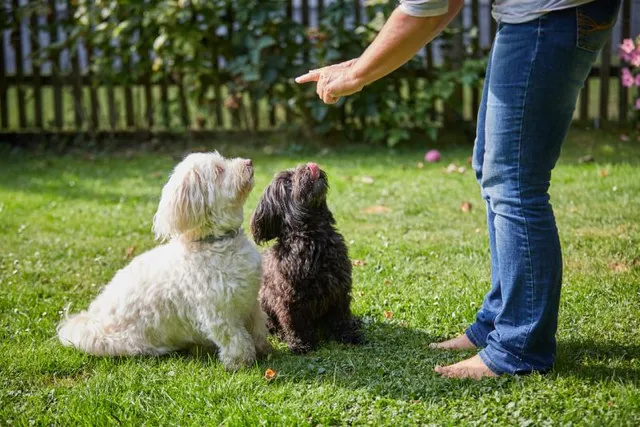
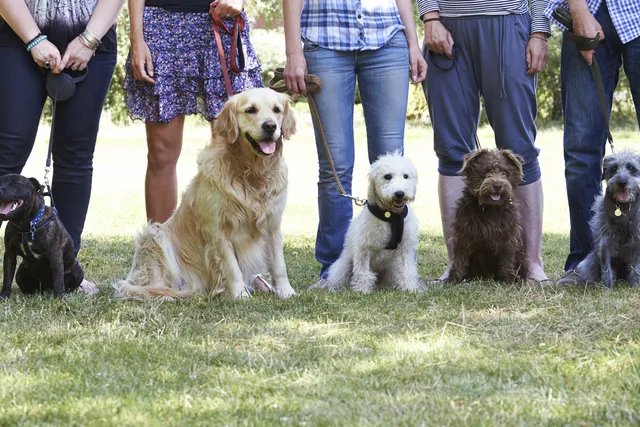
Group classes are most commonly available to puppies under a certain age, but you may find groups that are aimed at older dogs, while private training is often more geared towards dogs needing some extra help with specific areas.
Choosing which is best for you and your dog is going to depend on multiple factors, but will ultimately come down to what you hope to achieve.
Let’s take a closer look at dog training options to help you decide which is right for you.

At a Glance

Group Classes
Often called ‘puppy preschool’, most canine group classes aim to:
- facilitate socialization between puppies and humans
- teach or update owners on puppy health, training, and behavior
- demonstrate basic obedience training and commands
- help with toilet training
Group classes aren’t typically designed to address behavioral issues, but are more focused on socialization and broad concepts.

Who Are Group Classes For?
- Puppies that have received at least the first of their vaccinations, typically between the ages of 3-6 months (depending on the program).
- Owners looking to socialize their pups and expose them to different people, dogs, and environments.
- Older pups (>6 months) who need a brush-up on the basics and the opportunity to spend time with other dogs.
Who Aren’t Group Classes Suitable For?
- Puppies or dogs with specific and/or severe behavioral issues like:
- fear/anxiety
- aggression
- excessively boisterous
- Unvaccinated puppies or dogs

Private Training
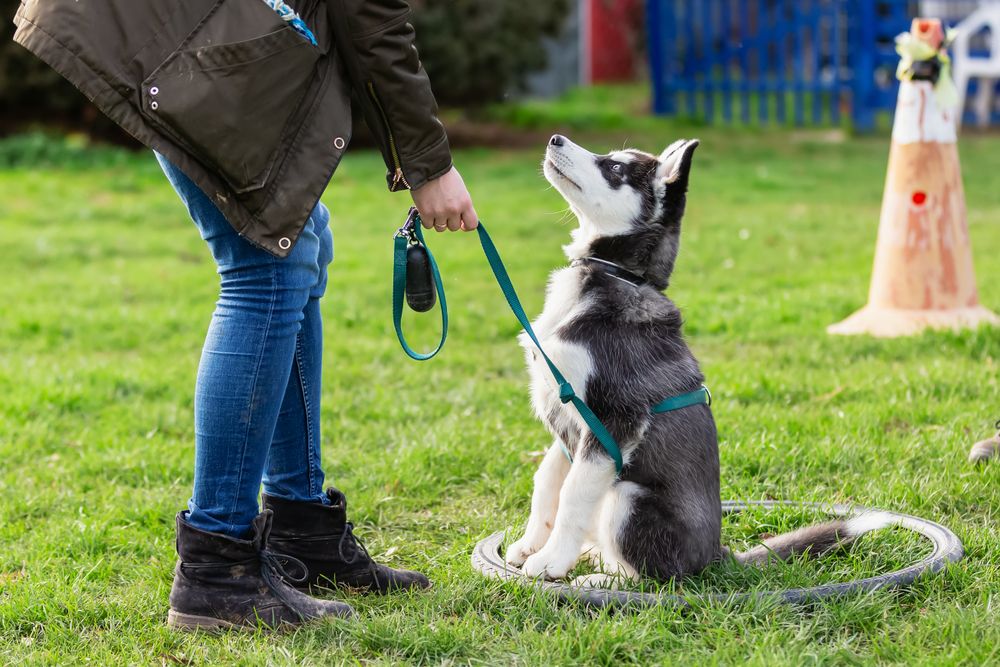
Enlisting the help of a private dog trainer usually means that your dog has specific issues you need to address, that cannot be dealt with in a group setting, such as:
- fear/stress
- aggression/resource guarding
- overly boisterous or unruly behavior
- excessive barking
- persistent house-soiling
- separation anxiety
However, a private dog trainer can also help with many of the basic components like toilet training and obedience if group classes aren’t suitable, particularly if you are unable to find a class that works with your schedule. They can also be a great option if your puppy or dog has any health conditions that preclude them from vaccination or mixing with large groups of dogs.
What you won’t get with private dog training is socialization, which is a key part of puppy development. However, you may be able to employ the services of a private dog trainer to work with you in a small group if you have friends, relatives, or neighbors who would like to participate.
Group Classes or Private Training - The Pros & Cons
| Group Classes | Private Training | |
| PROS | Good for socialization Cheap (sometimes free) Provide helpful tips and basic training | One-to-one approach Target specific issues/problems Flexible availability Comes to you No age limit |
| CONS | Not suitable for specific problems May be overwhelming for timid pups Boisterous dogs may be a problem for others Limited to their schedule Usually only for puppies | Expensive No socialization |

Group Classes or Private Training: Which Is Best for Your Dog
Choosing which training modality is going to be right for you and your dog ultimately comes down to what your dog needs. If you have a new puppy that needs to learn their basic manners and meet new people & dogs, then group classes are going to be the best option for you. They are usually inexpensive, and some veterinary practices may even offer them to their clients free of charge. You are limited to their timetable, but it’s worth making the time to give your pup the best sociable start.
Dogs that are very anxious may not do well in a group setting, and large, boisterous pups may prove to be an unwelcome distraction for some. If you think your puppy might struggle with group classes, speak to a vet or a dog trainer to find out if they have some options that will suit your pup.
If you are having difficulty with a specific training or behavioral issue, group classes are not going to be the right place to tackle them. To properly address a problem, you need the individual attention of a private trainer. Although this can be a more expensive option, many trainers can get to the root of the problem and formulate a plan within one or two sessions; the longer you wait, the more difficult it will be to address.
Final Thoughts
Even the most experienced dog owners need to socialize their puppies, and group classes are the perfect places to do it. At the same time, you might pick up some helpful tips from trainers and fellow owners.
If your dog is experiencing behavioral issues, a private dog trainer can come to your home and help you get to the root of the problem and work out a solution that works for you and your dog.
If in doubt, talk to your veterinarian about what they recommend, as they may be able to guide you better based on your specific situation.
Featured Image Credit: Christian Mueller, Shutterstock
Expert dog care, straight to your inbox
News, insights, expert advice, and everything dog.

No spam — unsubscribe anytime.
By signing up, you agree to our Terms & Conditions and Privacy & Cookies Policy.
How useful was this post?
Click a star to rate. You can leave written feedback afterwards. (We read all feedback.)
Dr. Karyn Kanowski, BVSc MRCVS (Vet)
Dr. Karyn is originally from Queensland, Australia, and has resided in the UK for the past 10 years. She graduated from The University of Queensland School of Veterinary Science in 2010, and also holds a Bachelor’s degree in Zoology. Karyn is passionate about using experience, evidence, and working with pet owners to provide the best solutions for pets. She also believes in making reliable information about animal health accessible to everyone. 5 cats and 4 dogs let her share their home with her and her husband, and when she is not practising as a veterinary surgeon, she spends her time writing, gardening, and cleaning up pet hair!