What Can I Give My Dog for Pain Relief at Home? 8 Vet-Recommended Options

In this article
It’s never nice knowing, or suspecting, that your dog is in pain. To make things harder, they can’t tell us why they are in pain, or how significant the pain is. Dogs can experience pain just like people can, as a result of acute injuries, chronic problems, illnesses, and infections. Veterinarians are very adept at assessing and correcting pain.
While this article will discuss several at-home options for canine pain relief, we emphasize that at-home treatment should never replace veterinary attention. At-home remedies are usually an adjunct and should be used alongside vet-prescribed pain relief.

Human Pain Relief Medications
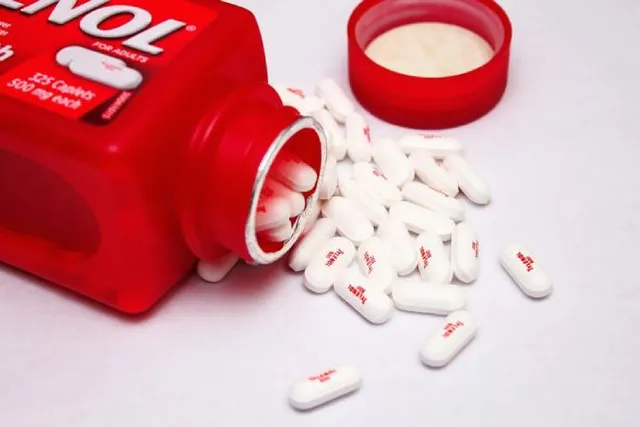
Unfortunately, nothing in your medicine cabinet is safe for your dog’s pain relief. Non-steroidal-anti-inflammatory (NSAID) medications such as ibuprofen and aspirin have a very narrow safety margin in dogs. These medications were designed for (and tested on) people, and while they are generally very safe for us to use, this is not the case for dogs.
Stomach ulceration, kidney disease, and liver injury are common complications of human NSAID administration in dogs. While paracetamol is sometimes prescribed by veterinarians for pain relief in dogs, this should only be done under the guidance of a veterinarian. Again, it is not a safe option for all dogs.

Veterinary Pain Relief Medications
The preferred way to alleviate your dog’s pain is with pain relief especially made for dogs; medications have been approved by the FDA. Examples of these medications include Carprofen, Meloxicam and Grapiprant (NSAID medications for dogs), and Gabapentin.
Other pain-relief options such as Tramadol and Paracetamol can also be prescribed by veterinarians. Different medications are used depending on the source of pain; for example, while NSAIDs are used for acute injuries and arthritis in otherwise healthy dogs, they are not considered a safe option for dogs that are dehydrated or experiencing signs of gastrointestinal disease.
Signs That Your Dog Might Be in Pain
The signs of pain in dogs are highly variable—some are extremely subtle, and others are very obvious. In general, signs of pain in dogs can be categorized into one of three groups.
The 8 At-Home Pain Relief & Natural Remedies
Below are eight over-the-counter options for reducing your dog’s pain. When used cautiously, under veterinary guidance, and in conjunction with prescribed painkillers, these can be very safe and effective.
1. Glucosamine and Chondroitin

These two substances are the building blocks of healthy joints. They are produced naturally by the cells of the joint, and aid with lubrication of joint surfaces. Supplementation with glucosamine and chondroitin has been shown to improve joint health in dogs while preventing the wearing of cartilage.
These supplements are available in many different brands and formulations, including tablets, capsules, and liquids.
2. Turmeric

Research is starting to emerge about the benefits that turmeric (Curcumin) can have as an anti-inflammatory agent in dogs, as it can in people. This yellow spice is generally safe to use in dogs. It is available as an extract in dropper bottles, though the powdered spice can also be used. More research is likely needed to ascertain the effectiveness of turmeric for pain relief in dogs.
3. Fish Oil

Omega-3 and 6 fatty acids have perhaps been studied more in dogs than any other natural supplement. There is good research to show that these fatty acids, found most commonly in fish oil, have good anti-inflammatory properties in dogs. In short, fish oil is a good option for additional pain relief in dogs suffering from arthritis.
Dog-specific formulations exist, but human capsules can be used as advised by a veterinarian.
4. Heat Packs

Applying a warm heat pack to a sore area can provide some comfort to your dog. Heat packs dilate or open up the blood vessels, allowing more blood flow, and thus more healing. Ensure they are not too hot, and only use for 15 minutes once or twice a day.
5. Cold Compression

Cold compression should be used alongside heat packs. The idea is that while heat packs promote healing, cold compression provides pain relief by reducing inflammation. Ensure there is something between your dog’s skin and the ice pack, such as a small towel. Again, this should only be done once or twice a day.
6. Green-Lipped Mussel

This natural seafood extract is rich in omega-3 fatty acids, antioxidants, and minerals, all of which help reduce pain. This can be used safely long term.
7. Weight Loss

Many dogs that suffer from arthritis and other injuries, including cranial cruciate ligament rupture, are overweight. Weight loss, and subsequently maintaining your dog at a lean weight, is a good way to minimize pain and further damage. This will also reduce the risk of future injuries and arthritis progression.
Weight loss should be done slowly, as guided by a veterinarian.
8. Specialized Diets

If you find it challenging sourcing and giving your dog all of these supplements, there’s another option. Specially formulated dog foods have many of the supplements built in. Hills J/D, for example, contains omega-3 fatty acids, glucosamine, chondroitin, and antioxidants.
Transitioning your dog to a new food should always be done slowly, over approximately 2 weeks, to lessen the risk of gut upsets.
Monitoring for Adverse Reactions
Any time you feed your dog something new, including the above supplements, it’s important to monitor him or her for signs of an adverse reaction. These include vomiting, diarrhea, loss of appetite, itchy skin, and hives.
Conclusion
Remember, it’s always advisable to contact a veterinary clinic or veterinary emergency center if your dog is in pain. The veterinarian will start by examining and assessing your dog, trying to localize the pain.
Pain-relief options will then be discussed. If you have questions about the above at-home remedies, if you wish to begin administering them to your dog, or if you would like to devise a weight-loss plan for your dog, it’s best to discuss with a veterinarian.
Sources
Featured Image Credit: Creative Cat Studio, Shutterstock
Expert dog care, straight to your inbox
News, insights, expert advice, and everything dog.

No spam — unsubscribe anytime.
By signing up, you agree to our Terms & Conditions and Privacy & Cookies Policy.
How useful was this post?
Click a star to rate. You can leave written feedback afterwards. (We read all feedback.)
Dr. Joe Mallat DVM (Veterinarian)
Joe is a veterinarian from Sydney, Australia. When he's not working, he enjoys cooking, exercising, and exploring the Australian wilderness. He has worked for 2 years at a mixed-species practice on the mid-north coast of New South Wales, treating animals of all sizes. His areas of particular interest include wound management, internal medicine, and oncology. Joe's love for the profession comes not only from helping dogs, but also from helping their parents and working with wonderful teams of people.
Joe completed his Bachelor of Veterinary Biology and Doctor of Veterinary Medicine at the University of Sydney in 2020.