My Dog Ate Aluminum Foil! Our Vet Explains What to Do Now

In this article
Dogs seem to love eating all sorts of weird and wonderful things, even things that shouldn’t be edible! Of course, if you’ve had something delicious wrapped in this shiny metal material, it might explain why your dog ate aluminum foil. If your dog has managed to feast on a sheet of aluminum foil, you’re obviously going to be worried about what to do next.
The good news is that your dog will probably be absolutely fine if they ate aluminium foil, but you may still need to take them to the vet. Let’s talk more about the problems that could arise from eating aluminum foil, what to watch out for, and when to call your vet.

My Dog Ate Aluminum Foil—What Should I Do?
Keep a close eye on them over the next 24–48 hours. Offer them small meals frequently and make sure they have access to fresh water. Watch their stools so you can see when the foil makes its way out. In some cases, the foil could damage or irritate the intestinal lining, so you might see a little bit of blood in the feces. If your dog is bright, comfortable, and happy, it should resolve within a day.
If your dog ate a large amount of aluminum foil, contact your vet for advice. They may recommend bringing them in for an examination. If they are worried about how much aluminum your dog has eaten, they may recommend taking an X-ray to decide what to do next.
Call the Vet If:
If your dog finds and eats aluminum foil regularly, it could be a sign of a nutritional deficiency or a condition where animals continually eat non-food items, known as pica. Compile a list of your dog’s regular food and contact your vet for an appointment.
What Is Aluminum Foil?
Aluminum is the 13th element on the periodic table. It is the most abundant metal element in the Earth’s crust, but due to its chemical structure, it does not appear in its metallic form in nature. When converted by electrolysis, pure metallic aluminum is very fragile and malleable, making it perfect for creating the moldable sheets we know today.


What Happens if Your Dog Eats Aluminum Foil?
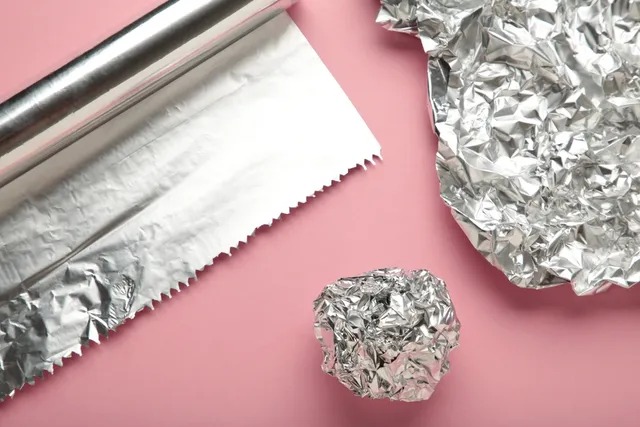
Aluminum is not a heavy metal and poses no toxicity risks if ingested, but it can still cause some issues. In the majority of cases, your dog will be fine. After a day or two, you will notice that their poop might look a bit like a disco ball, but the foil will most likely pass through without incident. However, there are a few circumstances where the foil could cause problems.
1. If Your Dog Ate a Lot of Foil
It would be unusual for a dog to ingest a large amount of aluminum foil, but not impossible. If they have managed to swallow a large ball of foil, it could cause a partial or complete obstruction in the gastrointestinal tract. Even if the foil doesn’t get completely stuck, it might cause damage to the lining of the esophagus or intestine as it travels through.
2. If There Was Anything Toxic Wrapped Inside the Foil
In most cases, we need to be more concerned about what was in the foil rather than the foil itself. There are a number of foods that humans eat regularly that are toxic to dogs (for example, chocolate, onions, and grapes) or fatty foods that could cause gastrointestinal upset or pancreatitis. If the food inside the foil had gone bad, this could put your dog at risk of food poisoning.
3. If Your Dog Regularly Eats Foil
If your dog has developed a strange fixation with eating aluminum foil, it is possible that pieces of foil could start to accumulate inside the digestive tract, binding together over time with other materials to form a bezoar or a solid object in the stomach. This could then cause an obstruction when it passes into the intestines.

Conclusion
Although most dogs will be more interested in what is wrapped in aluminum foil than the foil itself, that won’t necessarily stop some dogs from deciding to ingest this metal material. The good news is that aluminum foil is non-toxic, and being quite soft, it will usually pass through the digestive tract with little or no problem. However, if your dog has consumed a large amount of aluminum foil, there were any toxic food items or spoiled food inside the foil, or they are developing a habit of eating it, you should contact your vet for an appointment.
See also:
Sources
Featured Image Credit: Mouse family, Shutterstock
Expert dog care, straight to your inbox
News, insights, expert advice, and everything dog.

No spam — unsubscribe anytime.
By signing up, you agree to our Terms & Conditions and Privacy & Cookies Policy.
How useful was this post?
Click a star to rate. You can leave written feedback afterwards. (We read all feedback.)
Dr. Karyn Kanowski, BVSc MRCVS (Vet)
Dr. Karyn is originally from Queensland, Australia, and has resided in the UK for the past 10 years. She graduated from The University of Queensland School of Veterinary Science in 2010, and also holds a Bachelor’s degree in Zoology. Karyn is passionate about using experience, evidence, and working with pet owners to provide the best solutions for pets. She also believes in making reliable information about animal health accessible to everyone. 5 cats and 4 dogs let her share their home with her and her husband, and when she is not practising as a veterinary surgeon, she spends her time writing, gardening, and cleaning up pet hair!