Labradoodle Health Issues: 8 Vet-Explained Problems

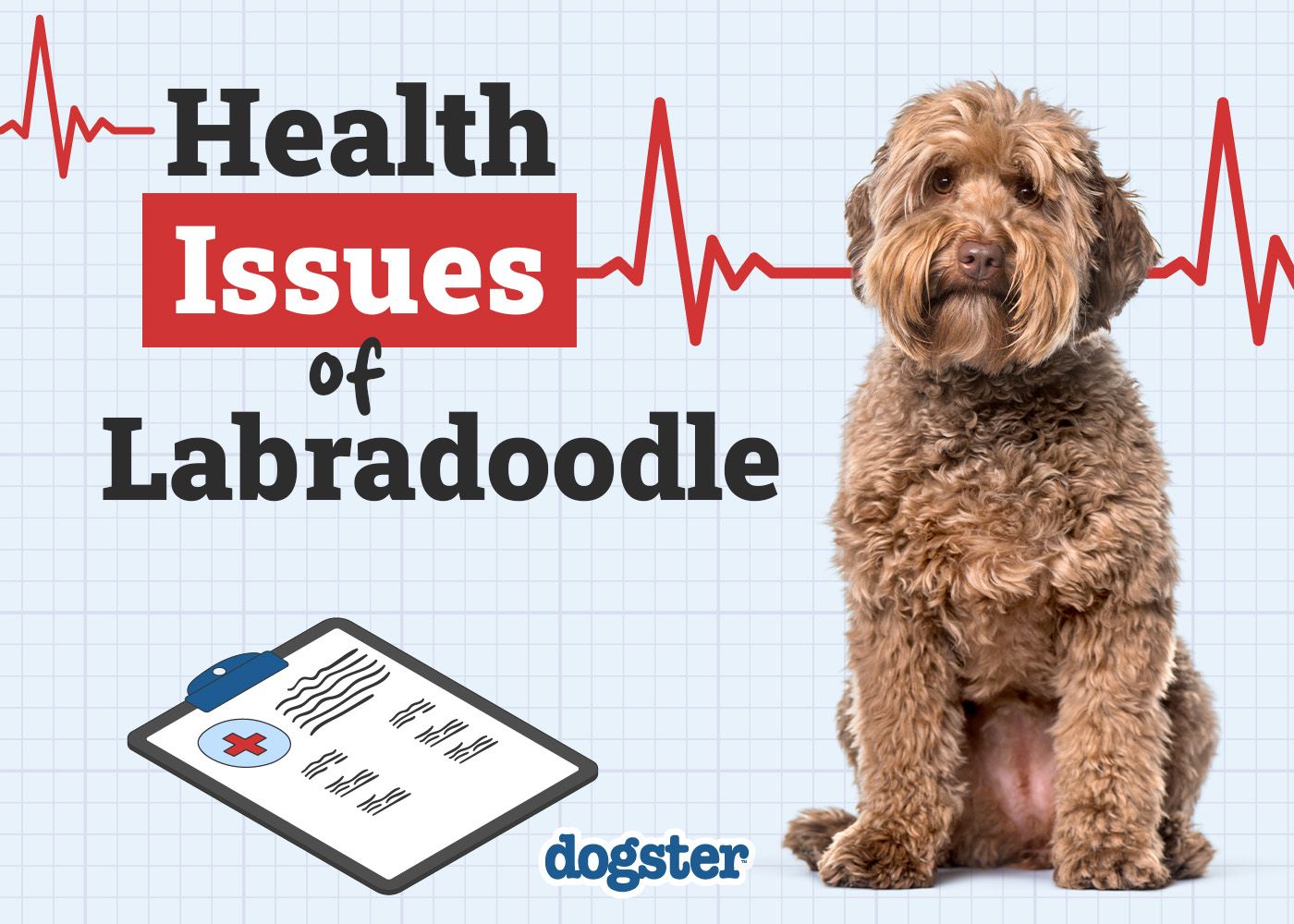
The Labradoodle is a mixed breed that is incredibly popular worldwide and has continued to gain popularity since first being introduced in 1988.1 Labradoodles are the perfect amount of scruffy, originating from Poodles and Labrador Retriever dogs. They're athletic, friendly, and playful, and their appeal is indisputable. Labradoodles’ appearances vary significantly since they come in a wide range of sizes and colorations. Although the Labradoodle is healthy, no dog is immune to health concerns. Continue reading to learn about eight of the more common health issues Labradoodles face!

The 8 Vet-Explained Labradoodle Health Issues
1. Allergies
If you bring a Labradoodle into your home, be prepared to battle allergies! Allergies can be caused by environmental allergens, parasites, or food. Signs of allergies vary but can include itchy skin, hair loss, ear infections, diarrhea, rashes, runny eyes, and more.
Allergies cannot be cured, but they can be managed. Your veterinarian can help you identify the underlying type of allergy and provide the best course of action to relieve signs. The treatment may include diet restrictions, immunotherapy, or other supportive means.
If you are concerned about the health and well-being of your pet, seek veterinary advice for the best course of action.
2. Hip Dysplasia
Large breeds tend to be more at risk for developing hip dysplasia. Hip dysplasia is when the bones that form the hip do not fit together correctly. In a dog with normal confirmation, the head of the femur is round and fits nicely within a socket of the pelvis called the acetabulum. With correct joint formation, the hind limbs move smoothly. When the femur doesn’t fit nicely into the acetabulum, laxity occurs, which promotes abnormal contact between bones.
As animals with hip dysplasia mature, grinding of the bones leads to degenerative changes called osteoarthritis. This condition can be present in dogs as young as 4 months of age but can go undiagnosed until later in life if no signs of discomfort are noted during puppyhood.
Dogs with hip dysplasia typically show signs of discomfort as they age and osteoarthritis forms. Signs of hip dysplasia include hindlimb lameness,1 bunny hopping, difficulty rising, reduced hindlimb range of motion, and swaying of the hips.
Hip dysplasia is diagnosed through radiographs. Depending on the severity, surgical corrections may be recommended. For patients who do not pursue surgery, joint supplements, physical therapy, and NSAIDs may be recommended. Large-breed puppies should receive a diet that doesn’t promote rapid growth since it can predispose a dog to hip dysplasia. Additionally, patients with hip dysplasia should be removed from the breeding stock.

3. Elbow Dysplasia
The humerus, ulna, and radius form the elbow. Elbow dysplasia is a disease that occurs when the bones do not fit together appropriately for various reasons. When the bones do not fit together, changes occur to the joint that cause discomfort and lead to arthritis.
There is a genetic correlation, and the disease is commonly found in Labrador Retrievers and other large-breed dogs. Signs of lameness may be seen in young puppies, but some dogs may not exhibit signs until later in life. Dogs affected with elbow dysplasia experience front leg lameness exacerbated by exercise. Surgical intervention may be necessary for some dogs, whereas other dogs may do well with supportive therapies. Dogs diagnosed with elbow dysplasia should be removed from breeding programs.

4. Patellar Luxation
Small-breed dogs,2 including miniature and toy Poodles, are prone to patellar luxation. A small Labradoodle may be at risk for this condition in which the kneecap, called the patella, falls out of the groove where it typically rests. As this process occurs over time, the femoral groove is worn down, exacerbating the mobility of the patella and leading to arthritis.
Signs of patellar luxation include intermittent or continuous lameness on the back legs. Often, owners may notice a brief period in which the pet holds up a rear leg for a couple of steps, then gingerly places it back down and proceeds to walk or run normally. This condition can vary in severity and can be painful in some dogs.
Manual manipulation of the kneecap and radiographs help provide a diagnosis. Patients who are severely impacted by patellar luxation may be candidates for surgical correction. Joint supplements and NSAID therapy may be recommended as well.

5. Ear Infections
Labradoodles seem to be prone to ear infections. The development of ear infections may be amplified by the amount of hair growing in their ear canals. Dogs with ear infections will often shake their heads, paw at their ears, and have a malodorous smell originating from the ears. Owners may attempt to clean the ears and note significant debris or discharge.
If an ear infection is suspected, an appointment should be made for your pet to be evaluated by a veterinarian. The veterinarian will closely evaluate the ear canal and eardrum and identify infectious agents within the debris. Ear infections can be treated with appropriate topical medications and cleaning. In some cases, ear infections could be a sign of allergies and may require a diet change to prevent reoccurrence.
6. Progressive Retinal Atrophy
Labrador Retrievers and Poodles are predisposed to the development of Progressive Retinal Atrophy (PRA). PRA is a heritable condition in which photoreceptor cells responsible for color recognition and vision lose function. There are different forms of retinal atrophy, but the most common is late-onset PRA.
When PRA occurs in adult dogs, photoreceptor cells have developed correctly but have slowly deteriorated over time. Eventually, PRA will lead to blindness. Signs of PRA include difficulty seeing in dim light, hesitancy to move in dark environments, and bumping into objects. Dilated pupils are also noted.
A veterinary ophthalmologist can perform tests and complete an ocular exam to confirm PRA in your Labradoodle. Unfortunately, there is no treatment for PRA. Dogs who are diagnosed with PRA should not be bred.

7. Von Willebrand’s
Poodles and Labrador Retrievers can have Von Willebrand Disease, a condition in which an essential clotting factor called von Willebrand Factor Protein (vWF) is reduced or abnormal. The reduction or abnormality in vWF can lead to excessive bleeding and bruising. Dogs experiencing significant bleeding may require blood transfusions.
Fortunately, dogs can be screened for von Willebrand to predict the likeliness of passing the trait to offspring and to determine the chances of a patient having problems with clotting. Unfortunately, there is no cure for this disease.
8. Addison’s Disease
The Poodle is the poster child for Addison’s disease, also known as hypoadrenocorticism. As a result of the high occurrence in Poodles, the Labradoodle may also develop this condition. Addison’s disease is a condition in which the adrenal glands do not produce hormones appropriately.
Dogs with hypoadrenocorticism have low levels of circulating cortisol, a type of steroid. The low levels of steroids make it difficult for affected dogs to respond to stressors or perform essential body functions appropriately. Dogs with Addison’s disease may experience low blood pressure, dehydration, gastrointestinal signs, and depression. In severe cases, an Addisonian crisis may occur, which can result in death if not quickly corrected.
Diagnosing dogs with Addison’s can be challenging since not all affected dogs present the same. Incidentally, Addison’s Disease has been nicknamed “The Great Pretender,” as it can mirror other illnesses. Fortunately, once diagnosed, dogs with Addison’s disease can have a good prognosis with appropriate treatment.
Treating dogs with hypoadrenocorticism includes monthly injections with a mineralocorticoid like Deoxycorticosterone pivalate and daily oral steroid supplementation.
If you are concerned about the health and well-being of your pet, we recommend getting in touch with a vet for guidance.
In Summary
Labradoodles are easy to love because of their friendly, upbeat personalities. Unfortunately, Labradoodles are susceptible to health issues and diseases that impact Labrador Retrievers and Poodles. Responsible breeders will be able to provide information regarding the genetic testing and screening of dogs used for breeding. Knowing the diseases that Labradoodles face will help owners provide appropriate care for their beloved pups.
Featured Image Credit: Wirestock Creators, Shutterstock
Expert dog care, straight to your inbox
News, insights, expert advice, and everything dog.

No spam — unsubscribe anytime.
By signing up, you agree to our Terms & Conditions and Privacy & Cookies Policy.
How useful was this post?
Click a star to rate. You can leave written feedback afterwards. (We read all feedback.)
Dr. Marti Dudley DVM (Veterinarian)
Dr. Marti Dudley is a small animal veterinarian with a strong interest in preventative medicine and pet parent education. She enjoys being a resource for pet owners as she believes that having a team approach leads to the best possible care of pets. Dr. Dudley enjoys writing and has been able to use this skill as another avenue to educate pet owners outside of the traditional office setting.
Dr. Dudley has been practicing veterinary medicine since 2014. She has an interest in preventative care and emphasizes the importance of pet owner education. Dr. Dudley’s experience in veterinary medicine is broad, as she has worked as a general practitioner, which has allowed her to see and treat many different types of conditions.
Dr. Dudley received her bachelor’s degree in biology from Longwood University in Virginia. She earned her Doctor of Veterinary Medicine (DVM) degree from Ross University.