How to Treat Spider Bites on Dogs: 11 Remedies (Vet Answer)


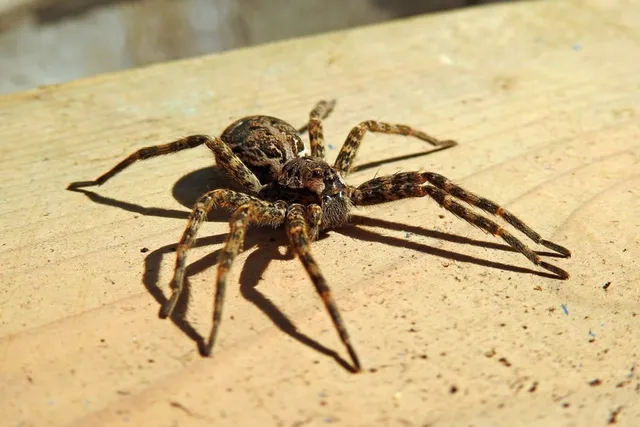
Did you know that there are over 3,000 species of spiders in the United States and over 48,000 in the world?1 Despite these facts, knowing that only a very small handful pose a real medical threat to your dog should be of great consolation. In the United States, the two groups of spiders that can cause envenomation with clinical signs are Widow Spiders (Latrodectus species) and Brown Recluse Spiders (Loxosceles species).
But, aside from this small subset of spider species’ bites or a rare reaction from any bite, most dogs will not need veterinary care from a spider bite. So, how do you treat spider bites on dogs? We'll show you how below!

Most Spiders Bite
While most spiders are venomous, there are various reasons why they do not cause problems if they happen to bite your dog, such as the mouthparts are too small to get the venom into the skin or the amount/potency of the toxin is not worrisome to your pup. This does not mean that your dog could not have a rare allergic reaction or get a secondary infection due to a bite, but most of the time, spider bites are not very painful, and unless clinical signs appear, they often are not a problem.
They may have mild local swelling and redness, but many dogs won’t even give them a first (or second) thought. In addition, in veterinary medicine, we often do not have the luxury of seeing the spider bite the pet at the moment, and we can’t talk to the dog to find out more information!
It could be reasonably deduced that spider bites are a) difficult to diagnose and b) difficult to recognize except in instances where an owner sees the occurrence firsthand. We often suspect a spider or bug bite due to evidence and signs afterward. Furthermore, sometimes what one suspects is a spider bite may have a different cause that may need to be investigated by a veterinarian if it continues.

How to Treat a Spider Bite on Dogs
If you see or have evidence of a spider, start with step one. If you don’t see one but suspect a possible spider bite, skip to step four.
1. Keep Calm and Breathe
Even if you're afraid of spiders, your dog can feed off your energy and needs you at your best to benefit from your care.
2. If You See the Spider, Collect It in a Jar
Try safely collecting it in a jar or a sealed cup that you can hold onto for identification purposes. If you can’t collect it, pictures or videos may also be helpful.
3. Identify the Spider
Helpful sources include books, websites, identification apps, contact with those who study insects (entomologists) or spiders (arachnologists), etc.
4. Monitor Your Pet
In the coming hours and over the next few days, be on the lookout for any changes. You know your dog best, and noting differences in your pet’s appearance or behavior will help determine if things are progressing.
5. Know What to Expect for a Typical Bite
You can expect to see some minor irritation in the area affected, such as a small bump with mild signs, including a little swelling, itching, or redness. Anything more severe than this, such as worsening swelling, discharge, pain, or changes in skin color, should warrant medical attention. Systemic signs such as fever, vomiting, or lethargy are abnormal and should also be investigated.
6. Watch Out for Signs of a Reaction
If you see signs of an adverse reaction from a spider bite, take your pup to a vet's office; this is an emergency. This could include signs such as facial swelling, trouble breathing, continual vomiting, retching, coughing, signs of lethargy, or intense swelling/redness/pus that form at the site in question. Again, these are rare occurrences, but something to watch out for.
7. If Your Dog Permits, Wash the Area of the Spider Bite
Wash the area with mild soap and water or rinse it with saline.
8. Use a Mild Cold Compress
A mild cold compress may bring some topical relief.
9. Contact a Veterinarian and Explain the Situation
Remember that they have your dog’s best interest at heart! They may want to see your pet or give you advice on when to bring your pet in. In some circumstances, they could give some general advice for mild situations, such as an antihistamine dose based on your pet’s weight or instructions for a topical chlorhexidine/antimicrobial product.
10. Discourage Your Pet From Licking or Scratching the Area
Scratching and licking can cause or make an infection more likely. An Elizabethan collar (often called “the cone of shame”) can be very helpful to keep your dog from accessing the area if it is becoming a problem.
11. Prevent Possible Future Spider Bites
While a spider can be almost anywhere, spider prevention inside and outside your home (as long as it is pet-friendly) may help you and your pet have peace of mind.

Worrisome Spider Bites
It should be noted that if you see or suspect these spider bites, contact a veterinarian right away. Alternatively, if you start to see some of the signs discussed below, a spider bite from a worrisome species may be on the list of possibilities and your dog should be seen by the vet immediately.
1. Widow Spiders

Latrodectus mactans, or Black Widow Spiders, are the most common species in this group, but there are others. A Black Widow typically is 2–2.5 cm long and has a black, shiny body with a red to orange hourglass mark on the underside of their abdomen. The immature female may be brown with red to orange stripes that will change to the more typical colors and markings as they age. A bite can have venom or be dry (no venom injected); however, you may not know which type the bite is until after signs are detected.
Black Widows live in all the states within the US except Alaska. Their venom is a potent neurotoxin that can be painful and cause long-acting muscle spasms and cramping. Additional signs that can be seen include excess salivation, stumbling and loss of coordination, tremors, vomiting, diarrhea, weakness, paralysis, or going into shock. It may even cause death if severe or left untreated, but luckily, these cases are considered rare.
In cases where there is confirmation or a suspected bite, an antivenom may be used, but it may not always be available or an option. Symptomatic treatment is also sometimes all that may be needed for dogs and can entail intravenous (IV) medication to help with the pain and muscle relaxation, as well as IV fluids and anti-seizure medications. The wound will be monitored until it is healed, and it is essential to note that weakness or partial paralysis may continue for several days during recovery.
2. Brown Recluse Spiders

L. reclusa is the most common Brown Recluse Spider, and its envenomation is typical for the 10 species in this group in the United States. These spiders are 8–15 mm in size with legs that are 2–3 cm long, and they most often have a violin-shaped pattern on their backs. They can be found throughout much of the United States, with various species in different geographical areas.
Initially, dogs may not show any signs of pain, irritation, limping, or shaking. A bite will often have a red, large skin lesion that develops a “bulls-eye” appearance and sometimes can develop into an ulcer that gets larger without medical intervention. The venom affects blood vessels, blood cells, and clotting factors around the lesion. Systemic signs can also occur within a few days after the bite, such as fever, rash, bruising, nausea or vomiting, and weakness. Renal damage and shock may also occur, and sometimes, in severe cases, damage to the red blood cells, platelets, and clotting factors can be diffuse throughout the body.
Unfortunately, there is no antivenom for these bites, but wound and supportive care would be indicated. This can include promptly applying a cool compress to the affected area as well as IV fluids. Additional treatment, such as antibiotics to prevent a secondary infection, steroids, blood transfusion, and oxygen, may be warranted. Dapsone, a medication used in people for leprosy, may also be an option to decrease inflammation, although its efficacy has not readily been studied in dogs. The wound may need to have damaged tissue removed (debrided), and in severe cases, skin grafting may be needed.

Conclusion
Spiders and their bites, while scary to some, typically aren’t something to be too concerned about for your canine friend. In the less common circumstance that your dog is reacting to a bite (allergic reaction or infection), you suspect one of the concerning spider species as discussed, or there are more worrisome medical signs in your dog, your veterinarian is only a call away!
See also:
Sources
Tilley, Larry P., and Francis W.K. Smith. Blackwell’s Five-minute Veterinary Consult Canine and Feline. 5th ed. Ames, IA: Wiley-Blackwell, 2011.
Aiello, Susan E., ed. The Merck Veterinary Manual. 11th ed. Kenilworth (NJ): Merck & Co., Inc, 2016.
Featured Image Credit: kenkuza, Shutterstock
Expert dog care, straight to your inbox
News, insights, expert advice, and everything dog.

No spam — unsubscribe anytime.
By signing up, you agree to our Terms & Conditions and Privacy & Cookies Policy.
How useful was this post?
Click a star to rate. You can leave written feedback afterwards. (We read all feedback.)
Dr. Rachel Ellison DVM (Veterinarian)
Dr. Rachel Ellison lives on a mountain in Utah with her husband, daughter, and son, as well as their animal menagerie— a Bernese Mountain Dog, a Bengal/Siamese mix, and an orange tabby cat, as well as numerous chickens. During her free time, she enjoys being with those she loves, cooking and baking, reading, hiking, sharing her knowledge about cats, and exploring nature and the world around her.