How to Treat a Burned Dog Paw Pad: 7 Expert Tips (Vet Answer)

Dogs can burn their paw pads if they stand or walk on hot surfaces, such as asphalt or pavement during a hot summer day. Fires, rough terrain, snow and ice, extensive exercise, and certain chemicals that your dog may accidentally walk through can also cause burns.
Most pet parents are familiar with the dangers of heat stroke, but they must also take into consideration how roads, sidewalks, and even gravel and soil can become dangerously heated when exposed to intense sunlight and temperatures.
While paw pads are designed to protect your dog’s feet, they are still susceptible to burns. Let’s look closer at how to treat your dog’s burned paw pad with this step-by-step guide.

Before You Start
- Keep in mind that dogs in pain may bite, even their owners. Use caution if your dog is injured to prevent getting bitten. If your dog will not let you examine them to assess the injury, veterinary assistance will be necessary.
- Have a first-aid kit for dogs on hand. The Vet in a Box™ Medical Kit is a great example and affordable.
- Purchase an Elizabethan collar, or E-collar. They can be found at most major pet stores or online.
- Keep your veterinarian’s phone number close by.
Your dog may exhibit abnormal behavior after burning their paw pads. These signs may include:
The 7 Tips on Treating a Burned Dog Paw Pad
1. Confirm a Possible Paw Pad Burn

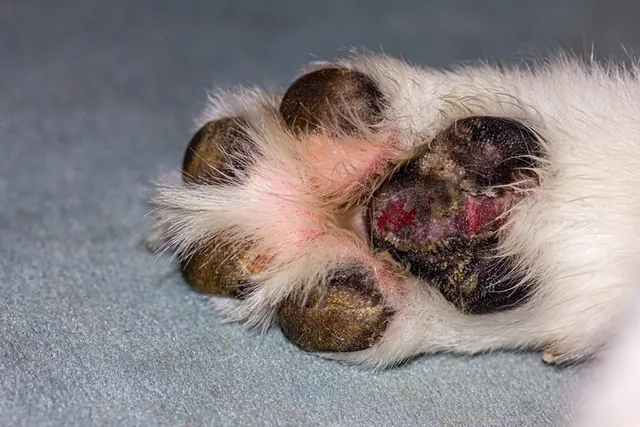
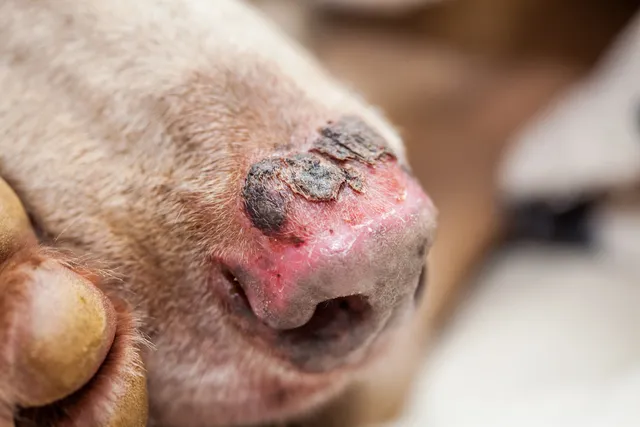
If your dog allows you to safely examine their foot, look for abnormalities like:
- Blisters
- Bleeding
- Raw or ulcerated paw pads
- Redness and irritation
2. Clean the Affected Paw Pads
Remove any visible dirt or debris. You can soak your dog’s foot twice daily in an Epsom salt bath consisting of 1 teaspoonful of Epsom salt to 2 cups of water. Additionally, standing your dog in cool water can help relieve pain and swelling.
3. Protect the Injury

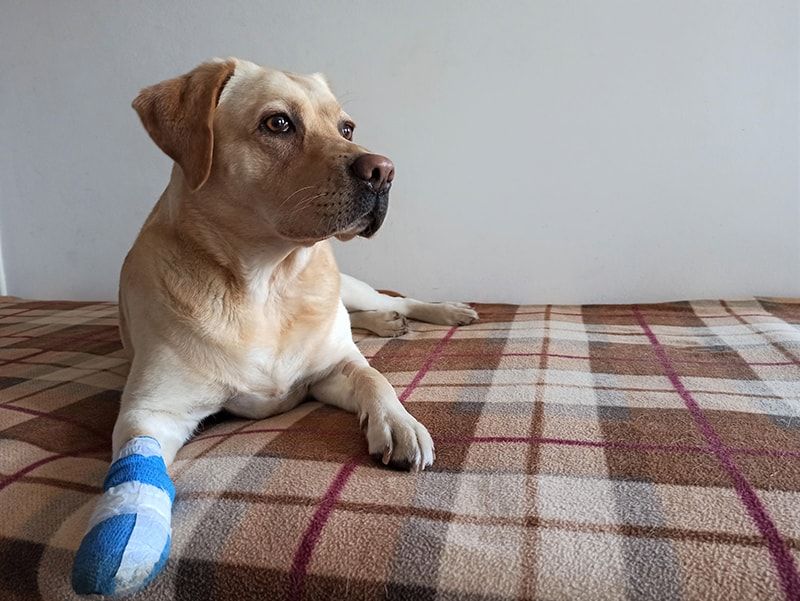
Keeping the burn clean is essential for healing and preventing infection. You can apply a properly fitted dog boot, sock, or bandage over the foot to protect it, making sure it is not too tight. A bandage that is too tight can restrict blood flow and may cause tissue injury.
Mild burns may heal in 7–10 days, while more severe injuries may take weeks to heal.
4. Restrict Exercise
Limit your dog’s activity to allow the wound to heal. Keep to strict kennel rest, do not allow jumping or running, do leash walks for potty breaks, and make sure they are on non-slip flooring to prevent further injury. A calm and relaxing environment with minimal distractions can help minimize their stress.
5. Use an Elizabethan Collar

An E-collar is especially important if your dog continues to lick or bother the wound. This will help prevent them from worsening the burn.
6. Monitor the Burn
Closely monitor your dog’s behavior and wounds. If they become lethargic, if they are unwilling to eat, drink, or get up on their own, or if their wounds appear infected (e.g., redness, foul odor, discharge such as pus, necrotic tissue, etc.), the best course of action will be to get them to your veterinarian as soon as possible for treatment.
7. Schedule an Appointment with Your Veterinarian
Getting your dog veterinary care is especially important if the burn is severe. Paw pad burns can quickly become infected, and your veterinarian may need to prescribe antibiotics and pain medications, further clean the wound, and bandage it as needed.
If you're concerned about your dog's health we suggest you speak to a vet.
Conclusion
Paw pads can become burned by walking on hot surfaces, rough terrain, snow and ice, or irritating chemicals. Always be aware of weather conditions and surface temperatures prior to walking your dog. In some cases, walks should be kept short to prevent injuries. Conditioning your dog before long hikes and using dog booties can also help protect paw pads.
Featured Image Credit: Alice Chen, Shutterstock
Expert dog care, straight to your inbox
News, insights, expert advice, and everything dog.

No spam — unsubscribe anytime.
By signing up, you agree to our Terms & Conditions and Privacy & Cookies Policy.
How useful was this post?
Click a star to rate. You can leave written feedback afterwards. (We read all feedback.)
Dr. Stacie Grannum DVM (Veterinarian)
Dr. Stacie Grannum was born and raised in Arizona, USA. When she was a little girl, an encounter with a little animal changed her life forever. A tiny bird fell high from its nest, and Stacie diligently cared for it. Sadly, despite her best attempts to save it, the baby bird did not survive. From this devastating loss came a new ambition, carving the path that Dr. Grannum followed. She knew that she wanted to pursue a career in veterinary medicine. She worked hard toward that goal and dedicated her time to pursuing the field.
Today, her focus is on pet health, particularly wellness and preventive medicine. She also enjoys writing about pet health and is eager to share what she has learned over the year with other animal lovers.
In 2014, Dr. Grannum earned her Doctor of Veterinary Medicine Degree from Colorado State University.