How to Treat a Dog Burn: Vet-Reviewed Care Tips & Facts


In this article
Unfortunately, accidents and injuries can occur at any time, including those involving our pets. The last thing that you want is to see your dog suffer through pain, but when it happens, it’s good to be prepared. Acting quickly can make a difference in the damage and amount of pain that your dog experiences, and this is especially true for burns.
In this article, we cover the six different types of burns that your dog could experience and provide guidance on the best ways to treat them. But if the burn seems severe, don't wait—see a veterinarian immediately!

What to Do if Your Dog Has a Burn
1. Ensure Safety First
If your dog has just experienced a sudden burn, it is important to take immediate action to ensure everyone's safety. Depending on how the burn occurred, you should remove the source: Make sure the fire has been extinguished or turn off the power. In certain cases, it may be necessary to muzzle your dog to prevent them from biting due to the pain while you assess them further.
2. Run Cool Running Water Over the Burn
Unless your dog looks like they are dying, you should run cool (not cold) running water over the area for about 20 minutes. This ideally needs to be done within 30 minutes of the injury, so in most cases you’re best to do this immediately. This will limit ongoing tissue damage from the burn. Try to run the water over the burn only, as you don’t want your dog to become unnecessarily wet and overcooled. Don’t apply ice to the burn or try to burst any blisters. These actions can make the situation worse.
3. Seek Veterinary Help
If your dog suffers from anything but a very tiny thermal burn, they will need pain relief, antibiotics (topical or oral), and dressings at a minimum, although treatment may vary with other types of burns. Burns are emergencies if they are large or involve sensitive areas. For severe burns, diagnostic tests and hospital treatment are often necessary. In severe cases a veterinarian may speak to you about surgery and skin grafts to aid burn healing. Your dog may also have other concurrent injuries, like smoke inhalation, depending on how the burn occurred.

Types of Burns
Six different kinds of burns can occur, and how a burn is treated depends on its type and severity.
Thermal Burns
Thermal burns occur from heat, such as smoke, steam, fire, and hot water. Common ones can include:
- Contact burns: These are from touching a solid, hot object, such as stovetops, heat lamps, hot pipes, radiators, car mufflers, and heating pads.
- Flame burns: These are from touching an open flame, such as house fires, bonfires, or cooking flames. Smoke inhalation is an additional concern associated with flame burns.
- Scalds: Thermal burns and scalds occur from steam or hot liquid, such as boiling cooking oil or water or steam from irons or steamers.
Electrical Burns
When an electrical current comes into contact with a dog's body, it can cause an electrical burn. This can result in tissue damage, with the initial site possibly becoming charred. A common cause of electrical burns in dogs is chewing on electrical cords. This can cause electrocution, which can also lead to serious internal injuries.
Chemical Burns
Chemical burns occur when skin comes in contact with caustic chemicals like paint thinners, drain cleaners, gasoline, and car battery acid. These can cause severe damage to tissues and cells, which is considered as serious as or more so than heat burns. If a dog accidentally ingests any of these chemicals, take them to a vet for treatment immediately!

Frostbite Burns
Cold can burn just as much as heat, which is when frostbite can be a serious concern. It can cause cell damage and death, which is known as necrosis. Dogs are more susceptible to frostbite in their extremities, which include the ears, tails, and paws.
Mechanical Burns
Mechanical burns can also be called friction burns, which can develop from rope and carpet. When the skin comes in contact with a hard surface, such as an asphalt road, it can be scraped off, which results in a heat burn and abrasion. For dogs, mechanical burns are often mild (albeit painful) wounds from a carpet or a more severe road rash from being hit by a car.
Radiation Burns
The most common form of a radiation burn is sunburn, which results from prolonged exposure to the sun's ultraviolet light. It isn’t common for dogs to get sunburned, but you should still provide them with shade whenever possible and put pet-safe sunscreen on hairless skin or any dog shaved down. Radiation burns are also possible during radiation therapy for cancer treatments.
Burn Classifications
There are three classifications for the level of the burn, which indicates the damage and course of treatment.
First-Degree Burns
First-degree burns are considered superficial and only affect the outer layer of skin. They are dry, red, and painful to the touch but heal quickly within a week, with little to no scarring.
Second-Degree Burns
These are called partial-thickness burns, and they affect the outer and a few of the inner layers of the skin, or dermis. There are blisters and drainage and they can take months to heal. These burns are more at risk of infection, and there will be scarring.
Third-Degree Burns
These are referred to as full-thickness burns because they destroy the entire dermis, all the way down to the subcutaneous layer and sometimes even muscles, tendons, and bones.
The skin becomes leathery and charred and loses all sensation. Third-degree burns are actually less painful than first- and second-degree burns because the nerves have been destroyed, but pain can be felt in the area around the burn.
Healing takes a long time, with a high risk of infection and permanent and extensive scarring. These burns usually require surgery and can cause severe internal damage, and the dog will likely go into shock after the incident.

Burn Signs in Dogs
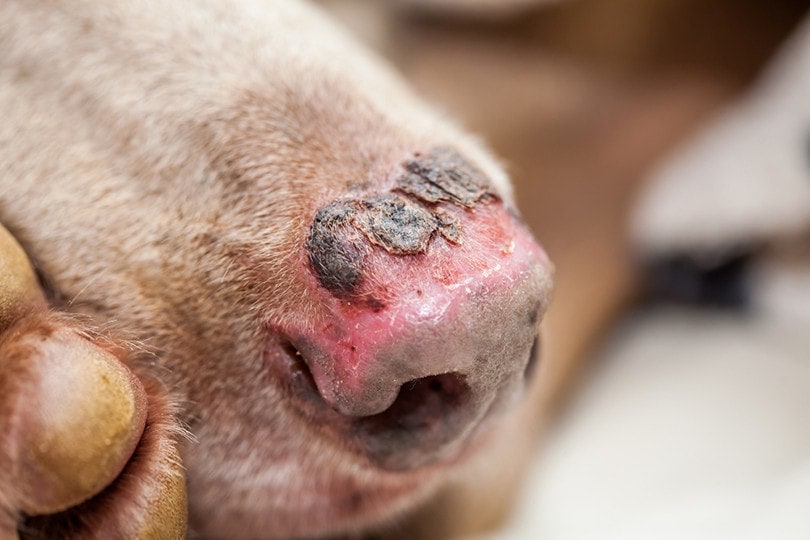
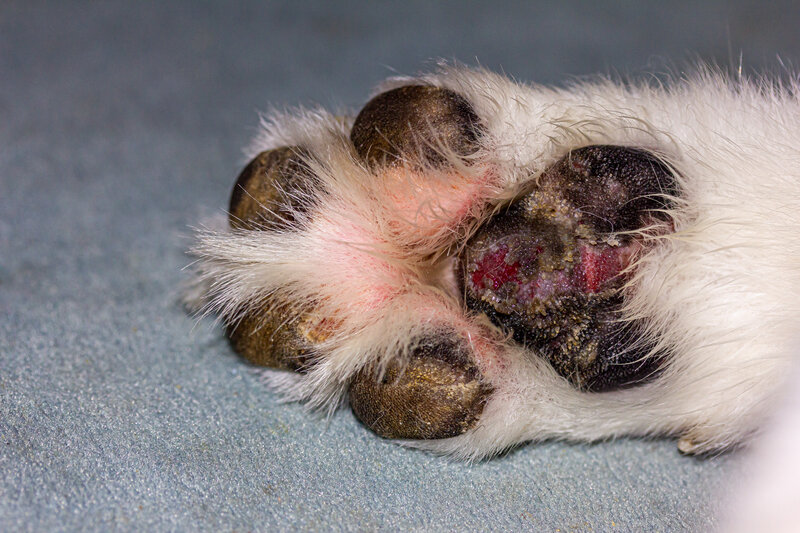
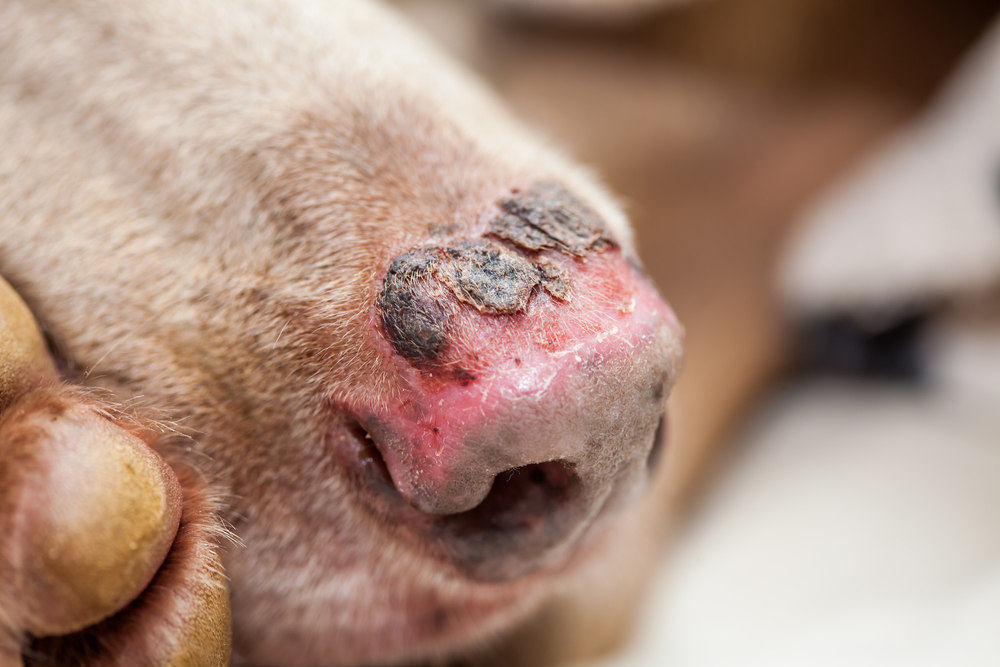
Mild burns are likely to be red, inflamed, and painful. Different burns will have different degrees of damage and signs, but the following signs can follow a burn:
- Hair loss at the burn site
- Discolored skin (yellow, gray, tan, black, or pale)
- Blistered skin
- Foul odor
- Pale or blue gums
- Vomiting
- Difficulty breathing
- Muscle spasms
- Drooling
- Heart arrhythmia
- Seizures
Burn Treatment for Dogs
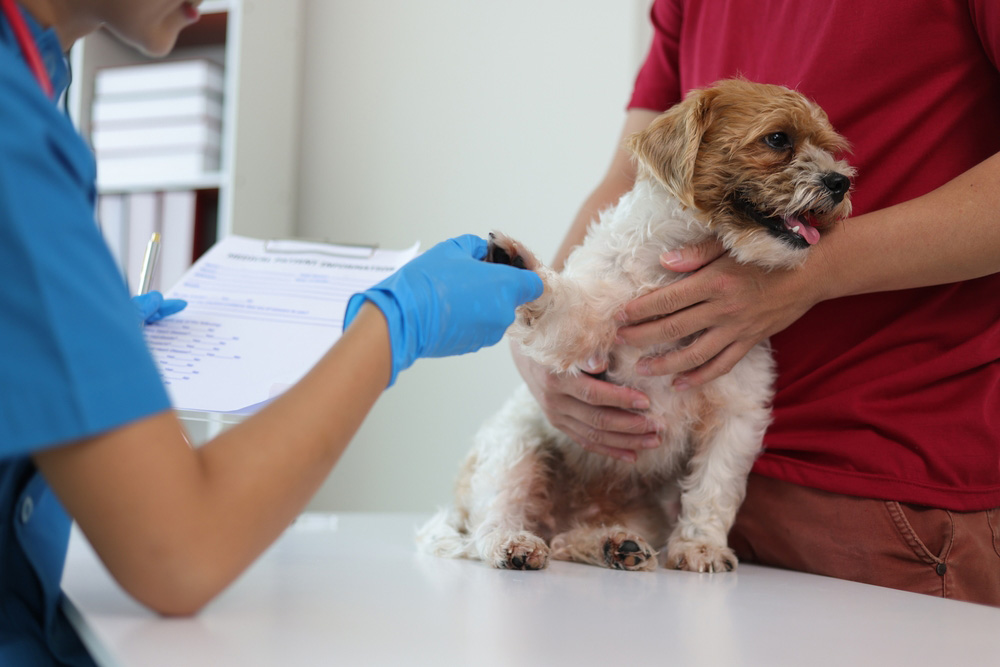
Regardless of how mild the burn is, you should speak with a vet regarding treatment. If it's mild, run cool water on the area and call your vet. Anything beyond this merits a visit to an emergency clinic. You should let your veterinarian know what caused the burn and how long you believe the exposure was.
A vet might run a complete blood count and a serum biochemistry test, which will help determine if the burn has caused any underlying metabolic issues. They might also run an X-ray, CT scan, or ultrasound to check the dog’s heart and airways.
The following treatments are possible, depending on the burn:
- IV fluids
- Pain medication
- Daily changing of bandages
- Wound healing medication
- Topical and/or oral antibiotics
- Feeding tube
- Specialized diet
- Oxygen therapy
Burn Prevention for Dogs
It’s essential to keep your dog away when you’re cooking. Whether on the stovetop or BBQ, having your pet underfoot while cooking can lead to accidental burns. Make sure all chemicals, such as bleach and oven cleaners, are out of your dog's reach, and keep them out of any room when you need to use these chemicals for housework.
Tuck electrical cords away or use cord protectors, which is even more crucial if your dog is a chewer. Additionally, don’t leave your dog unattended around a lit fireplace or candles, and don’t allow them to lie down directly on a heating pad.
Finally, ensure that your home has working smoke and carbon monoxide detectors and that the batteries are changed annually.
Conclusion
It is always best to prevent burns from happening to your dog in the first place. However, if your dog does end up suffering from a burn, it is crucial to seek urgent veterinary help.
Even if the burn seems minor, it can gradually worsen over the course of 72 hours, which is why immediate medical attention is necessary to prevent any further damage or complications!
Sources
https://www.petmd.com/dog/emergency/accidents-injuries/e_dg_burns_and_scalding
https://firstaidforpets.net/help-if-dog-suffers-a-burn-or-scald/
https://www.vets-now.com/pet-care-advice/how-to-first-aid-for-pet-burns
https://animalemergencycare.net/understanding-and-treating-burns-on-your-pet/
https://www.animalsurgicalcenter.com/skin-grafts-in-dogs-and-cats
Featured Image Credit: Anamaria Mejia, Shutterstock
Expert dog care, straight to your inbox
Vet-reviewed advice, training tips, and the best of Dogster. Free, and you can unsubscribe anytime.
By signing up, you agree to our Terms & Conditions and Privacy & Cookies Policy.
Kathryn was a librarian in a previous lifetime and is currently a writer about all things pets. When she was a kid, she hoped to work in a zoo or with wildlife in some way, thanks to her love for animals. Unfortunately, she's not strong in the sciences, so she fills her days with researching and writing about all kinds of animals and spends time playing with her adorable but terribly naughty tabby cat, Bella. Kathryn is hoping to add to her family in the near future – maybe another cat or two and a dog.
Join the conversation
Ask a question, share your story, or send private feedback.