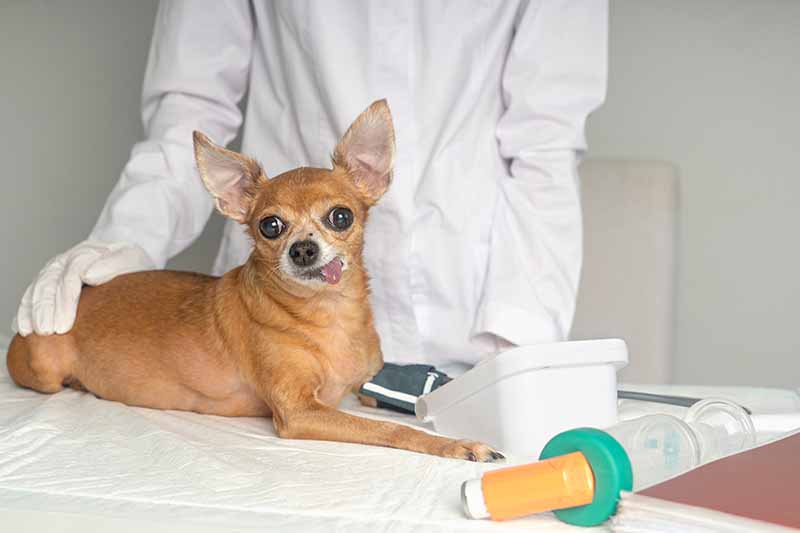
High blood pressure in dogs has some significant differences compared to humans. This article will explain how high blood pressure works in dogs, and how it is treated differently in veterinary medicine. Read the last section to understand why your vet doesn’t measure blood pressure the same way your doctor does.

What Is High Blood Pressure?
High blood pressure is when the blood in the arteries, veins, and heart pushes against the walls of the circulatory system with too much pressure. Maintaining blood pressure at just the right measure is a complex regulatory system that involves hormones, the walls of the arteries, the heart, and numerous other processes, including the kidney.

What Are the Signs of High Blood Pressure?
Concrete signs of hypertension are not easy to recognize. It is a largely silent problem with few signs that are usually only picked up after a thorough physical exam at the vet. You may not even know your dog has high blood pressure without taking measurements.
Furthermore, since high blood pressure in dogs is usually secondary to other diseases, the signs of it are confused with signs created by the original disease.
As a result of these two conditions, some of the signs of high blood pressure in dogs can be taken with a grain of salt because they can also be signs of other diseases, or they are what happens when the blood pressure is severe.
- Heart murmurs
- Irregular heartbeats
- Weakness, incoordination, seizures, or other signs of nervous system malfunction
- Blindness
- Bleeding in the eye or out the nose
- Dilated pupils
Consulting a veterinarian is recommended for the best course of action.
If you need to speak with a vet but can't get to one, head over to PangoVet. It's our online service where you can talk to a vet online and get the advice you need for your dog — all at an affordable price!
What Are the Causes of High Blood Pressure?
It is not clear what exactly causes high blood pressure in dogs or why it happens. However, unlike humans, high blood pressure by itself is fairly uncommon.
Primary hypertension is when the blood pressure is high, and no other disease is associated with it. It is just high blood pressure and the clinical signs that result from it.
Secondary hypertension is much more common in dogs. This is when high blood pressure occurs alongside other chronic illnesses. It may not be clear if or how the first disease causes high blood pressure, but the two chronic problems occur together. Kidney disease is the most common chronic illness associated with it. Other causes include diabetes, hyperthyroidism, and adrenal gland disease.
How Do I Care for a Dog With High Blood Pressure?
Since high blood pressure in dogs is usually caused by an associated disease, diagnosing and treating that disease with a veterinarian is the first step. Controlling the primary chronic disease may help manage high blood pressure. If your dog develops any of the signs listed above, remember that those are severe manifestations of high blood pressure and need veterinary attention.
Your vet may also prescribe heart and blood pressure medications to help manage it.
- Do not suddenly stop giving it
- If you forget a dose, do not double it (unless advised to do so by a vet)
- Your dog will probably be on the medication for the rest of their life
Your vet may also prescribe a certain diet. Diet can be an effective treatment for chronic disease. However, they can be difficult to execute at home. The special diets must be strictly adhered to, without any additional treats or supplemental food added in. Treats often complicate the results of the diet, and dogs are experts at getting food when they probably should not have it.
While doing things like giving medication and changing their diet feel productive, and are concrete, tangible tasks, the most important thing for your dog with any chronic disease is monitoring and watching them. Knowing what their normal is and being prepared for when something changes.

Frequently Asked Questions
What are the medical terms systolic and diastolic referring to regarding blood pressure?
Both terms refer to phases of the heartbeat and the consequential pressure of the blood in the arteries and veins.
Systolic refers to the point in time when the heart is contracting, squeezing together to push blood through the arteries and veins. As the heart muscles push the blood out of the heart, the blood pressure throughout the body increases. This is then measured when a doctor takes a blood pressure reading and is recorded as systolic pressure. The highest-pressure point in time.
Diastolic is the other end of the cycle when the heart is relaxed and not pushing blood through the arteries and veins. At this point, the pressure in the entire system is lower than before. This is recorded as the diastolic blood pressure, the lower number of the reading.
Why don’t vets measure blood pressure as part of an annual physical exam?
The short answer is that it is not worth it for the following three main reasons:
- It is rare. In a healthy dog, high blood pressure is rare. So, most of the time it is not worth measuring unless there are clinical signs that suggest it, or a chronic disease, or an acute problem that hints or suggests that there are problems with the blood pressure.
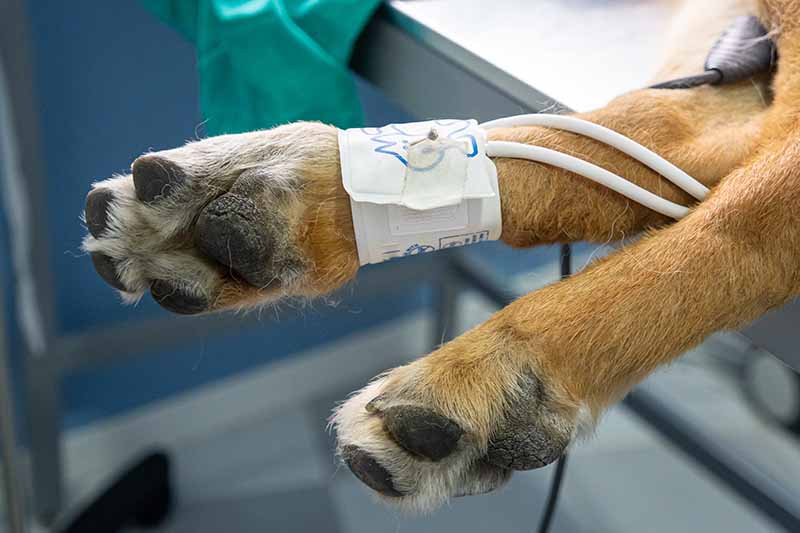
- It is stressful for most dogs. Most dogs are already stressed at the vet. And taking a blood pressure reading requires them to hold still while one or two people hold and manipulate their legs. As you can imagine, most dogs hate this—holding still while someone holds their feet.
- It is often not accurate. Blood pressure can change depending on the circumstances, particularly during stressful situations. So, a dog that is already stressed at the vet, and then is extra stressed by being forced to hold still to get a blood pressure is probably not going to have an accurate reading.
Conclusion
Well, there you have it; all about high blood pressure in dogs. Remember that your dog is special and that to receive the best medicine they need to have their own individualized care and treatment. Each dog is different, and they respond to treatments differently. Finding the right combination of vet, medication, and daily lifestyle is an ongoing yet important challenge.
See also:
- Pulmonary Hypertension in Dogs: Signs, Causes & Care (Vet Answer)
- How to Take a Dog’s Blood Pressure: 2 Vet Reviewed Methods
Featured Image Credit: Shveyn Irina, Shutterstock