Dog Tear Stains: Our Vet Discusses Signs, Causes & Treatment

In this article
While dogs don’t shed tears when they are sad or overjoyed, they do produce tears for a number of reasons. Many people will be familiar with the reddish-brown tear staining that can occur under a dog’s eyes, particularly in small-breed dogs. For our canine friends, these tear stains can be uncomfortable, or a sign of underlying eye disease.
As dog owners, the stains can be unsightly and puzzling. While most causes of tear stains are harmless, it might be wise to rule out other eye diseases that cause tearing. So, what does cause the tear staining, and what can we do about it?

What Are Tear Stains in Dogs?
To function properly, the eyes must be kept moist. Tears, which are comprised of water, oil, and mucus, provide the necessary moisture to protect the eye. Some dogs produce excessive tears. In the vet world, the technical name for excessive tearing is epiphora.
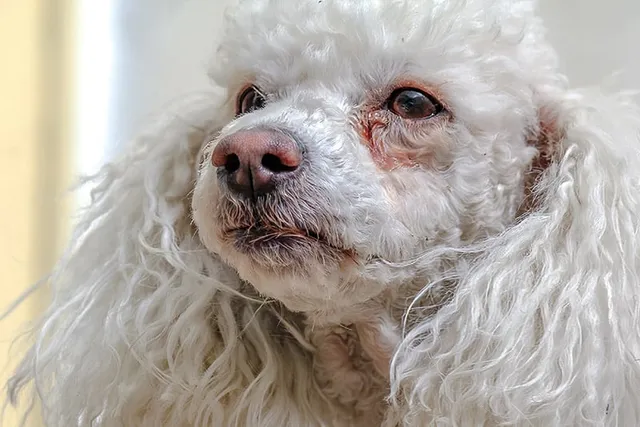
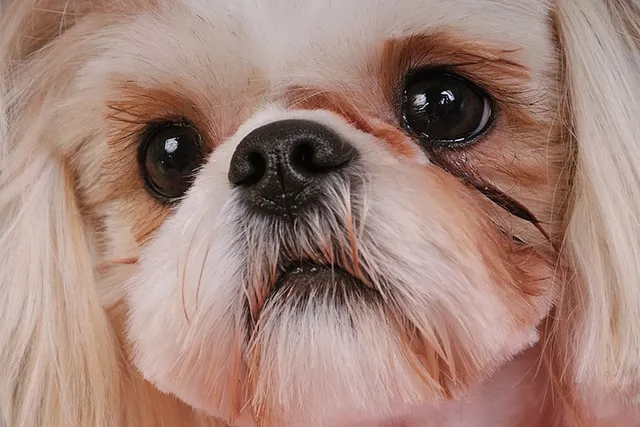
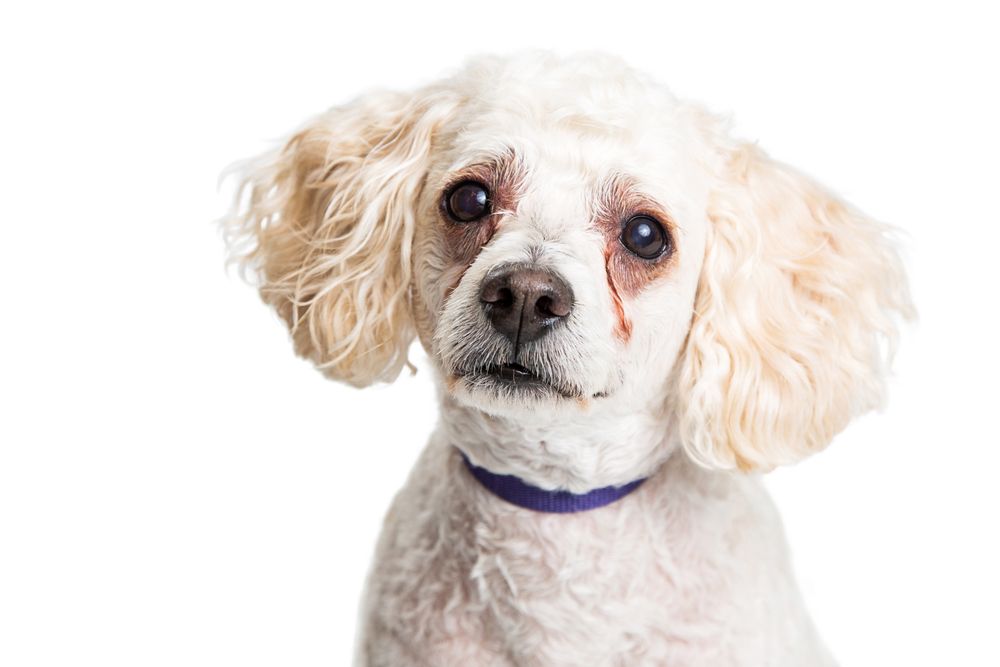
Tear staining occurs when the tears dry on the fur beneath the eyes. The classic reddish-brown color of dog tear stains is caused by an iron-containing dye molecule called porphyrin. This molecule is secreted in tears, as well as in bile and saliva. If excessive tear production occurs, the porphyrin in the tears will stain the fur as it dries.
While tear staining is easily recognizable in dogs with white coats, it can be harder to detect in dogs with dark or black coats. Dogs with short noses, large eyes, flat faces (such as the brachycephalic breeds), white fur, or congenital tear duct issues are more likely to develop tear stains, though any dog can be affected by epiphora.

Why Are Tear Stains Problematic?
Most causes of tear stains in dogs are not problematic. Many dogs, especially the small, white fluffy dogs, are just teary and always will be. They can live with this problem and do not feel any discomfort or self-consciousness.
There are three main reasons why tears and tear-staining may be an issue:
What Are the Signs of Tear Stains in Dogs?
There are several signs of tear staining in dogs:

What Are the Causes of Tear Stains in Dogs?
You may have noticed that when you cry, you develop a runny nose. This is because the tears produced by the eyes typically drain into the nose via the nasolacrimal duct, a narrow passage that cannot be seen by the naked eye. Dogs have nasolacrimal ducts just like us.
For most dogs, epiphora and subsequent tear staining is caused by variations in anatomy that cause tears to drain onto the face, rather than into the nose via the nasolacrimal duct. In some dogs, this duct has become blocked, leaving the tears nowhere to go but onto the face.
As we have touched on, the staining itself is caused by the drying of porphyrin, an iron-based molecule that is excreted in tears. As the tears dry, the porphyrin discolors the skin and hair.
In some dogs, excessive tear production and tear staining are not related to congenital factors and nasolacrimal ducts. Any sore or injured eye can produce tears in excess.
Pathological causes of epiphora include:
Diagnosing Tear Stains in Your Dog
To begin, your vet will take a thorough history. They may ask you how long the tear staining has been occurring, if your dog is showing any signs of discomfort, and if any at-home treatments have been attempted. They will then perform a thorough physical examination, focusing on the eyes.
Several in-house tests can be performed, including:
If all of these tests return normal results, we can rest assured that the tear production is not problematic, or a sign of significant eye disease.


How Do I Care for a Dog with Tear Stains?
Here there are three important steps you should take.
- Arrange a visit to your veterinarian. They will assess your dog and identify the most likely cause of tear staining. Remember, the eyes are delicate structures, and if there is any disease-causing epiphora, it’s important to know early. In these cases, appropriate treatment will often lead to resolution of the tearing.
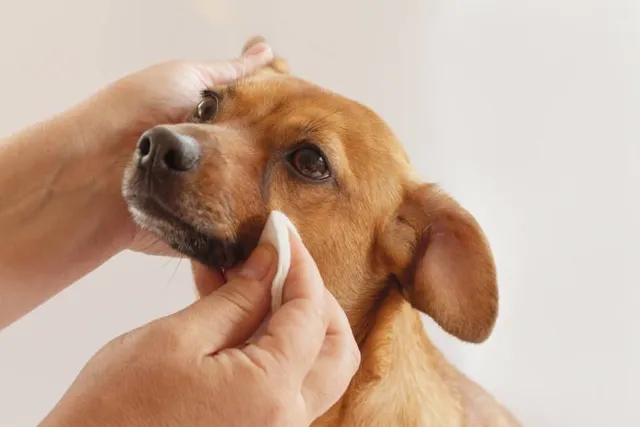
- Regular cleaning. Once diseases causing epiphora and tear-staining have been ruled out, make an effort to stay on top of cleaning the eyes. In many dogs, this needs to be done daily. Use a gentle, dog-friendly wipe to clean away tears and prevent the accumulation of crusty material. We like Eye Care for Dogs and Cats Eye Wash Pads, and Veterinary Formula Tear Stain Wipes.
- Keep the hair around the eyes short. Some dogs have lots of hair around their face, which can both irritate the eyes and make it harder to clean. In these dogs, regular grooming can be very helpful.

Frequently Asked Questions (FAQ)
What Is the Prognosis for Dogs with Tear Staining?
Thankfully, the prognosis for dogs with tear stains is generally very good. If a specific eye disease is diagnosed, your vet can discuss the prognosis. Most dogs with simple congenital tear staining can live full and comfortable lives, aided by regular cleaning and grooming.
Can Excessive Tear Production and Tear Staining Be Cured?
If a specific eye disease is identified and treated, excessive tear production can be fixed. If the tear production is congenital, without a specific disease, it will likely occur for life. Tear staining itself can be prevented by cleaning the eyes regularly, reducing the chance of reddish-brown porphyrin staining.

Conclusion
Tear-staining in dogs is relatively common. This can be uncomfortable if crusts or skin infections have developed, and it can be cosmetically unsightly for dog owners. It is important to consult your veterinarian to rule out other problematic or serious causes of excessive tear production. Once this has been done, discuss cleaning and hygiene with your vet to formulate a long-term plan. Also see:
Sources
Featured Image Credit: GoodFocused_Shutterstock
Expert dog care, straight to your inbox
News, insights, expert advice, and everything dog.

No spam — unsubscribe anytime.
By signing up, you agree to our Terms & Conditions and Privacy & Cookies Policy.
How useful was this post?
Click a star to rate. You can leave written feedback afterwards. (We read all feedback.)
Dr. Joe Mallat DVM (Veterinarian)
Joe is a veterinarian from Sydney, Australia. When he's not working, he enjoys cooking, exercising, and exploring the Australian wilderness. He has worked for 2 years at a mixed-species practice on the mid-north coast of New South Wales, treating animals of all sizes. His areas of particular interest include wound management, internal medicine, and oncology. Joe's love for the profession comes not only from helping dogs, but also from helping their parents and working with wonderful teams of people.
Joe completed his Bachelor of Veterinary Biology and Doctor of Veterinary Medicine at the University of Sydney in 2020.