Do Dogs Get Jet Lagged? Health & Facts (Vet Answer)

In this article
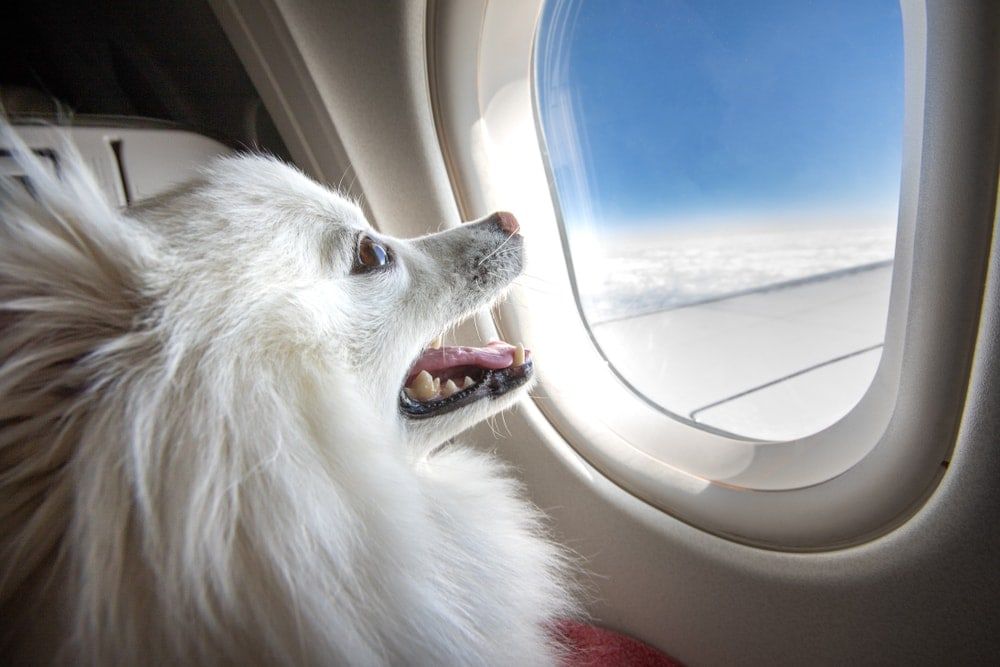
We’ve all experienced fatigue associated with jet lag, and traveling between time zones can really throw off a person’s schedule! What about dogs, though? Do dogs experience jet lag? Yes, dogs can experience jet lag, but their signs may be less noticeable, and they may adjust quickly. Continue reading to learn more about how travel may influence your companion.

The Circadian Rhythm
Before diving deeper into the specifics of how travel impacts your pet, let’s discuss internal clocks. Just like people, dog behavior is influenced by the time of day. Circadian rhythm is defined as, “The physical, mental, and behavioral changes an organism experiences over a 24-hour cycle.”
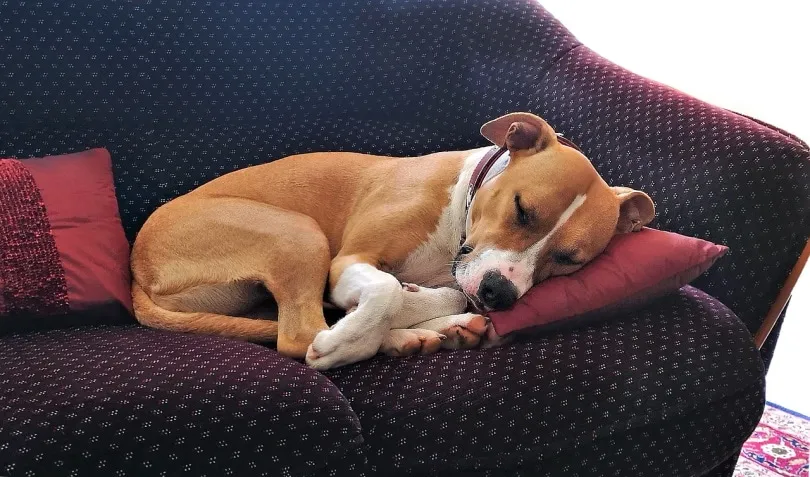
Dogs are programmed to sleep more deeply and for longer periods of time during dark hours and are more likely to be up and active during the day. Unlike humans, dogs are programmed to sleep lightly during the day and take several short naps. Although you may think that napping during the day may help prevent jet lag, that is not really the case. On top of that, circadian rhythms also influence hormone release, sleep, and eating patterns.
Disruptions in circadian rhythm can result in drowsiness, poor coordination, confusion, and difficulty focusing in people 1. It is likely that dogs could experience drowsiness, confusion, and potentially difficulty sleeping.
How Does Travel Impact My Dog?
Although your dog is not aware of the time your watch displays, your pup is very much aware of their stomach and their natural wake-sleep cycles. Traveling through different time zones can temporarily confuse your canine companion, but fortunately, animals are quick to adjust.
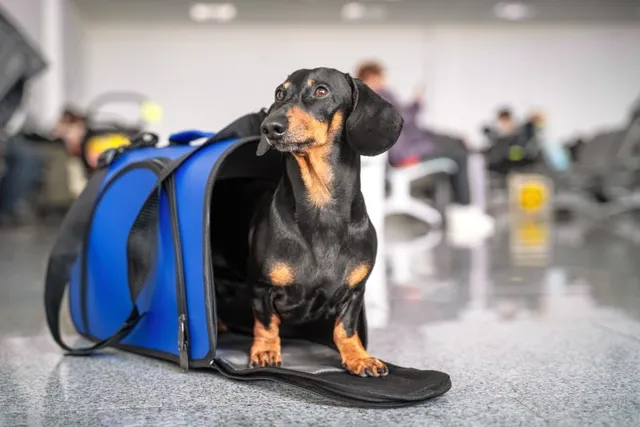
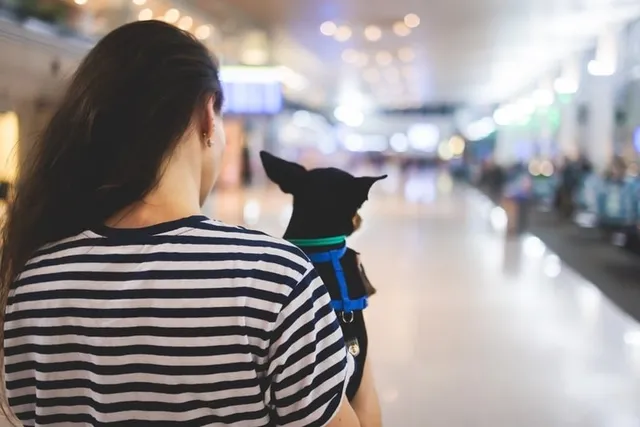
What might influence your pet’s behavior even more is the stress and excitement associated with travel. Being in an airport presents many new sights, sounds, and experiences that can lead to overstimulation, and this overstimulation can lead to mental and physical fatigue.

How Can I Help My Dog on Travel Days?
Try making traveling as stress-free as possible. This will help prevent your pet from becoming mentally and physically exhausted. Preparation for travel starts well in advance of the actual trip, so below are a few recommendations on how travel-related stress can be minimized.
1. Contact Your Veterinarian Well in Advance
If your pet has a history of travel-related anxiety, be sure to reach out to your veterinarian well in advance of your trip. Your veterinarian may be able to make additional travel suggestions and may even prescribe anxiety medication to help with travel. Your veterinarian will be able to provide your pet with the required documentation and vaccinations needed for travel.
2. Desensitize Your Pet to Crates and Carriers
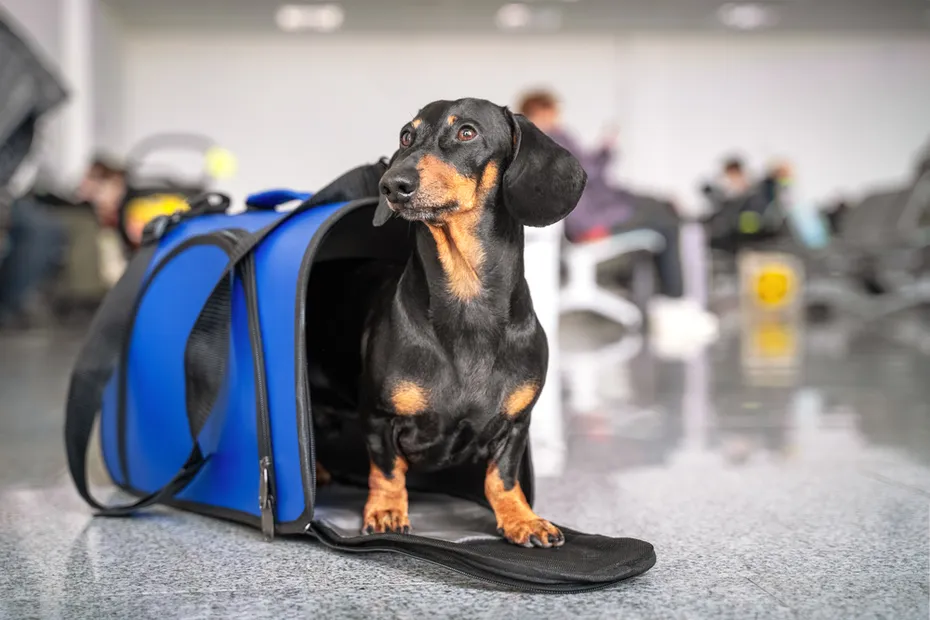
Try to prepare your pet for traveling days by familiarizing them with their crate. The crate should be a place that provides comfort and safety. For that reason, it is important to try to develop positive associations with the crate or carrier they will be traveling in. This can be achieved by feeding meals or offering very special treats while your pet is in their crate or carrier.
Additionally, as your pet familiarizes themselves with the crate, locking your pet in the crate or carrier should be avoided. Allow your pet the ability to go in and out of their crate as they please so they do not associate the crate with confinement. The Humane Society of the United States has several great tips for crate training your dog or puppy.
If your pet is not traveling in a crate, be sure that they are accustomed to wearing a harness or collar. Travel days are not the time for trying out new garments or accessories.
3. Consider Bathroom Breaks
Sometimes, long flights are accompanied by short layovers that may not provide your dog with time to relieve themselves. Depending on the travel you have planned, teaching your pup to relieve themselves on different surfaces, like pee-pads, may be helpful. This will allow your pet to eliminate in a bathroom as you rush to meet your next flight.
4. Feeding Adjustments
It is possible that your canine companion may need to have adjustments made to their feeding schedule prior to traveling. If this is the case, making slow adjustments to their feeding schedule can be helpful.
Always travel with food for your pet. This will function as a safety net in the event that travel plans are prolonged or altered. Ensure that food is with your companion whether they are flying cargo or with you on the plane. Furthermore, ensure that the food that is being offered to them is the same as what they are accustomed to eating at home.
Some animals may be sensitive to changes in water, so offering bottled water may be a safe option while traveling. Ensure that your pet has frequent access to fresh water throughout their travel day.
5. Observe Your Pet
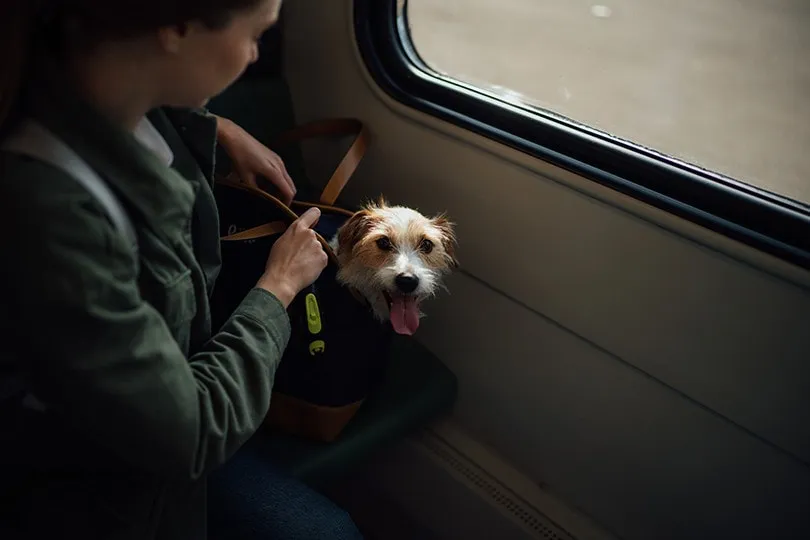
On travel days, anxiety and stress may be high. Once you have reached your destination, closely observe your four-legged companion. Are they stressed? Are they curious and energetic? Introducing your pet to their new surroundings and having some items they are familiar with can help minimize their anxiety. It will be helpful to follow their cues and allow a little grace. Likely, after a day or so of recuperation, your pet will be back to their normal self.

In Summary
Traveling can be taxing on your four-legged companion, but traveling with your dog can be so memorable! Disruptions in circadian rhythms have the ability to cause jet lag in our canine companions. It is important to try to minimize stress on travel days and to keep routines as close to normal as possible. Of course, adjustments to their schedule may need to occur, and these should be made gradually. If your pet has a history of being very anxious in new environments or situations, you may want to discuss anxiety medication with your veterinarian. Allow your pet some time to recharge and reset after traveling.
Sources
Featured Image By: Cameron Cross, Shutterstock
Expert dog care, straight to your inbox
News, insights, expert advice, and everything dog.

No spam — unsubscribe anytime.
By signing up, you agree to our Terms & Conditions and Privacy & Cookies Policy.
How useful was this post?
Click a star to rate. You can leave written feedback afterwards. (We read all feedback.)
Dr. Marti Dudley DVM (Veterinarian)
Dr. Marti Dudley is a small animal veterinarian with a strong interest in preventative medicine and pet parent education. She enjoys being a resource for pet owners as she believes that having a team approach leads to the best possible care of pets. Dr. Dudley enjoys writing and has been able to use this skill as another avenue to educate pet owners outside of the traditional office setting.
Dr. Dudley has been practicing veterinary medicine since 2014. She has an interest in preventative care and emphasizes the importance of pet owner education. Dr. Dudley’s experience in veterinary medicine is broad, as she has worked as a general practitioner, which has allowed her to see and treat many different types of conditions.
Dr. Dudley received her bachelor’s degree in biology from Longwood University in Virginia. She earned her Doctor of Veterinary Medicine (DVM) degree from Ross University.