What Are the Dangers of Using Rock Salt Around Pets? (Vet Answer)

In this article
If you live somewhere that experiences winter, you are likely familiar with the challenges of keeping driveways, sidewalks, and steps free of ice. There are many different products available to help melt ice and provide traction, but some of them can be dangerous for our fur babies. One example is rock salt, which can cause skin and gastrointestinal (GI) irritation, as well as salt toxicity if enough is eaten.
In this article, we will discuss the potential dangers of rock salt and suggest some alternatives that are safer for pets.

What Is Rock Salt?
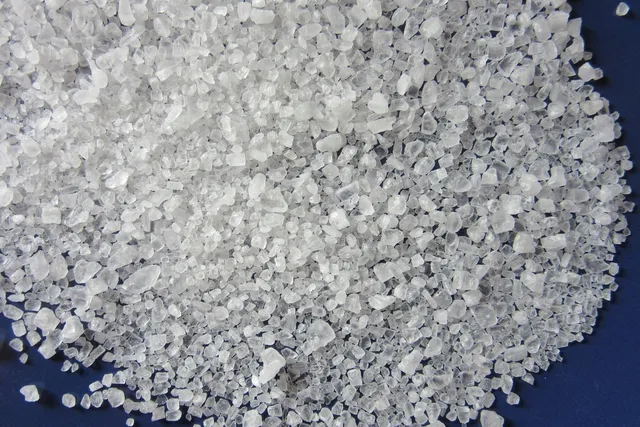
Halite, more commonly known as rock salt, is a mineral form of sodium chloride (NaCl).1 It is frequently used in winter to de-ice roads and improve traction for vehicles. People also purchase rock salt for home use. It is inexpensive, widely available, and effective at both melting ice and preventing it from forming. It can be used at temperatures as low as 5oF.

Why Is Rock Salt Dangerous to Pets?
Pets are at risk of accidentally ingesting rock salt when they lick it off their paws and/or fur after spending time outdoors. Some pets seem to find the taste appealing and will actually eat rock salt intentionally—either from a treated area or an open package.
Rock salt poses several problems for pets:
What Will Happen if My Pet Eats Rock Salt?
If your pet licks a small amount of rock salt, you may see mild signs of irritation, such as:
- Drooling
- Reluctance to eat or drink
- Gastrointestinal (GI) upset, such as vomiting and/or diarrhea
If your pet eats a lot of rock salt, they may become dehydrated and develop an elevated level of sodium in their blood (hypernatremia). In addition to GI upset, signs of salt toxicity can include:2
- Excessive thirst and urination
- Weakness
- Ataxia (incoordination)
- Muscle tremors
- Seizures
- Loss of consciousness
Salt Toxicity Can Be Fatal
If you suspect that your pet has eaten rock salt, contact a veterinarian immediately. Prompt treatment offers the best chance for recovery.
Can Pets Recover from Rock Salt Toxicity?
If only a small amount of rock salt has been ingested, signs should be mild and resolve on their own. For pets who have eaten larger amounts, the likelihood of making a full recovery depends on:
- Their size and the amount of rock salt consumed (4 grams per kilogram of body weight may be fatal)
- How quickly the ingestion is recognized
- How promptly treatment can be implemented
Your veterinarian should be able to offer advice regarding the specific prognosis for your pet, based on their unique situation.
What Should I Do if My Pet Comes into Contact with Rock Salt?
If you notice rock salt on your pet’s paws or fur, wipe them down thoroughly with a damp towel to remove them. Dry them afterward so they do not become chilled.
If you suspect that your pet has licked or eaten rock salt, contact a veterinarian or the Pet Poison Helpline* right away.
*Please note that there is a fee for using this service.

How Can I De-Ice Without Using Rock Salt?
For pets, the safest alternative to rock salt is sand. It does not melt ice, unfortunately, but it does provide traction.
Some de-icing products are advertised as “pet safe.” They typically contain urea, which is considered to be less irritating than rock salt and other common ice-melting ingredients (such as potassium chloride, magnesium chloride, and calcium salts). However, toxicity can still occur if enough of the product is ingested.
In Conclusion
While you have control over the de-icing methods and products you use at home, it is possible for your pet(s) to be exposed to rock salt while they are out and about in the winter.
Here are some additional tips to help keep your pet safe:
You might be interested in: Safe Paw Ice Melter Review
Featured Image Credit: MaraZe, Shutterstock
Expert dog care, straight to your inbox
News, insights, expert advice, and everything dog.

No spam — unsubscribe anytime.
By signing up, you agree to our Terms & Conditions and Privacy & Cookies Policy.
How useful was this post?
Click a star to rate. You can leave written feedback afterwards. (We read all feedback.)
Dr. Sharon Butzke DVM (Veterinarian)
Sharon has been drawn to animals for as long as she can remember. She was raised in Ontario, Canada and fulfilled her childhood dream when she obtained her Doctor of Veterinary Medicine (DVM) degree from the Ontario Veterinary College in 2009. Since then, she has worked in a variety of small animal clinics, with a focus on cats and dogs. She loves sharing her knowledge and empowering people to take the best possible care of their pets! Sharon currently resides in British Columbia with her husband, daughter, and a loveable Great Dane named Parker.