

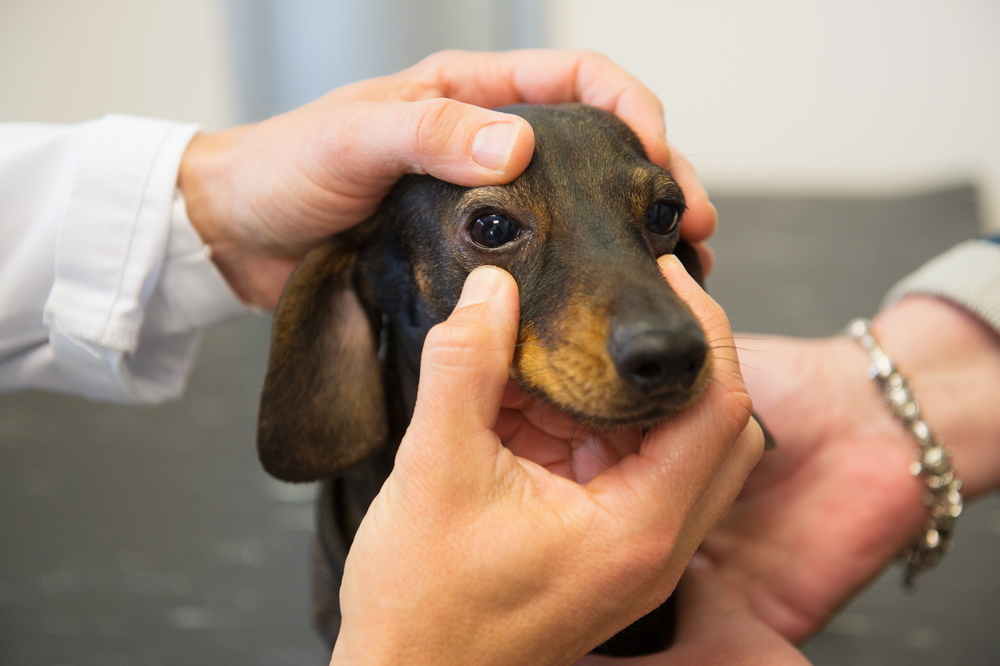
Dogs can get all types of bumps on their body, especially as they age. Some dogs may even start to develop small lumps on one or both of their eyelids. While many of the bumps associated with the eyelid may not be concerning, there are times when you may want to be more worried than others. We always recommend consulting with your veterinarian any time you find a new lump or bump anywhere on your dog’s body so that a diagnosis and appropriate treatment plan can be made. While we will discuss the most common causes and types of bumps on a dog’s eyelid, only your veterinarian and/or a laboratory can provide an exact diagnosis.

The 5 Common Causes of Bumps on a Dog’s Eyelid
1. Chalazion
Along the eyelid margins are glands associated with the eyelids called meibomian glands. These glands secrete an oil which helps to lubricate the eyes in combination with the tears. Commonly, these glands can become blocked, causing a swelling or bump on the eyelid called a chalazion.
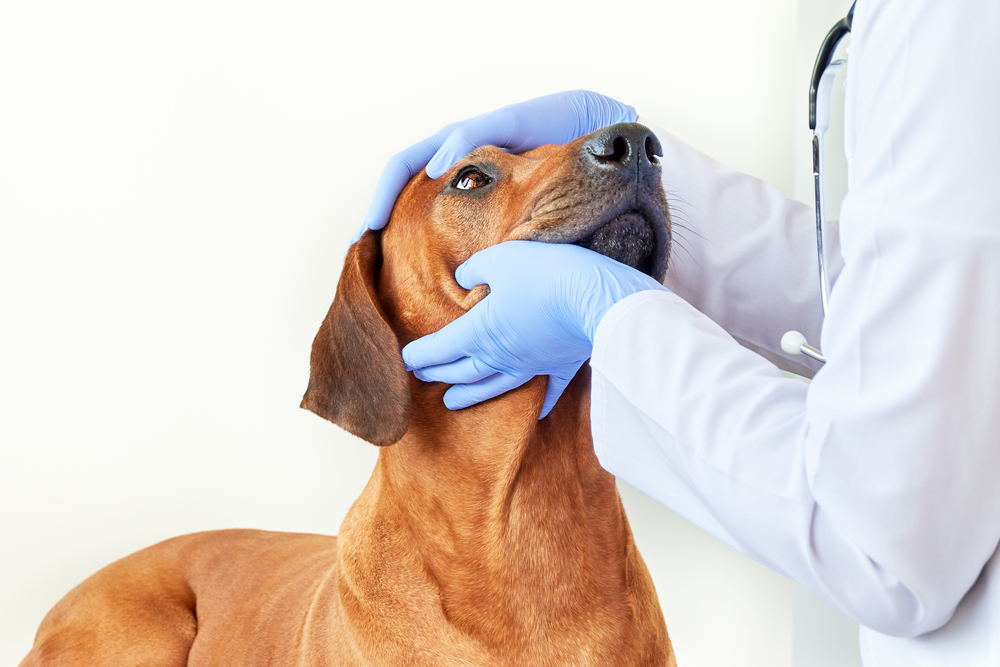
2. Meibomian Gland Tumor
Another bump associated with the meibomian gland are growths or tumors that originate from the gland. These are typically benign and most commonly classified as adenomas, which do not tend to spread to other areas of the body.
3. Melanoma
A melanoma is a malignant type of cancer with varying degrees of aggressiveness. Melanomas occur from uncontrolled growth of melanocytes. These start to grow, and don’t stop growing, causing the black tumors that can be seen. These can occur on the eyelid(s), and also in/on the eyeball itself, as well as other areas of the body.
4. Papilloma
The papilloma virus can cause wart-like masses called papillomas to grow along the eyelids (in addition to other areas of the body). The virus will cause one or multiple growths to occur, and is most common in puppies or immunocompromised dogs. Your dog will become infected by direct contact with another infected dog or a surface where the other dog contacted.
5. Trauma/Swelling
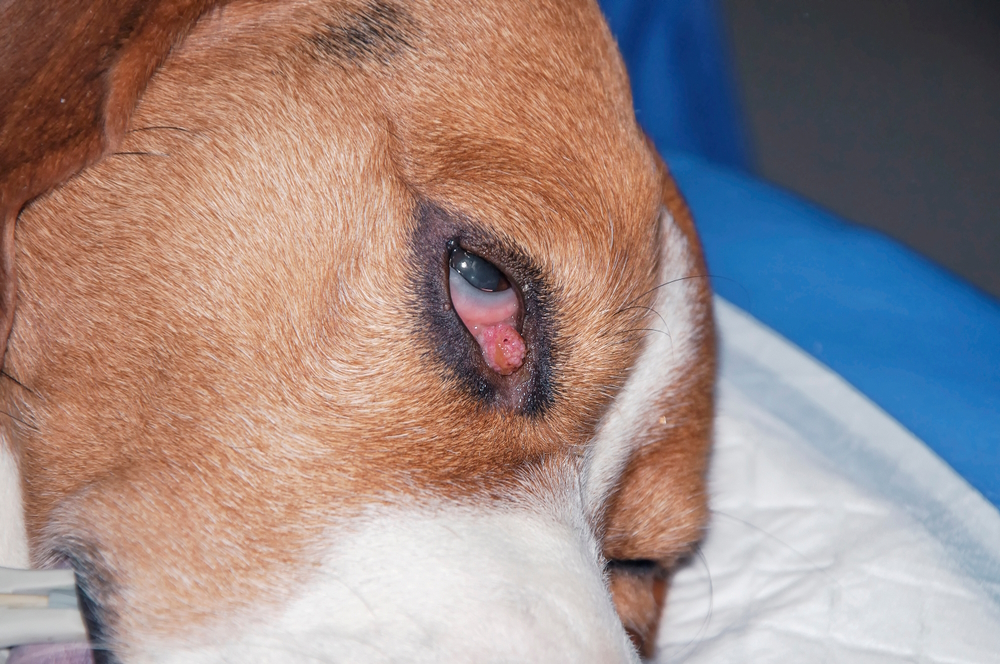
Any type of trauma to the eye can cause swelling of the entire eyelid, or even focal bumps/swellings to occur. Trauma can be a physical trauma to the eye and/or eyelid itself, or, your dog itching/rubbing their entire face from allergies, an ear infection, or even just for enjoyment in the grass.
If you want more information or are concerned about the health of your pet, you should contact your vet.
If you need to speak with a vet but can't get to one, head over to PangoVet. It's our online service where you can talk to a vet online and get the advice you need for your pet — all at an affordable price!
What Are the Signs of a Bump on My Dog’s Eye?
Each of the above types of masses can appear similar but also different in each dog. Sometimes you may just notice your dog squinting one or both eyes, or they may be rubbing at the affected eye. Some bumps will appear small at first, the size of a pinhead, and then grow with time. Others will start out fairly large and grow quickly. Melanomas tend to be black in color, but other bumps may have redness or a black discoloration if your dog is rubbing and causing the bump to be irritated and bleeding.
Your dog may also develop conjunctivitis, or inflammation of the conjunctiva of the eye. This is the pink tissue that lines the upper and lower eyelids that you can sometimes see. This can become inflamed if your dog is rubbing at the affected eye(s), or if the mass is irritating these areas as well.
Sometimes bumps that grow on the eyelid may grow inwards, towards the cornea or surface of the eye. If this occurs, it can rub along the cornea, causing irritation to the cornea. This can be extremely irritating and painful if the irritation is severe enough to cause a corneal ulcer. Your dog will be squinting their eye, trying to rub at it, develop conjunctivitis and redness of the white of the eye, and often have discharge as well. If you notice any of these signs, your dog should be seen by a veterinarian as soon as possible.
When Should I Be Concerned?
Any time you notice a new lump, bump, mass, or area of irritation on your dog, you should make an appointment to see your veterinarian. With eye conditions, we can sometimes see mild signs develop to severe, progressively worsening signs very quickly. If you see your dog squinting one or both eyes, holding their eye(s) shut, pawing and/or rubbing at the eye, you should have them seen. Also monitor for conjunctivitis, or swelling/inflammation of the conjunctiva, redness to the white of the eye, and mucoid/crusted discharge. If any of this is noticed, you need to have your dog seen ASAP.
If one of your dog’s eyes appears to be a different size – such as bulging – then veterinary care should be pursued. Any time a black colored mass is seen on the eyelid or anywhere on the body, your veterinarian should evaluate these masses.
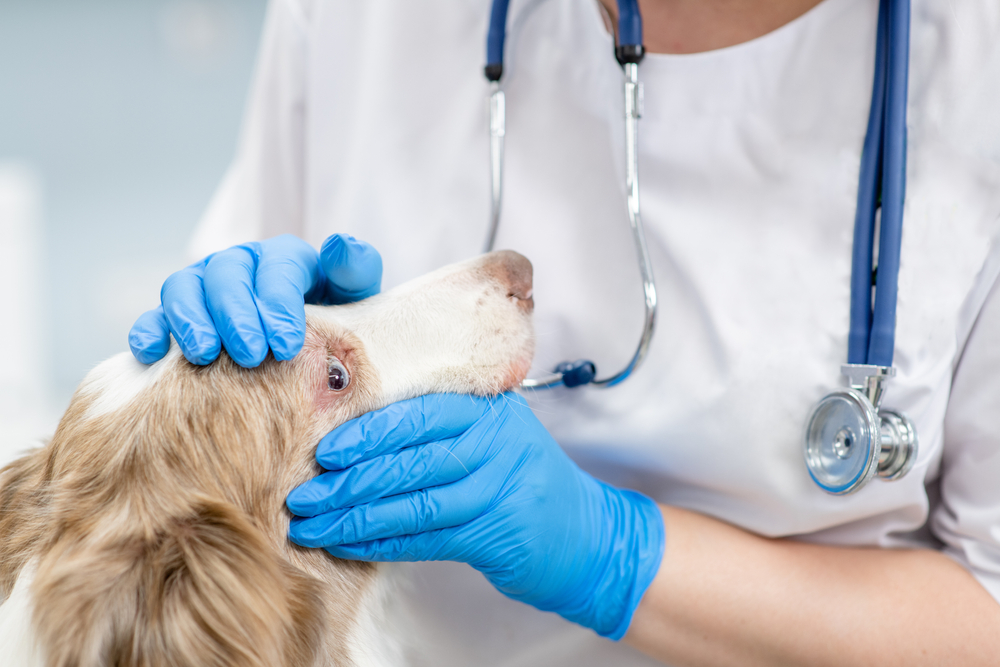
Certain bumps may be difficult to remove surgically due to their size and the delicate nature of surgery on the eyelid(s). Your veterinarian may refer to a Veterinary Ophthalmologist for care. This recommendation should always be followed as certain types of bumps on the eye may need to be removed for an exact diagnosis. Unfortunately, due to the area, a simple fine needle aspirate or even biopsy is not possible. Oftentimes eyelid bumps need to be completely removed before a diagnosis can be made.
Conclusion
As your dog ages, they may develop all types of lumps and bumps over their body, including bumps on the eyelid. Some of these bumps can even occur in younger dogs, such as papillomas. While many of these bumps are benign, they should still be evaluated by a veterinarian to make sure they are not causing any trauma to the cornea. Melanomas and other tumors may need to be surgically removed so that both a diagnosis can be made and stop causing irritation to the eye. If your dog’s eye(s) ever seem irritated, they are squinting, pawing, or acting painful, veterinary care should be pursued immediately. Other times, slow-growing masses that do not contact the cornea may be monitored with no immediate treatment needed.
Featured Image Credit: Ivonne Wierink, Shutterstock























2 Responses
Very informative, but the title is misleading. " … and what to do."
Hi Sherry!
Thanks for your comment, that’s a fair point! The “what to do” in the title is meant to highlight the importance of having a veterinarian examine any new bump or swelling on a dog’s eyelid.
Since eye issues can worsen quickly or be uncomfortable, seeing a vet is always the best next step to identify the cause and get proper treatment.
Have a great day!