In this article
View 4 More +The term “dysplasia” refers to the abnormal development of a tissue or organ. This means that elbow dysplasia refers to abnormal development of the elbow joint. Unfortunately, this is a relatively common cause of limping and pain in young, large-breed dogs.
If your dog has elbow dysplasia, you might feel overwhelmed by this diagnosis. Do they need surgery, or are there other options? Will they be in pain forever? This article aims to simplify elbow dysplasia—why it occurs, what to watch for, and how we can manage it.

What Is Elbow Dysplasia in Dogs?

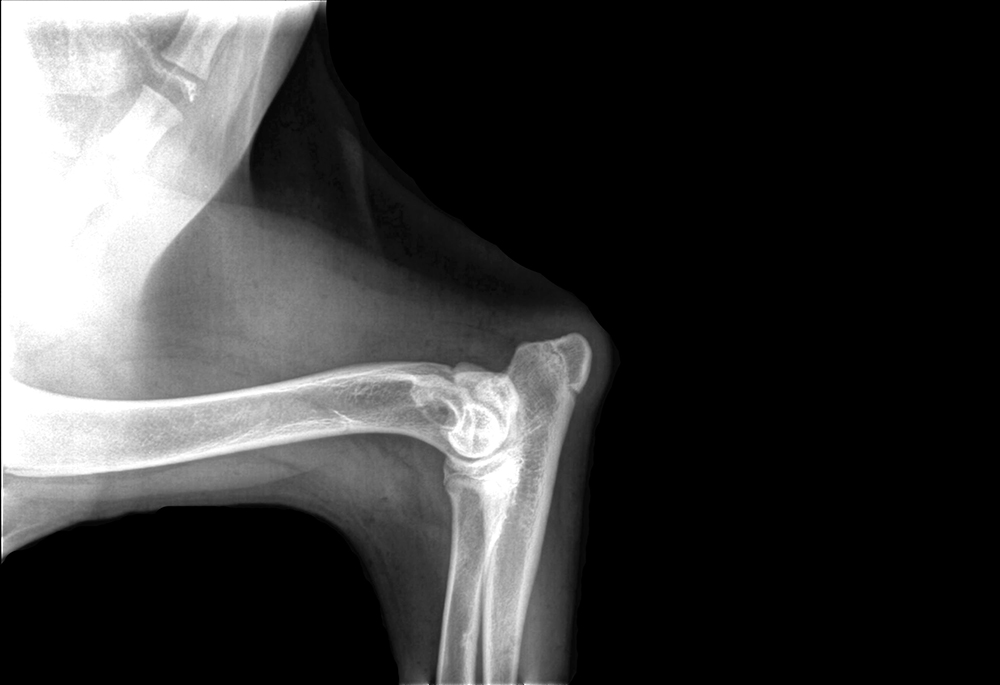
As we alluded to, elbow dysplasia is an abnormally developed elbow joint. The elbow joint is a complex hinge joint where three bones meet: the radius and ulna of the lower limb, and humerus of the upper forelimb. It may help to think of these bones as three pieces of a puzzle. They should fit together neatly, but in dogs with elbow dysplasia, they do not. This leads to increased contact pressure, and, subsequently, the formation of arthritis.
Elbow dysplasia is a phrase used to describe the underlying pathology of the abnormally developed elbow. It can result in one or more of these conditions that can be present in any given dog. (Elbow dysplasia was previously used as an umbrella term for the following conditions).
- Medial coronoid disease includes conditions affecting the cartilage and bone of this prominence on the “inside” aspect of the elbow. The affected bone may develop fissures or even fracture.
- Ununited anconeal process refers to a triangular piece of bone that should attach to the top part of the ulna forming a notch for the humerus. If it does not attach properly, it is left “floating” in the elbow joint, causing pain and ultimately arthritis.
- Osteochondritis dissecans results from the interruption of cartilage cells turning into bone in a small area of a developing bone. This results in a flap of cartilage that comes away from the underlying bone. This usually occurs on the end of the humerus.
- Elbow incongruity is the term for when the elbow does not fit physically well together. Though sometimes considered a separate problem, it often contributes to the above three elbow problems. Oftentimes the incongruence is caused by differences in length of the radius and ulna.
What Are Signs of Elbow Dysplasia in Dogs?
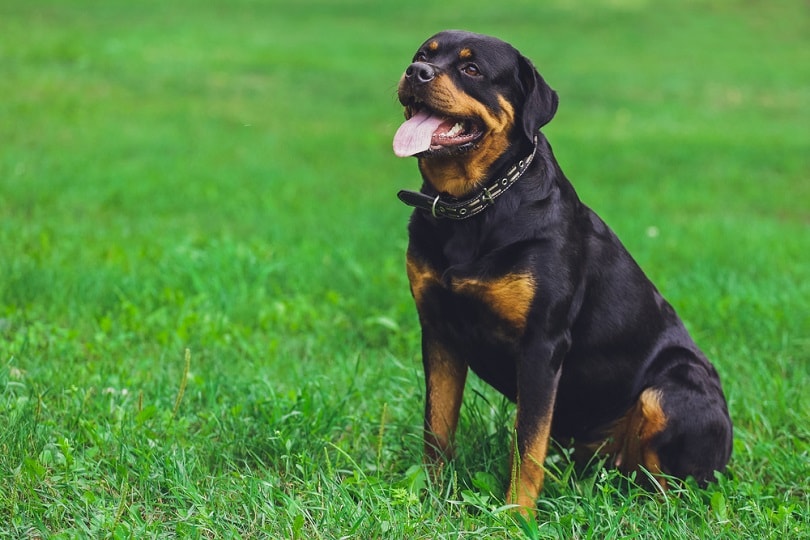
Certain breeds are affected by elbow dysplasia more commonly than other breeds. These include Rottweilers, Labrador Retrievers, German Shepherd Dogs, Golden Retrievers, and Chow Chows. However, any large or giant breed dog can suffer from elbow dysplasia.
Most dogs show signs of elbow dysplasia at a young age (before 3–4 years). Some dogs have been shown not to show any signs until later in life when arthritis has developed. However, limping can be trickier to detect if the dog has dysplasia in both elbows.
- Limping after exercise
- Reluctance to exercise
- Limping in one or both front legs
- Turning of the feet inwards
- Pain when the elbow joint is manipulated
Seek veterinary advice if you’re concerned about your pet’s well-being.
Did you know you can speak to a veterinarian without having to travel? Just head over to PangoVet. It's our online service where you can talk to a vet online and get the advice you need for your pet — all at an affordable price!
What Are the Causes of Elbow Dysplasia in Dogs?
The cause of elbow dysplasia in dogs remains unclear. The current theories show a high degree of genetic component likely controlled by many genes rather than just one. It is also thought that the disease is multifactorial, meaning a combination of other factors contribute to the development of this orthopedic problem. These include obesity at a young age, injuries, diet, exercise and more.
How Do I Care for a Dog with Elbow Dysplasia?
Here, it helps to discuss the situation with an experienced veterinarian or specialist surgeon. Treatment depends on the severity of signs (i.e. the degree of pain), the specific problem (or problems) present in the joint, your access to specialist surgeons, and your financial capacity to pursue surgery.
There are two main options for treating elbow dysplasia—surgery and medical management.
Surgery
Surgery for elbow dysplasia is generally performed arthroscopically, via a small camera inserted into the joint. Depending on the specific elbow problem, surgeons may need to remove bone and cartilage fragments, re-attach bone pieces, and re-align the joint. This is generally performed by experienced specialist veterinary surgeons.
Many dogs benefit from surgical attention to their malformed elbow joint. However, not all dogs improve after surgery; additionally, even dogs that undergo surgery are likely to develop arthritis in the joint with age. The goal is to reduce pain and, as best as possible, to create a healthier joint so that arthritis develops more slowly.

Medical Management
There is not a single medication for managing elbow dysplasia. This approach requires a combination of medications, physiotherapy, and at-home changes.
- Maintaining a lean body weight
- Controlled exercise with sufficient recovery time
- Physiotherapy and hydrotherapy
- Joint supplements such as omega-3 fatty acids, chondroitin, and glucosamine
- Injections for arthritis at a veterinary clinic
- Anti-inflammatory medications and painkillers (prescribed by a veterinarian)
Even despite your best efforts and the most thorough management plan, dogs are likely to develop arthritis in the elbow over time.
Frequently Asked Questions
What Is the Prognosis for Elbow Dysplasia?
This depends on a number of factors: your dog’s age, body weight, the severity of the disease, and the approach to treatment. While not a life-threatening disease, elbow dysplasia can significantly impact a dog’s quality of life, as they experience pain and may struggle to run.
It is important to mention that even despite your best efforts and the most thorough management plan, dogs are likely to develop arthritis in the elbow over time. There is no cure for this disease—we can only aim to manage it and minimize pain.
Can Elbow Dysplasia Be Prevented?

There may be things you can do to reduce the likelihood of your large-breed puppy developing elbow dysplasia, but you cannot eliminate this risk. In other words, some dogs will develop elbow dysplasia, regardless of what you do.
- Keep your puppy at their optimal body weight
- Minimize excessive jumping and climbing stairs for the first 6 months of their life
- Attain dogs from reputable breeders who are performing appropriate x-ray tests for elbow dysplasia
How Is Elbow Dysplasia Diagnosed?
Elbow dysplasia is diagnosed using a combination of examination findings, X-rays, and CT scans.
Conclusion
Elbow dysplasia is a developmental orthopedic disease that causes pain in malformed elbow joints and predisposes the joint to arthritis. The cause is thought to be largely genetic, though several risk factors may contribute to elbow dysplasia.
Both surgical and medical treatment options exist; the pros and cons of each should be discussed with your veterinarian.
Featured Image Credit: 9gifts, Shutterstock