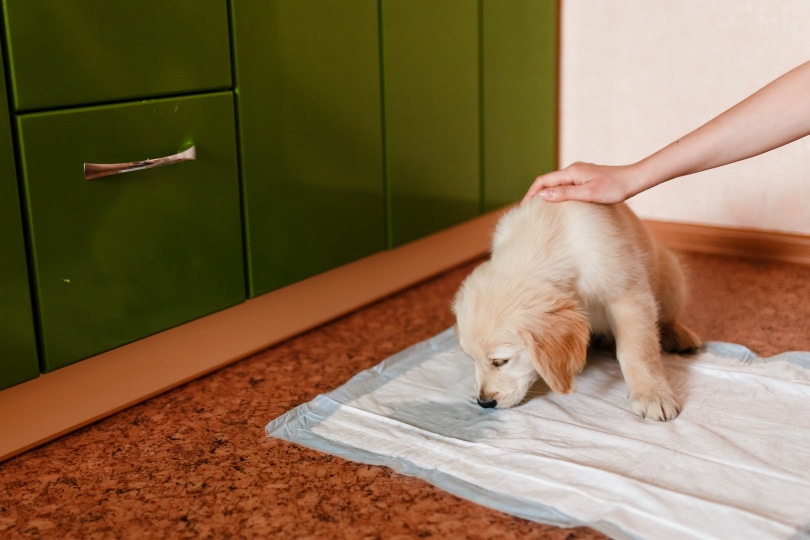
Dogs peeing when they become excited is not an old wives’ tale; it’s a natural phenomenon that can frustrate owners to no end if they don’t understand why it’s happening.
Here, we will discuss some common reasons why your dog may pee when petted.

The 2 Possible Reasons Your Dog Pees When You Pet Them
1. Submissive Urination
Submissive urination refers to a dog’s urge to urinate to show a deferral of dominance between itself and a dominant figure. By doing so, your dog is deferring to you as the pack leader and showing you respect in dog language.
Dogs who urinate submissively may do so whenever they feel anxiety, fear, or shyness. This could be triggered by being greeted by you (the pack leader), a new person, or a loud noise. The urge to urinate submissively is an evolutionary communication behavior critical to canine packs.
If you notice that your dog is urinating in response to fear, excitement, or anxiety, they likely have a problem with submissive urination. Submissive urination can be caused by incomplete housetraining, fear of past experiences, or separation anxiety, among other things.
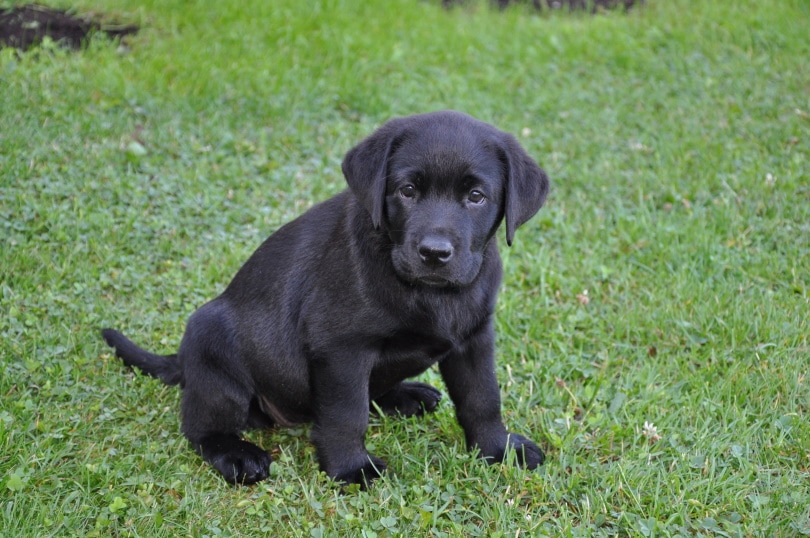
Submissive urination is most common in dogs younger than 12 weeks and equally common among the sexes. Many young dogs grow out of submissive urination, but the behavior can still be frustrating for dog parents while it’s occurring.

How to Train Your Dog Not to Urinate Submissively
Training your dog is one of the core facets of being a dog owner, and luckily, submissive urination is a behavior that dog parents can teach their dogs out of. The key to training your dog not to urinate submissively is understanding submissive urination from a dog’s perspective and working from there.
Submissive urination is a communication technique dogs use to show that they have yielded control to another creature, usually a dominant dog. Showing your dog that you want them to do something else to show their submissiveness to you is key to getting them to stop urinating submissively.
Identify Signs of Submissive Urination
Dogs follow some general behavioral tics when they have the urge to urinate submissively. These behavioral displays show the other dog (or person) they’re trying to communicate with that they’ve yielded control.
- Raising their front paws
- Tucking in their tails
- Flattening their ears back against their head
- Licking the dominant figure
Intervene
When you see your dog displaying these behaviors, you’ll want to intervene and show them how you want them to act. Dogs want to please the people they view as their pack leaders. So, if you teach your dog how to work, they’ll do so to please you.
For starters, when your dog starts showing signs that they feel the urge to urinate, bring them outside submissively. This will help them learn that urination is meant to be done outside, even if it’s done submissively, and help reinforce housetraining.
- Do: Greet Your Dog Calmly Upon Returning Home. If you greet your dog with too much enthusiasm, they could mistake your mood for being angry or dominant and urinate submissively to respond to your energetic greeting.
- Do: Teach Them to Sit and Shake When Meeting New People. If your dog has trouble submissively urinating when meeting new people, teach them to sit and shake when they meet someone new. This helps keep their mind off dominance and gives them a framework of behavior you expect from them to follow.
- Do: Give Them a Treat or Toy When Returning Home. Giving your dog a treat or a toy when you return home from exciting places can help distract them and keep them from submissively urinating.
- Don’t: Scowl or Frown When Your Dog Submissively Urinates. Showing your dog your displeasure can make them feel scared and worsen the problem in the long run.
- Don’t: Yell or Scold Your Dog. Yelling or scolding your dog can reinforce the behavior by making your dog feel like they need to show you more submission.
- Don’t: Avoid or Ignore Your Dog During Submissive Urination Episodes. Your dog won’t be able to understand what they’ve done wrong, and pointedly ignoring them can make the problem worse.
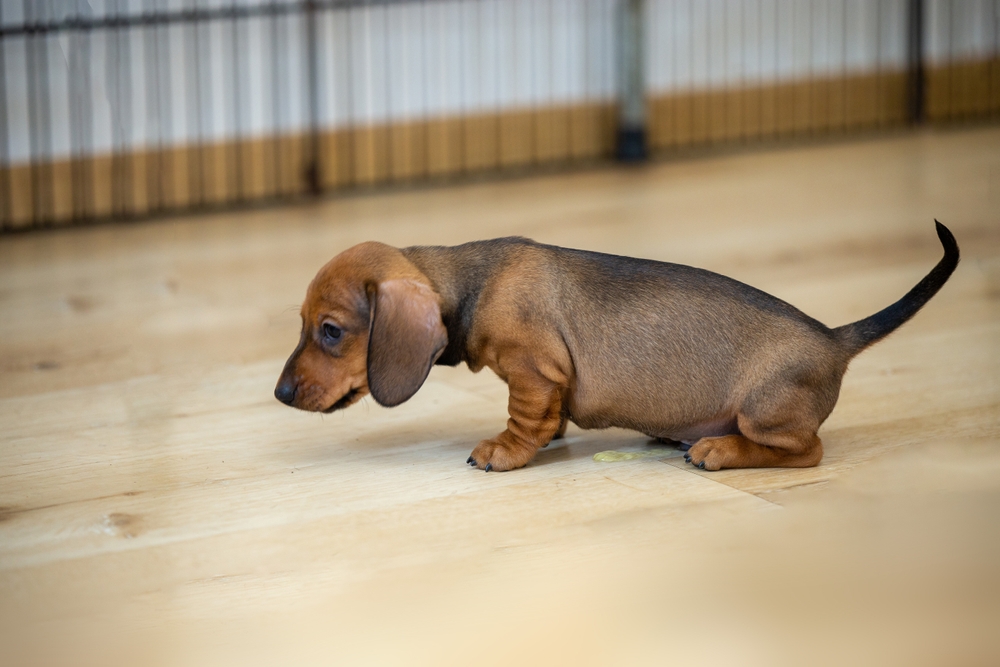
2. Health Issues That Can Cause Inappropriate Urination
If your dog isn’t experiencing a submissive urination problem, you may have an issue with your dog’s health. Getting them checked by a veterinarian can help clear any worry about health problems causing your dog to urinate inappropriately.
Still, here are some other signs that your dog might have a health issue that’s making it hard for them to hold in their pee.
- Diabetes: Diabetes can cause your dog to have an increased need for water and, thus, a high need to urinate. Because they’re drinking so much water, dogs may urinate inappropriately if they develop diabetes.
- Kidney Disease: Kidney disease can also cause your dog to have trouble holding and passing urine. Dogs with acute or advanced kidney disease may have pale gums. Other symptoms may include breath that smells like chemicals, significant weight loss, and decreased energy level.
- Cushing’s Disease: Cushing’s Disease can cause your dog to urinate more frequently or inappropriately. Since dogs with Cushing’s Disease may drink excessive water, they will often urinate more regularly and have accidents from drinking too much water.
- Bladder Infection: A dog with a bladder infection may have pain when urinating or holding its urine. This may cause them to have accidents or urinate inappropriately.
If you suspect your dog might be suffering from underlying health issues, you should contact your vet.
If you need to speak with a vet but can't get to one, head over to PangoVet. It's our online service where you can talk to a vet online and get the advice you need for your pet — all at an affordable price!

Final Thoughts
Inappropriate urination is a frustrating topic for any pet owner! Our pets can’t speak with us. So, we can’t explain when and where they should urinate; we only train them with non-verbal communication.
Luckily, submissive urination is a relatively easy fix for most dog owners. It just takes a little bit of hard work and consistent training to get your dog acting correctly. It shouldn’t be hard to correct your dog’s behavior, and you’ll have a prim and polite pup in no time!
See Also:
- Why Does My Dog Pee on My Child’s Bed? (5 Possible Reasons)
- Why Did My Dog Pee On Me? 5 Possible Reasons and Solutions
Featured Image Credit: Parilov, Shutterstock
 The 2 Possible Reasons Your Dog Pees When You Pet Them