What Is Telehealth for Dogs? Vet-Verified Facts & Info



In this article
Many people became familiar with telehealth during the COVID-19 pandemic. Of course, telehealth existed before that, but it wasn’t used nearly as often. What exactly is telehealth? It is simply a term that encompasses all the ways technology can be used to deliver healthcare, information, and education remotely.
You might have used telehealth in the past, but did you know you can also use it for your dog? More and more veterinarians are offering telehealth services, which can make life easier for pet parents (particularly those in more rural areas who don’t have access to a local veterinarian). However, before you use telehealth for your canine companion, you should know more about it.

How Does It Work?
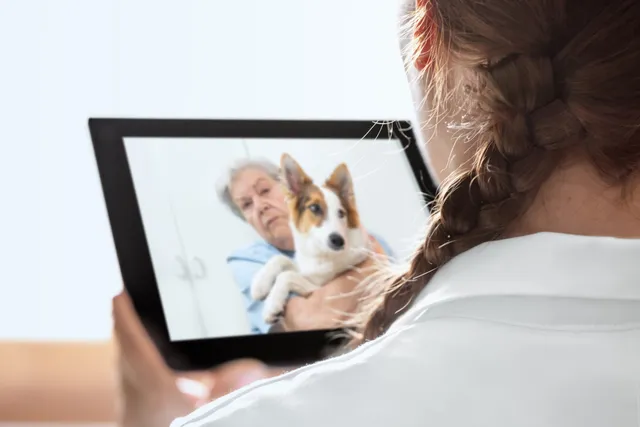
Telehealth simply means delivering health care services (in this case, veterinarian) and health information to people through telecommunication technology, such as digital and video technology, by providing consultation, assessment, diagnosis, treatment, care management, and education while the patient is located in one place and the provider is located in a different place. All that to say, telehealth works by connecting you to a veterinarian via technology. In many cases, this will be video technology, as video includes much more information for the veterinarian when assessing and diagnosing pets.
However, even video has its drawbacks, as veterinarians cannot touch or smell your pet. This means they need to use you as a proxy; a veterinarian may ask you to use the camera to show them parts of your dog’s body or feel around for any bumps or lumps.
Essentially, though, telehealth is just a vet visit, a way to get a quick answer about something, schedule appointments, etc.


What Are the Different Types of Telehealth for Dogs?
There are a plethora of services available under the telehealth umbrella.
Telemedicine
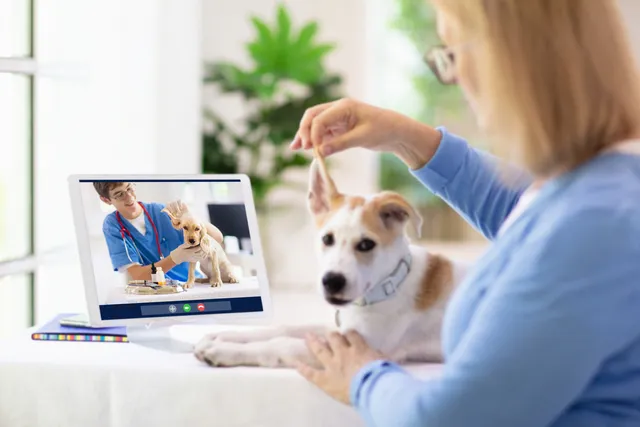
Telemedicine is when medical information is exchanged from one place to another via technology. An example would be using a video call to let your vet visually observe your dog and their behavior when they are feeling unwell. Telemedicine for canines can enhance the care of your pet by facilitating scheduling, diagnostics, communication, treatments, and more.
Telemonitoring
Telemonitoring is a bit similar to telemedicine because it’s the remote monitoring of a patient who isn’t in the same location as the veterinarian. However, telemonitoring only involves monitoring; this monitoring could be done via a device like a portable glucose monitor or another wearable device.
Teletriage
You know what triage in a hospital is, but how does that translate to telehealth? Teletriage simply means that a veterinarian in a different location than their patient uses technology to provide a determination on whether a pet needs to go in to see a vet or not. Suppose your pup ate something they shouldn’t have and aren’t feeling well. Teletriage would give a vet an opportunity to advise whether your dog needs to physically see a veterinarian immediately.
Teleconsulting
This category of telehealth is when a vet uses technology to talk with a specialist to gain a better understanding of a patient’s condition.
Teleadvice
Teleadvice occurs when a veterinarian provides general guidance, recommendations, or health information about a patient; however, this advice isn’t specifically diagnosing or treating an injury or illness.
Mobile Health or mHealth
This category of telehealth is limited to mobile devices, so this could be something like an app on your phone that augments your dog’s healthcare.
E-Prescribing
This, of course, is when your veterinarian prescribes medicine for your pup via digital means.

Where Is It Used?
Telehealth can be used pretty much anywhere, which is one of the advantages of it. You could use telehealth when you’re at home and unable to leave because you’re sick, but your pup is also ill, and you want them to see a vet. Telehealth is especially good for those living in extremely rural areas without a veterinarian nearby. Telehealth can also be used by those who don’t have a means of transportation to get their dog to the vet when needed. There are countless situations when telehealth would be more advantageous or simpler than taking your dog to the veterinarian’s office.

Advantages of Telehealth for Dogs
What are the advantages of telehealth for dogs? One of the most significant has already been mentioned—being able to have your pet seen by a veterinarian when you can’t bring them into the office. But there are other advantages, too.
Another advantage benefits your pet—with telehealth, your vet can see your furry pal at home, where they are most at ease. Let’s face it—trips to the vet are stressful for our pets, but with telehealth, your dog gets to avoid all the stress of car rides, being around strangers and strange animals, etc.
There are even advantages for veterinarians when it comes to telehealth. Many vet offices are in high demand and struggle to meet that demand. Using telehealth means they can ease some of the pressure by using technology for tasks such as scheduling, making appointments, and even diagnosing minor conditions.
Disadvantages of Telehealth for Dogs
Although telehealth may have many advantages, it also has its disadvantages. The most significant downside to telehealth is its limitations. For one, your vet is limited only to what they can see and hear through video when it comes to diagnosing your pet. This could mean they miss something important because they can’t touch or smell your dog.
Telehealth can also be at a disadvantage because it may end up being a first step rather than a fix. For example, if your dog had a limp and you had a telehealth visit with your vet, they could advise you on what to do or in some situations prescribe medication for your pup. But if that limp doesn’t go away or gets worse, you’ll still need to take your pet in for a physical visit to determine what’s wrong.

Frequently Asked Questions (FAQ)
Have more questions about telehealth for dogs? Here are some of the questions people most commonly ask.
Is telehealth legal?
Telehealth for dogs is absolutely legal. However, the legal requirements for the different forms of telehealth services available vary by state and local laws. Vets can only offer telemedicine services if they already have a Veterinarian-Client-Patient Relationship (VCPR) with a client as defined by their state’s vet practice act. Without an established VCPR telehealth vets can provide general advice but cannot diagnose or treat pets. In some states a VCPR can be established remotely but in most states an in person consultation and physical examination is needed.
What conditions can telehealth address?
Telehealth isn’t for everything that might go wrong with your dog. For example, if there was an emergency situation and your pup was seriously injured, that’s a situation that calls for a physical vet visit although a telehealth vet can triage and advise on the urgency of the situation. Telehealth is useful for general health advice and preventative care, minor conditions, (such as coughing, mild diarrhea, skin problems, or minor limps), as well as nutritional and behavioral advice.
Is there a charge for telehealth services?
Generally there is a charge for telehealth services. This can be per appointment or as part of a membership or subscription package. The charge will vary depending on the service being offered.
Does pet insurance cover telehealth services?
That depends on the insurance company you use. Some may cover all telehealth services, others might cover specific ones, and others could cover none. Check with your insurance company before using telehealth for your dog!
Conclusion
Telehealth for dogs is quite similar to telehealth for humans. It’s simply another way for your veterinarian to be able to care for your pup. Telehealth is especially useful in situations where you are unable to make it to your vet’s office for a physical visit or when you live out in the boonies and don’t have a vet nearby. It allows you to seek personalized, expert advice for your dog from the comfort of your own home. However, telehealth has certain limitations, so keep that in mind when considering using it.
Featured Image Credit: Kampus Production, Pexels
Expert dog care, straight to your inbox
Vet-reviewed advice, training tips, and the best of Dogster. Free, and you can unsubscribe anytime.
By signing up, you agree to our Terms & Conditions and Privacy & Cookies Policy.
Misty Layne lives out in the woods in small-town Alabama with her two Siamese - Serafina & Jasper. She also has an array of stray cats, raccoons, and opossums who like to call her front porch home. When she’s not writing about animals, you’ll find her writing poetry, stories, and film reviews (the animals are, by far, her favorite writing topic, though!). In her free time, Misty enjoys chilling with her cats, playing piano, watching indie and foreign films, photographing abandoned places, and catching up on her never-ending TBR list.
Join the conversation
Ask a question, share your story, or send private feedback.