In this article
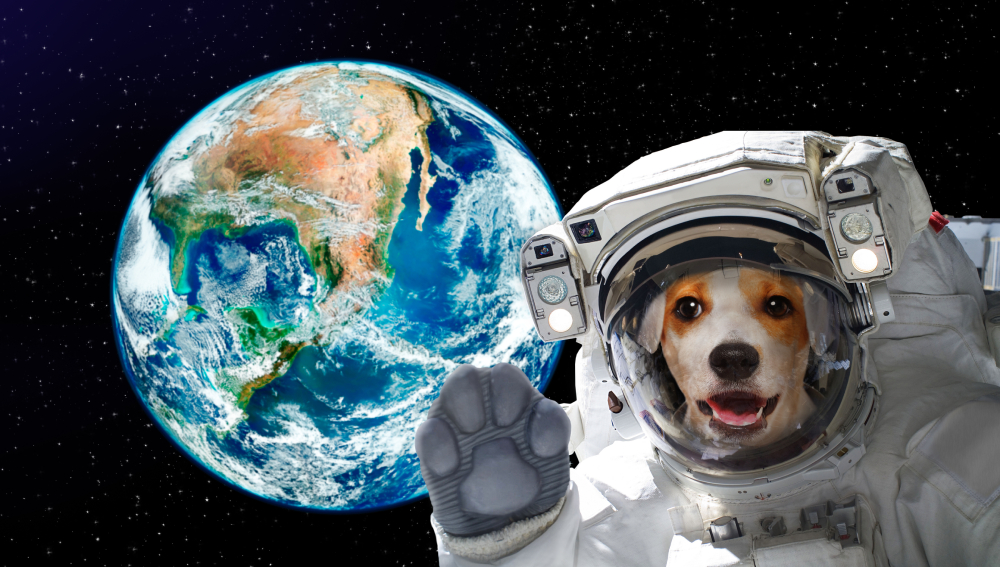
Many countries have used animals to research space travel, but some of the most notable space animals are the Soviet Space Dogs. The Soviet Space Dogs are a group of dogs that were used for space exploration during the 1950s and 1960s. They underwent intensive training to increase their chances of survival during space travel.
While Soviet Space Dogs are celebrated as heroes and pioneers of space exploration, their story also involves a sad aspect of mistreatment that animal activists fought against at the time. With new information about the Soviet Space Dogs getting released over the years, many people’s attitudes have shifted from admiring the dogs to feeling bittersweet. Understanding their full story can help protect dogs and other animals from unethical research practices.

Early 1950s: Suborbital Flights
Stray dogs were the preferred space animals for Soviet scientists during the era of the Space Race. Soviet scientists believed that strays were already accustomed to enduring extreme conditions, including living in cold weather and experiencing hunger. Another reason scientists preferred dogs was because they felt dogs could withstand being inactive for long periods of time.
The Soviet Space Dogs underwent intensive training to prepare for their space missions. They were trained to stand for long stretches of time, wear space suits, and get used to being inside small space modules. They also had to become familiarized with launch experiences and would be placed in launch simulators and ride in centrifuges that mimicked the acceleration speeds of a rocket launch.
On August 15, 1951, Dezik and Tsygan became the first Soviet Space Dogs to make a suborbital flight. They traveled to a maximum altitude of 110 km and were both safely recovered after their flight.
Following the success of Dezik and Tsygan’s launch, Soviet scientists continued to send dogs into space, and over 20 dogs were enlisted in their space exploration program. Some dogs had successful trips and returned safely, while others didn’t survive their flights.

November 3, 1957: Laika’s Mission
Laika is the most well-known Soviet Space Dog due to her monumental space flight. Prior to her flight, dogs and other space animals had reached sub-orbital heights. Laika was the first living Earth-born creature to surpass sub-orbital space and fly into Earth’s orbit.
Laika had humble beginnings and was a stray dog in Moscow. She was believed to be a Husky-Terrier mix and was about 3 years old and weighed between 11–13 pounds when she was found by Soviet scientists and trained for space exploration.
Laika’s name means “Barker,” but she was called several other names, including Kudryavka (Little Curly), Zhuchka (Little Bug), and Limonchik (Little Lemon). The US mainstream media would often refer to Laika as Muttnik, which was a pun off Sputnik 2, the spacecraft assigned to Laika’s space voyage.
Laika had gained a lot of attention due to propaganda and positive media coverage. Her image was stamped on all kinds of products, and she even had a brand of cigarettes named after her. She was a popular figure, and many people highly anticipated her space launch.
While Laika’s flight broke records, she unfortunately didn’t survive her space voyage. The Soviet Union gave conflicting statements on her cause of death and how long she had survived in orbit. It was initially reported that she had survived 4 days of her journey before dying from overheating. However, information on Laika’s space voyage was made public in 2002, and the reports revealed that Laika had died from stress and overheating and only survived the first 5 to 7 hours of the spacecraft launch. The Sputnik 2 continued to orbit Earth and made 2,570 orbits before disintegrating during its re-entry on April 14, 1958.
Most scientists attribute Laika’s space launch to making major contributions and advancements for the first human space voyage. She was memorialized in 1997 with an installation of a statue of her and other cosmonauts in Star City, the training center for Russian cosmonauts. Another monument of Laika was installed in 2008 at the military training facility involved in Laika’s space flight.
1960s–1970s: Laika’s Successors
The Soviet Union continued to send dogs into space after Laika’s voyage. Some projects were suborbital flights, while others were orbital flights. Belka and Strelka were the first Soviet space dogs to survive an orbital flight. Their spacecraft, Korabl-Sputnik 2 was launched on August 19, 1960, and it included a rabbit, 2 rats, 42 mice, and a variety of plants and fungi. They spent a day in orbit before safely returning to Earth.
Controversies and Ethics of Soviet Space Dogs
Positive media coverage, propaganda, censorship, and the buzz around the Space Race drew focus away from concerns about animal rights and the ethics of animal space programs. However, animal rights activists and organizations advocated and spoke out against animal testing and the mistreatment of animals. They would call the public to protest at Soviet embassies, and some groups organized demonstrations outside of the United Nations in New York.
In the case of Laika’s space flight, her story turned bittersweet as more details were revealed over the years. While her journey is credited for significant contributions to space exploration and research, her story also became a tragic tale of the mistreatment of space dogs. It was revealed years after her launch that Soviet scientists hadn’t intended for her to return from her journey.
The launch of Sputnik 2 was a hastily assembled project that prioritized setting the launch date to November 7, 1957, which was the 40th anniversary of the October Revolution. Due to the limited amount of time, the spacecraft wasn’t constructed to survive re-entry, and scientists involved in her space project knew she wouldn’t return.
While Laika is known to be a space hero, conflicting feelings and opinions exist within both the scientific community and the general public. Some people question if her mistreatment and the mistreatment of other space animals were worth it.

Final Thoughts
The Soviet Space Dogs, especially Laika, are praised for making crucial steps for humans to fly to space. However, the discoveries made from their journeys came at a high cost. The legacy of Laika and the Soviet Space Dogs celebrates the achievements made through them. However, when honoring these dogs and other space animals, it is still important to acknowledge and remember the sacrifices made for these achievements.
Featured Image Credit: Sonsedska Yuliia, Shutterstock